AFC Asian Cup U17 : India U17 Stand One Step Away from History as Uzbekistan Clash Looms Large
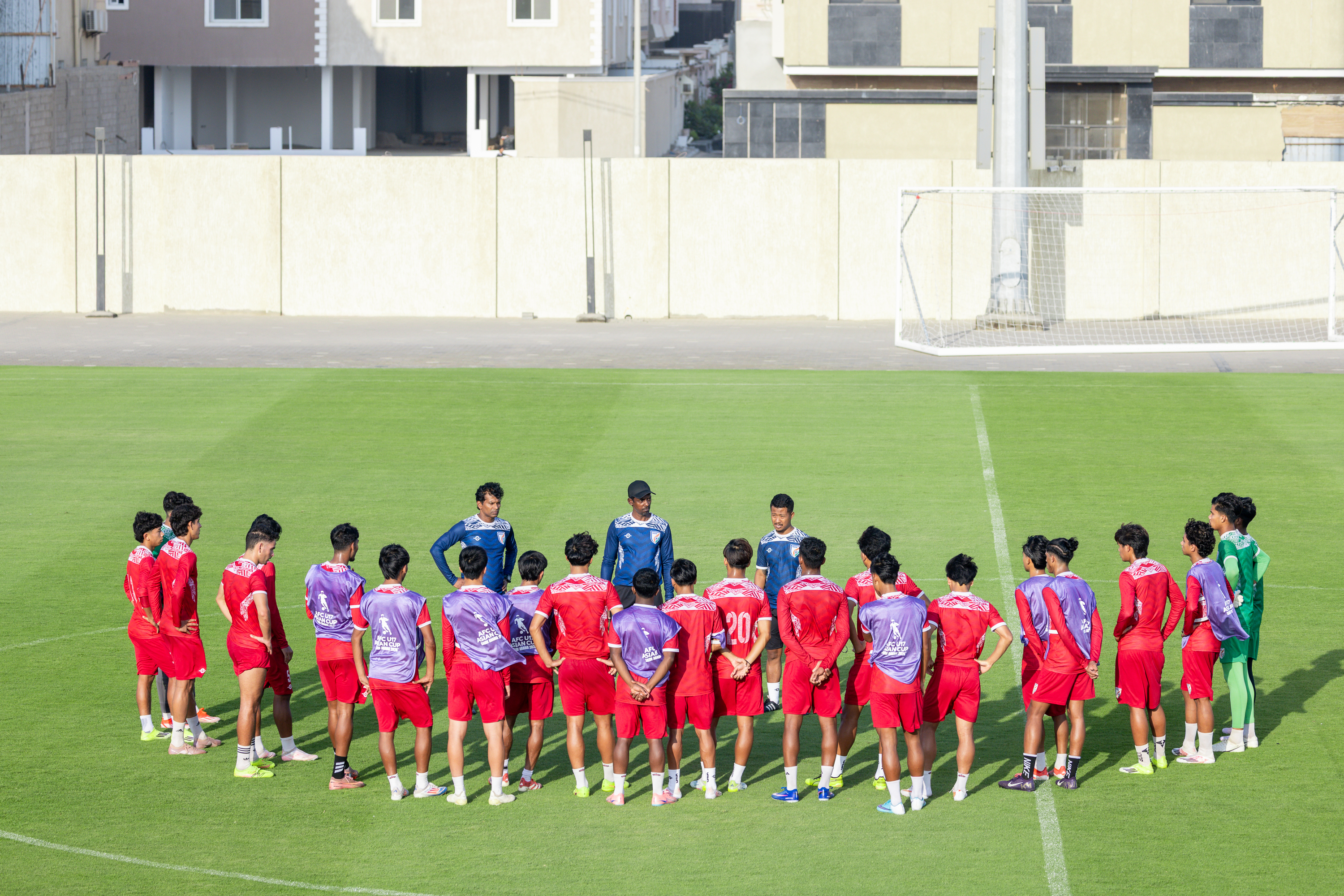
India’s U17 men’s team finds itself on the brink of a historic milestone as they prepare for a decisive encounter against Uzbekistan in Jeddah.
India U17 men’s team finds itself on the brink of a historic milestone as they prepare for a decisive encounter against Uzbekistan in Jeddah.
With World Cup qualification within reach, the equation is clear yet demanding deliver a result in the final group match and keep hopes alive for a place on the global stage. For a nation still chasing its first-ever merit-based qualification to a FIFA U17 World Cup, this match carries enormous significance. Scheduled at the King Abdullah Sports City Hall Stadium on May 10, the contest is more than just a group fixture it is an opportunity to redefine Indian youth football. The permutations heading into the match underline both the possibility and the challenge.
A victory over Uzbekistan would keep India firmly in contention, provided other results fall in their favour. Even a draw could be sufficient, depending on how Australia fare in their match. While the mathematics remains complex, the focus within the Indian camp is singular: control what can be controlled.
At the centre of this campaign is head coach Bibiano Fernandes, who has long been associated with India’s youth development pathway. For Fernandes, this moment is not new—it is a continuation of a journey that has come close to fruition before. In 2018, under his guidance, India reached the quarter-finals of the AFC U16 Championship, falling just one win short of World Cup qualification.
That near-miss continues to shape the present.
“World Cup qualification is a dream that we have been chasing for some time now,” Fernandes said ahead of the match. “We came close in 2018, but I always felt we had the capability to go further. This is something close to all our hearts, and the entire group is focused on doing everything possible to achieve it.”
The current squad has benefited from a structured build-up to the tournament. Over the past few months, India have faced a range of opponents in preparatory matches, including physically strong teams like Türkiye and the Korea Republic. These fixtures have been critical in preparing the players for the demands of continental competition, particularly against teams that rely heavily on physicality and direct play.
Uzbekistan, by all accounts, will present a similar challenge.
“They are a physical side, much like Australia,” Fernandes noted. “But we have faced such teams before and performed well. The key is to remind ourselves of what we did in those matches and execute our plan.” India have used the three-day break leading into the match to focus on both recovery and tactical preparation. The coaching staff has undertaken detailed analysis of the opposition, breaking down individual and team patterns to provide clarity to the players. This level of preparation reflects a shift in approach at the youth level, where data-driven insights and structured planning are becoming increasingly integral.
“The staff has done a really good job,” Fernandes added. “Every player was analysed, and the team understands the strengths and weaknesses of Uzbekistan. Now it’s about applying that on the pitch.”
From a tactical standpoint, India will need to balance defensive organisation with attacking intent. Against physically imposing teams, maintaining compactness and winning second balls becomes crucial. At the same time, moments of transition and efficiency in the final third could define the outcome.
Equally important will be the psychological aspect. Matches of this magnitude often hinge on composure under pressure. For a young side, managing expectations while staying focused on execution is a challenge in itself. Fernandes’ experience in handling youth teams in high-stakes situations could prove vital in this regard. The broader significance of this match extends beyond the immediate result. Qualification for the U17 World Cup would represent a landmark achievement for Indian football, signalling progress in grassroots development and youth systems. It would also provide invaluable exposure for players at a formative stage of their careers.
In recent years, there has been a conscious effort to strengthen youth pathways in Indian football, with increased emphasis on structured training, international exposure, and long-term planning. A successful qualification campaign would validate these efforts and potentially accelerate further investment in the ecosystem. However, the immediate task remains clear. Uzbekistan stand between India and history, and the challenge will require both tactical discipline and mental resilience.
As kickoff approaches, the narrative is straightforward: one match, one opportunity, and a chance to take a decisive step forward. For Bibiano Fernandes and his squad, the dream is within touching distance—but it will demand their most complete performance yet.
In Jeddah, under the lights, India’s U17 team will look to turn years of preparation into a defining result one that could reshape the trajectory of Indian football at the youth level.
Comments (0)
to post comments, replies, and votes.
Loading comments…