Focus on the Last Line: India Women’s Hockey Strengthen Goalkeeping Core with Specialized Camp
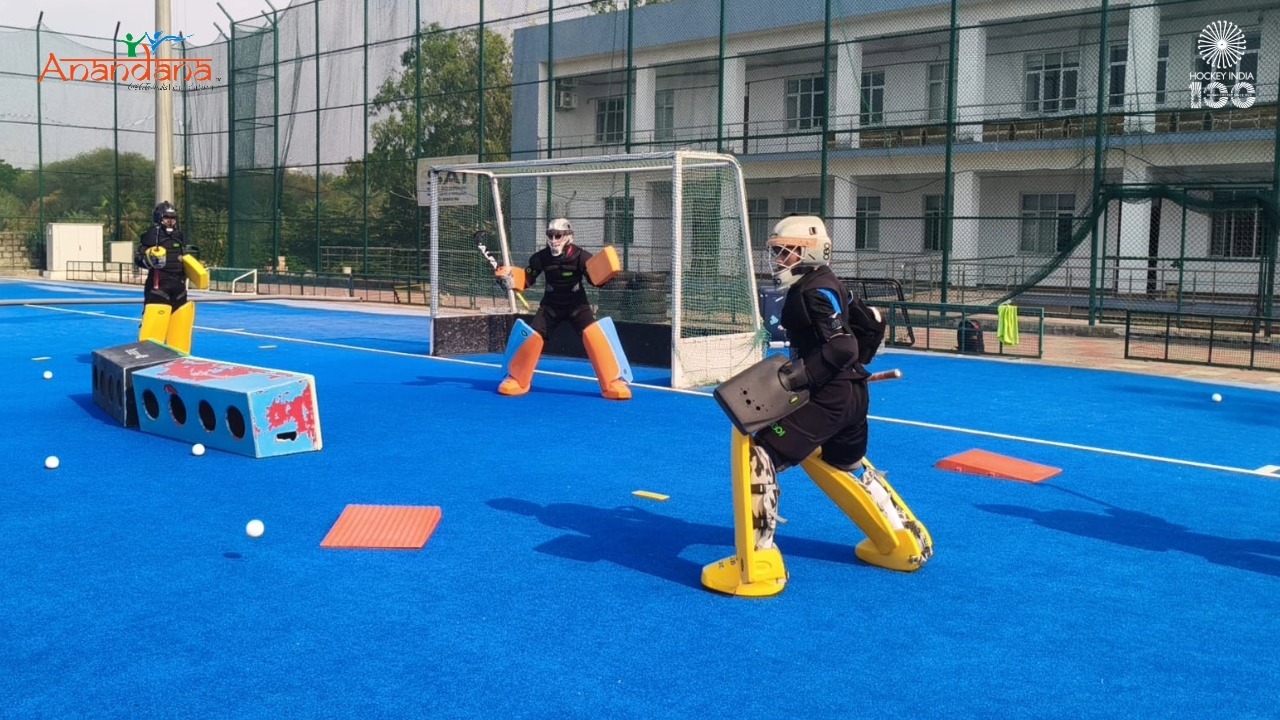
As the Indian women’s hockey team prepares for a packed international calendar in 2026, attention has turned toward refining one of the most critical positions on the field the goalkeeper.
In a structured move aimed at strengthening this department, Hockey India has organised a specialised goalkeeping camp at the Sports Authority of India (SAI) centre in Bengaluru, running from April 22 to May 2. The camp, led by experienced coach David Williamson and overseen by Chief Coach Sjoerd Marijne, brings together India’s frontline goalkeepers Savita, Bansari Solanki, Bichu Devi Kharibam, and Madhuri Kindo. The initiative reflects a targeted approach to performance development, focusing on technical precision, decision-making, and adaptability under pressure.
Goalkeeping in modern hockey has evolved into a highly specialised role, requiring not just reflexes and positioning but also tactical awareness and communication with the defensive unit. In this context, a dedicated camp allows for focused training that is often difficult to achieve during regular team sessions.
Williamson’s involvement adds a layer of international expertise to the setup. With experience in coaching the United States women’s national team and exposure to franchise hockey through the Women’s Hero Hockey India League, he brings a perspective shaped by varied competitive environments. His role in the camp is expected to centre on refining technical aspects such as footwork, angle coverage, and response to high-speed attacking plays.
The timing of the camp is significant. India’s recent tour of Argentina provided valuable match exposure, particularly against strong opposition known for structured attacking play. The performances of the goalkeepers during that tour have been a positive takeaway, but the upcoming schedule demands further consistency at a higher level. With international competitions lined up from June onwards, this window offers an opportunity to address specific areas of improvement. The emphasis is not only on maintaining current standards but also on enhancing the ability to perform under sustained pressure, particularly in matches where defensive organisation is tested.
A notable aspect of the camp is the integration of junior goalkeepers alongside the senior group. This approach serves a dual purpose. For senior players, it creates a competitive training environment, while for junior athletes, it provides direct exposure to elite-level preparation. The transition from junior to senior hockey is often marked by a steep learning curve, particularly for goalkeepers who must adapt to faster gameplay and more complex attacking patterns. Training alongside experienced players accelerates this process, allowing younger athletes to observe and internalise the demands of the role.
From a structural standpoint, such initiatives indicate a broader shift in how Indian women’s hockey is approaching player development. Rather than relying solely on match experience, there is a growing emphasis on specialised training modules that address specific roles within the team. The camp is also supported by Anandana, the Coca-Cola India Foundation, highlighting the role of external partnerships in strengthening the sport’s ecosystem. Their involvement extends beyond elite training, having also supported grassroots initiatives such as the Sub Junior Women’s National Championship earlier this year.
This alignment between grassroots development and high-performance training is crucial. Building a pipeline of talent requires consistent support at multiple levels, ensuring that players have access to resources and opportunities as they progress through the system.
For players like Savita, who has been a mainstay in India’s goalkeeping setup, such camps offer an opportunity to refine and adapt. Experience at the international level brings with it an understanding of evolving game patterns, and continuous training ensures that skills remain aligned with current demands. At the same time, the presence of multiple goalkeepers in the camp underscores the importance of depth in this position. Modern tournaments often involve congested schedules, making rotation and squad readiness essential. Developing a pool of goalkeepers capable of performing at a high level provides flexibility and resilience to the team.
The technical focus of the camp is likely to include scenario-based training, where goalkeepers are exposed to simulated match situations. This could involve handling penalty corners, managing one-on-one situations, and responding to deflections areas that frequently determine match outcomes.
Equally important is the psychological aspect of goalkeeping. The position demands concentration over extended periods, with the ability to respond instantly when called upon. Training environments that replicate match pressure help in building this mental resilience. As the camp progresses, the objective remains clear: to ensure that India’s goalkeeping unit is prepared for the challenges ahead. With international tournaments approaching, the margin for error narrows, and the role of the goalkeeper becomes increasingly decisive.
The initiative in Bengaluru represents a focused step in that direction. By combining international expertise, structured training, and integration of emerging talent, the Indian women’s hockey team is reinforcing a key area of its setup.
In a sport where outcomes often hinge on moments, strengthening the last line of defence could prove to be a defining factor in the months to come.
Comments (0)
to post comments, replies, and votes.
Loading comments…