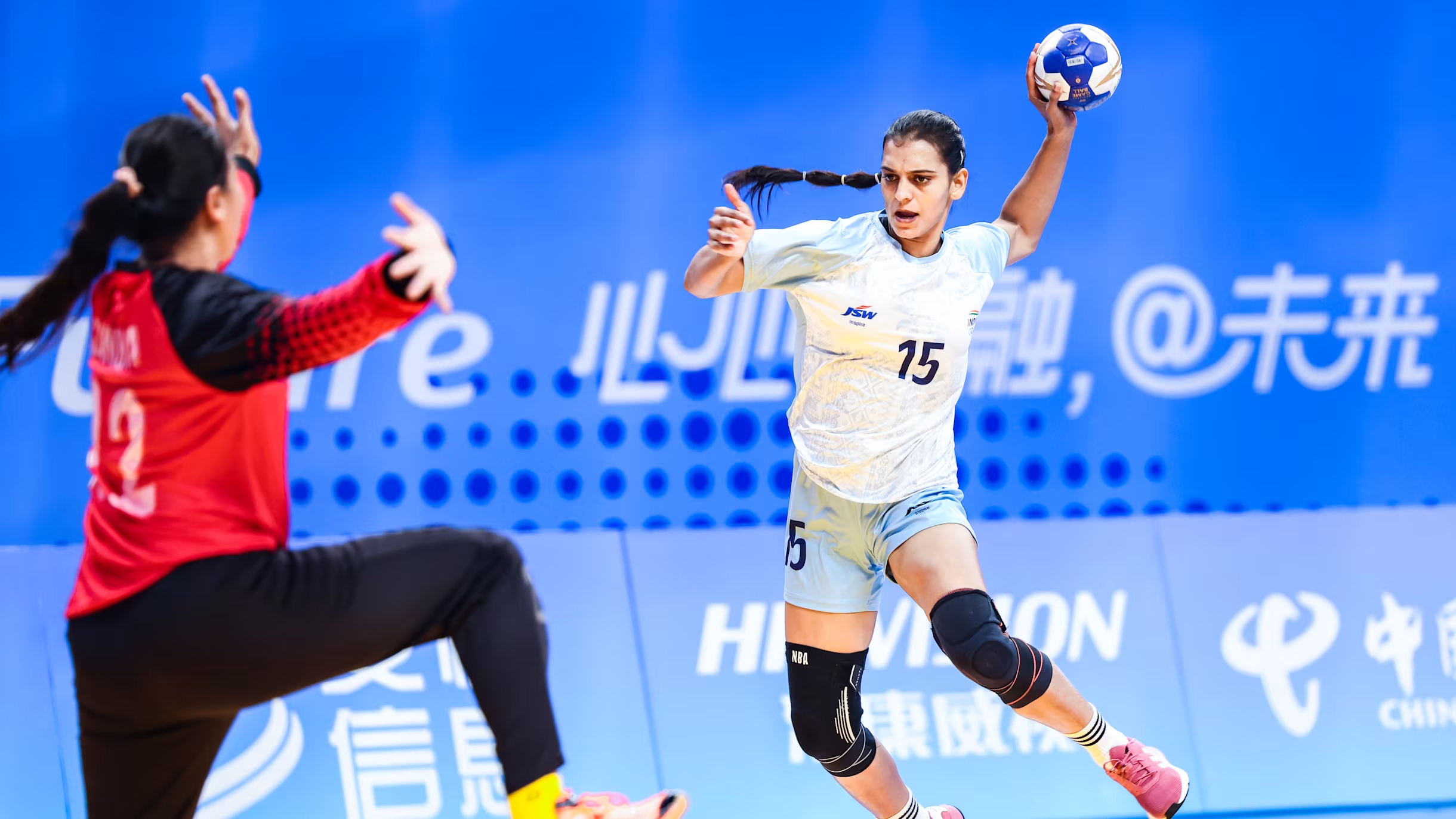
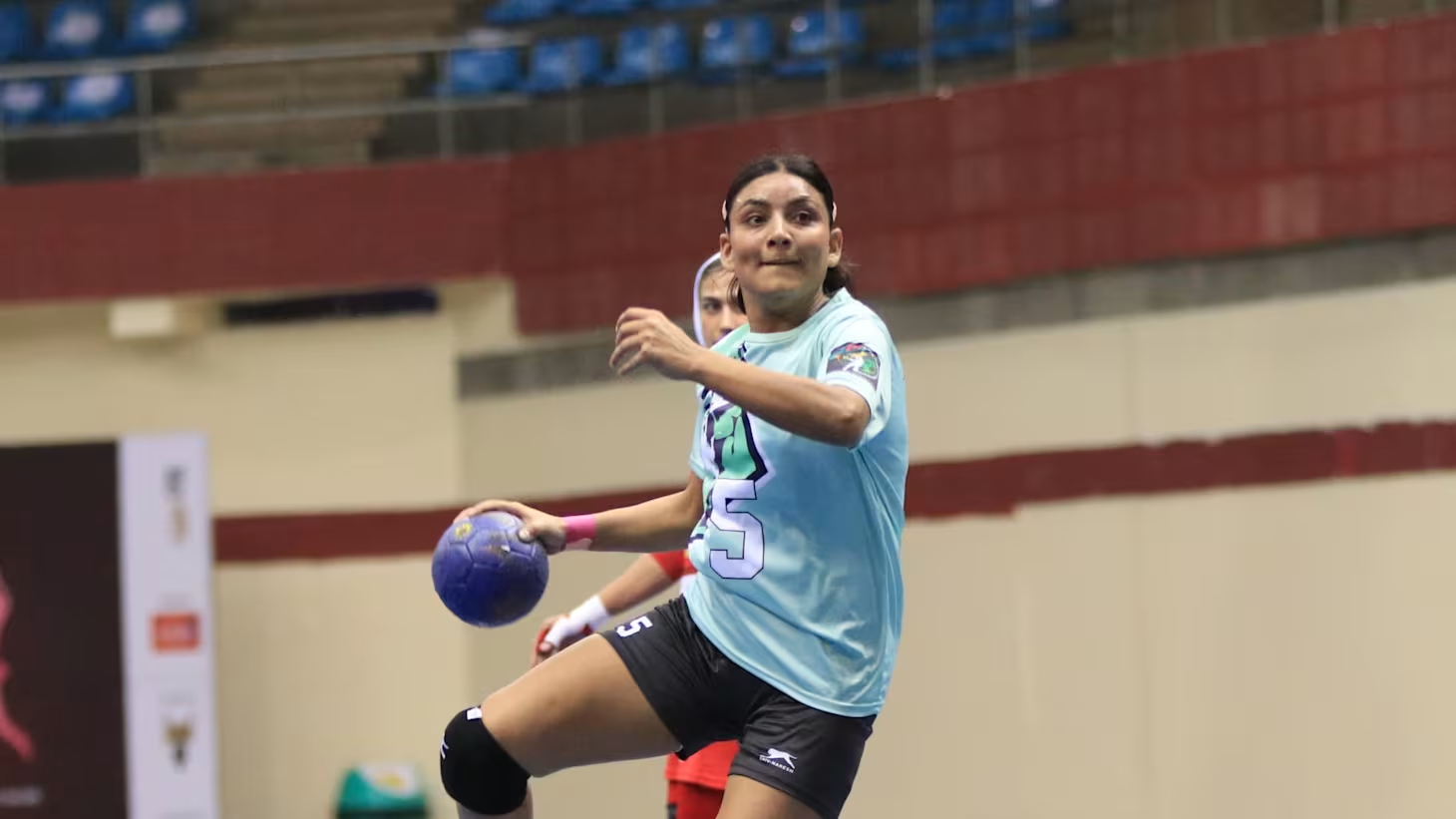
India End U20 Women's Handball World Championship Campaign in 32nd Place Amid Tough Global Test
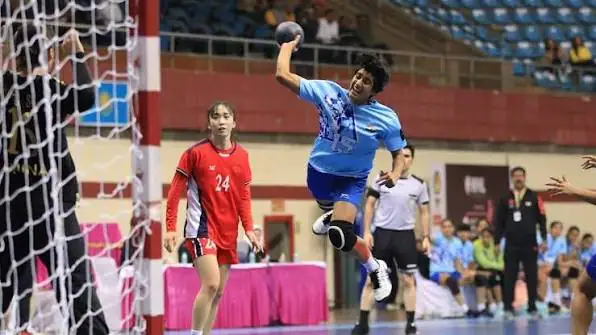
India's campaign at the 2026 IHF U20 Women's Handball World Championship came to an end with a 32nd-place finish, as the young side gained valuable international experience against some of the strongest handball nations in the world.
Competing in Jinzhong, China, India faced a steep learning curve throughout the tournament, beginning with a challenging group that included reigning world champions France, Sweden and African powerhouse Egypt. The Indian team ultimately finished with seven losses from seven matches, but their performances showed encouraging improvement as the competition progressed.
The tournament marked India's return to the global stage after qualifying through the Asian Women's Junior Handball Championship, an achievement that itself highlighted the growing potential of Indian women's handball. However, the gap between India's developing programme and the world's elite teams was evident throughout the competition.
India were drawn into arguably the toughest group of the tournament alongside France, Sweden and Egypt, three nations with established international pedigree. Their opening match saw Egypt register a 56-21 victory. India found it difficult to cope with Egypt's pace in transition and clinical finishing, with the African champions building an early advantage that proved impossible to recover from.
The second match against defending champions France proved even more challenging. France's organised defence and quick counter-attacks restricted India to just eight goals, handing the young Indian side a 38-8 defeat. India concluded the group stage against Sweden, another European powerhouse, losing 42-13 despite showing greater composure in attack during parts of the contest.
After three matches, India finished fourth in Group A and moved into the President's Cup classification rounds.
Although results remained elusive, India's performances improved considerably once the classification phase began. The first match against Angola ended in a 33-14 defeat, but the Indian team began adapting better to the pace and physicality of international handball. Their closest contest came against Paraguay in what proved to be India's best performance of the tournament.
Locked at 15-15 at halftime, India matched Paraguay throughout the contest before narrowly losing 28-27 in the closing moments. It was a heartbreaking defeat, but one that demonstrated the team's growing confidence and ability to compete more effectively.
India's attacking display reached another level against the United States in the 29th-32nd classification semi-final. Despite losing 43-36, the Indian attack produced its highest-scoring performance of the tournament at that stage, with the backcourt showing greater fluency and improved finishing.
In the 31st-place playoff, India again crossed the 30-goal mark but went down 42-36 to Canada, eventually finishing 32nd among the 32 participating nations.
While the final standings may not reflect it, India's offensive performances improved significantly over the course of the championship. Against France, India managed only eight goals, struggling to create clear scoring opportunities against one of the world's strongest defensive units. By the final classification matches, however, the team had nearly quadrupled its scoring output.
The 36 goals scored against both the United States and Canada reflected better attacking coordination, increased confidence and improved adaptation to the speed of international competition.
The progression demonstrated that the young squad learned quickly despite facing elite opposition throughout the tournament.
Two players consistently stood out for India during the championship. Shivani Devi emerged as one of the team's most influential performers, producing several impressive displays despite the difficult results. Her standout performance came against Paraguay, where she scored 13 goals, almost inspiring India to a memorable victory.
She continued her strong form by adding 10 goals against the USA and nine against Canada, establishing herself as India's primary attacking threat.
Sujata also enjoyed an impressive tournament. She scored 15 goals against the United States, one of the highest individual tallies by an Indian player during the championship, while also contributing nine goals against Canada and playing a vital role throughout the competition.
Together, Shivani and Sujata carried much of India's attacking responsibility and demonstrated that the country possesses talented young players capable of competing at the highest level.
India's campaign also highlighted the challenges facing handball in the country. The team's preparations were reportedly affected by administrative issues and limited funding, with players facing significant obstacles before even reaching the tournament. Limited access to indoor training facilities also proved to be a major disadvantage. While most leading handball nations prepare year-round on international-standard indoor courts, India's preparations were constrained by inadequate infrastructure, making the transition to elite competition even more difficult.
These factors were reflected in areas such as defensive organisation, transition play and goalkeeping, where India's opponents consistently held the advantage.
Although India finished at the bottom of the standings, the tournament offered invaluable experience for a young squad competing against world-class opposition. Facing teams such as France, Sweden and Egypt exposed the players to the highest standards of international handball while also providing clear benchmarks for future development.
The improvement shown in the latter stages of the competition suggests that the gap can be narrowed through sustained exposure, better infrastructure and stronger domestic support systems.
With players like Shivani Devi and Sujata emerging as bright prospects, the tournament also provided encouraging signs for the future of Indian women's handball.
The 32nd-place finish may not have delivered the results India had hoped for, but the experience gained in Jinzhong could serve as an important stepping stone as the country continues working towards becoming more competitive on the global stage.
Comments (0)
to post comments, replies, and votes.
Loading comments…