Indian Shotgun Squad Gears Up for ISSF World Cup Challenge in Kazakhstan
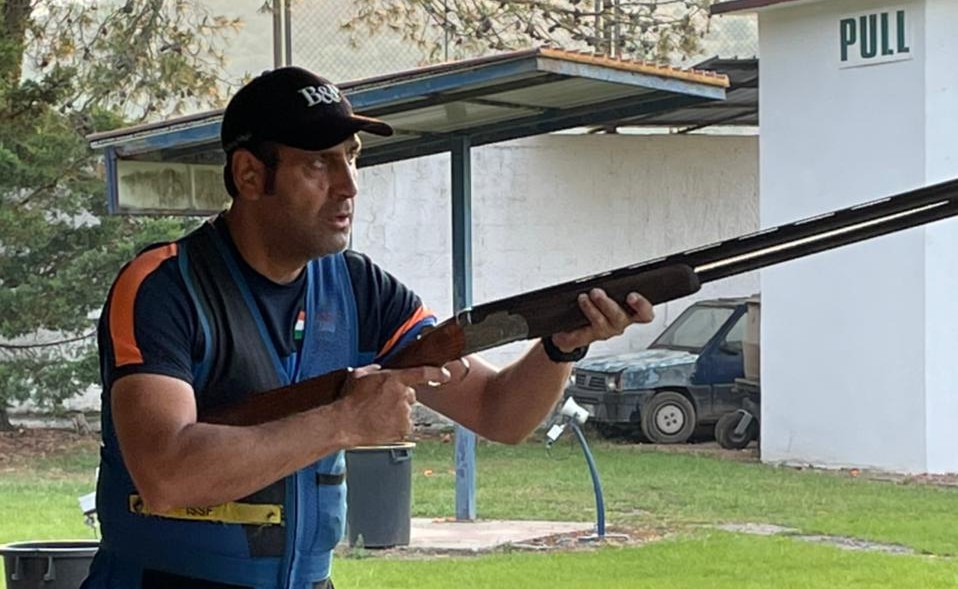
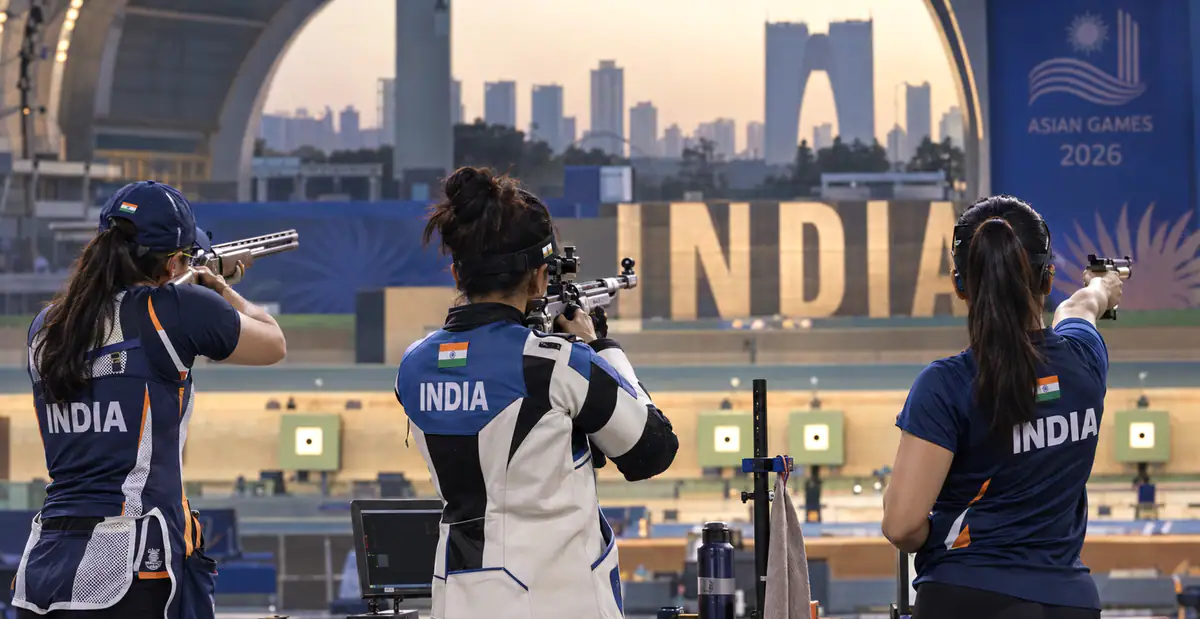
India’s shotgun shooters are set for another important international test as a 12-member squad prepares to compete at the second ISSF World Cup Shotgun
India’s shotgun shooters are set for another important international test as a 12-member squad prepares to compete at the second ISSF World Cup Shotgun stage of the 2026 season in Almaty, Kazakhstan.
The competition, scheduled across ten days beginning with team arrivals on May 2, will bring together 284 shooters from 42 National Olympic Committees competing across the five Olympic shotgun events. The tournament represents another key milestone in the international calendar as athletes continue building momentum toward major global championships and long-term Olympic qualification cycles. Alongside the main 12-member Indian squad, eight additional Indian shooters will also participate as RPO (Ranking Points Only) athletes, giving India a sizeable presence at one of the strongest shotgun competitions of the year.
The Almaty World Cup follows the opening ISSF shotgun World Cup stage held in Tangier, Morocco, earlier this year, where Indian shooters gained valuable competitive exposure against elite international fields. For several senior Indian shooters, however, Kazakhstan will mark their first international appearance of the season.
The competition schedule begins with the men’s and women’s skeet qualifiers on May 4, followed by the finals the next day. The men’s and women’s trap finals are scheduled for May 9, while the trap mixed team event the final medal event of the competition will take place on May 10. With multiple Olympic disciplines on display, the event offers Indian shooters another opportunity to test themselves against some of the strongest shotgun nations globally.
The Indian challenge in skeet will be led by three Olympians veteran Mairaj Ahmad Khan, Anantjeet Singh Naruka, and Raiza Dhillon. All three are expected to play important roles for India, particularly given the quality of opposition present in Almaty. Mairaj Ahmad Khan remains one of India’s most experienced shotgun shooters and continues to be a key figure in Indian skeet shooting even after more than a decade competing internationally. His ability to handle pressure in qualification rounds and maintain consistency over long competitions makes him a vital member of the squad.
Anantjeet Singh Naruka, meanwhile, enters the tournament carrying growing expectations after steadily establishing himself as one of India’s most promising shotgun athletes in recent seasons. Known for his composure and technical consistency, Anantjeet will be aiming to convert strong qualification performances into finals appearances.
On the women’s side, Raiza Dhillon returns to international competition looking to regain rhythm and consistency after limited appearances earlier in the year. The young Olympian remains one of India’s key prospects in women’s skeet and will hope to use the Kazakhstan stage to build momentum for the remainder of the season.
The challenge awaiting Indian shooters in Almaty will be significant. Traditional shotgun powerhouse Italy once again arrives with a formidable squad and remains one of the favourites across both skeet and trap disciplines. Italian shooters have consistently dominated international shotgun events over the last decade through exceptional depth and technical excellence. Beyond Italy, several other nations bring strong medal credentials. Countries such as Finland, Denmark, the Czech Republic, Cyprus, Greece, Peru, and Qatar all possess experienced shotgun shooters capable of challenging for podium finishes.
The host nation Kazakhstan is also expected to be highly competitive, especially given familiarity with local conditions and strong home support. In addition, China and Russia the latter competing under the designation of Individual Neutral Athletes (AIN) add even greater depth to the competition. Russian shooters, in particular, have traditionally remained among the strongest competitors in global shotgun shooting.
That level of competition means Indian athletes will need exceptional qualification rounds simply to secure finals berths.
The Kazakhstan World Cup also reflects the growing competitiveness of international shotgun shooting overall. Margins in skeet and trap events have become incredibly small at the elite level, with qualification cut-offs often decided by a single missed target. Finals formats have further increased pressure, rewarding shooters who can remain mentally composed under elimination scenarios. For Indian shooters, consistency across qualification rounds remains one of the biggest focus areas.
India has shown the ability to produce strong individual performances internationally in recent years, but converting those performances into medals against elite global fields continues to be the next challenge. The presence of experienced Olympians alongside younger shooters in the current squad reflects India’s attempt to balance immediate competitiveness with long-term development. Beyond medals, the Almaty World Cup serves another important purpose for the Indian contingent preparation. With major continental and world-level competitions approaching later in the season, international exposure against elite fields becomes crucial in helping athletes refine technical adjustments, competition strategies, and mental preparation.
Conditions in Kazakhstan may also present different environmental challenges compared to previous competitions, making adaptability another important factor. The additional participation of Indian RPO shooters could also prove valuable in strengthening depth within the national system by giving more athletes access to high-level international competition.
Indian shooting continues to remain one of the country’s strongest Olympic sports, though rifle and pistol disciplines have historically produced a larger share of international medals. Shotgun shooting, however, has shown encouraging progress over the past decade through athletes like Mairaj Ahmad Khan, Angad Bajwa, Ganemat Sekhon, and others who have consistently pushed India’s presence in global competitions.
The Almaty World Cup now offers another opportunity for Indian shotgun shooters to demonstrate that progress against some of the world’s finest competitors.
With experienced Olympians returning, younger athletes gaining exposure, and strong international participation ensuring elite-level competition, India’s shotgun squad heads to Kazakhstan aiming not just for participation but for meaningful impact on the ISSF World Cup stage.
Comments (0)
to post comments, replies, and votes.
Loading comments…