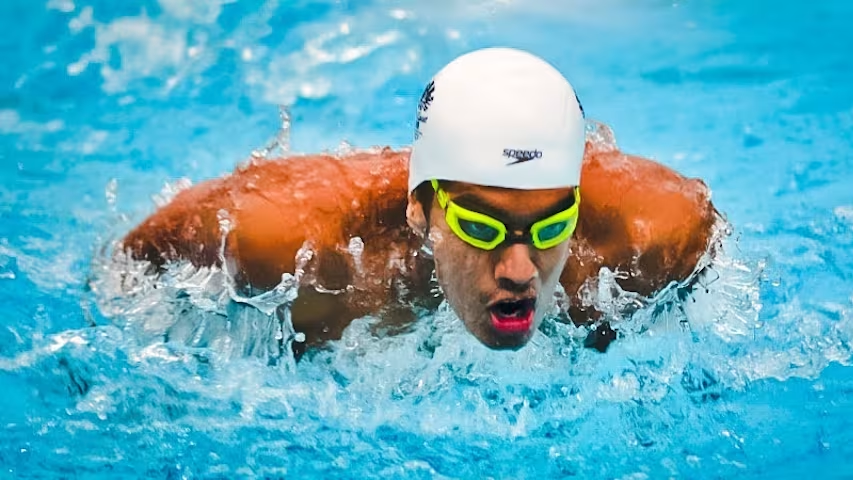
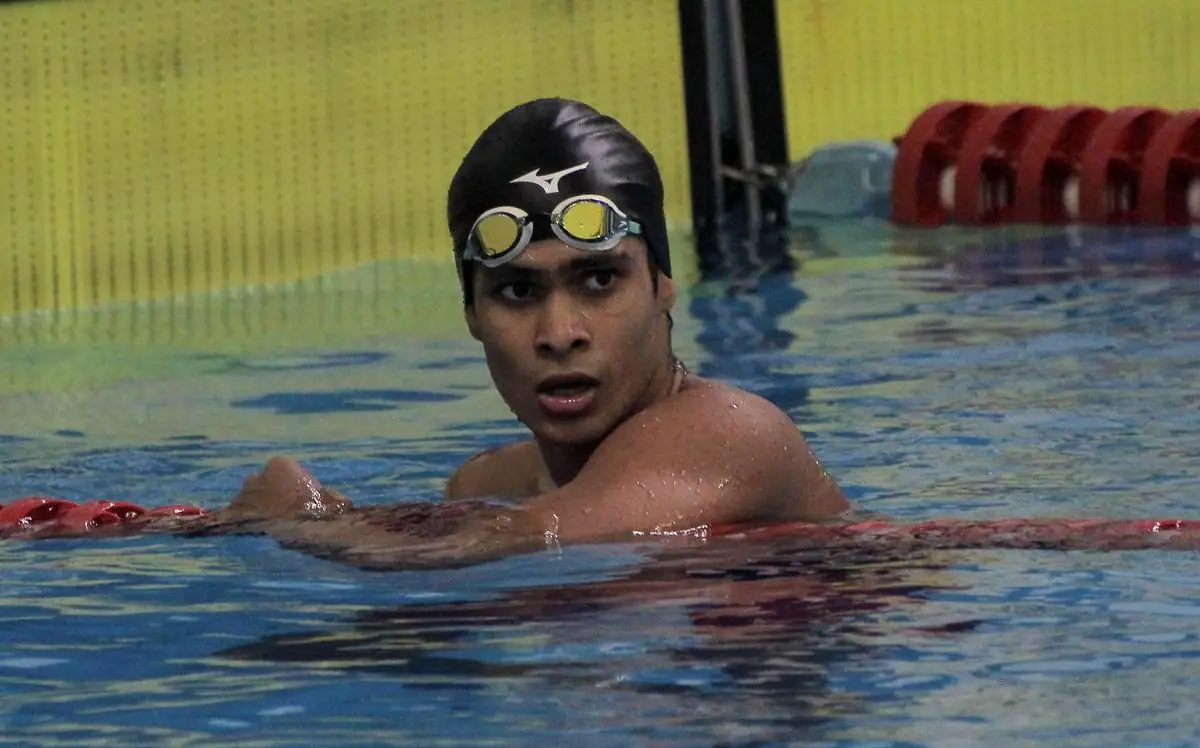
Rishabh Das Creates History, Becomes First Indian to Go Sub-2 Minutes in 200m Backstroke
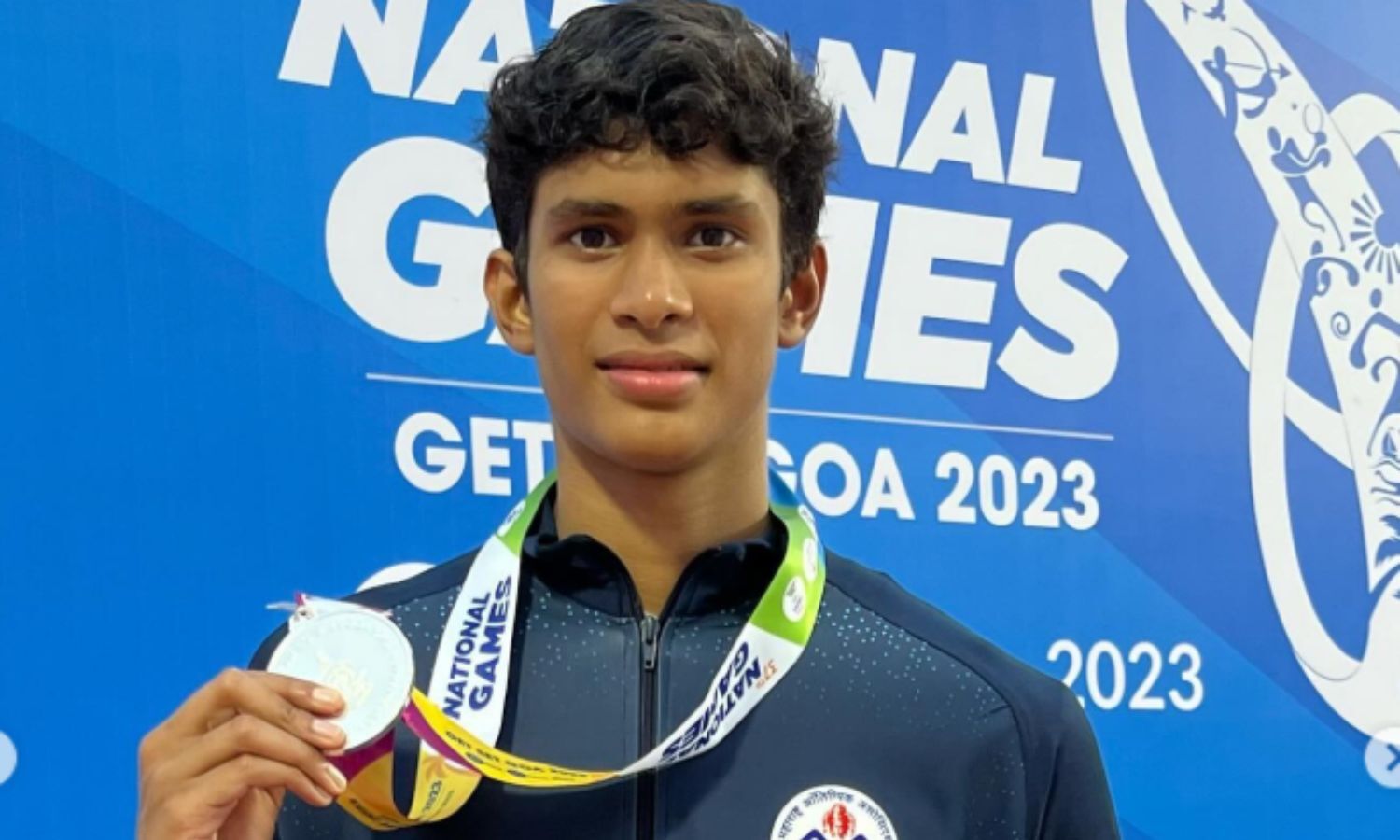
Rishabh Das broke the Indian national record in men’s 200m backstroke, becoming the first Indian swimmer to go sub-2 minutes.
Indian swimmer Rishabh Das produced a landmark performance at the Sydney Open Meet 2026, breaking the national record in the men’s 200m backstroke and becoming the first Indian swimmer in history to go under the two-minute barrier in the event.
Competing in a high-quality international field, Rishabh clocked 1:59.84 in the final to finish fifth overall, improving upon his own previous national record and achieving one of the most significant milestones in Indian backstroke swimming. The performance marks another major step forward for Indian swimming, particularly in long-course events where breaking internationally competitive timing barriers has historically remained a challenge.
The sub-two-minute mark in the men’s 200m backstroke has long been viewed as a major benchmark internationally. For Indian swimming, the barrier represented more than just a numerical milestone it symbolised the level required to consistently compete with elite global swimmers in the discipline.
Rishabh’s 1:59.84 now places him in completely new territory within Indian swimming history. Before this swim, the national record stood at 2:00.14, which Rishabh himself had set earlier this year at the NSW State Open Championships in Sydney while winning bronze. In just over two months, he managed to lower the record further and finally break through the two-minute barrier.
The progression highlights both technical improvement and increasing consistency at international meets.
Strong International Field in Sydney
The Sydney Open final featured several highly competitive swimmers from Japan and Australia. Japan’s Hidekazu Takehara won the race in 1:57.11, while Australia’s Se-Bom Lee finished second in 1:57.27. Stuart Swinburn secured third place with 1:58.04. Rishabh finished fifth overall, only 0.25 seconds behind Japanese swimmer Yumeki Kojima, the junior world record holder in the 200m and 400m individual medley.
That margin is particularly significant because it underlines how competitive Rishabh’s performance was against swimmers operating at elite international junior and senior levels. Rather than simply breaking a national record in isolation, the Indian swimmer remained closely connected to internationally accomplished athletes throughout the race.
Rishabh Das has steadily emerged as one of India’s strongest backstroke swimmers over recent seasons. While Indian swimming has traditionally produced stronger results in sprint freestyle and butterfly events domestically, backstroke has remained an area where international-level progression was slower. Rishabh’s recent performances suggest that gap is beginning to narrow.
His development has been particularly noticeable in long-course swimming, where endurance, underwater phases, turn efficiency, and pacing become far more demanding than in short-course competition. Breaking two minutes in long-course 200m backstroke demonstrates not only improved speed but also high-level race management across all four laps.
One of the biggest reasons behind Rishabh’s progression has been his visible improvement in race efficiency. The 200m backstroke demands a careful balance between controlled pacing and sustained speed, especially through the middle 100 metres where many swimmers lose rhythm. Rishabh’s recent performances indicate stronger underwater transitions and improved stroke control during fatigue phases of the race.
At elite level, even marginal technical improvements can significantly reduce overall timings. Dropping from 2:00.14 to 1:59.84 may appear small numerically, but in swimming terms, crossing a major benchmark often carries huge psychological importance. Now that the barrier has been broken, the focus shifts toward consistency and further reduction.
Indian swimming has gradually started showing improvement internationally, particularly through younger athletes training and competing more regularly overseas. However, achieving globally relevant timings remains one of the biggest challenges for Indian swimmers due to differences in infrastructure, exposure, and competition frequency compared to traditional swimming nations.
Performances like Rishabh’s therefore carry broader significance beyond individual success. Breaking long-standing barriers creates new standards for upcoming swimmers and demonstrates that internationally competitive timings are achievable for Indian athletes. The result also highlights the importance of overseas competition exposure.
Racing regularly against stronger international fields forces technical adaptation and helps swimmers understand pacing and intensity levels required globally.
Rishabh’s timing also places him closer to competitive Asian-level standards. While the global elite in the men’s 200m backstroke continue to operate several seconds faster, going sub-two minutes is often considered the minimum benchmark for relevance at major continental competitions. The next phase of progression will likely focus on improving race consistency and pushing further towards the mid-1:58 range, where stronger Asian Championship competitiveness becomes possible.
The timing of the record is also important with several major international competitions approaching over the next cycle, including the Asian Games and Commonwealth-level meets. Indian swimming has increasingly prioritised long-term athlete development, and swimmers like Rishabh represent the growing impact of that approach.
At a time when Indian sport is expanding beyond traditional disciplines, breakthroughs in swimming remain especially valuable because of the sport’s global depth and technical complexity. For now, Rishabh Das has already secured his place in Indian swimming history. By becoming the first Indian swimmer to break the two-minute barrier in the men’s 200m backstroke, he has established a new benchmark for the discipline nationally. More importantly, his progression suggests this may not be the limit.
Indian swimming has often waited for athletes capable of consistently pushing technical and timing boundaries internationally. In Sydney, Rishabh Das showed that Indian backstroke swimming may finally be entering that phase.
Comments (0)
to post comments, replies, and votes.
Loading comments…