Sanjana Clinches Triple Bronze with Personal Best at Asian Weightlifting Championships 2026
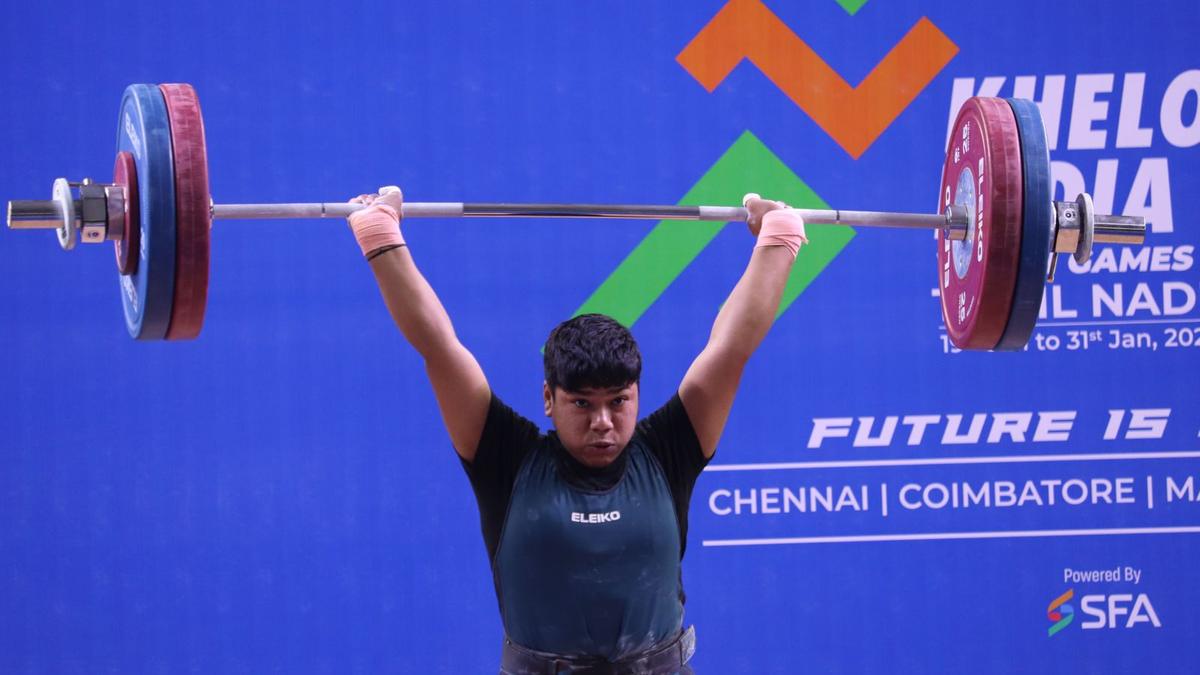
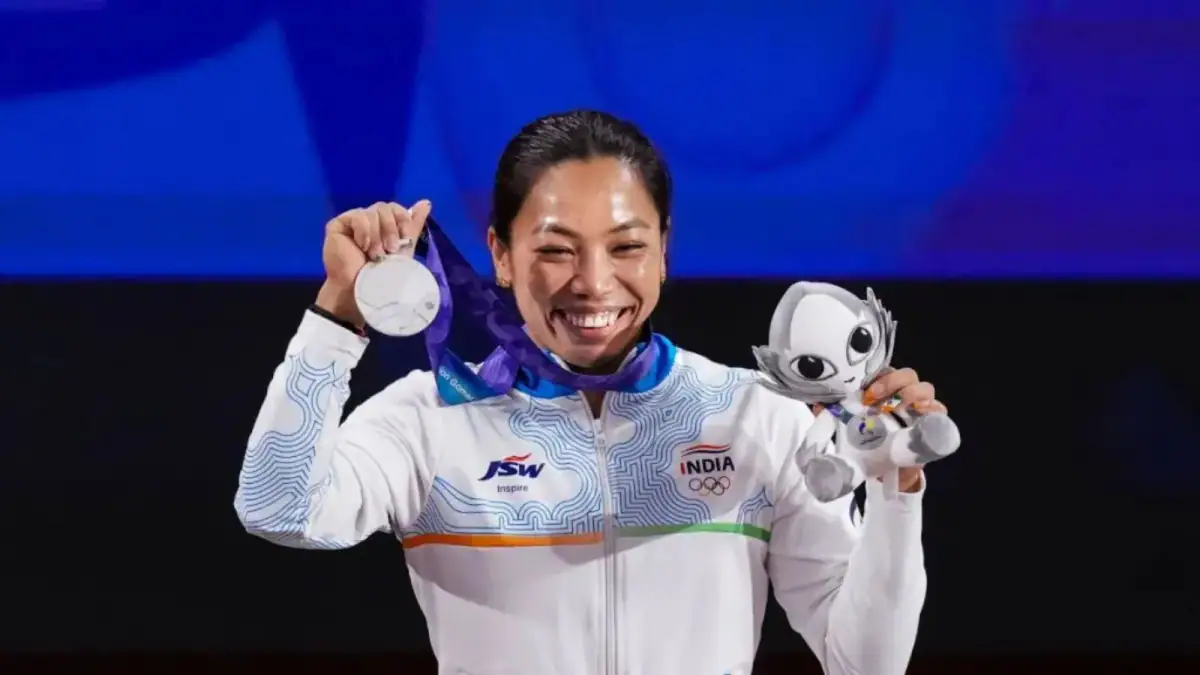
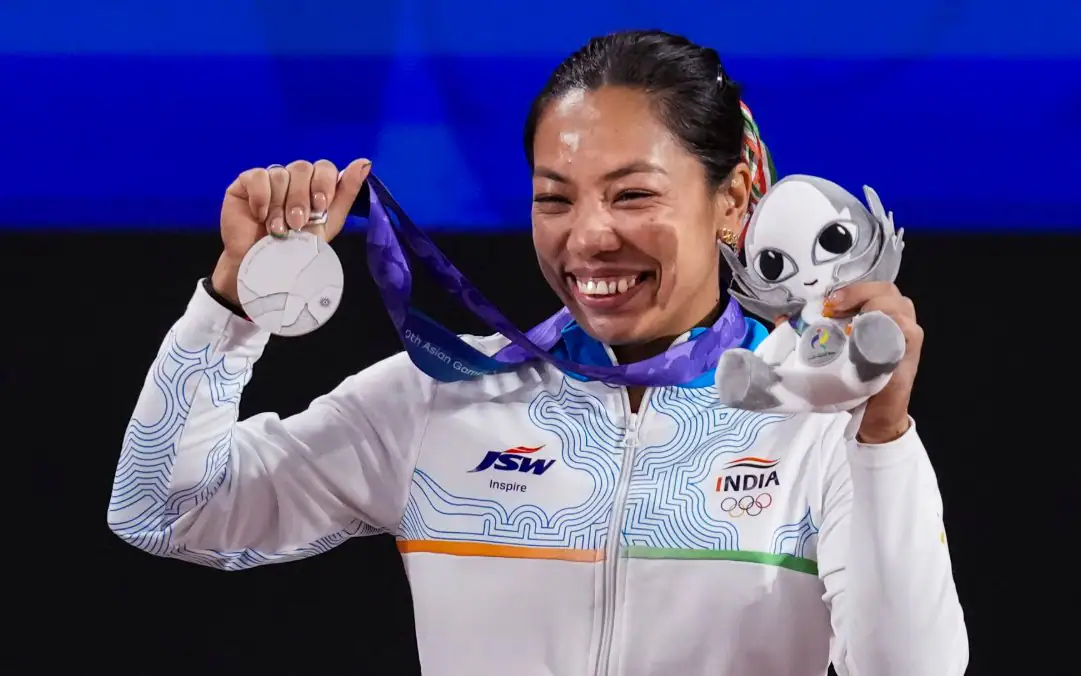
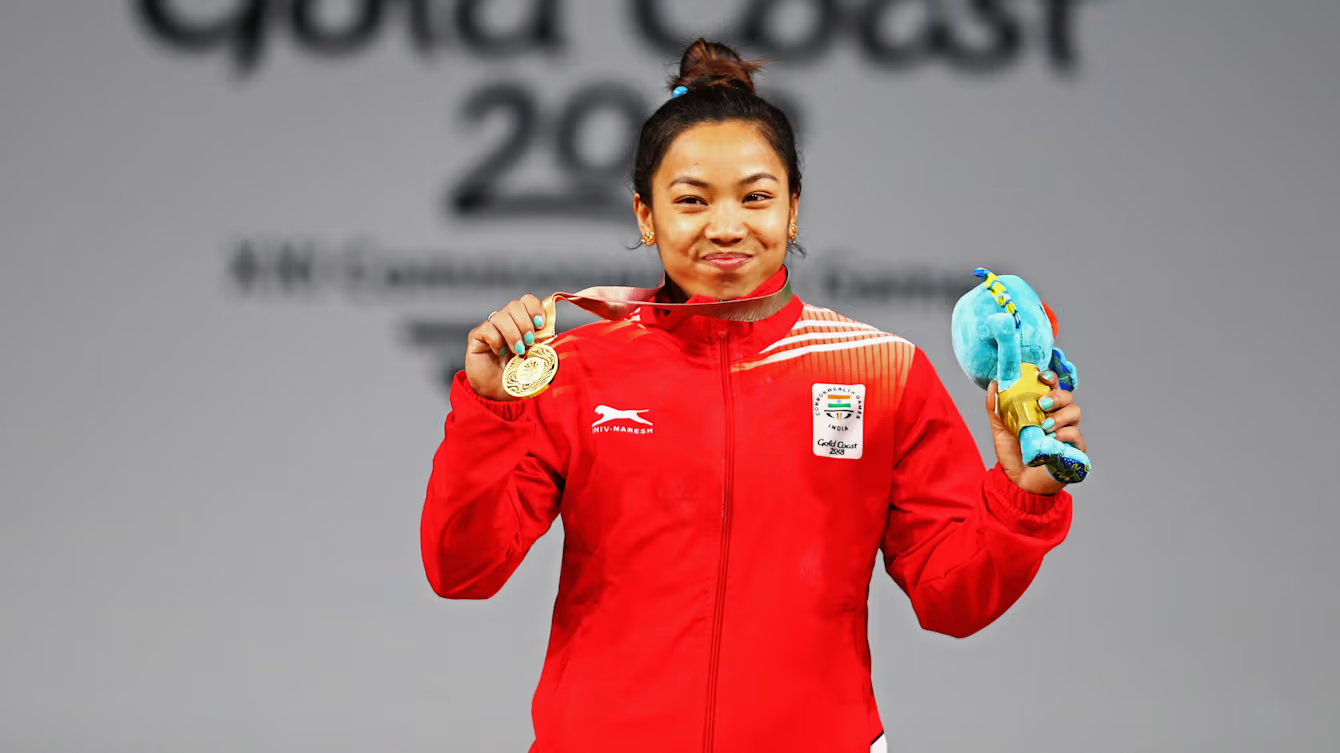
India’s Sanjana delivered one of the country’s most encouraging performances at the Asian Weightlifting Championships 2026 in Gandhinagar, clinching three bronze medals in the women’s 77kg category while also registering a new personal best.
Competing in front of the home crowd at the Mahatma Mandir Exhibition Hall, Sanjana lifted a combined total of 220kg, comprising 96kg in snatch and 124kg in clean and jerk, to finish third overall in the category. The total marked a four-kilogram improvement over her previous personal best and represented one of the few notable upward performances by an Indian lifter during the championships.
Three Bronze Medals for India
Sanjana secured bronze across all three medal categories in the event. She finished third in snatch with a best effort of 96kg, followed by another bronze in clean and jerk after lifting 124kg. Her combined total of 220kg then ensured a third bronze medal in the overall standings.
The performance placed her behind China’s Liao Guifang, who dominated the competition with a total of 265kg, and DPR Korea’s Ryon Kaming, who finished second with 260kg. Despite the sizeable gap separating the top two lifters from the rest of the field, Sanjana managed to stay composed throughout her attempts and capitalised effectively on the competition structure.
While the field itself lacked the overall depth normally associated with elite Asian weightlifting categories, Sanjana’s individual improvement remains genuinely significant. The Indian lifter improved her previous personal best total by four kilograms, a meaningful progression in a sport where marginal gains often require months of technical refinement and physical adaptation.
Importantly, both her snatch and clean and jerk phases showed greater stability compared to earlier international appearances. Her 96kg snatch demonstrated improved confidence overhead, while the 124kg clean and jerk reflected stronger recovery mechanics during the clean phase an area where many Indian lifters have struggled under pressure in recent years.
One of the most interesting aspects of Sanjana’s performance was her bodyweight. Despite competing in the women’s 77kg category, Sanjana weighed only 70.8kg at weigh-in, significantly lighter than many competitors in the division. That detail becomes particularly important when evaluating her long-term potential.
Operating well below the upper limit of the category suggests she still has considerable room for physical development and strength gains without requiring a move to a higher weight class. In weightlifting, athletes competing significantly under category limits often possess greater scope for future progression as muscle mass and power output increase gradually through structured training cycles.
For Indian coaches, that will likely be one of the biggest positives from her performance in Gandhinagar.
The Asian Weightlifting Championships have been challenging overall for many Indian lifters despite the advantage of competing at home. Several athletes struggled to match personal best numbers, while others failed to maintain consistency across attempts against stronger Asian opposition. Against that backdrop, Sanjana’s improvement stands out even more. She became one of the few Indian lifters at the event to genuinely raise her performance level under competition pressure rather than merely matching previous standards.
That distinction matters because home championships often create additional psychological pressure rather than reducing it, especially for younger athletes competing in front of domestic expectations.
Even with the thinner field in the women’s 77kg category, the broader championships once again highlighted the extraordinary standards within Asian weightlifting. Countries such as China, DPR Korea, Kazakhstan, and Uzbekistan continue to dominate the sport globally through exceptional technical systems and deep developmental pipelines.
For Indian lifters, competing against those nations remains one of the toughest challenges in international sport. That reality also explains why performances like Sanjana’s must be viewed through both contexts simultaneously: the competition itself may not have carried elite global depth, but individual progress at continental championships still represents meaningful development.
Indian women’s weightlifting has historically produced some of the country’s strongest international performers, including Olympic and world-level medal contenders. However, maintaining depth beyond a handful of elite names has remained difficult. Performances like Sanjana’s therefore become important indicators of emerging talent within the system. At a relatively young stage in her career, improving personal bests on the continental stage demonstrates both technical progression and mental resilience.
India also saw a near-podium finish in the women’s 86kg category through Vanshita Verma. Vanshita finished fourth overall with a combined total of 220kg after lifting 95kg in snatch and 125kg in clean and jerk. She narrowly missed medals across all three categories, finishing fourth in snatch, clean and jerk, and overall standings. Although disappointing, the performance still reflected solid competitiveness against strong Asian opposition.
For Sanjana, the bronze-medal finish should provide significant confidence moving forward. The most encouraging aspect of her performance was not simply the medals themselves, but the visible improvement in total weight lifted and the indication that further progress remains possible physically and technically. Indian weightlifting continues to search for the next generation of lifters capable of competing consistently at the continental and global levels.
In Gandhinagar, Sanjana may have taken an important step toward becoming part of that future.
Comments (0)
to post comments, replies, and votes.
Loading comments…