Regulatory Verification and Procedural Architecture
The Athletics Federation of India (AFI) has mandated Sex-determining Region Y (SRY) gene testing for female atheletes.
Through administrative circulars and decisions ratified at its Annual General Meeting and Executive Council sessions, the AFI resolved to make SRY gene testing an absolute eligibility prerequisite for female athletes competing in all sanctioned domestic competitions, establishing full regulatory enforcement beginning in 2027. While sensationalized summaries suggest universal screening across all athletes, the directive specifically governs participation within the female competition category across all age classifications, spanning youth, junior, and senior levels.
The policy represents a structural expansion of an emergency framework first initiated in mid-2025. Following World Athletics (WA) regulations introduced ahead of the 2025 World Athletics Championships in Tokyo, the AFI initially mandated the screening exclusively for elite national qualifiers. The federation has since phased the requirement into major national events, including the Federation Cup and the National Inter-State Championships, before establishing a hard cutoff for all AFI-approved events in 2027. To standardize sample processing and limit protocol deviations, the AFI designated MedGenome Labs Ltd. as its authorized genetic testing partner. Through central negotiation, the federation subsidized the individual testing fee from approximately ₹8,000 down to ₹3,500, pledging institutional funding to eliminate the direct financial burden on registered competitors.
Biological Mechanics of the SRY Assay
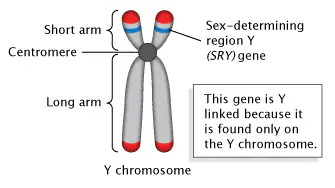
The SRY gene, located on the short arm of the Y chromosome, serves as the master genetic trigger for male sexual differentiation. During early embryonic gestation, expression of the SRY gene initiates a developmental cascade that prompts bipotential gonadal tissue to develop into functional testes rather than ovaries. In turn, testicular tissue secretes testosterone and anti-Müllerian hormone, driving anatomical male development and establishing the physiological foundation for the virilizing androgenic changes associated with male puberty.
Administratively, the SRY screen is performed as a once-in-a-lifetime test utilizing non-invasive buccal epithelial swabs or venous phlebotomy. Under current WA and AFI regulations, athletes who test negative for the SRY gene permanently satisfy eligibility criteria for the female category, avoiding recurrent biochemical surveillance. This genetic approach supplants earlier sports governance models that relied on continuous serum testosterone suppression, which required continuous pharmaceutical intervention and intrusive blood monitoring.
Institutional Drivers and Governance Justifications
The domestic rationale for instituting universal genetic screening stems from a dual imperative of international compliance and internal regulatory enforcement. Globally, World Athletics codified the principle that elite female categories must be restricted to individuals who develop along biological female pathways, maintaining that male puberty confers insurmountable morphological and metabolic advantages. Because Indian athletes cannot accrue world-ranking points or represent the nation abroad without verifiable SRY clearance, aligning domestic entry criteria prevents sudden international disqualifications. This proactive synchronization is especially critical given Indian athletics' fraught historical encounters with gender verification controversies, which previously caused severe trauma and protracted legal battles for international athletes.
Simultaneously, the mandate addresses administrative dysfunction within Indian domestic athletics. AFI leadership identified athlete impersonation and fraudulent documentation as pervasive problems across state, inter-district, and school-level competitions. By making SRY testing an immutable diagnostic record paired strictly to an athlete's passport and AFI Unique Identification (UID) card, the federation intends to construct an unalterable bio-registry that eliminates competitor substitutions and fraudulent age-category entries.
Ethical, Clinical, and Legal Ramifications
Expanding mandatory genetic screening to grassroots and developmental age cohorts introduces formidable biological and legal complications. From an endocrinological perspective, prominent geneticists note that relying on the SRY gene as a binary marker of athletic eligibility is overly reductive. Conditions such as Complete Androgen Insensitivity Syndrome (CAIS) result in individuals who carry an SRY gene but entirely lack functioning androgen receptors, leaving them unresponsive to endogenous testosterone and without muscular or aerobic advantages.
Furthermore, mass genetic screening will inevitably discover previously undiagnosed Differences in Sex Development (DSD) among adolescent competitors. Exposing complex chromosomal variations within a sports administrative system rather than an informed clinical setting risks severe psychological distress, stigmatization, and breaches of medical confidentiality. Legally, compelling young female athletes to submit biological material as an absolute condition for participation across district and state sports could face constitutional scrutiny under Article 14 and Article 21 of the Constitution of India, which protect equality, bodily autonomy, and privacy.
The AFI's 2027 mandate establishes a centralized sex-verification architecture unprecedented in domestic sports governance. While designed to protect female competition integrity and curtail identity fraud, the systemic rollout across junior pipelines demands comprehensive medical governance, robust counseling frameworks, and strict data safeguards to prevent catastrophic legal vulnerabilities and psychological harm to aspiring female athletes
Enjoyed this story? A small contribution helps us cover more of Indian sport.₹200+ unlocks 1 year Premium · tap anywhere to paySupport · ₹501