Simranjeet Kaur Storms Into Shanghai Semifinals, Signals India’s Recurve Resurgence
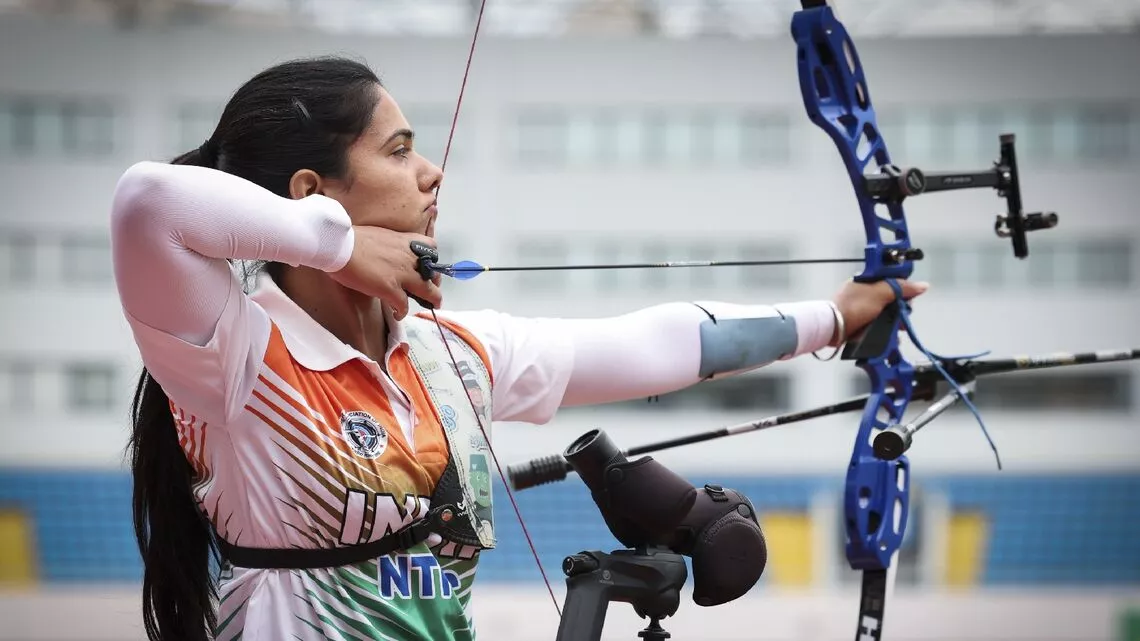
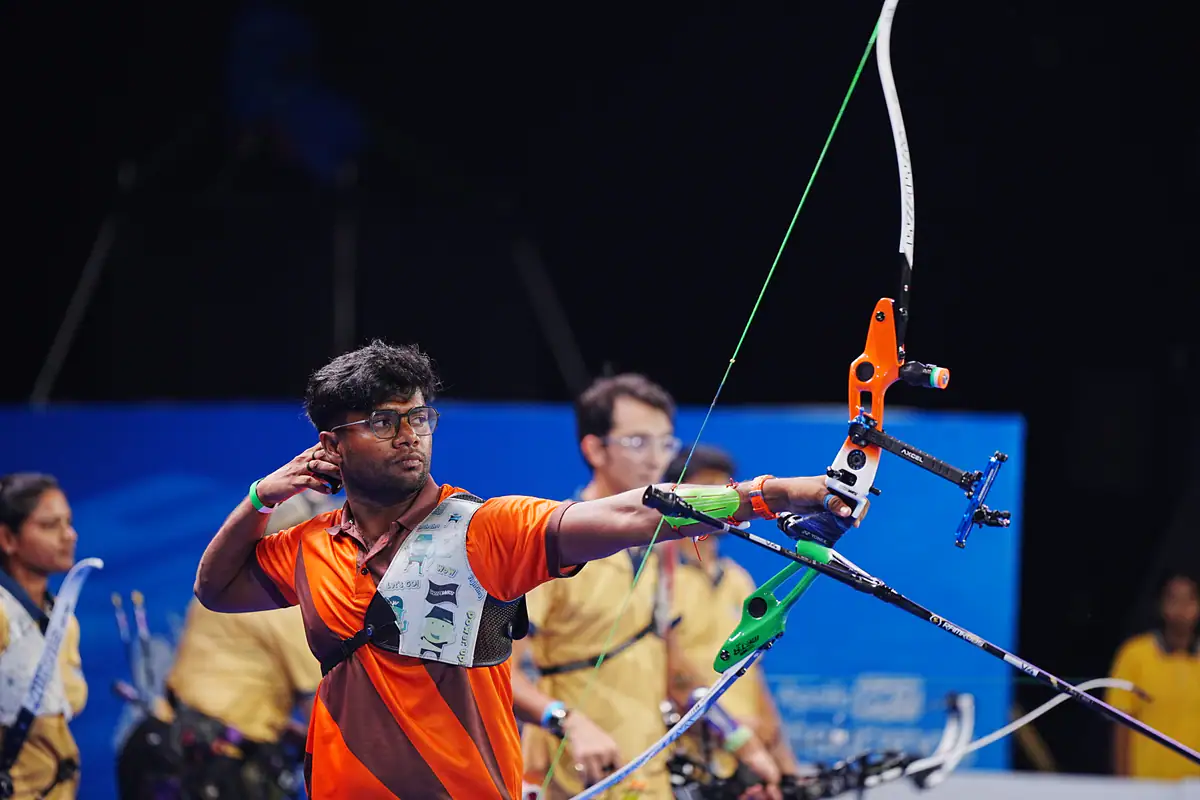
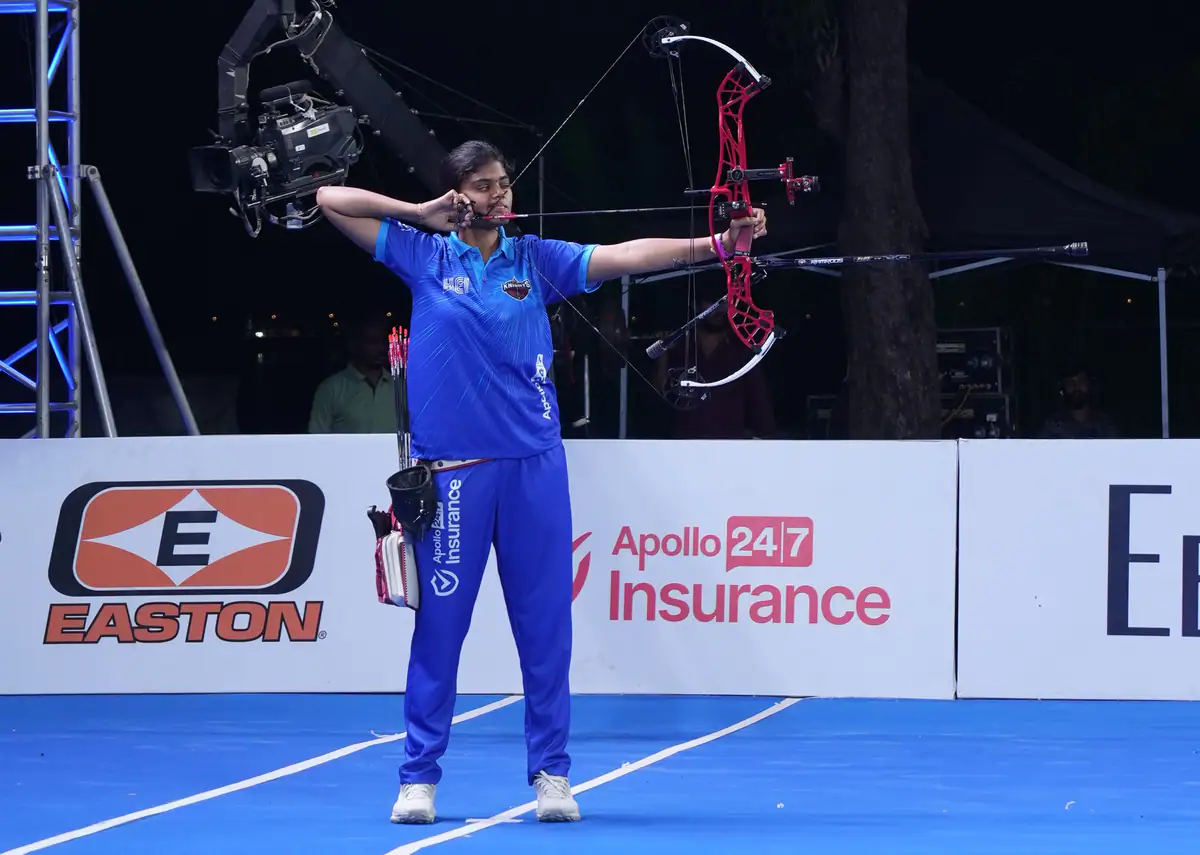
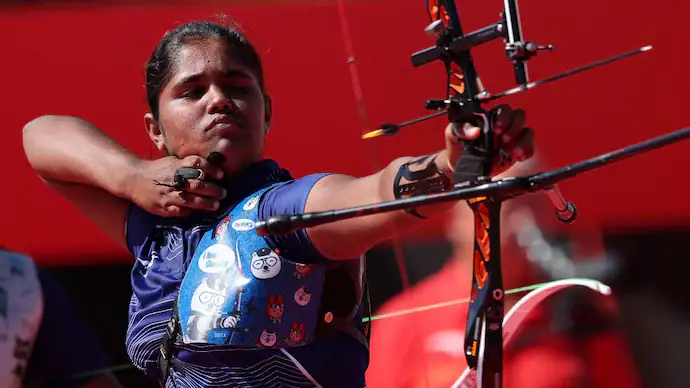
Simranjeet Kaur’s campaign at the Archery World Cup Stage 2 in Shanghai has evolved into one of the most compelling stories of the tournament, as the Indian recurve archer powered her way into the semifinals with a series of composed and high-quality performances.
Competing on one of the sport’s most demanding international stages, Simranjeet has not only delivered results but also showcased a level of consistency and tactical maturity that positions her among the serious contenders for the title. For an archer stepping onto a World Cup final stage for the first time, the expectation is often about exposure and experience. Simranjeet, however, has approached the competition with a very different mindset one that blends composure under pressure with the ability to raise her scoring ceiling in decisive moments.
Her run to the semifinals has been built on four successive victories, each highlighting a different aspect of her evolving competitive profile.
A Campaign Built on Control and Precision
Simranjeet began her knockout journey with a 6-4 win over Spain’s Paula Alvarez, a match that tested her early rhythm. The Indian archer showed control in the latter sets, managing her shot execution effectively to close out the contest. Against higher-level opposition, such control often becomes the difference between progression and elimination.
She followed it up with another 6-4 victory, this time against China’s Yu Qi. Competing against a home favourite is rarely straightforward, especially in a high-stakes World Cup environment. Yet, Simranjeet maintained her composure, managing the tempo of the match and ensuring that she stayed marginally ahead across sets without allowing her opponent to build momentum.
The round of 16 clash against Türkiye’s Gizem Ozkan proved to be her toughest test. The match went down to a 6-5 shoot-off, underlining the fine margins at this level. In such scenarios, execution under pressure becomes paramount. Simranjeet delivered when it mattered most, holding her nerve in the one-arrow shoot-off to edge past Ozkan and keep her campaign alive.
If the previous rounds highlighted resilience, the quarterfinal performance demonstrated dominance.
Facing Chinese Taipei’s Fong You Jhu, Simranjeet produced her most complete display of the tournament. She secured a commanding 6-0 victory, effectively controlling every phase of the match. Her scoring sequence 27, 28, and 29 across the ends reflected not just accuracy but also consistency across arrows, which is often the hallmark of elite-level recurve archery.
Notably, she doubled her opponent’s count of perfect 10s in the match, underlining the precision she brought to the contest. It was a performance that left little room for contest and firmly established her as a serious medal contender. What stands out in Simranjeet’s Shanghai campaign is not just the results, but the manner in which they have been achieved. Her shot grouping has remained tight, her recovery between ends has been efficient, and her decision-making under pressure has improved significantly.
At this level, matches are rarely won by large margins. Instead, they are decided by marginal gains a single point swing, a well-timed 10, or the ability to avoid a costly low arrow. Simranjeet has demonstrated a strong understanding of these dynamics. Her progression through the rounds also indicates an ability to adapt. Against Alvarez and Yu Qi, she managed the match tempo. Against Ozkan, she absorbed pressure. Against Fong, she dictated terms completely. This versatility is critical for success in international competitions, where each opponent presents a different challenge.
The semifinal presents Simranjeet with her toughest challenge yet a clash against Korea’s Kang Chaeyoung, one of the most accomplished recurve archers in the world and a former world champion. Korean archers have long dominated the recurve discipline, combining technical precision with unmatched consistency. Kang, in particular, is known for her ability to maintain high scores across all sets, leaving little room for opponents to capitalise on errors.
For Simranjeet, the contest will demand near-perfect execution. The margin for error against Kang is minimal, and maintaining scoring stability in the high 28-30 range will be crucial. However, her performance so far suggests that she is capable of rising to the occasion. Simranjeet’s run in Shanghai carries significance beyond individual success. Indian recurve archery has been searching for consistency at the highest level, particularly in individual events where converting potential into podium finishes has often proved challenging.
Her performance signals a positive shift. Training under experienced guidance and focusing on technical refinement, Simranjeet appears to be aligning her game with the demands of elite competition. With the Asian Games 2026 on the horizon, such performances become critical indicators of readiness. The ability to compete, and more importantly win, against a diverse field of international opponents is essential for building confidence ahead of major multi-sport events.
Regardless of the semifinal outcome, Simranjeet Kaur’s campaign at the Archery World Cup Stage 2 has already established itself as a breakthrough moment. It reflects not just individual growth but also the potential for Indian recurve archery to challenge established powerhouses more consistently. As she steps onto the line against Kang Chaeyoung, the stakes will rise, but so will the opportunity. For Simranjeet, this is no longer just about participation it is about contention.
And based on her performances so far in Shanghai, she has earned that right.
Comments (0)
to post comments, replies, and votes.
Loading comments…