The Sports Scientist Behind India's High-Performance Revolution: How Dr. Wayne Lombard Is Transforming Elite Indian Athletics

From hockey to boxing and athletics, Dr. Wayne Lombard is revolutionising Indian sport with cutting-edge sports science and data-driven athlete development.
For decades, India's sporting success was often attributed to talent, determination and resilience. While those qualities remain essential, modern international sport has increasingly become a battle won long before athletes step onto the field, track or ring.
Today, championships are decided through data, physiology, recovery science, biomechanics and workload management as much as technical ability.
Few individuals have played a more influential role in bringing this scientific revolution to Indian sport than Dr Wayne Lombard. An exercise scientist and strength and conditioning specialist, Lombard has quietly become one of the architects behind India's transition towards evidence-based high-performance sport, influencing athletes across hockey, athletics, boxing, wrestling, judo and several Olympic disciplines.
Unlike traditional conditioning coaches who rely primarily on experience, Lombard combines extensive academic expertise with practical elite-level coaching.
His educational background includes a PhD in Exercise Science, an MPhil in Biokinetics, honours and undergraduate degrees in Sports Science, alongside globally recognised certifications as a Certified Strength and Conditioning Specialist (CSCS) and Registered Strength and Conditioning Coach (RSCC). He also serves as an Honour Research Affiliate at the University of Cape Town, where his work focuses on translating sports science research into practical high-performance applications.
His research spans neuromuscular fatigue monitoring, long-term athlete development, recovery protocols, workload management and physiological profiling—areas that have become fundamental pillars of modern elite sport.
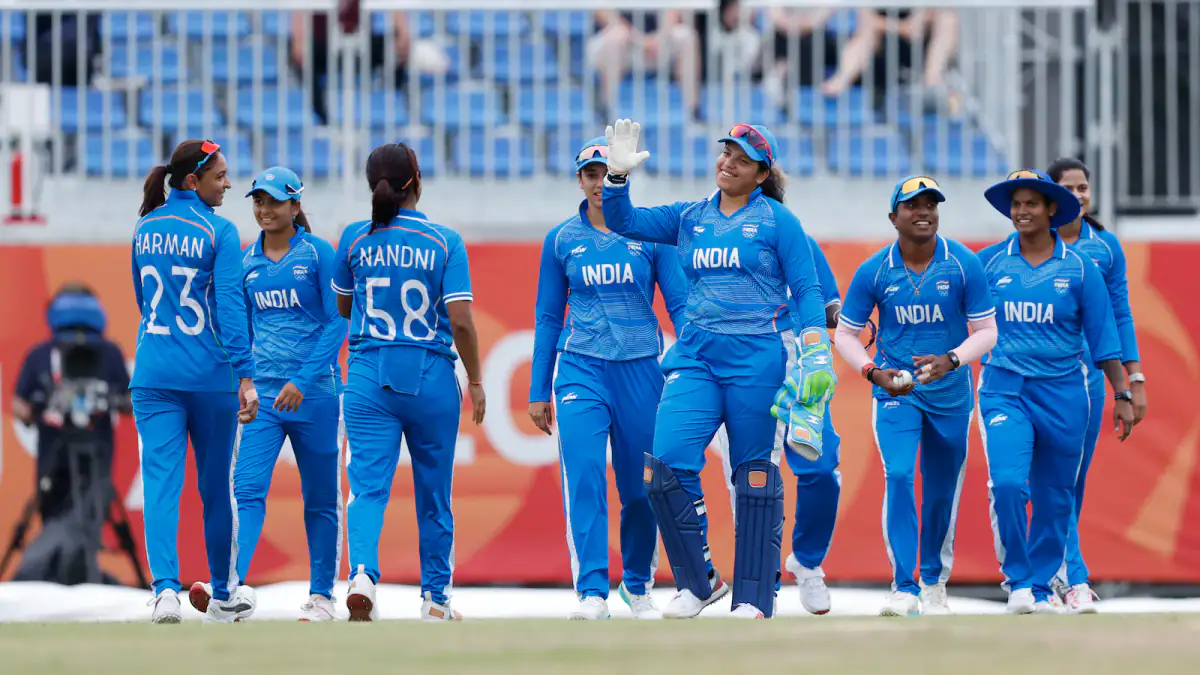
Perhaps Lombard's most visible contribution came after joining the Indian Senior Women's Hockey Team in 2017 as Scientific Advisor and Head of Athletic Performance. When he arrived, India possessed technically gifted players but lagged behind global powerhouses in physical preparation. Teams from Europe and Oceania consistently outperformed India in repeat sprint ability, strength, endurance and late-match intensity.
Rather than simply increasing training loads, Lombard introduced a completely new philosophy centred around measurement and individualisation. Every athlete underwent structured physical assessments. Aerobic capacity, sprint performance, body composition, recovery status and neuromuscular fatigue were monitored continuously rather than periodically.
The results were striking.
The squad's average Yo-Yo endurance scores improved dramatically over four years, while players became significantly more robust physically. Eventually, testing evolved towards more advanced Maximal Aerobic Speed (MAS) profiling using the 30-15 Intermittent Fitness Test, allowing training sessions to be prescribed individually rather than treating every player the same.
This shift represented a cultural transformation. Instead of running identical conditioning sessions, every player trained according to their physiological profile, maximising performance while reducing unnecessary fatigue.
One of Lombard's greatest strengths lies in his emphasis on monitoring rather than guessing. He integrated force-plate technology into daily routines to assess Countermovement Jump (CMJ) performance, enabling coaches to monitor an athlete's neuromuscular readiness before every training session.
Rather than asking athletes how they felt, objective measurements of force production, jump mechanics and power output identified fatigue levels before injuries occurred. These insights were combined with subjective readiness questionnaires, creating a comprehensive athlete monitoring system. Such practices are standard among Olympic champions and leading European football clubs but were still relatively uncommon in Indian high-performance sport before Lombard's arrival.
Injury prevention became another cornerstone of Lombard's philosophy. Weekly diagnostic testing identified muscular imbalances before they developed into serious injuries. Athletes displaying asymmetries were immediately placed on corrective strength programmes while their workloads were adjusted accordingly. This proactive model proved particularly valuable for senior players carrying long-term injury concerns.
Instead of reacting once injuries occurred, Lombard focused on preventing them altogether. That approach helped ensure greater athlete availability during crucial tournaments, including India's memorable campaign at the Tokyo Olympics.
Nutrition as a Competitive Advantage
Elite sport is no longer just about training harder. Recovery and nutrition often determine whether athletes can consistently perform at world-class levels. Lombard introduced systematic body composition monitoring alongside nutrition programmes that eliminated processed sugars and emphasised structured fuelling based on training intensity.
Heavy training days required higher carbohydrate intake, while recovery days prioritised protein and controlled energy intake. Blood markers were also monitored periodically to detect nutritional deficiencies before they affected performance. This scientific attention to detail became another important building block in India's evolving high-performance culture.
The COVID-19 pandemic created one of the biggest challenges elite sport has ever faced. With competitions cancelled and lockdowns restricting movement, maintaining international standards became exceptionally difficult. Lombard adapted quickly. Training programmes shifted indoors, athletes received individualised conditioning plans and structured return-to-play protocols were introduced for players recovering from COVID-19 infections.
Despite unprecedented disruption, India produced its finest-ever Olympic performance in women's hockey, narrowly missing out on a medal with a historic fourth-place finish in Tokyo. While numerous factors contributed to that success, the physical preparation programme played a significant role in ensuring the squad remained competitive throughout the tournament.
Following the Tokyo Olympic cycle, Lombard joined the Inspire Institute of Sport (IIS), one of India's leading high-performance centres. Here, his influence expanded beyond hockey. He helped implement strength and conditioning systems across boxing, wrestling, judo, taekwondo and athletics while integrating technologies such as velocity-based training and force-velocity profiling into athlete development programmes.
His work increasingly focused on building sustainable pathways rather than isolated success stories.
Young athletes entering elite environments were now exposed to world-class sports science from the earliest stages of their careers.
Recognising his impact, Indian sports federations once again turned to Lombard ahead of the next Olympic cycle. He rejoined the Indian Women's Hockey Team in 2026 as Scientific Advisor and Head of Sports Performance while simultaneously taking charge of strength and conditioning for the Boxing Federation of India. His responsibilities now extend towards preparing athletes for the 2026 Asian Championships, Commonwealth Games, Asian Games and ultimately the Los Angeles 2028 Olympic Games.
It reflects growing recognition that sports science is no longer an optional support service but a central pillar of international success.
India has entered a new era in Olympic sport. The country now regularly produces world champions, Olympic medallists and elite performers across multiple disciplines. Behind many of those achievements lies an increasingly sophisticated performance ecosystem driven by science rather than instinct alone.
Dr Wayne Lombard has been one of the key figures shaping that evolution. His work demonstrates that elite performance is not built solely through talent or hard work but through intelligent planning, objective measurement and continuous refinement.
As India prepares for the next Olympic cycle, Lombard's methods offer more than immediate results; they provide a blueprint for sustained excellence.
In an increasingly competitive global sporting landscape, that scientific edge could prove just as valuable as the talent of the athletes themselves.
Comments (0)
to post comments, replies, and votes.
Loading comments…