AFC U17 Asian Cup 2026: India U17 Fall to Uzbekistan as World Cup Hopes End in Jeddah
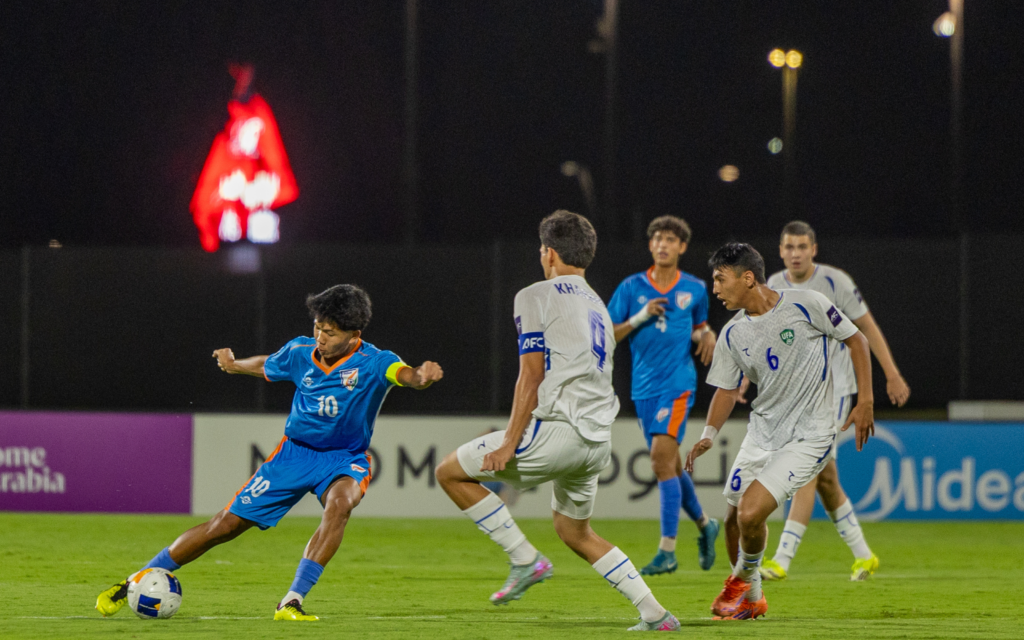
India’s U17 men’s team saw their FIFA U17 World Cup qualification hopes come to an end after a 0-3 defeat to defending champions Uzbekistan in their AFC U17 Asian Cup 2026 Group D clash
India’s U17 men’s team saw their FIFA U17 World Cup qualification hopes come to an end after a 0-3 defeat to defending champions Uzbekistan in their AFC U17 Asian Cup 2026 Group D clash at the King Abdullah Sports City Hall Stadium in Jeddah on Sunday.
In a match where India needed a positive result to stay in contention for a historic qualification, the Blue Colts produced phases of disciplined football but were ultimately undone by key moments at both ends of the pitch. India began the contest with a clear defensive structure, absorbing early pressure from a physically strong Uzbekistan side. The opening exchanges saw Uzbekistan probing for gaps, but India’s backline remained organised, with goalkeeper Rajrup Sarkar handling initial threats confidently.
The Blue Colts looked to stay compact, limiting space in central areas and forcing Uzbekistan to rely on wide play. For much of the first half, the approach worked effectively, with India restricting clear scoring opportunities and maintaining shape under sustained pressure.
India’s first attacking opportunity came in the 23rd minute when they earned a corner. However, the delivery failed to create any real danger, reflecting a recurring issue in converting set-piece situations into meaningful chances. The game’s turning point arrived in the 32nd minute. A defensive lapse led to Rajrup Sarkar rushing out of his line to intercept an Uzbek attack. In the process, he committed a foul inside the penalty area, and the referee pointed to the spot. Laziz Abduraimov stepped up and converted the penalty, giving Uzbekistan a 1-0 lead.
Despite the setback, India responded with composure. The defensive unit continued to hold its shape, and the team avoided conceding further before halftime. Apart from the penalty, India’s defensive display remained structured, and they entered the break trailing by a single goal. The second half began with India showing more attacking intent. The team pushed higher up the pitch and looked to create openings through quicker transitions. Their best chance came in the 56th minute from a free-kick situation.
Diamond Singh produced a powerful strike that beat the goalkeeper but struck the post. India had an opportunity to capitalise on the rebound, but the chance went begging. At that stage, the match could have shifted, but the inability to convert the opportunity proved costly.
Moments later, Uzbekistan extended their lead. In the 60th minute, they scored a second goal, turning the momentum decisively in their favour. The timing of the goal was significant, as it came shortly after India’s closest attempt at an equaliser. Trailing 2-0, India faced an uphill task. The team continued to push forward, but Uzbekistan’s defensive organisation and physical presence limited clear opportunities. As the match progressed, the Blue Colts found it difficult to break through in the final third.
Uzbekistan sealed the result late in the game with a third goal, effectively ending any hopes of a comeback. The goal also reflected the difference in finishing between the two sides, with Uzbekistan capitalising on their chances more efficiently. The final whistle confirmed a 3-0 defeat, bringing India’s campaign to an end. The result meant that Uzbekistan and Australia progressed from Group D, while India exited the tournament without scoring a goal.
From a tactical perspective, India showed phases of disciplined defending and structured play. For long periods, particularly in the first half, they were able to contain Uzbekistan’s attacking threats. However, key moments such as the penalty and missed chances proved decisive.
The match also highlighted areas for improvement. Converting opportunities in the final third remains a challenge, as seen in the missed rebound following Diamond Singh’s free-kick. At this level, such moments often determine outcomes. Defensively, while the overall structure was effective, individual errors carried significant consequences. The penalty incident shifted the game’s balance, forcing India to chase the match against a strong opponent.
Despite the result, the campaign provided valuable exposure for the young squad. Competing against top Asian teams offers experience that is critical for development at this level. The ability to maintain defensive organisation and create moments against stronger opposition are positives to build upon.
For head coach Bibiano Fernandes and his team, the focus will now shift towards long-term development. The experience gained in this tournament will be important as the players progress through the national pathway. The loss in Jeddah marks the end of India’s immediate World Cup ambitions, but it also underlines the gap that needs to be bridged at the continental level. Improving consistency in both defence and attack will be key moving forward.
In a match defined by fine margins, India stayed competitive for significant phases but were ultimately outperformed in decisive moments. The 0-3 scoreline reflects the outcome, but also the learning curve that lies ahead for this group.
Comments (0)
to post comments, replies, and votes.
Loading comments…