Asian Games 2026: Can Roshibina Devi Create History Against China?
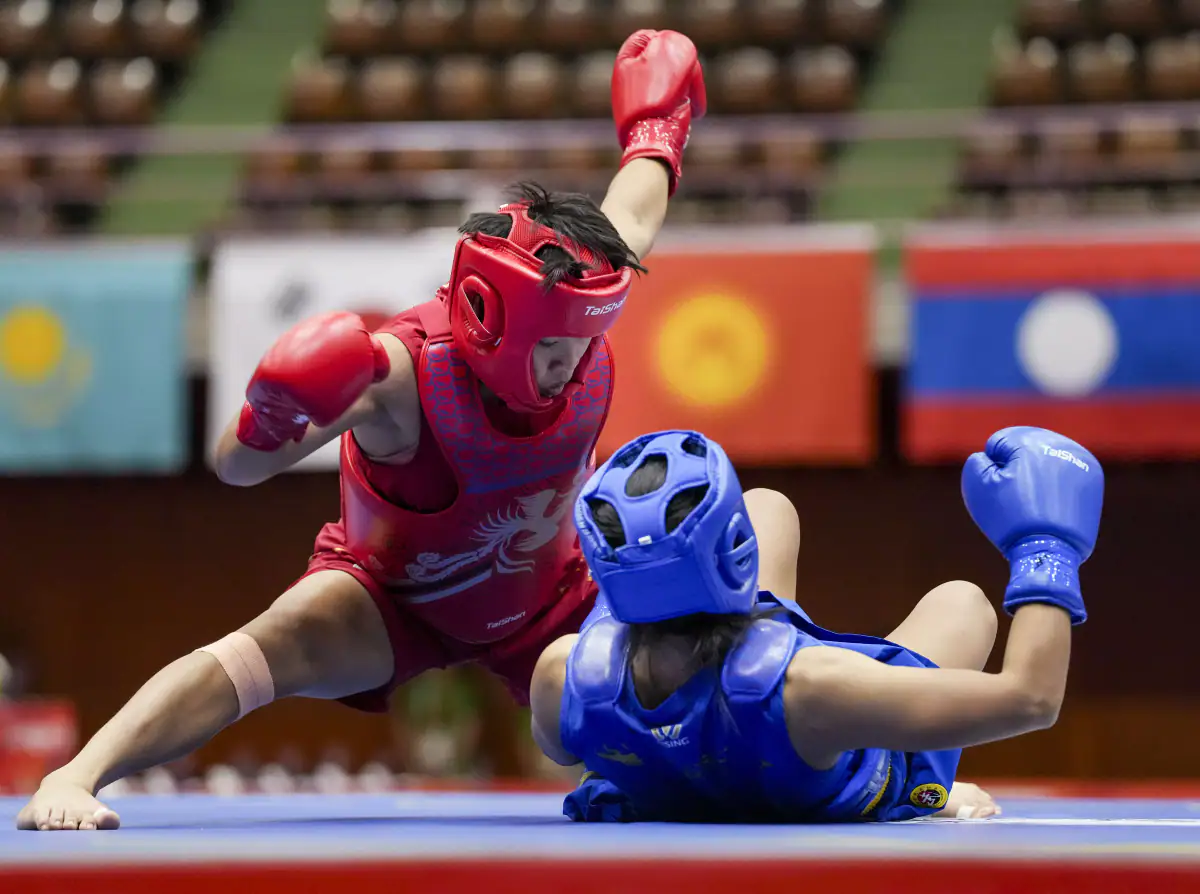
Roshibina Devi faces China’s Zhang Xiaoyu in the Asian Games 2026 women’s 60kg Sanda final. Here are the key tactical factors that could shape India’s historic gold-medal opportunity.
For Roshibina Devi, the opportunity is unlike anything Indian wushu has seen before.
The Indian star is one fight away from becoming the first Indian wushu athlete to win an Asian Games gold medal. Standing between her and that piece of history is China’s Zhang Xiaoyu in the women’s 60kg Sanda final at the Aichi-Nagoya Asian Games. The stakes could hardly be higher.
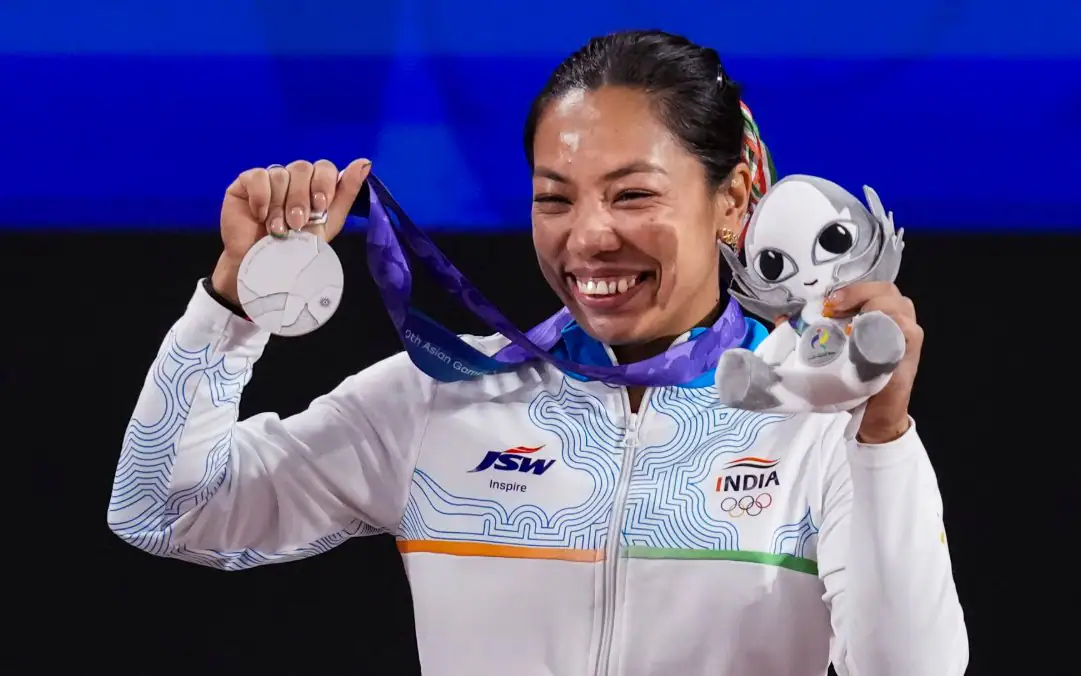
Roshibina has already guaranteed her third consecutive Asian Games medal after winning bronze in 2018 and silver in 2023. She has now reached the final for the second straight Asian Games, becoming the first Indian wushu athlete to achieve that feat.
But this final presents a completely different challenge. Zhang is an emerging Chinese fighter who won the 2026 Chinese National Sanda Championship and has powered through her Asian Games draw without dropping a bout. Roshibina, meanwhile, brings years of international experience, tactical maturity and familiarity with the pressure of major finals.
The question is not simply who has the stronger résumé. It is about which fighter can impose her preferred style on the leitai.
Roshibina enters the final with an extensive international pedigree. She won bronze at Jakarta 2018, silver at Hangzhou 2023 and silver at the 2023 World Wushu Championships. She has also won gold at the 2019 South Asian Games and was named the IWUF Female Sanda Athlete of the Year in 2023.
More importantly, she has already experienced the unique pressure of an Asian Games gold-medal bout. In 2023, Roshibina reached the final against China’s Wu Xiaowei but lost the contest. That experience could prove valuable now, particularly when dealing with the intensity and tactical demands of another championship bout against a Chinese opponent.
Her route to this year's final has also been controlled. She defeated Bangladesh’s Most Shika Khatun by point difference, beat Macau’s Chu Man Sin by a unanimous decision and then defeated Indonesia’s Thania Kusumaningtyas 2-0 in the semifinal.
Zhang Brings Pressure and Wrestling
Zhang Xiaoyu represents a very different proposition. The Chinese fighter has emerged through the Henan Tagou Martial Arts School and the Henan provincial Sanda system. She became the 2026 Chinese National Sanda Champion, defeating established opposition on her way to qualification for the Asian Games.
Her performances in Aichi-Nagoya have been particularly emphatic. She defeated Iran’s Diana Rahimi 2-0 in the Round of 16, stopped Chinese Taipei’s Lin Tsai-mei by point difference in the quarterfinal and then produced another point-difference victory against Vietnam’s Nguyen Thi Thu Thuy in the semifinal.
That last victory is particularly noteworthy because Nguyen is a world champion. Zhang therefore enters the final having demonstrated that she can deal with experienced international opponents and maintain an aggressive tempo.
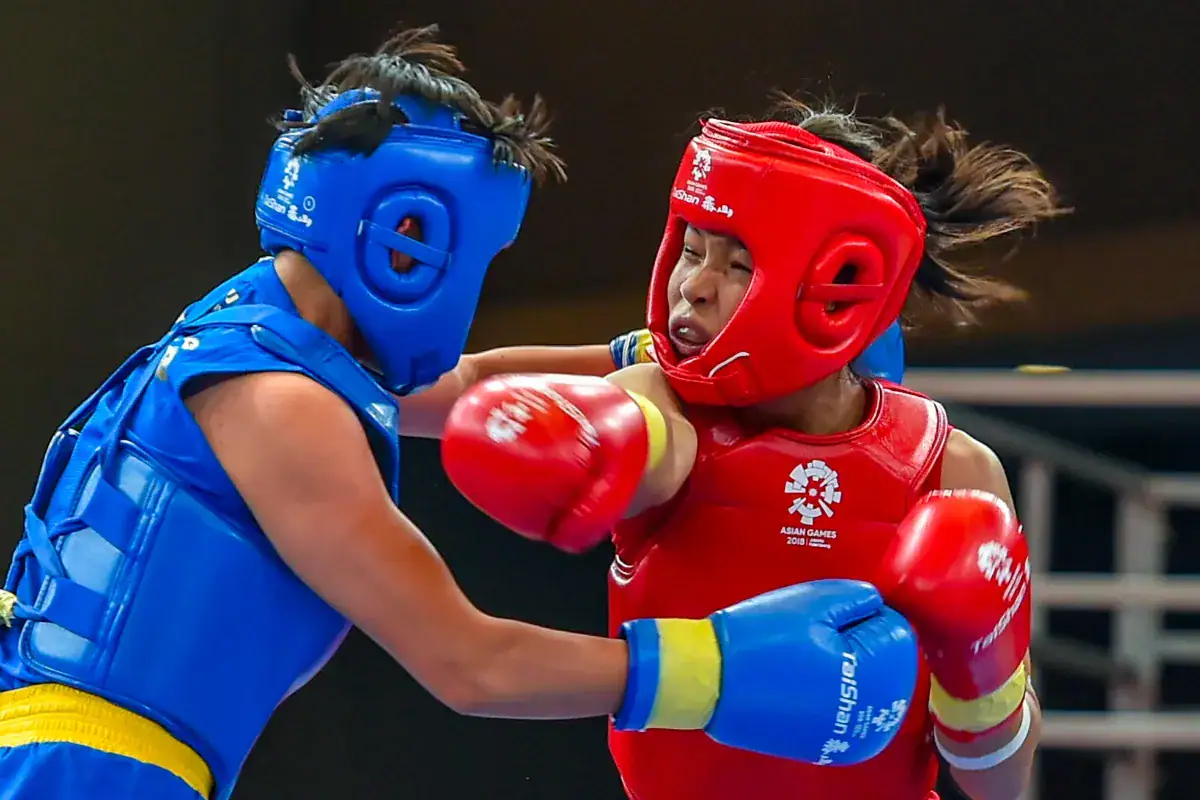
The tactical contrast between the two fighters could define the contest. Roshibina's strength lies in distance management, lateral movement and counter-striking. She is particularly effective when she can draw opponents forward and punish their attacks with precise counters and leg sweeps.
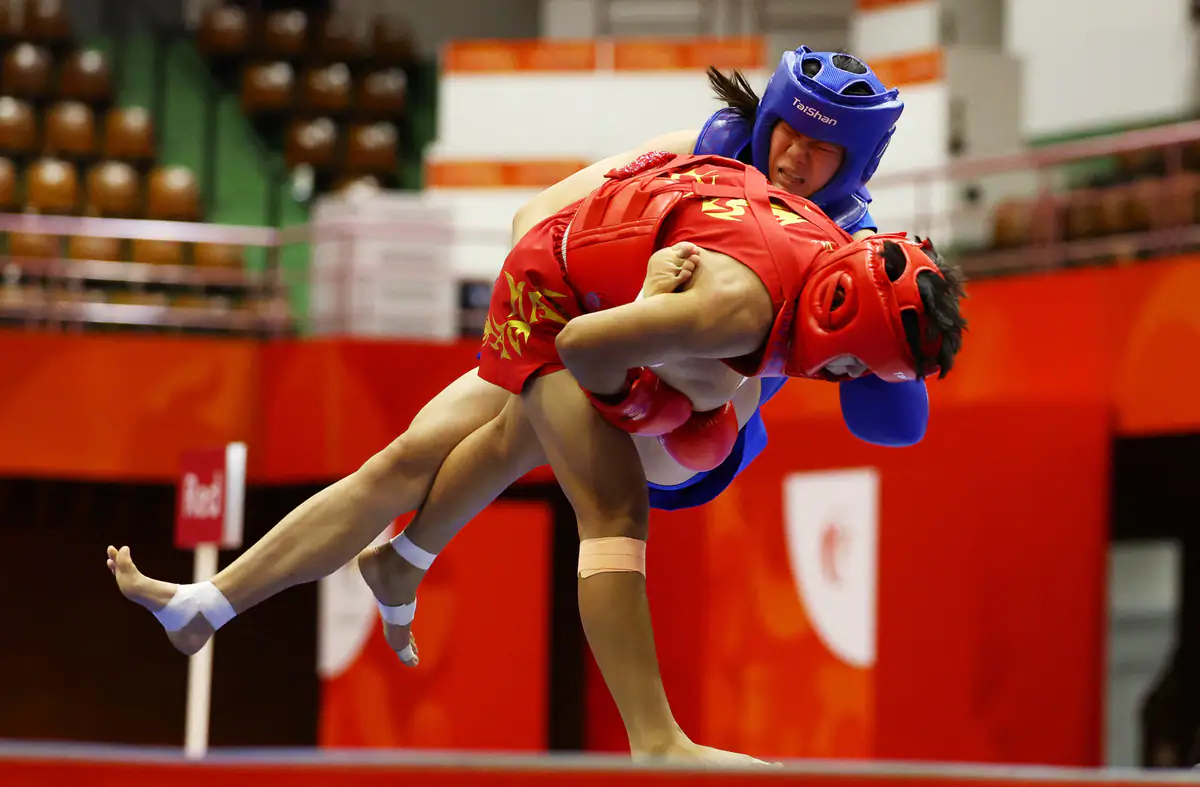
Zhang, on the other hand, prefers a higher-pressure approach. Her style combines punches and kicks with rapid entries into wrestling and throws. Her ability to transition quickly from striking to grappling gives her multiple ways to score. That creates an important tactical question for Roshibina: can she prevent Zhang from turning the fight into a close-range wrestling contest?
The elevated Sanda platform, or leitai, makes positioning particularly important. A clean takedown can produce two points, while forcing an opponent off the platform can also generate significant scoring opportunities. Zhang's forward pressure could therefore become dangerous if Roshibina is repeatedly pushed toward the edge.
The Indian fighter's ability to maintain centre-platform control will be crucial. Rather than retreating in a straight line, she will need to use lateral movement and angles to avoid being trapped along the perimeter. This is where Roshibina's experience and counter-striking style could become important.
The other major battleground will be the clinch. Zhang's repertoire includes rapid hip throws and wrestling entries immediately after establishing upper-body contact. Roshibina will need to prevent Zhang from securing the grips required to execute those techniques.
The source analysis identifies denying double underhooks and inside collar ties as an important defensive priority for Roshibina. If Zhang gets comfortable in those positions, she can turn short clinch exchanges into valuable scoring opportunities. At the same time, Zhang's aggressive kicking game creates opportunities for Roshibina.
The Indian's catch-and-sweep technique can turn an incoming kick into a scoring opportunity. If she can catch Zhang's kicking leg and execute the sweep cleanly, she can counter the Chinese fighter's aggression rather than simply absorb it.
The First Round Could Set the Tone
The opening exchanges may therefore be especially important. Roshibina will want to establish her rhythm early, use her side kicks and straight punches to control distance and prevent Zhang from dictating the pace. If Zhang is allowed to repeatedly close the distance, initiate clinches and push Roshibina toward the edge, the contest could begin to favour the Chinese fighter's preferred style.
But if Roshibina maintains the centre, forces Zhang to overextend and consistently lands counters, the Indian can make her opponent work for every exchange. The source analysis identifies first-round tempo, grappling disengagement, spatial awareness and composure as four decisive factors in the final.
There is no need to diminish the challenge facing Roshibina. Zhang has been impressive throughout the tournament and has already defeated elite opposition. China also has a formidable record in wushu. But Roshibina brings something equally significant: experience at this precise stage, a proven counter-striking game and the knowledge of what it takes to reach an Asian Games final.
If she can keep the fight at her preferred distance, defend against Zhang's clinch entries and turn the Chinese fighter's aggression into counter-scoring opportunities, the tactical pathway to victory is clear. The significance of the contest goes beyond one medal.
A victory would make Roshibina Devi the first Indian wushu gold medallist in Asian Games history. Bronze in 2018. Silver in 2023. Now a final in 2026.
One fight remains between Roshibina and history.
Comments (0)
to post comments, replies, and votes.
Loading comments…