Bengal T20 League Boosting Women’s Cricket Growth: Jhulan Goswami
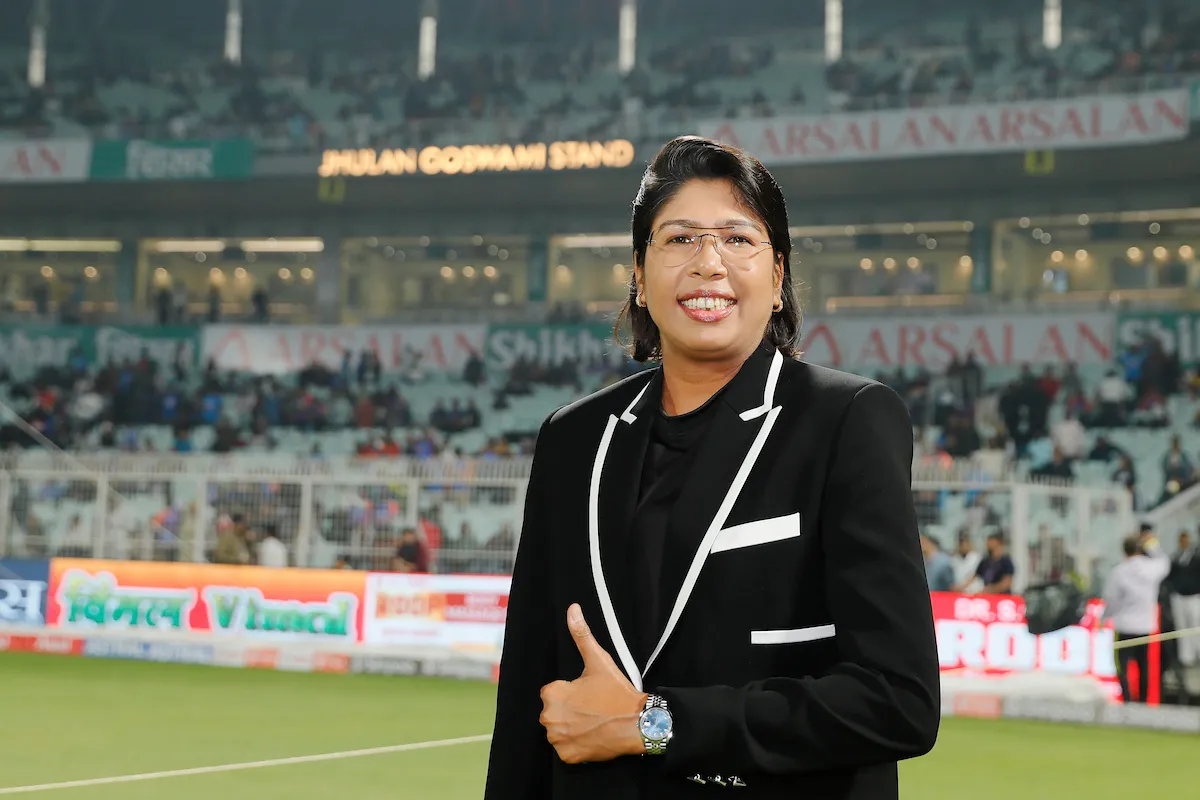
Jhulan Goswami says Bengal T20 League is transforming women’s cricket with over 500 players now involved, offering exposure and a pathway to elite levels.
The Bengal T20 League is rapidly emerging as a transformative force in Indian domestic cricket, particularly in the women’s game.
Former India pacer Jhulan Goswami believes the tournament is playing a crucial role in reshaping the landscape of women’s cricket in Bengal, offering young players a structured platform to grow and compete.
Speaking on the sidelines of the recent player auction, Goswami who currently serves as the mentor of women’s cricket at the Cricket Association of Bengal highlighted the scale and impact of the initiative, calling it a “huge platform” for aspiring cricketers.
The latest edition of the Bengal T20 League marked a significant milestone with its Season 3 auction, where franchises built squads from a pool of over 1000 cricketers. The scale of participation reflects the growing interest in domestic T20 structures, especially within women’s cricket.
In the auction, Shahbaz Ahmed emerged as the highest-valued men’s player at ₹12.20 lakh, while Mita Paul topped the women’s category with a ₹3 lakh deal figures that underline increasing financial recognition in the women’s game.
For Goswami, however, the most important metric is participation.
“When I used to play for Bengal, hardly 60–70 girls used to play. Now more than 500 girls are enlisted in the Bengal T20 League,” she noted.
This sharp rise is indicative of a broader shift. What was once a limited ecosystem is now expanding into a structured pipeline, driven by investment, visibility, and opportunity.
One of the defining aspects of the Bengal T20 League is its ability to bridge the gap between grassroots cricket and the professional stage.
According to Goswami, the exposure players receive in such tournaments is invaluable. Beyond skill development, the league introduces young cricketers to the realities of modern-day competitive sport.
“There will be pressure, nervousness, social media engagement, and cameras around them. Many of them have never experienced these things before,” she explained.
This environment mirrors elite-level cricket, where handling external factors is as important as on-field performance. The league, therefore, functions not just as a competition but as a preparatory ecosystem.
For young players, learning to adapt to these conditions early can significantly ease the transition to higher levels, including national camps and franchise leagues. Goswami also emphasized the importance of mental attributes in shaping successful cricketers. In an era where margins are minimal, decision-making under pressure has become a defining factor.
“The most important thing in cricket is decision-making. You have to have a clear mind and clear vision in crunch situations,” she said. Her approach as a mentor reflects this philosophy. Rather than focusing solely on technique, she prioritizes clarity of thought and intent. “As a mentor, I always prefer players who are very clear about their plans and are able to make decisions under pressure. Intent is very important.”
This aligns with the evolving demands of T20 cricket, where quick thinking, adaptability, and tactical awareness often determine outcomes. Another critical factor driving growth in Bengal’s women’s cricket is the visibility of role models.
Players like Richa Ghosh, Titas Sadhu, and Saika Ishaque have not only achieved success at higher levels but have also created a tangible pathway for younger players.
“When young girls see their role models training and playing in front of them, they start believing they too can represent Bengal and India one day,” Goswami said.
This visibility plays a crucial role in sustaining participation. It transforms ambition into belief an essential component in long-term athlete development. The Bengal T20 League is increasingly being seen as a stepping stone to bigger opportunities, including selection pathways linked to national teams and franchise-based competitions.
With growing interest from scouts and connections to the Women’s Premier League ecosystem, performances in the league now carry tangible career implications.
For Bengal cricket, this represents a structural shift from isolated development programs to a more integrated system where talent identification, exposure, and progression are aligned.
From an Indian perspective, the Bengal T20 League offers a blueprint for how domestic structures can accelerate the growth of women’s cricket. The combination of investment, participation, competitive exposure, and mentorship has created a self-sustaining ecosystem that continues to expand. For Jhulan Goswami, who has witnessed the journey firsthand from limited participation to large-scale engagement the progress is both significant and promising.
The challenge now is to sustain this momentum and replicate similar models across other states, ensuring that the growth of women’s cricket in India is both widespread and consistent.
Comments (0)
to post comments, replies, and votes.
Loading comments…