Beyond Coaching Hours: How Parents Can Build a Balanced Sports and Skill Routine for Children
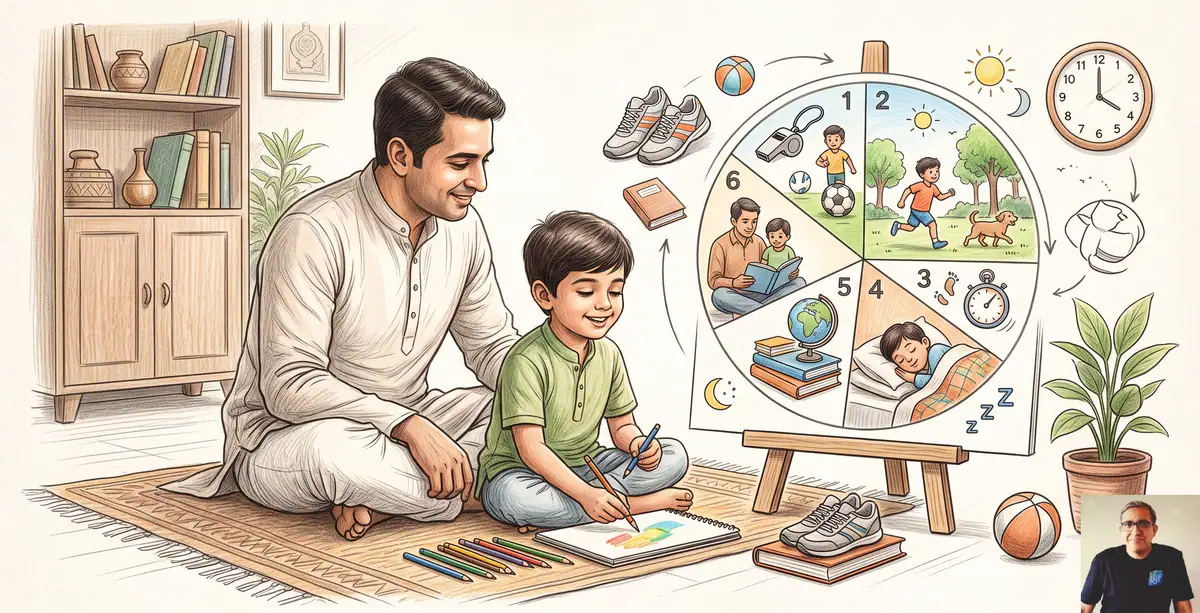
Discover how to build a balanced sports routine for children beyond coaching. Learn the role of free play, rest, and habits in long-term skill building.
By Sumit Kapoor, Founder, LyfSkills
A child may attend football coaching twice a week and still have very little movement in the rest of the week. Another child may be enrolled in swimming, skating and martial arts, yet feel too tired to enjoy any of them.
The number of classes is not the best measure of a healthy sports routine. What matters is the week around those classes: sleep, school, free play, practice, recovery and whether the child still wants to return.
Coaching provides instruction and structure. The habits built between sessions decide whether sport becomes a lasting part of the child’s life or another appointment managed by the parent.
Choose a primary activity for the season.
Children should explore, but exploration does not require three serious commitments at the same time. For a school term or a few months, choose one primary sport. Let the child attend consistently enough to understand the coach, the group and the rhythm of practice.
Other interests can remain lighter: cycling with family, an occasional swim, a game in the park or a short holiday camp. This gives the child variety without creating three sets of attendance rules, equipment and performance expectations.
At the end of the season, review it together. Did the child enjoy the sessions? Did they feel safe with the coach? Was the level too easy, too hard or about right? Would they choose it again?
Protect unstructured play.
Coaching teaches technique. Free play teaches children to make decisions without waiting for an adult.
A casual game changes constantly. Teams are uneven, rules get negotiated and children solve small disputes themselves. They decide when to pass, when to take a risk and how to include a younger player. Those experiences build judgment and confidence in a way that drills cannot copy.
Free play also removes the pressure to improve every minute. A child can experiment, be silly and stop when tired. Keep at least a few pockets in the week where movement has no scorecard.
Make home practice short enough to repeat.
Parents sometimes imagine practice as another full coaching session. It rarely needs to be.
Ten or fifteen minutes can be enough for basic footwork, catching, balance, stretching or ball control. The aim is to repeat one or two skills correctly, not to exhaust the child. A short routine is easier to fit before dinner or after homework and far more likely to survive a busy school week.
Ask the coach what is safe to practise at home. Then agree on a realistic frequency with the child. If the routine needs daily arguments, it is not working.
Build the week around energy, not empty calendar slots.
A timetable can show two free hours and still hide a tired child.
Look at school travel, homework, sleep and the physical demand of the sport. A late evening class before an early school morning may be a poor fit even when the academy is excellent. Younger children, in particular, may need food and quiet time before they can participate well.
Keep one recovery day after an intense session or match. Watch for persistent soreness, poor sleep, irritability, falling school concentration or repeated reluctance to attend. One difficult day is normal. A pattern deserves attention.
Add complementary skills with care.
A second activity can support the primary sport when it serves a clear purpose and does not become another performance track. Dance may improve rhythm and body awareness. Yoga can help with mobility and controlled breathing. Swimming can build general endurance. Music, theatre and art offer a different kind of concentration and expression.
The question is not whether two activities look good together. Ask whether the child has the time and energy to enjoy both.
When comparing academies, parents should check the coach’s approach, group size, safety practices, travel time and whether a trial class is available. Families looking for local sports and complementary activity options can explore Lyfskills Discover and then speak directly with the provider about the child’s age, current level and goals.
Measure progress beyond medals.
Competition can be motivating, but medals are a narrow record of development. A child may be making real progress even before results change.
Look for punctuality, willingness to practise, better listening, recovery after a mistake and comfort playing with others. Notice whether the child can explain what they are working on. Ask what felt difficult and what felt better than last week.
Parents can support this by keeping post-session conversations simple. “What did you enjoy?” and “What do you want to try again?” usually reveal more than an immediate analysis of every error.
Review before Renewing
Long packages can make families continue after an activity has stopped fitting the child. Before renewing, speak with the coach and the child separately. Compare what each sees.
There may be a reason to persist through a temporary dip. There may also be a good reason to pause, change batches or try something else. Stopping one activity is not failure if the child has learnt what suits them.
A balanced routine is not the busiest one. It is the one a child can sustain alongside school, sleep, family and ordinary play. Coaching gives direction. The rest of the week gives that direction a chance to become a habit.
About the Author
Sumit Kapoor is the founder of Lyfskills a platform that helps families discover and book children’s classes and skill-building activities.
Comments (0)
to post comments, replies, and votes.
Loading comments…