China Smash 2026: Manika Batra Defeats Bruna Takahashi, Sets Up Blockbuster Clash with Wang Manyu

Manika Batra stunned World No. 27 Bruna Takahashi 3-2 at China Smash 2026 after saving two match points. She now faces World No. 1 Wang Manyu.
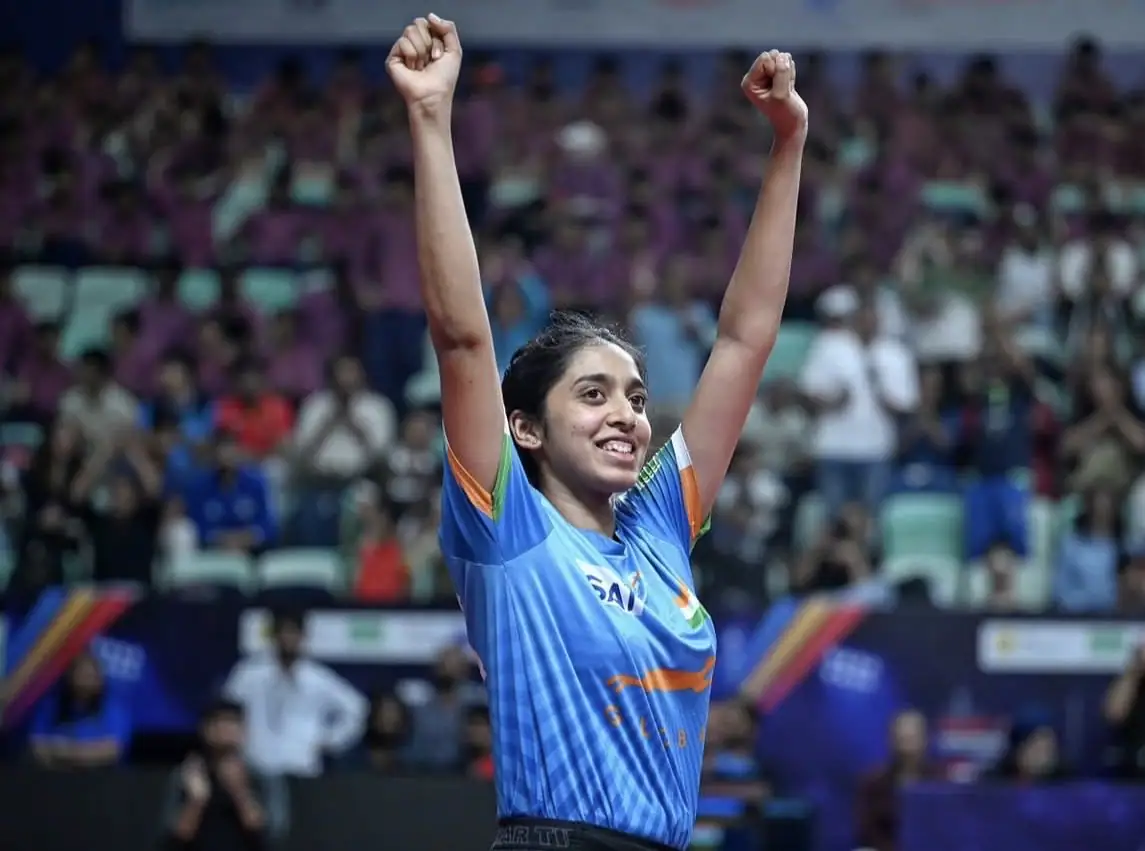
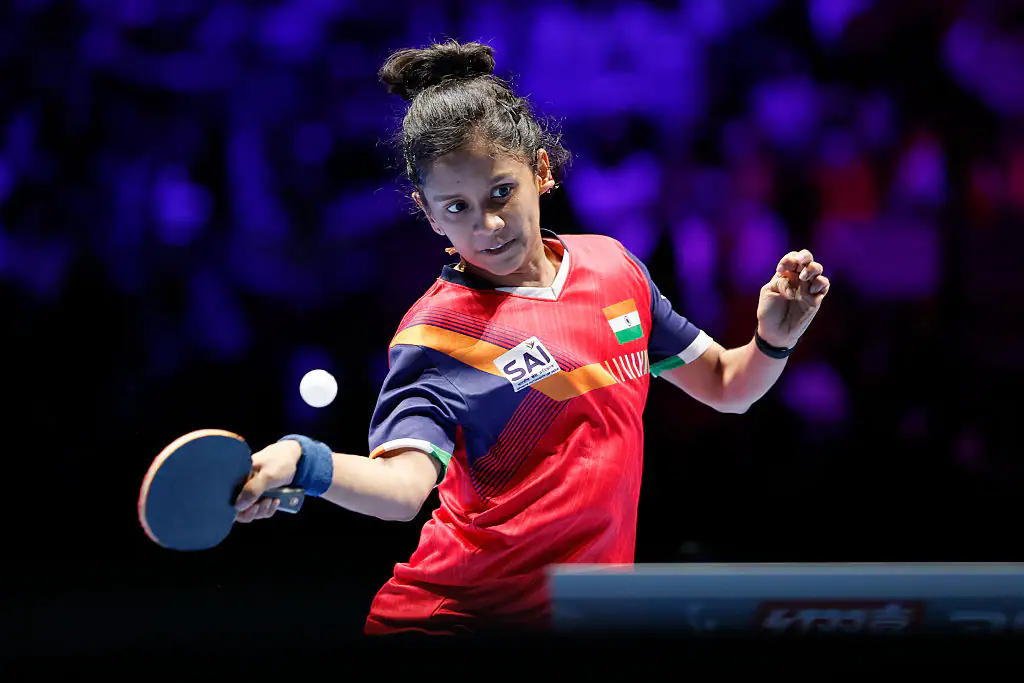
Manika Batra produced one of the biggest early results for India at the China Smash 2026, fighting back from a match point deficit in the deciding game to defeat Brazil’s Bruna Takahashi 3-2 and advance to the Round of 32.
The Indian, ranked World No. 53, overcame Takahashi, ranked World No. 27, in a 42-minute battle at Beijing’s Shougang Park. The official China Smash match centre confirmed the 8-11, 11-8, 11-9, 5-11, 12-10 scoreline.
The victory was particularly significant because Batra entered the main draw as a wild card and had been handed a difficult opening-round opponent. Instead of being overawed by the ranking gap, she stayed in the contest through four fluctuating games before producing her best table tennis when the match was on the line.
Now comes a substantially bigger challenge.
Batra's next opponent will be World No. 1 Wang Manyu of China, the reigning Aichi-Nagoya Asian Games women's singles champion. Wang defeated American Amy Wang in straight games in her opening-round match and moved into the last 32, setting up a high-profile meeting with Batra.
The opening game went Takahashi's way as the Brazilian took an 11-8 lead. Batra, however, immediately changed the momentum. She responded with an 11-8 victory in the second game before taking the third 11-9 to move within one game of the Round of 32.
Takahashi refused to let the match slip away. The Brazilian controlled the fourth game 11-5, forcing a deciding fifth game and putting Batra under pressure once again.
The final game became the defining sequence of the contest. Batra found herself trailing 8-10, leaving Takahashi with two match points. At that stage, the match appeared to be tilting back towards the higher-ranked Brazilian.
Instead, Batra produced four consecutive points. She saved both match points, levelled the game at 10-10 and then continued the sequence to close out the deciding game 12-10. The comeback turned a match that had been slipping away into one of Batra's most significant wins at the tournament.
The numbers underline how narrow the contest was. Batra won the match despite losing the opening game and being forced into a fifth-game shootout. Takahashi won the fourth game 11-5, but Batra recovered immediately in the decider. The crucial statistic was not simply the final score but Batra's ability to remain composed when the match reached its most pressurised stage.
At 8-10, there was no margin for error. One loose ball would have ended her China Smash singles campaign. Instead, she extended the rally, saved the two match points and converted her own opportunity at 11-10 before finishing at 12-10.
That ability to survive the closing stages could be more important than the ranking difference when Batra now faces Wang.
Wang Manyu Represents a Completely Different Test
The reward for Batra's comeback is perhaps the toughest possible opponent. Wang Manyu is currently the World No. 1 and arrived at China Smash after winning the women's singles gold medal at the Aichi-Nagoya Asian Games. She defeated compatriot Sun Yingsha 4-2 in the final on September 27, securing her second Asian Games women's singles title after her 2018 Jakarta triumph.
Wang's Asian Games campaign demonstrated why she sits at the top of the rankings. She defeated South Korea's Shin Yubin 4-0 in the quarterfinals, Japan's Miwa Harimoto 4-1 in the semifinals and then overcame Sun in the final. That makes Batra's task substantially different from the one she faced against Takahashi.
Against Takahashi, Batra had a realistic opportunity to control periods of the match and build momentum. Against Wang, those windows are likely to be considerably smaller.
The Indian will need to disrupt Wang's rhythm rather than simply try to match her point-for-point. Batra's ability to vary placement, change the tempo and force Wang away from comfortable attacking positions could determine whether the match becomes competitive.
The pressure will be overwhelmingly on Wang. For Batra, reaching the Round of 32 after entering as a wild card has already produced a significant result. The next match offers an opportunity to test herself against the best-ranked player in the women's singles field.
The challenge will be maintaining the same competitive discipline that produced the Takahashi comeback. Against the Brazilian, Batra recovered after losing the first game, moved ahead after three and then responded to another setback in the fourth. Most importantly, she did not panic when she trailed 8-10 in the decider.
That resilience will be essential against Wang. The Chinese star will be expected to win, and probably comfortably. But Batra has already demonstrated at China Smash that rankings do not determine what happens once the ball is in play.
India's other singles players did not enjoy the same fortunes in the opening round. Sreeja Akula lost 0-3 to a lower-ranked opponent, while Manush Shah went down 2-3. Batra therefore remains India's principal singles representative in the women's draw as the tournament moves into the Round of 32.
The next challenge is considerably bigger than Takahashi.
But after escaping from 8-10 down against the World No. 27, Batra now has the chance to take on the World No. 1. Against Wang Manyu, the question is no longer whether Batra can pull off an upset.
It is whether she can make the world's best player uncomfortable.
Comments (0)
to post comments, replies, and votes.
Loading comments…