CWG Qualification for Indian Athletics at Federation Cup 2026
The 2026 Federation Cup in Ranchi may ultimately be remembered as one of the most significant domestic athletics competitions in Indian history.
Held as the primary selection event for the 2026 Commonwealth Games in Glasgow, the competition produced a remarkable series of elite performances as multiple athletes breached the extremely demanding qualification standards set by the Athletics Federation of India.
In total, 14 athletes successfully crossed the qualification marks across men’s and women’s events, highlighting both the growing depth in Indian athletics and the increasingly high-performance environment developing domestically. What made these achievements even more impressive was the strictness of the qualification criteria themselves. AFI intentionally established standards that, in several events, exceeded existing national records to manage the limited Commonwealth Games quota.
Among the biggest stories of the championships was Tejaswin Shankar.
The Indian all-rounder shattered his own national record in the decathlon, becoming the first Indian ever to cross the 8000-point barrier with a massive score of 8057 points. His performance comfortably surpassed the CWG standard of 7787 points and further established him among Asia’s elite combined-event athletes. Tejaswin’s performance symbolised the broader rise in Indian athletics technically refined, physically mature and increasingly capable of competing at global standards.
Indian Sprinting Enters New Era
The men’s 100m sprint emerged as arguably the defining event of the championships. Gurindervir Singh produced a sensational national record of 10.09 seconds, becoming the first Indian ever to break the sub-10.10 barrier. Meanwhile, Animesh Kujur also breached the qualification mark after clocking 10.15 seconds during the semifinals.
The dramatic back-and-forth between the two athletes across the competition represented a landmark moment for Indian sprinting. For years, India struggled to produce sub-10.20 runners consistently. Now, two athletes have already entered territory once considered impossible domestically. Interestingly, while Animesh succeeded in the 100m, he narrowly missed qualification in his preferred 200m event after winning gold in 20.64 seconds just 0.03 outside the standard.
Indian field events also enjoyed one of their strongest Federation Cups ever. Dev Kumar Meena and Kuldeep Kumar both cleared 5.45m in the men’s pole vault, jointly setting a new national record while comfortably surpassing the CWG standard of 5.25m. The event highlighted the rapid rise of Indian pole vaulting, an event that had historically lacked depth and infrastructure.
In the men’s high jump, Sarvesh Kushare continued his excellent run by clearing 2.28m, while Aadarsh Ram also breached the qualification standard with 2.22m. Sarvesh’s consistency over the last two seasons now firmly places him among India’s most reliable international-level jumpers.
India’s horizontal jumpers also delivered. Sreeshankar crossed the qualification mark in men’s long jump with 8.08m, continuing his impressive sequence of domestic performances beyond the 8m barrier. Meanwhile, national record holder Praveen Chithravel breached the CWG standard with a winning jump of 17.08m in the triple jump.
Praveen’s performance was particularly significant because it marked his first 17m jump of the season and reinforced his status as India’s strongest medal prospect in the event for Glasgow 2026.
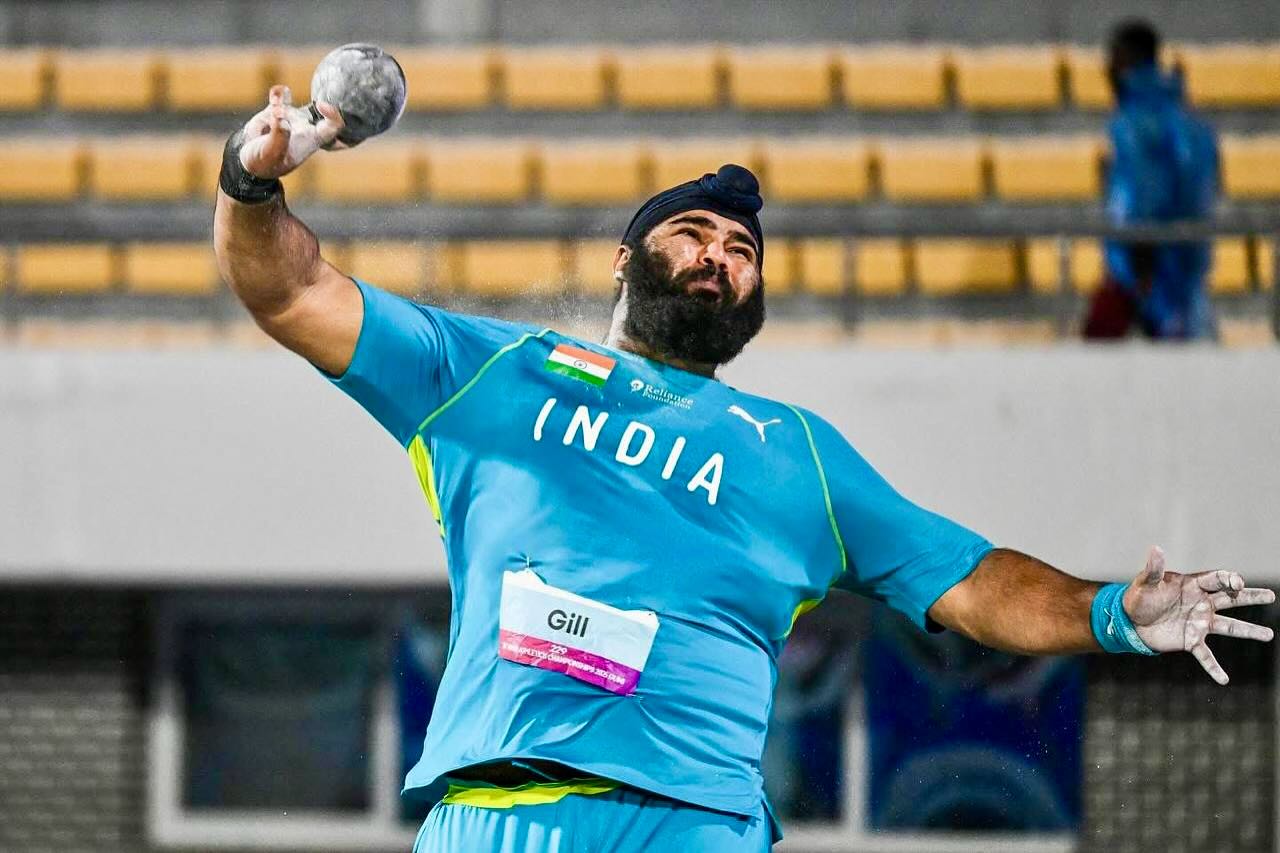
One of the biggest surprises came in men’s shot put where Samardeep Singh Gill produced a breakthrough personal best of 20.46m. The throw not only breached the CWG standard but also made Samardeep only the ninth Indian in history to cross the 20m mark. In the men’s 400m hurdles, both Yashas Palaksha and Santhosh Kumar T comfortably surpassed the qualification mark with timings of 49.00s and 49.06s respectively.
The performances highlighted India’s growing depth in one of its strongest emerging track events. The women’s side saw fewer athletes breach the qualification standards, underlining the tougher competitive gap that still exists in several disciplines. Veteran Seema Punia qualified in women’s discus throw with 57.29m, once again demonstrating remarkable longevity at the elite level.
Meanwhile, Ravina achieved a lifetime best of 44:29.66 in the women’s 10,000m race walk to secure qualification. Beyond the numbers, the Federation Cup revealed something more important about Indian athletics domestic competition standards are rising rapidly. In events like the 100m, pole vault and 400m hurdles, athletes pushed each other toward national-record-level performances under pressure. That competitive depth is essential for long-term international success.
The championships also exposed areas needing improvement, particularly logistical and infrastructural support for elite athletes. But purely from a performance standpoint, Ranchi 2026 represented one of the strongest domestic athletics meets India has ever produced.
Comments (0)
to post comments, replies, and votes.
Loading comments…