Dakar 2026 Youth Olympics: Can Syndrela Das Upset the Favourites in Women’s Table Tennis?
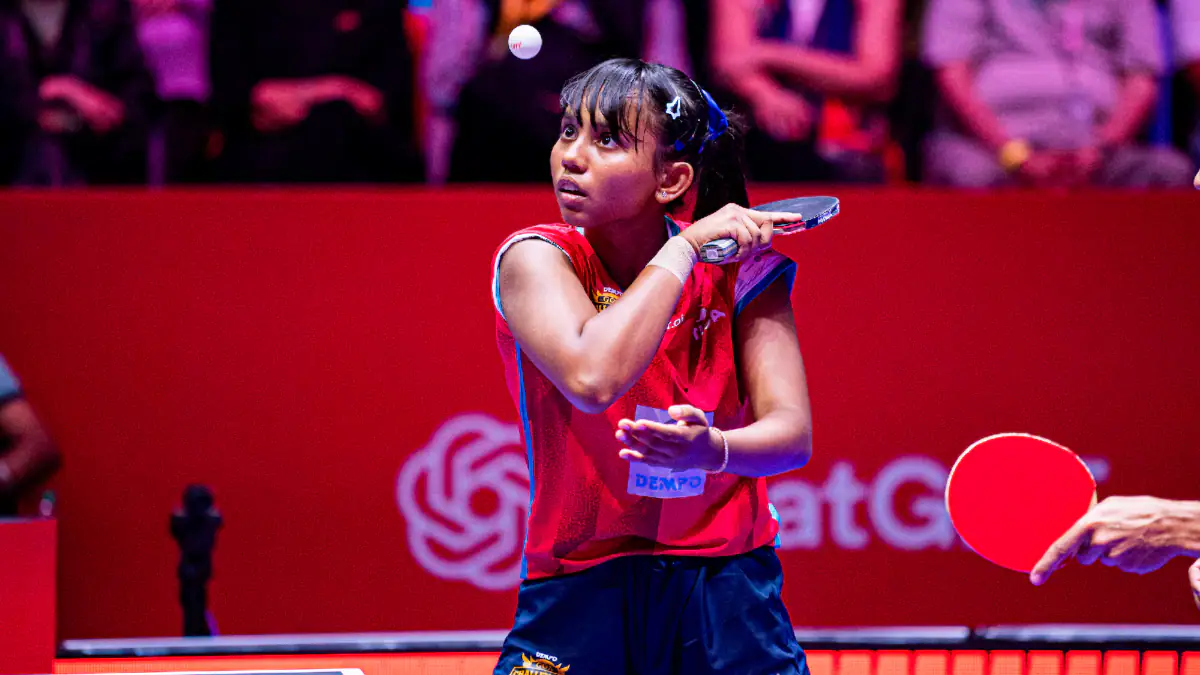
The women’s singles table tennis competition at the Dakar 2026 Youth Olympic Games promises a compelling contest between established junior champions, emerging international prospects and tactically unconventional players.
China’s Yao Ruixuan and Japan’s 13-year-old Miku Matsushima emerge as the leading contenders for gold, while South Korea’s Heo Yerim, Hong Kong’s Su Tsz Tung and France’s Nina Guo Zheng are among the athletes capable of challenging the favourites.
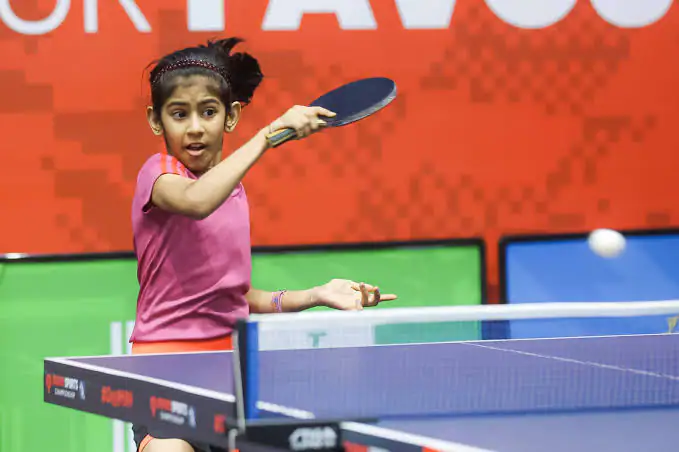
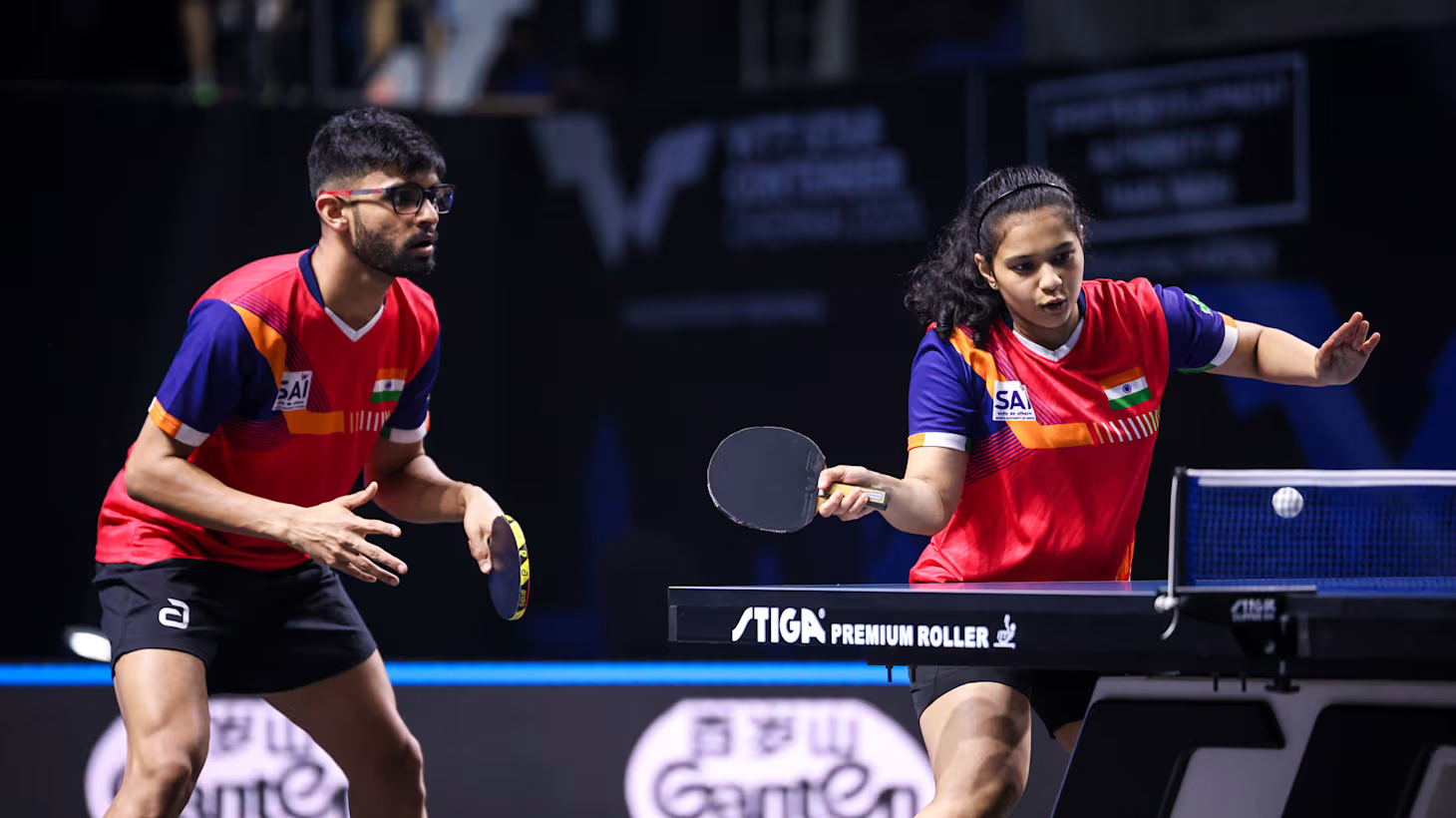
India’s Syndrela Das also enters the competition as a potential disruptor. Her unusual equipment setup and attacking style could create problems for opponents accustomed to conventional topspin exchanges, giving India a possible route into the latter stages of the 32-player knockout draw.
The tournament’s single-athlete-per-National Olympic Committee (NOC) restriction adds another dimension. Unlike competitions where leading countries can enter several players, each nation must rely on one representative, concentrating its medal hopes on an individual performance.
Yao Ruixuan and Miku Matsushima Lead the Gold-Medal Race
China’s Yao Ruixuan is the leading gold-medal favourite. Her credentials include the girls’ U-15 singles title at the 2024 ITTF World Youth Championships in Helsingborg, alongside mixed doubles and team gold medals.
Yao’s right-handed attacking game is built around early ball contact, compact strokes and aggressive third-ball attacks. Her short serves are designed to force passive returns, which she can exploit through backhand flicks and powerful forehand loops.
Her greatest strength is the ability to remain close to the table and deny opponents time to organise their attacks. However, variations in backspin and defensive chopping can disrupt her preferred rhythm, potentially creating opportunities for tactically versatile opponents.
Japan’s Matsushima represents a different kind of threat. Born in June 2013, she is just 13 but has accumulated 13 WTT Youth Series singles titles, including four in the U-19 category. She also reached the final of the China Youth Smash and won the U-15 title at the Singapore Youth Smash.
A left-handed attacker, Matsushima uses sharp crosscourt angles and quick backhand flicks to dominate the opening exchanges. Her ability to take the ball early can overwhelm opponents before they establish their preferred patterns. Her main vulnerability is physical leverage against older, stronger players. If opponents push her away from the table, her attacking power and recovery time can become less effective. Maintaining her position close to the table will be crucial to her medal prospects.
Su Tsz Tung and Heo Yerim Lead the Chasing Pack
Hong Kong’s Su Tsz Tung brings considerable senior international experience to Dakar. Having competed in major WTT events and the Asian Championships, she has faced a level of pace and pressure that many junior players have yet to encounter.
Su’s compact strokes and ability to redirect incoming power make her particularly dangerous against aggressive opponents. Her experience against senior players could prove valuable in tight knockout matches, although heavy backspin and changes in tempo remain potential challenges.
South Korea’s Heo Yerim is another leading podium contender. A five-time WTT Youth Series U-19 singles champion, Heo relies on quick footwork, powerful forehand attacks and sustained topspin pressure. Her ability to dominate longer rallies gives her a strong foundation, but opponents who disrupt her short game and serve-receive patterns can prevent her from setting up her forehand attacks.
Germany’s Koharu Itagaki and France’s Nina Guo Zheng add further depth to the medal race. Itagaki uses heavy spin, changes in trajectory and precise placement to restrict opponents’ attacking options. Guo Zheng, meanwhile, offers one of the tournament’s most unusual tactical profiles.
Guo Zheng’s short-pimpled forehand creates a major contrast with the conventional attacking styles of the leading contenders. Instead of producing the familiar topspin response, her forehand generates flatter, lower-bouncing shots that can disrupt an opponent’s timing.
She combines this with an inverted-rubber backhand, allowing her to switch between flat hitting and heavier topspin. The variation makes it difficult for opponents to settle into predictable rally patterns. Her record includes a reported 3-2 victory over Matsushima in a WTT U-17 girls’ singles final. That result illustrates why Guo Zheng cannot be dismissed simply because she is outside the leading gold-medal tier.
Her challenge will be maintaining accuracy when stretched away from the table. Short-pimpled attacks can be highly effective when executed from balanced positions, but they offer less margin for error when footwork breaks down.
Czechia’s Hanka Kodet is another potential disruptor, using a compact backhand block to redirect power into the corners. Chinese Taipei’s Chen Min-Hsin relies on consistency and controlled transitions, making her a difficult opponent to dislodge.
Syndrela Das: India’s Tactical Wild Card
India’s Syndrela Das could be one of the most intriguing players in the competition because of her medium-pimpled forehand rubber, which produces an unconventional ball trajectory. Her setup can turn incoming topspin into flatter, lower-skidding returns with a sinking effect. Opponents who rely on standard upward looping mechanics may struggle to adjust, particularly if they have limited experience against this type of equipment.
Das complements the unusual forehand with an inverted-rubber backhand, giving her the option to vary the pace and spin of exchanges. Against conventional attackers, the contrast can interrupt rhythm and force technical adjustments.
The key question is whether she can sustain that advantage over multiple rounds. Once opponents identify the trajectory and adapt their contact points, Das will need consistency and tactical variation to remain competitive in extended rallies.
The supplied analysis identifies her as an upset threat rather than a leading medal favourite. Her projected probability of reaching the quarterfinals is 32%, with a 10% chance of reaching the semifinals. These are analytical estimates, not official tournament probabilities.
Yao and Matsushima are projected to lead the title race, with Yao favoured because of her physical strength, heavier topspin and consistency under pressure. Matsushima has the attacking speed and angles to challenge her, particularly if she controls the serve-and-receive phase.
Su and Heo are the leading candidates behind them, while Guo Zheng and Itagaki could threaten the established hierarchy through tactical variation.
For Das, a favourable draw and an early upset could change the outlook. Her equipment offers a genuine stylistic challenge, but converting that advantage into a medal would require precise execution across several matches.
The Dakar women’s singles competition will therefore test more than technical ability. With each nation relying on a single player, tactical adaptability, composure and the ability to solve unfamiliar playing styles could determine the podium.
Yao remains the favourite, Matsushima possesses the potential for a historic breakthrough, and the challengers including India’s Das will look to exploit any weakness in the leading contenders.
Comments (0)
to post comments, replies, and votes.
Loading comments…