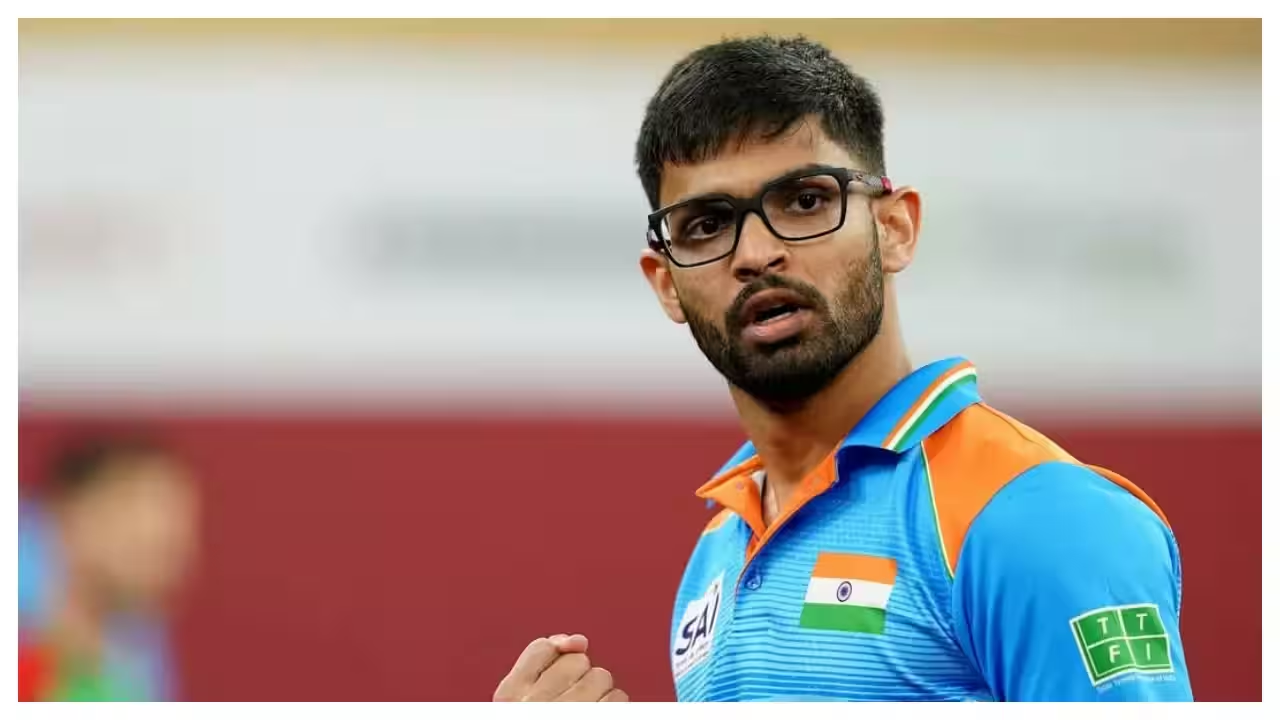
Manav Thakkar-Manush Shah Survive Chinese Fightback to Reach China Smash Quarterfinals
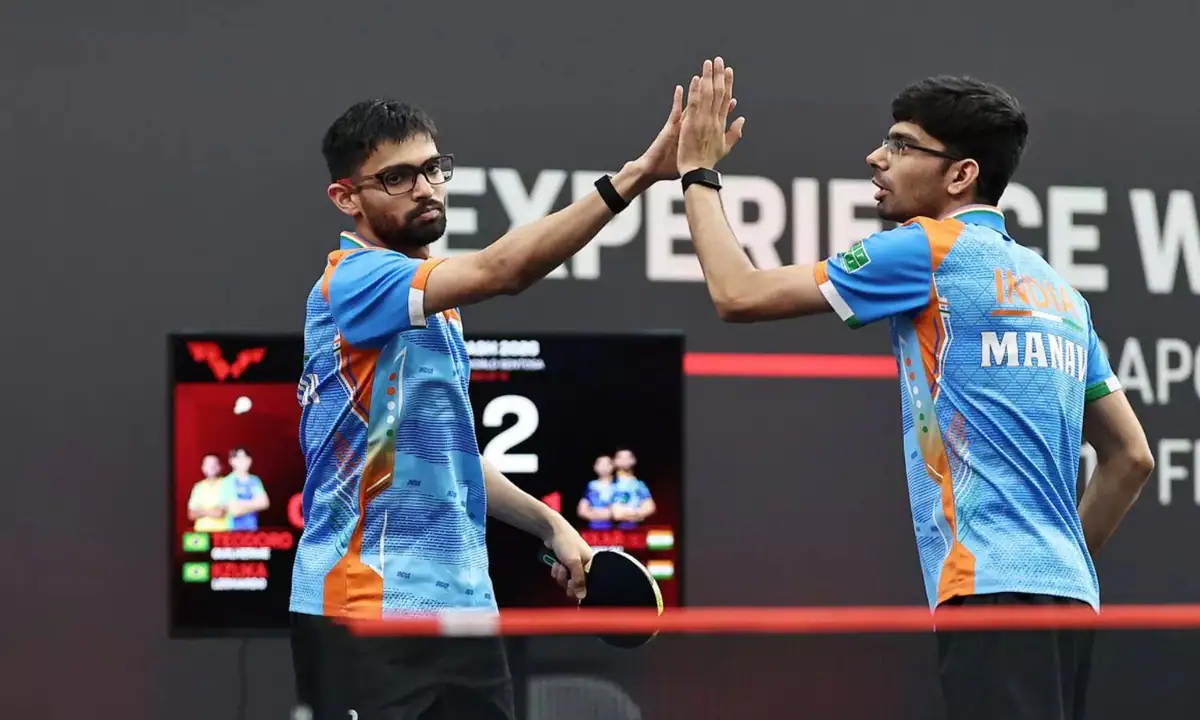
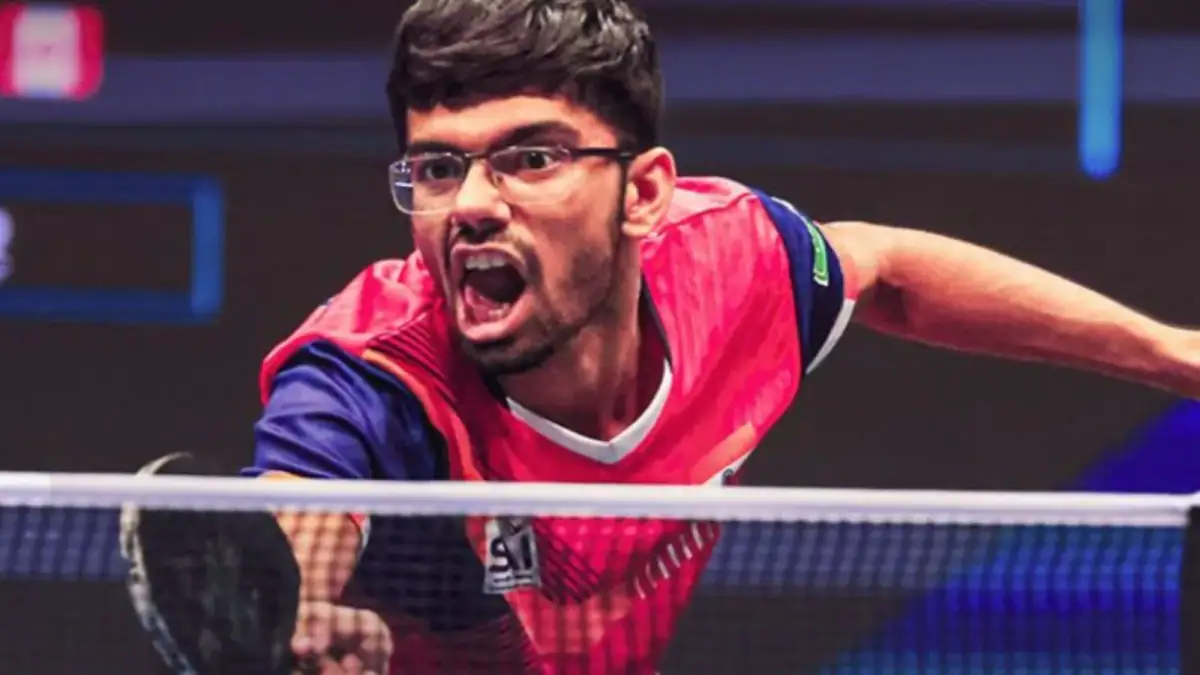
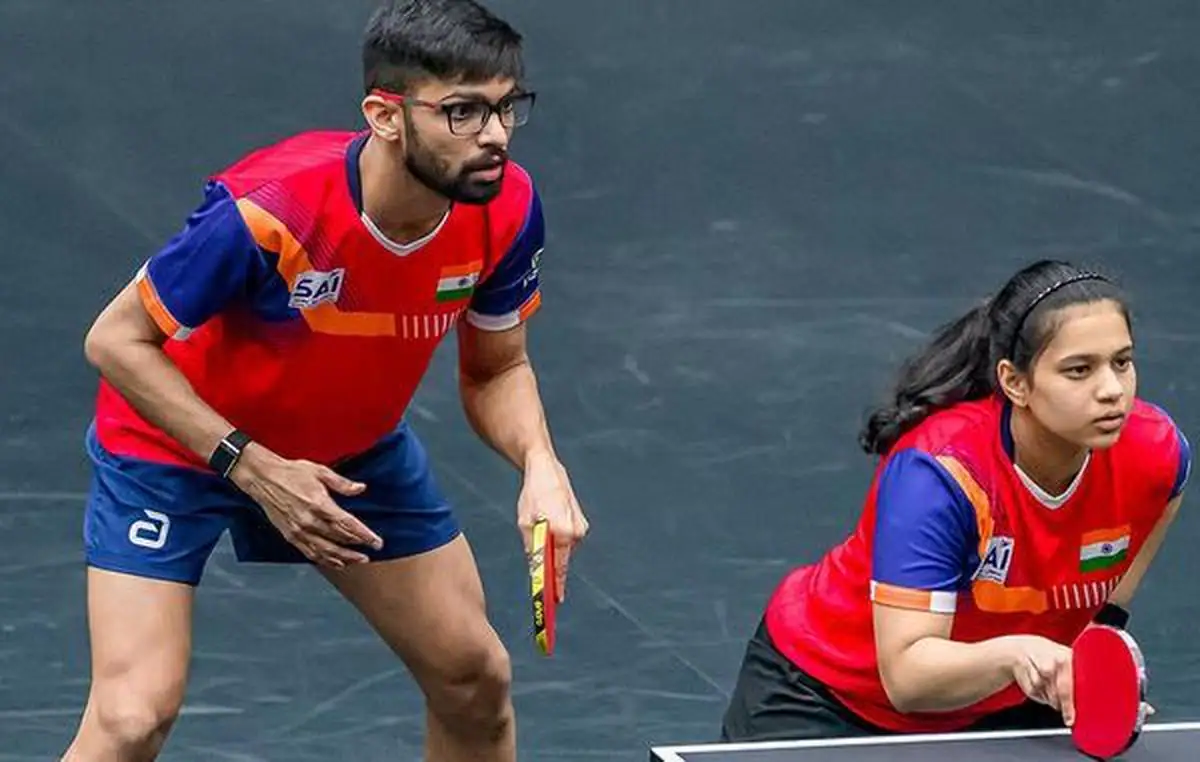
Manav Thakkar and Manush Shah defeated China’s Chen Junsong and Zhou Qihai 3-2 to reach the men’s doubles quarterfinals at WTT China Smash 2026.
Manav Thakkar and Manush Shah are through to the quarterfinals of the WTT China Smash 2026 after surviving a dramatic five-game battle against China’s Chen Junsong and Zhou Qihai.
The Indian pair, seeded No. 2, appeared to be cruising after taking the opening two games comfortably, only for the Chinese combination to completely change the momentum. What followed was a four-game swing that eventually came down to the smallest of margins, with Thakkar and Shah holding their nerve to win the deciding game 12-10.
The final score read 11-5, 11-6, 2-11, 7-11, 12-10. It was a match that India seemed to have under control after 22 points, then nearly lost before producing the decisive response when the pressure was at its highest.
The opening two games belonged firmly to Thakkar and Shah. They established an early advantage against the Chinese pair and maintained enough control in the exchanges to take the first game 11-5. The second followed in almost identical fashion, with the Indians winning 11-6 to move within one game of the quarterfinals.
At 2-0, the match appeared to be moving rapidly in India's direction. The No. 2 seeds had not allowed Chen and Zhou to settle into a rhythm, and their six-point advantage in the second game reinforced the impression that the Indian pair had found the more effective combination of aggression and control.
But China Smash matches rarely remain straightforward, particularly when a Chinese pair is involved. The response came immediately.
China Turn the Match Around
The third game was the turning point.
Instead of allowing India to dictate the exchanges, Chen Junsong and Zhou Qihai raised the intensity and began pulling the Indians into a different type of contest. Thakkar and Shah managed only two points, losing the game 2-11. Suddenly, the 2-0 advantage no longer looked decisive. The fourth game became another test of India's ability to absorb pressure. The Chinese pair continued their comeback and secured it 11-7, levelling the match at 2-2.
The momentum had completely changed. In the space of two games, India had gone from being one game away from victory to facing a deciding game against a pair that had rediscovered its confidence.
The match was now effectively reduced to 11 points.
The fifth game delivered the tension that the previous four had been building towards. Neither pair was prepared to give the other a decisive opening. At this stage, every serve, receive and first attacking ball carried greater significance because one small run could determine the entire contest. Thakkar and Shah eventually reached the finish line—but not before the Chinese pair pushed them beyond the regulation 11-point mark.
India won the deciding game 12-10, completing a 3-2 victory and securing their place in the quarterfinals. The final game was particularly important because it demonstrated the pair's ability to recover after surrendering a two-game lead. Rather than allowing the collapse of games three and four to dictate the decider, Thakkar and Shah stayed in the contest long enough to create the two-point margin required for victory.
The result adds another significant run to what has become a productive year for Thakkar and Shah. The Indian combination has repeatedly found itself competing deep into WTT events against established international opposition. Earlier in 2026, the pair reached the quarterfinals at several WTT events, including the United States Smash, where they defeated Japan's Sora Matsushima and Shunsuke Togami before eventually losing to China's Wen Ruibo and Yuan Licen.
Their success has been built around a combination of complementary strengths and an increasing ability to handle high-pressure matches. That is particularly relevant at China Smash, one of the biggest events on the WTT calendar. The official China Smash field features some of the strongest players in world table tennis, making every round a significant examination of international-level consistency.
For an Indian men's doubles pair, progressing into the last eight is therefore more than simply another quarterfinal appearance. It is evidence that the combination is increasingly capable of competing at the sharp end of elite WTT competition.
Manush Shah Has Two Quarterfinals
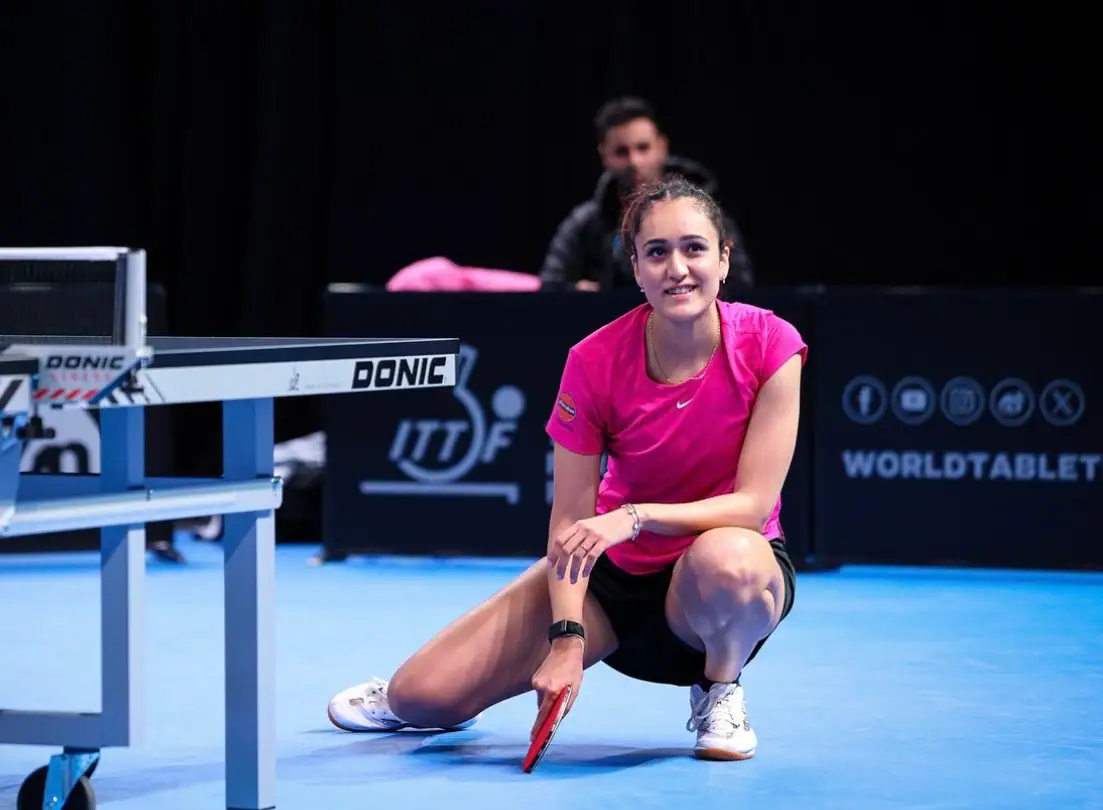
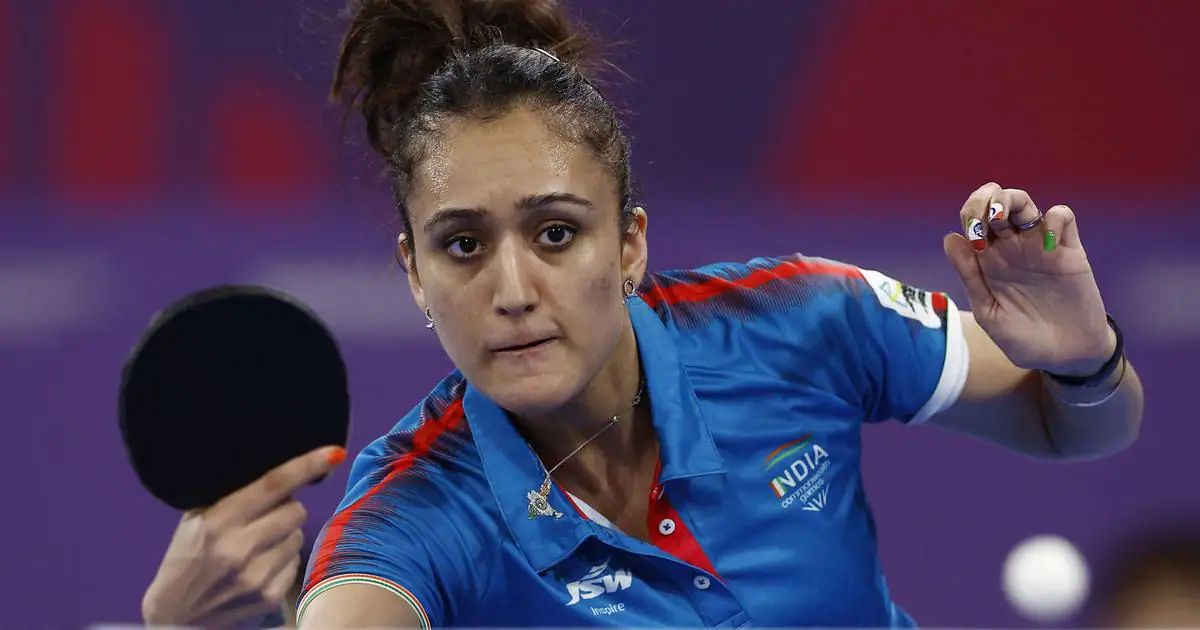
The victory also gives Manush Shah a second quarterfinal appearance at China Smash, adding another layer to India's campaign. Shah and Diya Chitale had already progressed to the mixed doubles quarterfinals after defeating Egypt's Omar Abdelaziz and Hana Goda/Alhodaby combination in the earlier round, according to the supplied match information. That means Shah is now carrying India's challenge in two doubles disciplines at the same major event.
For Indian table tennis, having players capable of making deep runs across multiple doubles categories is significant. Doubles success requires more than individual ranking or shot-making ability. Communication, movement patterns, serve-receive combinations and the ability to reset after losing points become crucial, particularly against pairs from China and Japan who have extensive experience in these formats.
The quarterfinal berth gives Thakkar and Shah another opportunity to test themselves against the world's best. But the manner of their progression may ultimately be more valuable than the result itself.
They have already demonstrated that they can start aggressively, absorb a major momentum swing and then win a deciding game under pressure. The next round will demand another level. At China Smash, there are no easy quarterfinals. Every remaining pair has survived multiple rounds against elite opposition, and the margins become increasingly narrow as the tournament progresses.
For Thakkar and Shah, however, the message from this match is clear. They were two games ahead. They lost the next two. Then, with the match hanging on a knife-edge at 10-10, they found a way to win.
That is precisely the kind of five-game resilience required to go beyond simply reaching quarterfinals—and start turning deep WTT runs into genuine medal opportunities.
Comments (0)
to post comments, replies, and votes.
Loading comments…