Divyanshi Choudhary Asian Games Wushu Selection Dispute
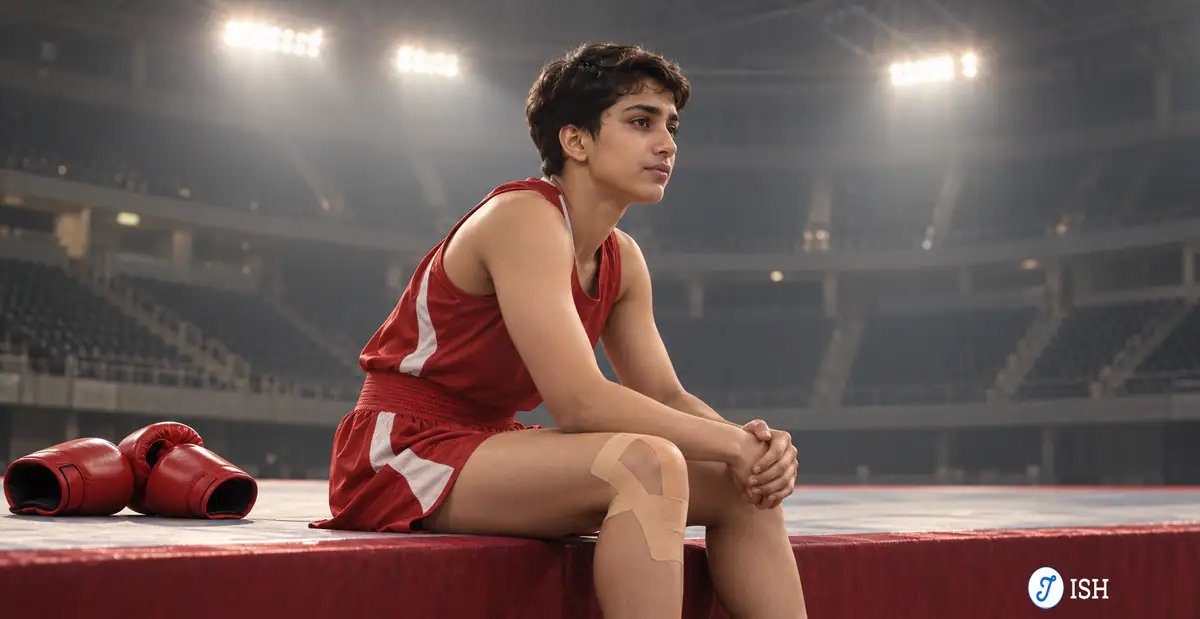
The de-selection of 18-year-old wushu athlete Divyanshi Choudhary from the Indian contingent for the 2026 Asian Games in Aichi-Nagoya, Japan, underscores the precarious intersection of athlete welfare, medical risk management, and procedural transparency in Indian elite sport
Narrative of the Dispute
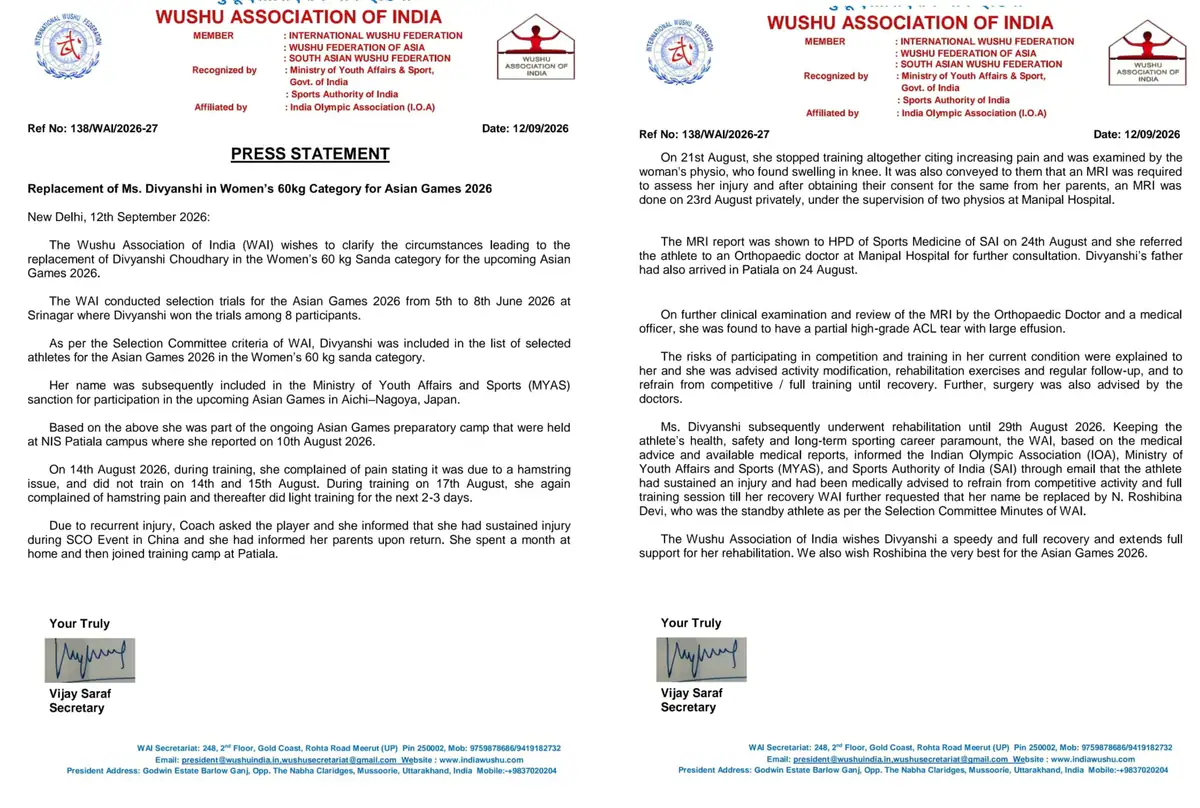
Divyanshi Choudhary's qualification trajectory commenced between June 5 and 8, 2026, during the national selection trials conducted by the WAI in Srinagar
Following a month of recuperation at home, Choudhary reported to the Asian Games preparatory national camp at NIS Patiala on August 10
Concurrently, administrative processes moved forward: on August 22, the Ministry of Youth Affairs and Sports (MYAS) sanctioned India's official seven-member wushu contingent, listing Choudhary as the primary 60 kg representative
Administrative disconnects worsened when Choudhary was permitted to attend the Indian Olympic Association (IOA) formal send-off ceremony in New Delhi on September 8 and received official team kits on September 9
Chronological Incident Log
June 5–8, 2026 (Selection Trials, Srinagar): Divyanshi Choudhary won the women's 60 kg Sanda trials among an eight-athlete draw, defeating two-time Asian Games medallist Naorem Roshibina Devi in the semi-finals and Himanshi of Chandigarh in the final to earn the top spot.
June 24–29, 2026 (SCO Tournament, Hubei, China): Choudhary represented India at the SCO Wushu Sanda Championship, winning a silver medal while sustaining an undisclosed knee strain. She subsequently spent a month recuperating at home.
August 10, 2026 (National Camp Assembly): Choudhary reported to the National Institute of Sports (NIS) Patiala campus to join the Asian Games national preparatory camp.
August 14–17, 2026 (Early Training Symptoms): Choudhary paused live training on August 14 after complaining of lower-limb discomfort, which she initially attributed to a hamstring problem, missing sessions on August 14 and 15. After resuming light training on August 17, recurrent discomfort prompted camp coaches to question her condition.
August 21–23, 2026 (Clinical Exam and Diagnostic MRI): Choudhary stopped workouts altogether on August 21 due to escalating pain. A camp physiotherapist noted visible swelling in her knee, and with parental consent, a private MRI scan was conducted on August 23 under physiotherapist supervision at Manipal Hospital.
August 22, 2026 (Official Contingent Sanction): The Ministry of Youth Affairs and Sports (MYAS) published the sanctioned list of India's seven-member wushu squad for the Asian Games, naming Choudhary as the primary 60 kg competitor.
August 24–27, 2026 (Medical Findings and Advisory): On August 24, orthopaedic doctors and sports medicine officials reviewed the scan with Choudhary's father, diagnosing a partial high-grade ACL tear with large effusion. On August 27, Dr. Jahanvi Dande, High Performance Director of Sports Medicine at SAI NIS Patiala, formally directed that the athlete refrain from competitive contact and full training to undergo rehabilitation.
September 8–9, 2026 (Send-Off Ceremony and Replacement Request): Choudhary attended the Indian Olympic Association (IOA) formal send-off ceremony in New Delhi on September 8 and received her official playing kit on September 9. In parallel, the WAI formally alerted the IOA of her medical disqualification and requested an emergency squad replacement.
September 10–11, 2026 (Approval and Team De-Selection): MYAS sanctioned the squad adjustment on September 10, reinstating standby athlete Roshibina Devi after trials runner-up Himanshi was deemed unavailable due to a jaw fracture. Choudhary was informed of her de-selection on September 11.
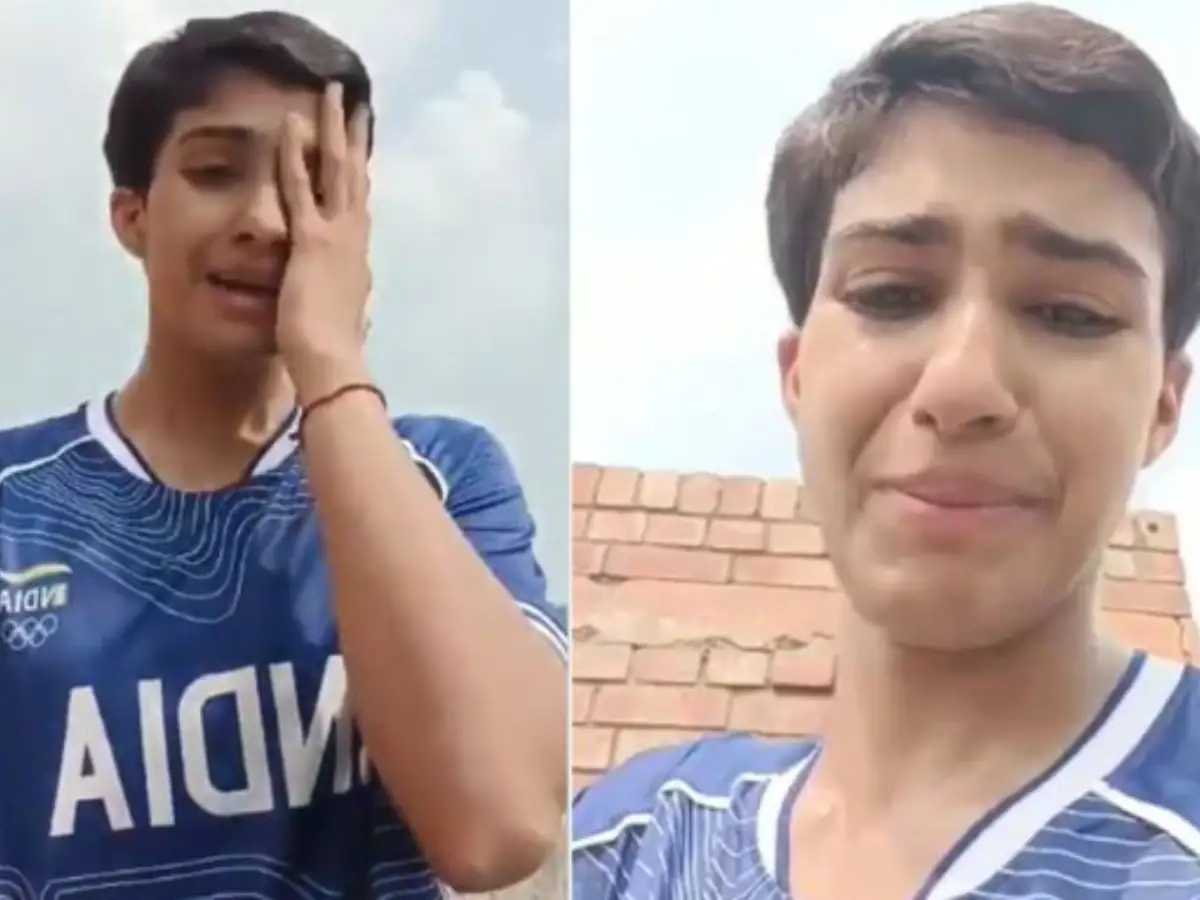
September 12, 2026 (Public Protest and Ministerial Intervention): Choudhary posted an emotional video from the roof of the NIS Patiala hostel alleging institutional bias and mental distress. Following public attention, her father met Union Sports Minister Mansukh Mandaviya, who guaranteed full financial backing for her medical treatment, surgery, and rehabilitation.
Comparative Precedents in Indian Sports Governance
The Choudhary controversy follows a well-documented pattern of institutional friction within Indian Olympic sport selection:
Wrestling Selection Exemptions (2023 Asian Games): Junior World Champion Antim Panghal mounted legal challenges after an ad-hoc administrative committee granted trial exemptions directly to senior stars Vinesh Phogat and Bajrang Punia
The Narsingh Yadav–Sushil Kumar Dispute (2016 Rio Olympics): After Yadav earned an Olympic quota spot, veteran medallist Sushil Kumar demanded direct selection trials, exposing an absence of standardized written protocols concerning whether Olympic quotas belong to the athlete or the national federation.
Late Camp Fitness Omissions in Athletics and Gymnastics: Across multiple Commonwealth and Asian Games cycles, national governing bodies have removed trial winners during final staging camps following last-minute internal fitness assessments, frequently prompting High Court writs due to non-transparent evaluation metrics
Governance Implications
The confrontation involving Divyanshi Choudhary illustrates systemic deficiencies in communication timing, dispute management, and sports medicine arbitration. While ministerial intervention through Sports Minister Mansukh Mandaviya stabilized the immediate welfare crisis by guaranteeing full funding for Choudhary’s surgery and rehabilitation, structural reforms remain imperative
Comments (0)
to post comments, replies, and votes.
Loading comments…