Gurtej Singh Bhatti Emerges as India’s Breakthrough Star at IIHF U18 Asia Cup
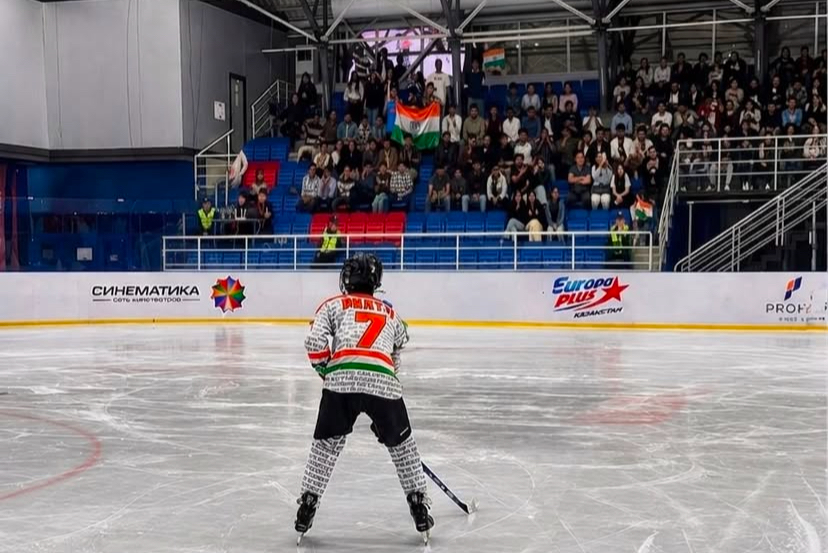
At the 2026 IIHF U18 Ice Hockey Asia Cup in Bishkek, one such moment or rather a series of them came through Gurtej Singh Bhatti.
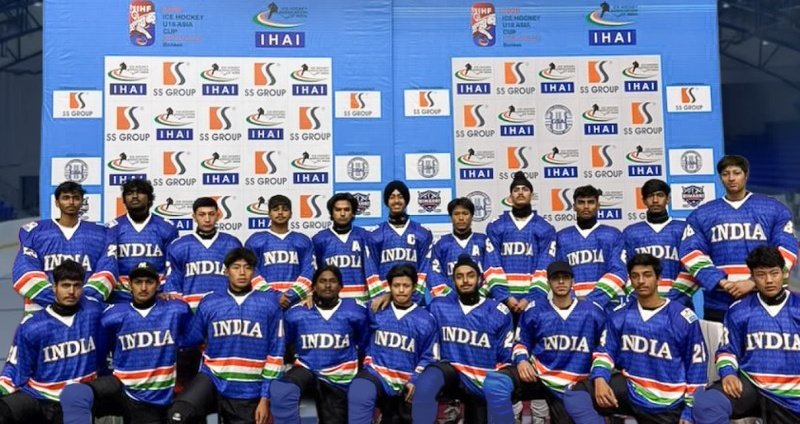
In a sport where India is still building its identity, moments of individual brilliance often become catalysts for larger change. At the 2026 IIHF U18 Ice Hockey Asia Cup in Bishkek, one such moment or rather a series of them came through Gurtej Singh Bhatti.
The Indian captain announced himself on the international stage with a standout performance, finishing as the tournament’s top goalscorer with 13 goals and ranking fourth overall in points with 15 (13 goals, 2 assists). For a team that ultimately finished outside the medal positions, Bhatti’s numbers stand out not just as a statistical achievement, but as a signal of India’s growing competitiveness in a traditionally unfamiliar sporting landscape.
India’s presence in international ice hockey has historically been defined by participation and gradual development rather than dominance. Competing against nations with deeper infrastructure and longer traditions in the sport, Indian teams have often found themselves in rebuilding phases. Against that backdrop, Bhatti’s performance becomes even more significant. Scoring 13 goals in a short-format international tournament is not merely impressive it is exceptional. His tally placed him ahead of players from stronger hockey systems, making him the most clinical finisher in the competition.
Equally important was his overall contribution. With 15 points, he ranked fourth in total scoring, indicating that his impact extended beyond finishing. While primarily operating as a goal scorer, Bhatti also demonstrated the ability to create opportunities and influence attacking sequences.
This dual impact as both finisher and contributor reflects a level of maturity rarely seen in players from emerging hockey nations.
The Role of Volume Shooting and Efficiency
One of the defining aspects of Bhatti’s game during the tournament was his aggressive offensive approach. He consistently generated scoring opportunities through high shot volume, recording one of the highest shot counts among leading players.
This approach aligns with modern ice hockey analytics, where sustained offensive pressure and shot generation are key indicators of attacking effectiveness. Bhatti’s ability to combine volume with efficiency converting at a high rate made him a constant threat. His goals came from varied situations: quick releases from the circle, rebounds in front of goal, and well-timed runs into scoring areas. This versatility made it difficult for opposing defences to contain him, particularly in transitional phases where India looked to exploit space.
While the numbers define Bhatti’s tournament, his leadership adds another layer to his impact. As captain of the Indian U18 side, he carried the responsibility of guiding a relatively inexperienced team through a demanding competition. India’s campaign had its challenges, particularly against stronger Central Asian teams with greater physicality and tactical cohesion. However, Bhatti’s ability to maintain composure and drive the team forward was evident throughout.
His performances in key matches particularly in classification games demonstrated not just skill but also resilience. Even when the team was under pressure, he remained a focal point in attack, ensuring India continued to compete rather than retreat. This aspect of leadership is crucial for a developing program. Players like Bhatti set the standard, not just in performance but also in mindset.
India’s most dominant performances came in the relegation round against Macau, where Bhatti played a central role in securing victories. In one of the matches, he scored four goals, showcasing his ability to take control of a game and convert opportunities with precision. His chemistry with fellow attackers also became evident, as India’s forward line began to function with greater cohesion.
These matches highlighted a key shift in India’s approach from reactive play to proactive attacking hockey. Instead of merely defending and countering, India began to dictate phases of play, largely driven by Bhatti’s offensive presence. The result was not just wins, but convincing performances that reinforced the team’s potential.
Despite Bhatti’s heroics, the tournament also underlined the gap that still exists between India and the region’s leading teams like Uzbekistan and Kyrgyzstan. Physicality, depth, and structured systems remain areas where India trails its competitors. The average build and conditioning of opposing teams often gave them an advantage in puck battles and sustained pressure situations.
However, the emergence of a player like Bhatti suggests that the gap is narrowing in certain aspects particularly in offensive capability. If supported by improved infrastructure, conditioning programs, and tactical development, players of his profile can accelerate India’s progress.
A major factor shaping Indian ice hockey is the lack of year-round infrastructure. Unlike traditional hockey nations, India does not have widespread access to indoor ice rinks, limiting training opportunities. Currently the number of Ice Rinks available 12 months stands at two.
To compensate, players often transition from inline hockey and train in short, intensive camps. While this approach has produced technically skilled players, it also creates limitations in terms of consistency and physical development. Bhatti’s rise, therefore, is not just a product of talent but also of adaptability. His ability to excel despite these constraints highlights both individual determination and the effectiveness of recent developmental initiatives.
In many ways, Gurtej Singh Bhatti represents a new phase for Indian ice hockey one where individual excellence begins to align with collective progress. His performance at the IIHF U18 Asia Cup is more than a personal milestone. It is a reference point for what Indian players can achieve on the international stage. It also provides a narrative that the sport in India has long needed a standout performer who can inspire the next generation.
For India, the challenge now is to build around such performances. The transition of U18 players into the senior setup, investment in infrastructure, and increased international exposure will be critical in sustaining momentum. Bhatti’s 13 goals and 15 points have already set a benchmark. The next step is ensuring that this is not an isolated performance, but the beginning of a consistent upward trajectory for Indian ice hockey.
Because while the standings may not yet reflect it, performances like these indicate a shift one where India is no longer just participating, but starting to compete.
Comments (0)
to post comments, replies, and votes.
Loading comments…