India Women’s Penalty Corner Problem? Rupinder Pal Singh on Their World Cup Challenge
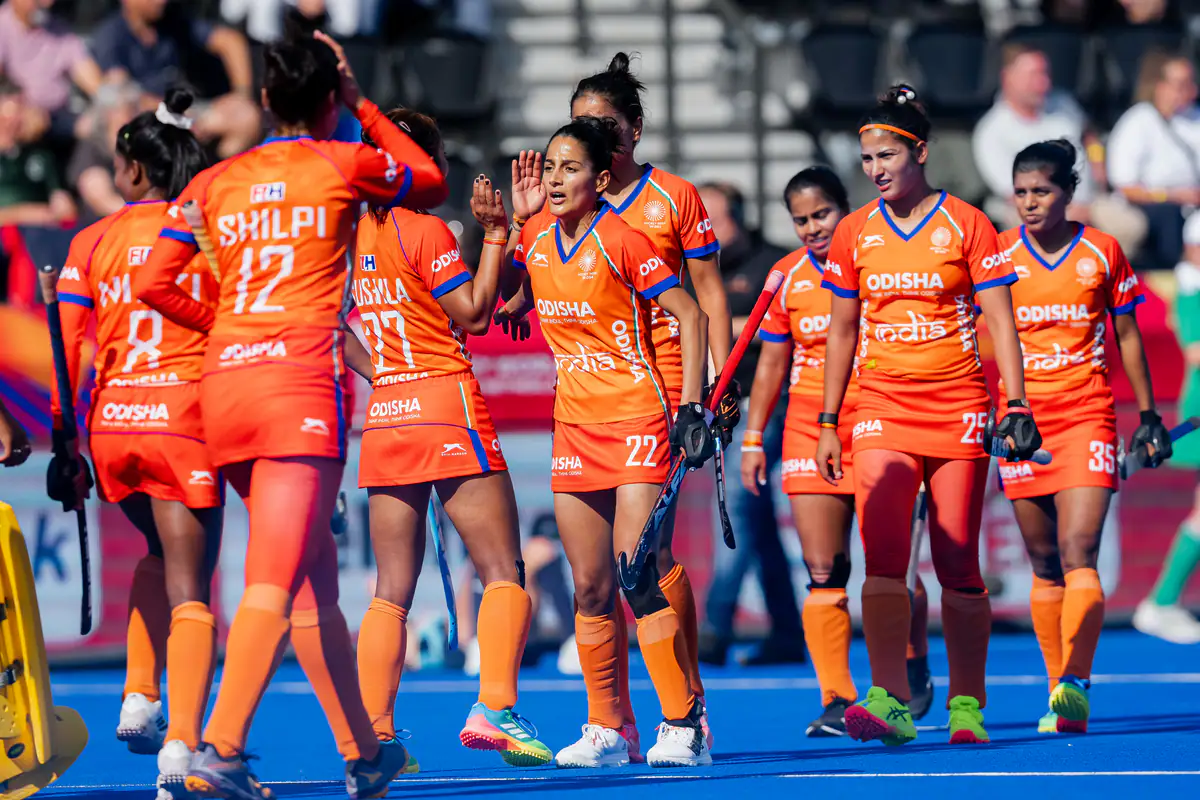
The Indian women’s team have made it through to the next stage of the 2026 FIH Women’s Hockey World Cup, but former India drag-flick specialist Rupinder Pal Singh wants the team to aim much higher.
After holding England to a goalless draw in the women's final Pool D match on Thursday, India progressed to the next stage along with China. India’s reward for their strong start to the tournament is a meeting with two of the biggest challenges in world hockey: the Netherlands and Australia.
In an exclusive conversation with IndiaSportsHub, Tokyo 2020 Olympic bronze medallist Rupinder Pal Singh, who continues to contribute to the development of Indian hockey and has worked with India’s junior players, shared his thoughts on teams’ performance so far.
India earned six penalty corners against England in their final pool-stage match but failed to convert any of them. Two attempts taken by Navneet were disallowed after the ball went above the permitted height.
For the Indian men’s team, the penalty corner has traditionally been an area of considerable strength. With Harmanpreet Singh, Sanjay, Jugraj Singh and Amit Rohidas all capable of taking drag flicks, India have multiple options in a department that can often decide tight matches.
Rupinder, one of India’s finest drag flickers during his playing career, believes that depth is crucial.
“Harmanpreet has a lot of experience now. He has been doing well since his junior days. But talking about the other players, the more depth there is in drag flickers, the better it is. It maintains competition, and if by chance one player is off, then we have the option to try another player.”
The contrast with the women’s team is evident. While India have several established options among the men, Deepika remains the specialist drag flicker in the current women’s setup, with Navneet and Neha being used as primary hitters in the set-piece. The women’s team, in summary, have not found a dependable drag flicker in place of the former defender Gurjit Kaur.
For Rupinder, however, the issue is not Deepika’s ability. In fact, he believes the 22-year-old has the potential to become one of the best in the world.
“Deepika, I think, can become one of the best drag flickers in the world if she gets more opportunities and responsibility,” he said. The former defender has worked with Deepika during his involvement in drag-flicking workshops and has seen a marked improvement in her ability. He believes the next step is to give her greater responsibility and, crucially, more opportunities to build confidence.
“Deepika is a very good player, but it’s also a matter of confidence. As she keeps scoring goals and getting chances, her confidence will build up,” he explained.
Developing a reliable drag flicker, however, is a long-term process. According to Rupinder, specialists need consistent exposure and years of training before they can be expected to perform under the pressure of international hockey.
“Learning drag flicking or doing a drag flick isn’t a short process. It’s a long process. For that, you have to train every day, for many months, for years,” he said. “With someone, they might start showing progress in six months, while with someone else, it might take a year or two. But it all depends on how much they train, how much time they give to drag flicking.” The development, he added, is often about refining small technical details rather than completely changing a player’s technique.
“When we talk about drag flicking in coaching, especially in the junior setup, it’s about working on small details. It’s not about changing their entire technique or form. We talk about small details and work on accuracy, speed or technique. It depends on the player as well,” Rupinder said.
Rupinder recalled working with junior and senior women players during camps several years ago, including Deepika and a few other youngsters who showed promise as drag flickers. However, he said he lost touch with their development after his involvement with the camps ended.
“I worked with three-four girls who were quite good. Now I don’t know what their progress is, because after a few follow-up camps, I never went back, and I believe the workshops are now being conducted by foreign coaches,” he said.
For India, Rupinder believes the immediate answer is not necessarily finding another established specialist overnight but creating enough opportunities for Deepika while simultaneously developing the next generation.
Meanwhile, the Indian men’s team provides a useful example of what that depth can look like.
Harmanpreet remains India’s first-choice drag flicker, but the presence of Sanjay, Jugraj and Amit Rohidas means the opposition cannot afford to focus solely on one player. Rupinder believes the other three must be ready to take responsibility whenever their opportunity arrives.
“If Harman has scored in all three matches now, it’s possible he might not be able to score in the next match. But at that exact time, Jugraj, Sanjay and Amit Rohidas will have to step up,” he said. “For that opportunity, these three should always be prepared, always, with that mindset. It should be such that if I get even one chance, I have to convert that.”
That depth is about more than having additional names on a team sheet. It creates internal competition while making it harder for opposition defences to anticipate where the danger will come from.
India’s women’s team will now face precisely that kind of challenge; the Netherlands possess one of the world’s most dangerous penalty-corner weapons in Yibbi Jansen, while Australia will present another significant test for India. Against such opposition, India’s ability to maximise their own set-piece opportunities could prove crucial.
Yet Rupinder remains positive about India’s campaign so far.
After drawing with China, beating South Africa 6-1 and holding England to a goalless draw, India have shown enough to suggest they can compete with the world’s best. His message, therefore, is one of ambition rather than caution. “I feel that the Indian women are performing really well at the moment. In all three matches, they played really well,” he said.
“And I hope they don’t get satisfied with it, that we cleared the first pool. I really hope; I want them to just stay down to earth and keep doing the same work they’ve been doing until now. Keep defending well, and the way they are playing, I think they can get something from this World Cup. I just hope they don’t get settled with this only.” Rupinder has a similarly encouraging message for the Indian men’s team. India have not won a World Cup since 1975, and the former international wants this generation to finally end that wait.
“It’s been a really long time since we won the World Cup. So I want the team to bring back the cup this time. I really wish them all the best,” he said.
As both the Indian men’s and women’s teams prepare to face tougher opponents, their depth from the penalty corner could be tested like never before. For India’s women in particular, the question will be whether they can turn their opportunities into goals when the biggest moments of the World Cup arrive.
Comments (0)
to post comments, replies, and votes.
Loading comments…