ICC's Post-Pregnancy Guidelines for Return to Play
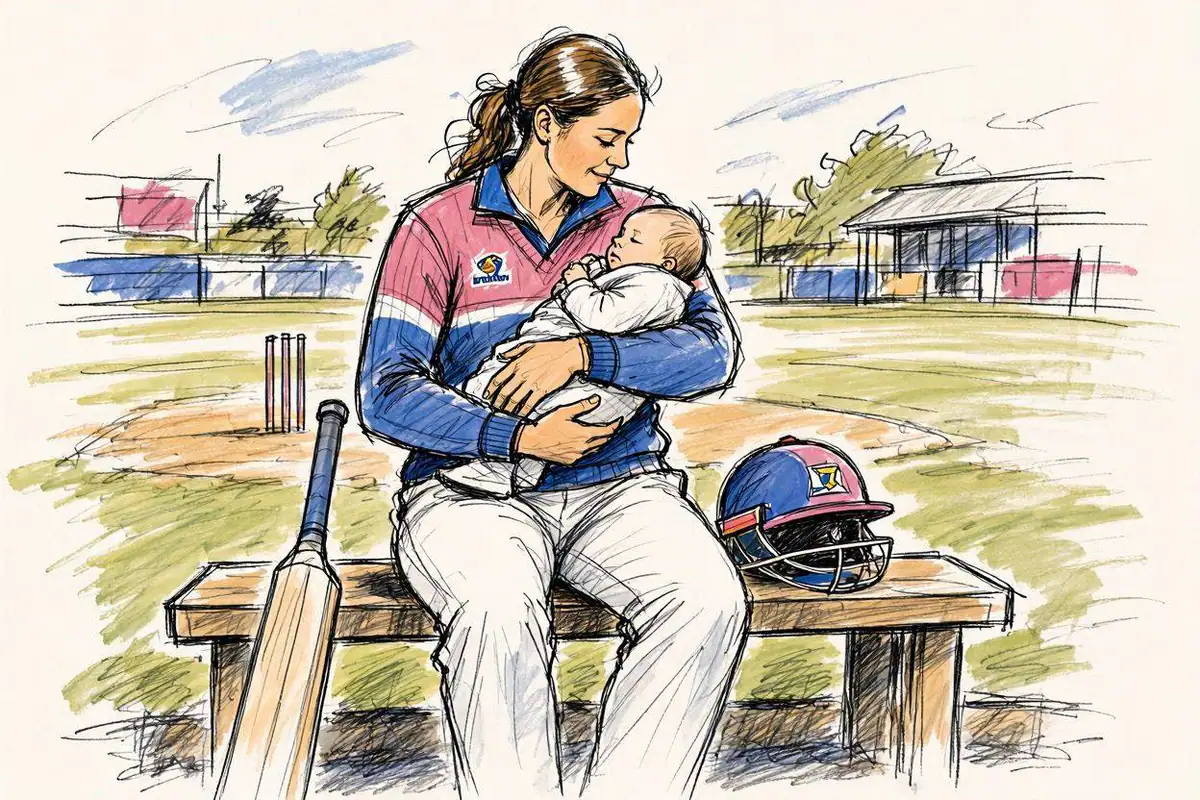
Women Cricket
A comprehensive overview of ICC's post-pregnancy guidelines for return to competitive play with explanations on points that warrant a discussion.
In June 2026, the International Cricket Council released a structured framework on how women can return to competitive and professional cricket play after pregnancy. This article succintly presents the salient features with a explicit explanations on points that warrant an elaborate discussion.
The Basics
The recommendations state that a cricketer has complete autonomy to decide when she wishes to announce her pregnancy and there is no mandate in any rule of cricket for her to take a pregnancy test. While the document does suggest that local labour laws must be considered, the ICC's structured guidelines seem generalizable.
For return to play, exercising is recommended during pregnancy. However, to execute it effectively, the national governing board of the sport must assign a case manager for every pregnant player. In addition to the player's coach, the internal support team should have a cricket medical officer, physiotherapist, psychologist, strength and conditioning coach, and player development coach. The external team on the other hand comprises the obstetrician, a family member, and a physiotherapist with an expertise in women's health.
Even though no evidence clearly points to a particular gestational age, a player's competitive play must cease by the end of the first trimester. This is because the position of the fetus moves higher towards the abdominal region, posing a risk of injury. Due to hormonal changes, the ligaments loosen up, causing a shift in the center of gravity of the player during regular movements. Moreover, travel restrictions are necessary to avoid any infections, and the patient also needs to consume medications that are compliant with that of World Anti-Doping Agency's policies. This is also a time when the player's physiotherapist monitors the pelvic floor for musculoskeletal issues.
The 6R Framework
The role of the case manager is to hold regular review meetings at the following time points: at the announcement of pregnancy, third trimester, 6-8 weeks after birth, and then every 4 weeks till the player's return to competitive cricket. To nurture the player's return back to competitive levels, a 6R protocol has been laid out.
- Ready: The first 6 weeks after birth must include gentle walking sessions.
- Review: 6-8 weeks post-partum, the patient is reviewed for musculoskeletal problems and iron levels in blood. Strength training is gently introduced, and non-ballistic movements like swimming can be started. The player is counselled by a dietician and an assessment is also made for the fit of the sports bra. Additionally, psychological and social support staff is also established.
- Restore: 8-16 weeks later, the player returns to a structured training environment. The player must be physically assessed for injuries and training sessions must not hinder the schedule of the player dedicated for childcare.
- Recondition: After 12-16+ weeks, the player is tested for sustained performance and endurance levels.
- Refine: The player's energy levels are now closely monitored, and any symptoms of muscular injuries to the pelvic floor is assessed.
- Return: The time when the player returns to professional play.
The ICC also believes that the player must be supported during the recovery phase when they are returning to professional play. A breastfeeding or pumping room, a changing table for the baby, and necessary electronic items (microwave, fridge, sink) must be available in the training premises. The team must have a high performing medical team. Contractual agreements must be extended if possible, and every effort must be made to compensate the player with an alternative cricket-related job during their time away from cricket.
When is exercising during and post-pregnancy safe?
A few important points that are not directly given in ICC's official document but has been simply left as a reference warrant a noteworthy mention.
The list of conditions below are absolute contraindications for players to indulge in exercising during pregnancy.
- Severe respiratory diseases (eg, chronic obstructive pulmonary disease, restrictive lung disease and cystic fibrosis)
- Severe acquired or congenital heart disease with exercise intolerance
- Uncontrolled or severe arrhythmia
- Placental abruption
- Vasa previa
- Uncontrolled type 1 diabetes
- Intrauterine growth restriction (IUGR)
- Active preterm labour
- Severe pre-eclampsia
- Cervical insufficiency
The list of conditions which are relative contraindications (can perform but with extreme caution and ideally under supervision) is given below:
- Mild respiratory disorders
- Mild congenital or acquired HD
- Well-controlled type 1 diabetes
- Mild pre-eclampsia
- Preterm premature rupture of membranes (PPROMs)
- Placenta previa after 28 weeks
- Untreated thyroid disease
- Symptomatic, severe eating disorder
- Multiple nutrient deficiencies and/or chronic undernutrition
- Moderate–heavy smoking (>20 cigarettes per day) in the presence of comorbidities
The recommended active levels during pregnancy are 150 minutes per week or 20-30 min per day. Exercises to avoid: ones that pose a risk of fall, scuba diving, exercises that involve lying on the back. Yoga, pilates, swimming, and aerobics exercises should be done only under certified experts. Avoid or stop exercises or consult before exercising in these cases: high blood pressure, if 3 or more miscarriages, existing condition like a weak cervix, risk of premature labour, pelvic girdle pain, diabetes, eating disorders.
The guidelines of the ICC are based on evidence-based articles, thus serving as a valuable resource for expecting mothers to know a definitive pathway to return to competitive play after pregnancy. Bismah Maroof, Amy Satterthwaite, Nain Abidi, Sarah Elliott, Enid Bakewell and Laura Newton are some prominent names who returned to international cricket after motherhood.
Comments (0)
to post comments, replies, and votes.
GU
Loading comments…