India Dominates 2026 IAU 24-Hour Asia & Oceania Ultrarunning Championships With Historic Men’s Podium Sweep
Indian athletics produced another unforgettable chapter on the international stage as the country delivered one of the most dominant performances in the history of Asian and Oceanic ultrarunning at the 2026 IAU 24-Hour Asia and Oceania Championships in Hirosaki City, Japan.
Held from May 23 to 24 in Aomori Prefecture, the championships witnessed India’s men achieve a historic clean sweep of the individual podium while also securing team gold with a massive combined distance of 815.833 km. The Indian women’s team added to the celebrations by clinching bronze, completing a memorable campaign for the contingent.
The performance came during what has already become a remarkable period for Indian athletics. While national records continued to tumble at the Federation Cup in Ranchi, India’s endurance athletes in Japan proved that the country’s strength now extends far beyond the track and field arena.
For those unfamiliar with the discipline, a 24-hour ultramarathon is regarded as one of the toughest endurance events in world sport. Unlike traditional races contested over a fixed distance, athletes run continuously for an entire day, aiming to cover the maximum possible distance within 24 hours. The format demands exceptional physical preparation and mental resilience. Athletes must manage nutrition, hydration, pacing, fatigue, weather conditions and sleep deprivation while continuously running around a looped course. Elite competitors often cover more than 250 kilometres, equivalent to running over six marathons back-to-back.
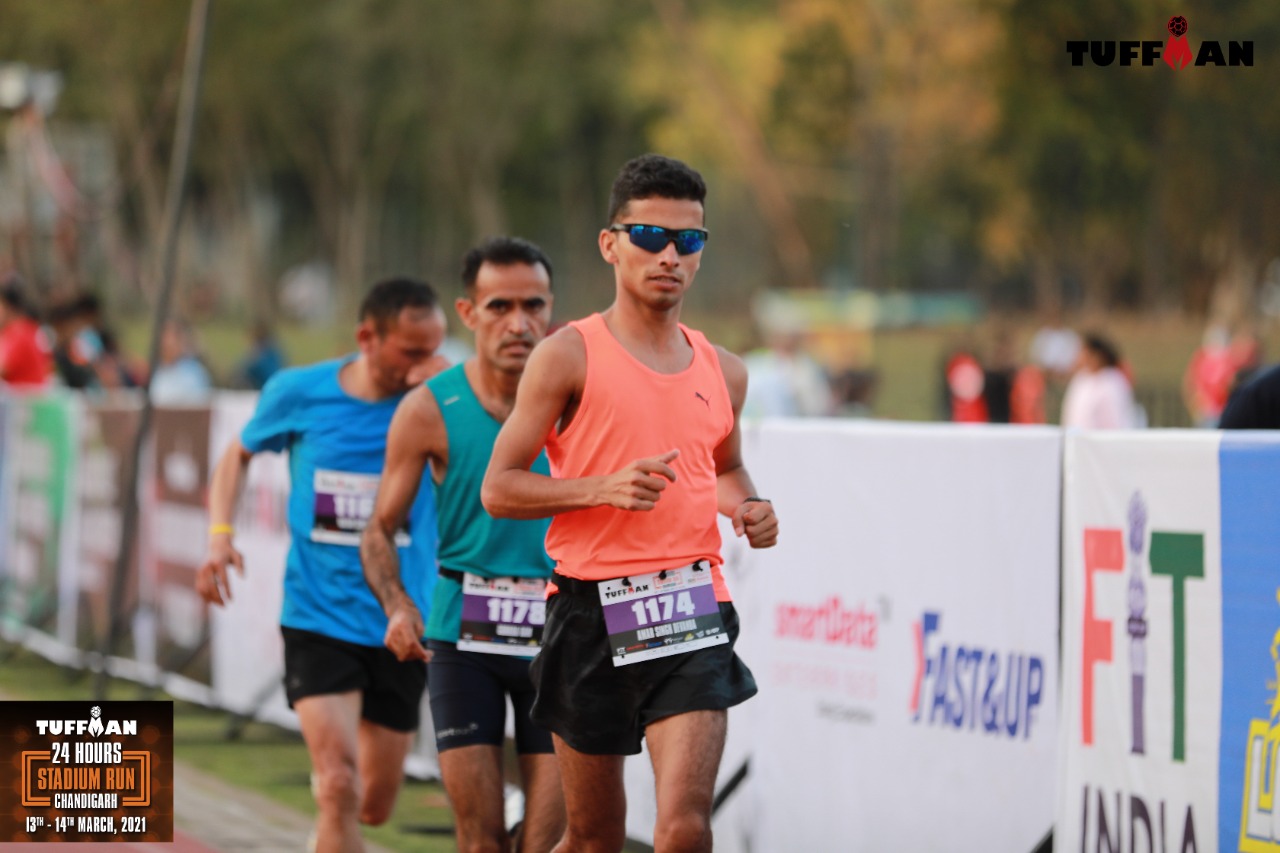
India’s men produced a truly historic performance in these brutal conditions. Leading the charge was Amar Singh Devanda, who once again confirmed his status as one of Asia’s premier ultrarunners. The Rajasthan-born athlete claimed gold with an extraordinary distance of 282.881 km across 226 laps.
He was followed by fellow Indians Geeno Antony and Saurav Kumar Ranjan, who secured silver and bronze respectively. Geeno completed 272.894 km while Saurav finished with 260.058 km, ensuring India completed a rare and historic podium sweep in the men’s category.
India’s combined men’s team distance of 815.833 km comfortably secured team gold ahead of Japan, which finished with 754.726 km, and Australia, which settled for bronze with 732.525 km. The result marked India’s strongest-ever performance at the continental championships and established the country as a rising powerhouse in ultrarunning.
Amar Singh Devanda’s victory was particularly special because it added another milestone to his inspiring journey. A corporal in the Indian Air Force, Amar rose from humble rural beginnings in Rajasthan to become one of the continent’s finest endurance athletes. He had already won gold at the 2022 championships in Bengaluru before defending his title in Canberra in 2024 with an Indian national record of 272.537 km. His latest performance in Hirosaki pushed the benchmark even higher and further strengthened his legacy in Indian endurance sport.
India’s women also delivered a strong campaign to secure team bronze.
Japan’s Miho Nakata, the reigning women’s 24-hour world record holder, once again showcased her class by winning the women’s gold medal. Australia finished second in the women’s team standings, while India claimed bronze through consistent performances across the squad. Tenzin Dolma emerged as India’s standout performer in the women’s category, finishing fourth individually and playing a key role in the team’s podium finish.
The Indian women’s squad also featured Aparna Choudhary, Shashi Mehta, Sunita Subba, Bindu Juneja and Mukesh Kumari, all of whom contributed to the team effort. The men’s team included Amar Singh Devanda, Geeno Antony, Sugourav Goswami, Saurav Kumar Ranjan and Velu Perumal. The championships attracted strong international competition from countries including Japan, Australia, New Zealand, Chinese Taipei and Lebanon. One of the biggest names in the field was Australia’s Phil Gore, regarded as one of the world’s best backyard ultrarunners.
Gore, who holds the IAU 24-hour Oceanic best performance of 270.826 km, covered 253.392 km in Hirosaki and helped Australia secure bronze in the men’s team competition.
India eventually topped the overall medals standings with five medals two gold, one silver and two bronze finishing ahead of traditional ultrarunning powers Japan and Australia.
The success in Hirosaki perfectly complemented the historic performances witnessed at the Federation Cup in Ranchi. Within the span of two days, Gurindervir Singh became India’s fastest man ever with a 10.09-second national record in the 100m, Vishal TK became the first Indian to run sub-45 seconds in the 400m, and Tejaswin Shankar crossed the 8000-point mark in the decathlon for the first time.
From sprinting brilliance to ultra-endurance dominance, Indian athletics is currently experiencing one of its most extraordinary phases.
The achievements in Japan underline not only the talent of individual athletes but also the growing depth and professionalism within Indian long-distance and endurance programs. Indian ultrarunners are no longer just participants at continental events — they are now emerging as genuine medal contenders on the global stage.
Comments (0)
to post comments, replies, and votes.
Loading comments…