India's Olympic Machine: How a Silent Revolution in Sports Funding Is Rewriting the Nation's Sporting Story
 df. Mustafo Akhmedov (TJK)3875-X3.jpg)
India's Olympic Machine: How a Silent Revolution in Sports Funding Is Rewriting the Nation's Sporting Story olympics news and analysis on IndiaSportsHub.
In January 2025, inside a meeting room in New Delhi, something quietly significant took place. The 152nd session of India's Mission Olympic Cell convened with an unusual mix of attendees government officials, sports federation heads, and representatives from some of India's largest corporations, including Reliance and JSW.
Sports Minister Mansukh Mandaviya spoke of a "360-degree approach" to Olympic success. It was, in many ways, a public declaration that India's sporting ambitions had outgrown what any single institution could deliver alone. To understand why that meeting mattered, you need to go back a decade and trace a transformation that has unfolded largely out of public view.
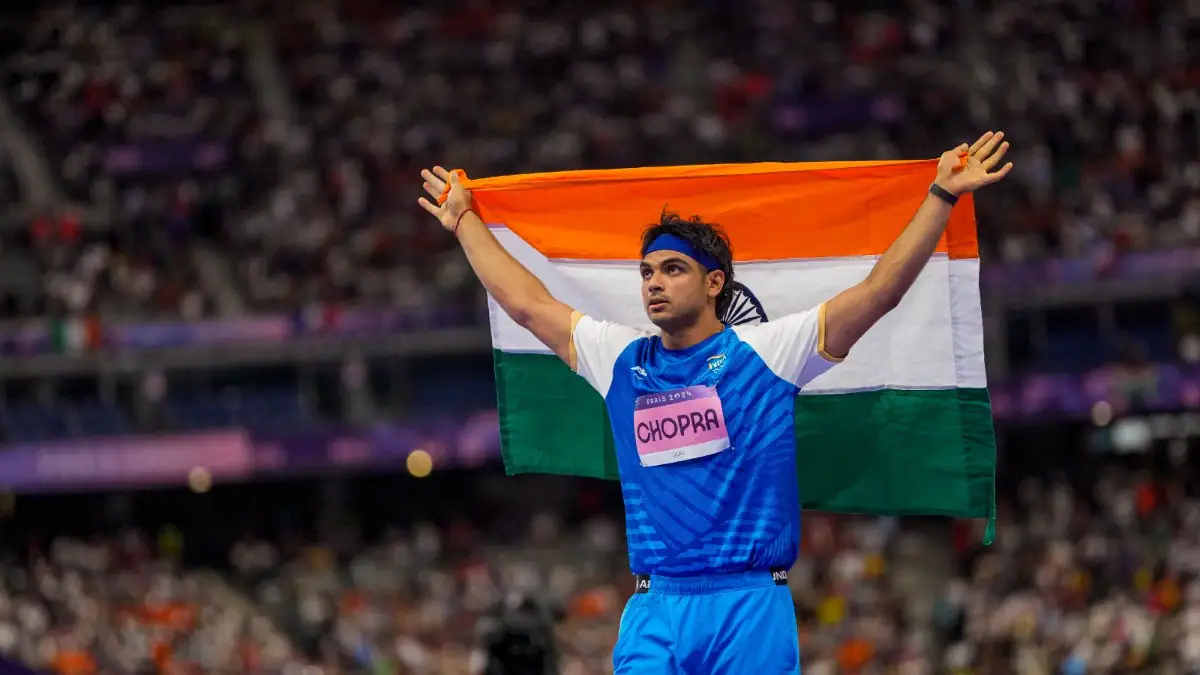
In 2016, India's government spent approximately ₹37 crore supporting its athletes through the Rio Olympic cycle. Eight years later, heading into Paris 2024, that figure stood at ₹470 crore. A more than twelvefold increase across just two Olympic cycles. The scale of that shift in financial commitment, institutional infrastructure, and sporting philosophy is rarely spoken about in the way it deserves to be. And the results have followed with remarkable consistency. At the Asian Games in Busan in 2002, India returned home with 36 medals. By Hangzhou in 2022, that tally had swelled to a record 107 nearly three times as many, including 28 gold medals. India's Paralympic athletes, once allocated minimal resources and minimal attention, delivered 29 medals at Paris 2024 compared to just four at Rio 2016. Numbers like these do not emerge from nowhere. They are the product of a system one that was painstakingly constructed and is now beginning to show its full potential.
At the heart of that system is the Target Olympic Podium Scheme, known universally within Indian sport as TOPS. Launched in 2014, the scheme was founded on a principle that sounds simple but was revolutionary in practice: identify India's most promising Olympic athletes early, and surround them with every resource they could possibly need. Monthly stipends of ₹50,000. Access to foreign training camps. International competition exposure across multiple seasons. Specialised coaching, sports science, physiotherapy, and crucially sports psychology support. The idea was to eliminate every obstacle between an Indian athlete and peak performance.
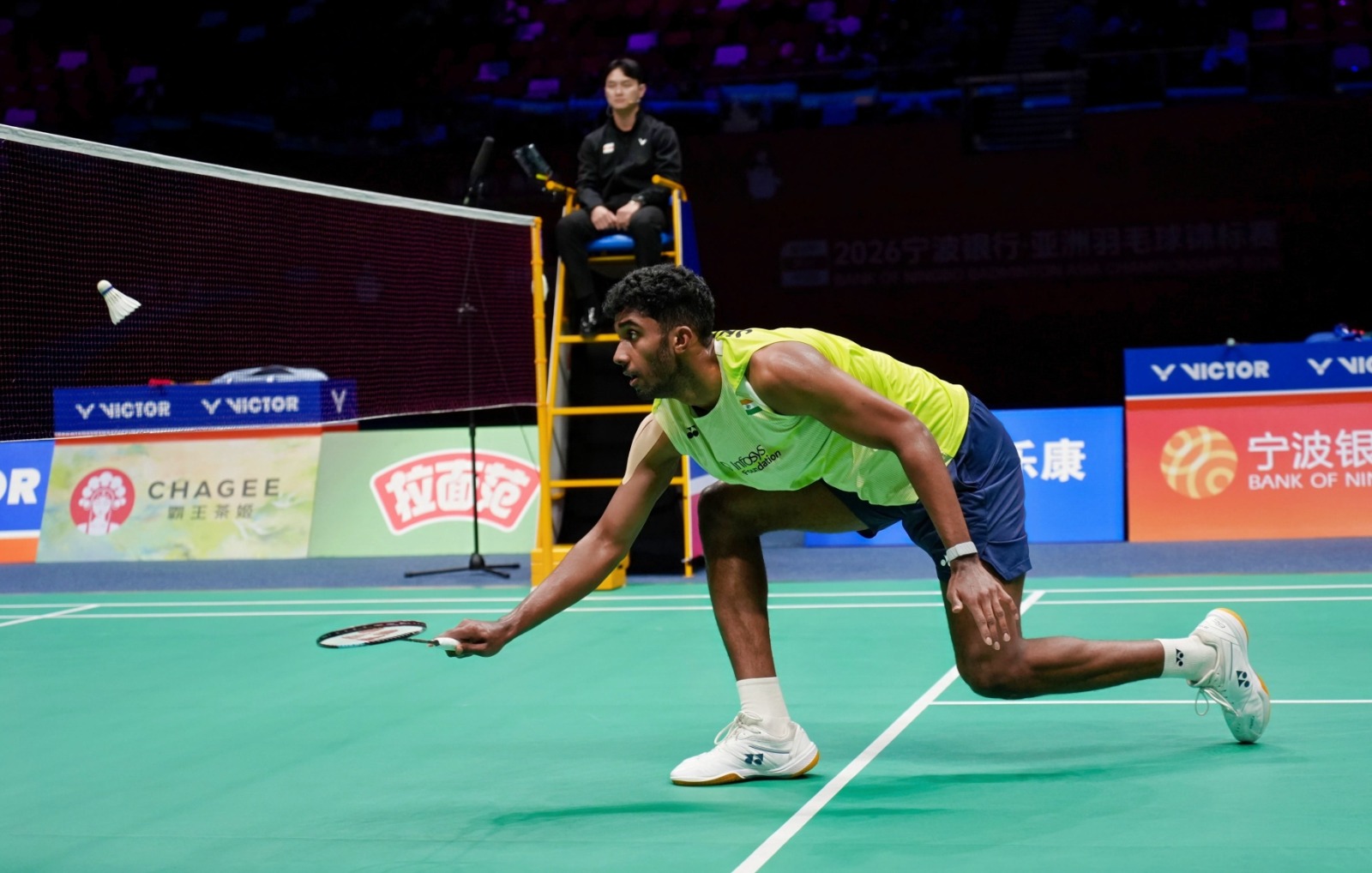
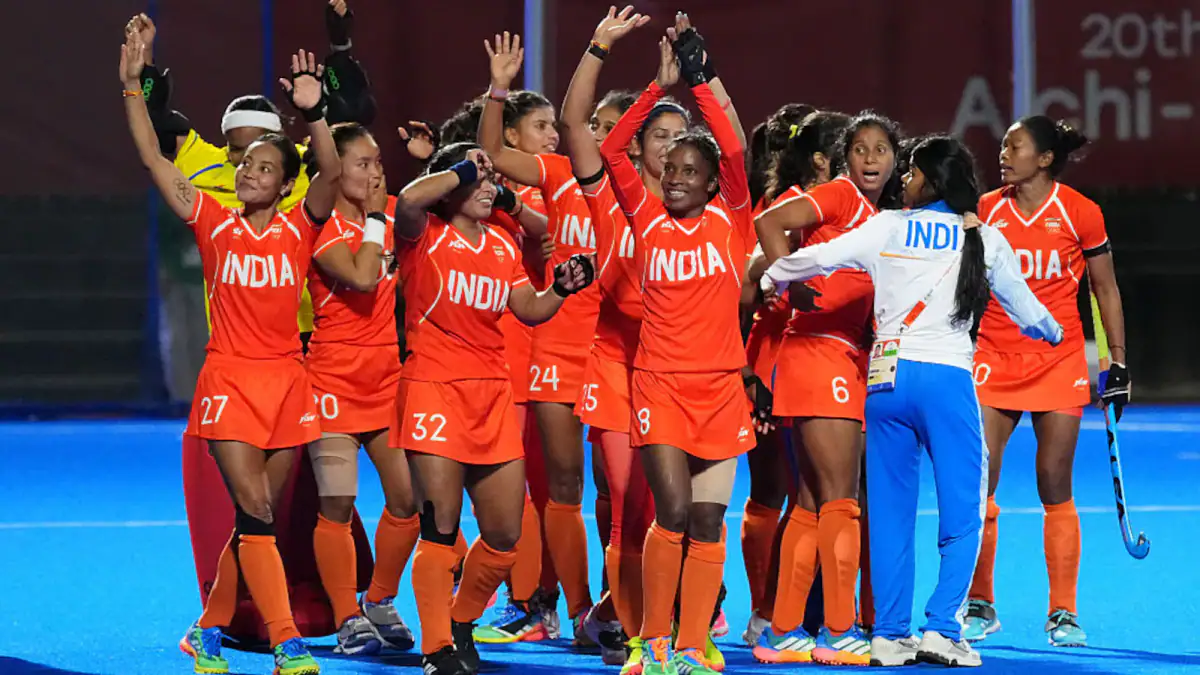
By mid-2025, TOPS had grown to cover 98 athletes in its Core Group, spanning 13 sports alongside men's and women's hockey, with a further 165 athletes enrolled in a Development Group. These are not just numbers on a government register. These are wrestlers, shooters, boxers, archers, weightlifters, and track athletes individuals whose careers have been materially shaped by the support TOPS provides.
What truly separates TOPS from a standard funding scheme, however, is the Mission Olympic Cell the MOC that governs it. Every fortnight, this committee convenes to review the performance and needs of every athlete on the programme. The questions asked are precise and unsparing: Is this athlete progressing? Do they need a foreign coach? Would a sports psychologist help them through a performance plateau? And if an athlete's results are consistently falling short, the MOC has the authority and the will to remove them from the programme entirely. It is a governance model that is merit-based, data-driven, and accountable in a way that Indian sporting institutions have not historically been known for.
The proof of concept arrived in compelling fashion at the 2018 Commonwealth Games. Of India's medal winners in Gold Coast, somewhere between 67 and 71 percent depending on the metric used were TOPS-supported athletes. Nearly three in every four Indian medals came from athletes the system had specifically identified, funded, and backed. That is not a coincidence. That is a policy working as designed.
The ecosystem extends further still. The Khelo India scheme works at the other end of the pipeline, identifying young talent at school and grassroots level and building the infrastructure through which future TOPS athletes will emerge. National Sports Federations receive structured funding for training camps, nutritional support, and specialised coaching. Retired Olympians and Asian Games medallists receive lifetime pensions. The Pandit Deendayal Upadhyay Sports Welfare scheme provides grants for athletes dealing with injury or financial hardship. Viewed together, these programmes represent something India has never previously had a cradle-to-career support structure for elite sport.
And yet, for all its progress, the system faces a ceiling that government spending alone cannot break through. Here lies the most uncomfortable truth in Indian sport's success story. In the financial year 2023-24, Indian companies collectively spent approximately ₹34,908 crore on Corporate Social Responsibility activities. Of that vast sum, sports received an estimated ₹692 crore roughly 1.9 percent. Education and health, understandably, command the lion's share of CSR budgets. But sport, with its documented capacity to transform lives, build communities, and generate national pride, barely registers. A handful of exceptions shine through. JSW Sports has built genuine athlete development infrastructure in Gujarat. Tata Trusts have invested meaningfully in Odisha's sporting ecosystem, helping produce athletes of international standing. These examples demonstrate what long-term, structured corporate investment in sport can produce. But they remain precisely that exceptions, not the norm.
For most Indian companies, sports CSR still means a jersey sponsorship, a stadium naming rights deal, or a one-off donation to a federation that may or may not be deployed effectively. It is visibility-driven spending dressed up as impact. Experts across the sports development space have consistently called for something different investment in coaching infrastructure, grassroots facilities, talent identification programmes, and linkages with government schemes like Khelo India. The kind of investment that builds systems rather than brands.
The government has done its part, and done it well. The foundation is solid, the processes are functioning, and the results are on the scoreboard. What India's Olympic machine now requires is scale and scale requires more than one engine driving it. The next chapter of India's sporting rise will be written not just in government meeting rooms and SAI training centres, but in boardrooms. The question is no longer whether India can produce Olympic champions. The question is how many it can produce and how soon. That answer depends, in no small part, on whether corporate India finally decides that sport deserves more than 1.9 percent of its conscience.
Comments (0)
to post comments, replies, and votes.
Loading comments…