Olympics: ₹1.17 Lakh Crore in Revenue. ₹0 for Athletes | Kirsty Coventry
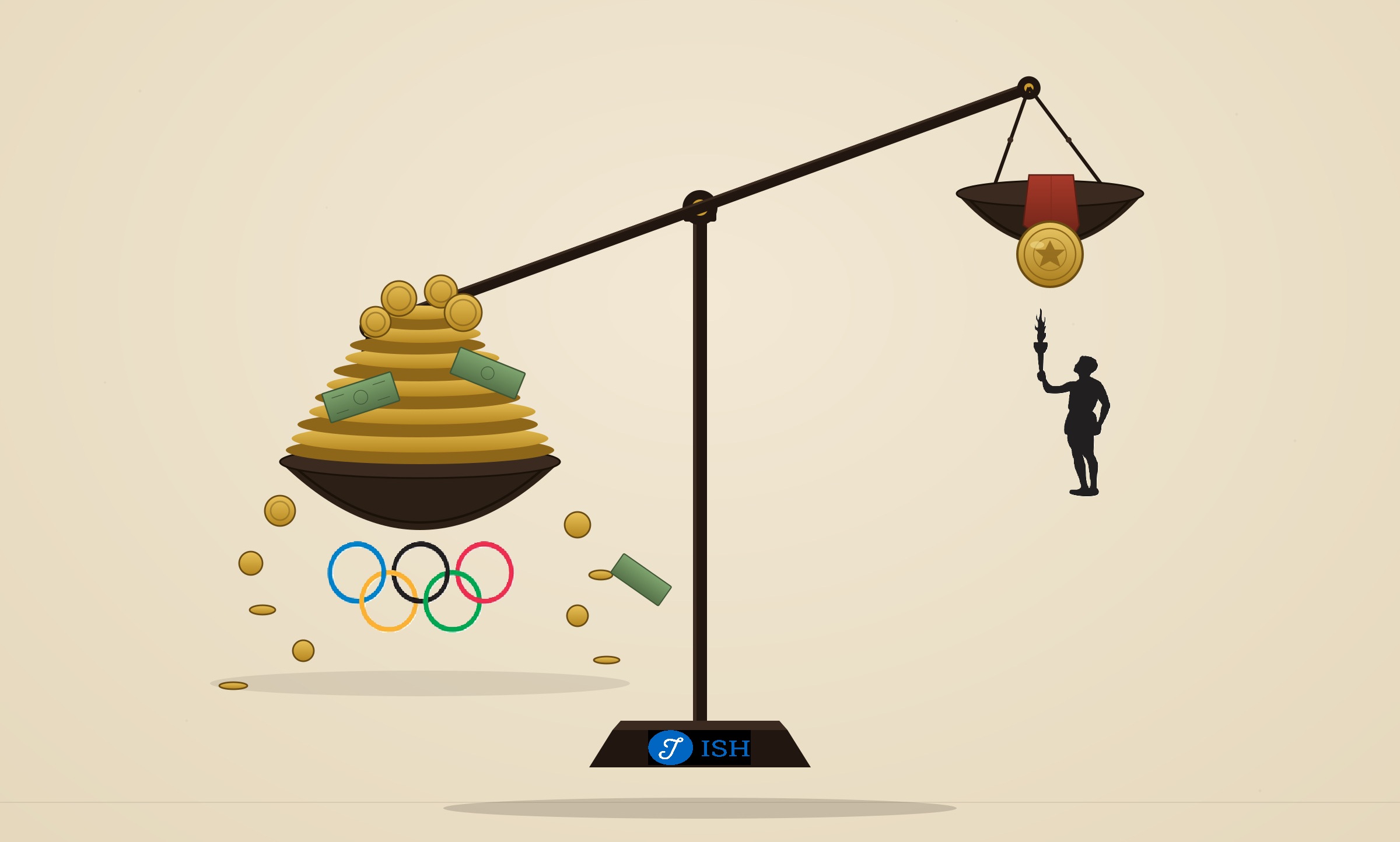
Kirsty Coventry says athletes shouldn't be paid at the Olympics. Meanwhile the IOC earns ₹1.17 lakh crore. The full breakdown, with the Indian angle.
Kirsty Coventry says Olympians should be content with "beautiful venues and beautiful villages." The IOC President's stunning defence has just lit a fuse under the Olympic Movement.
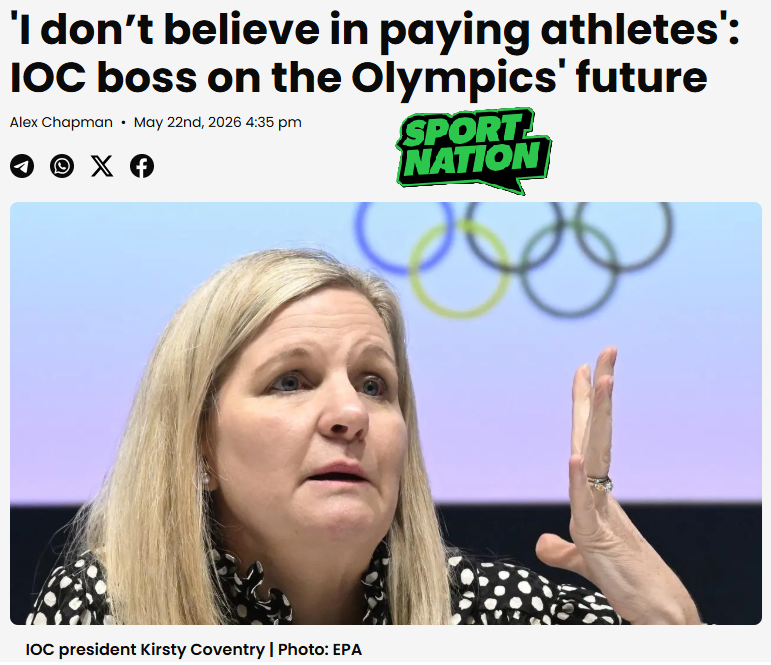
The first woman and the first African to ever lead the International Olympic Committee made a comment this week that has reopened one of world sport's oldest wounds. Speaking to Sport Nation NZ during an Oceania tour, IOC President Kirsty Coventry, herself an Olympic gold medalist swimmer from Zimbabwe, said it plainly:
"I don't believe in paying athletes. I come from a small country, I came from a sport that doesn't necessarily pay athletes very well, and I still don't think we should be paying athletes at the Olympic Games."
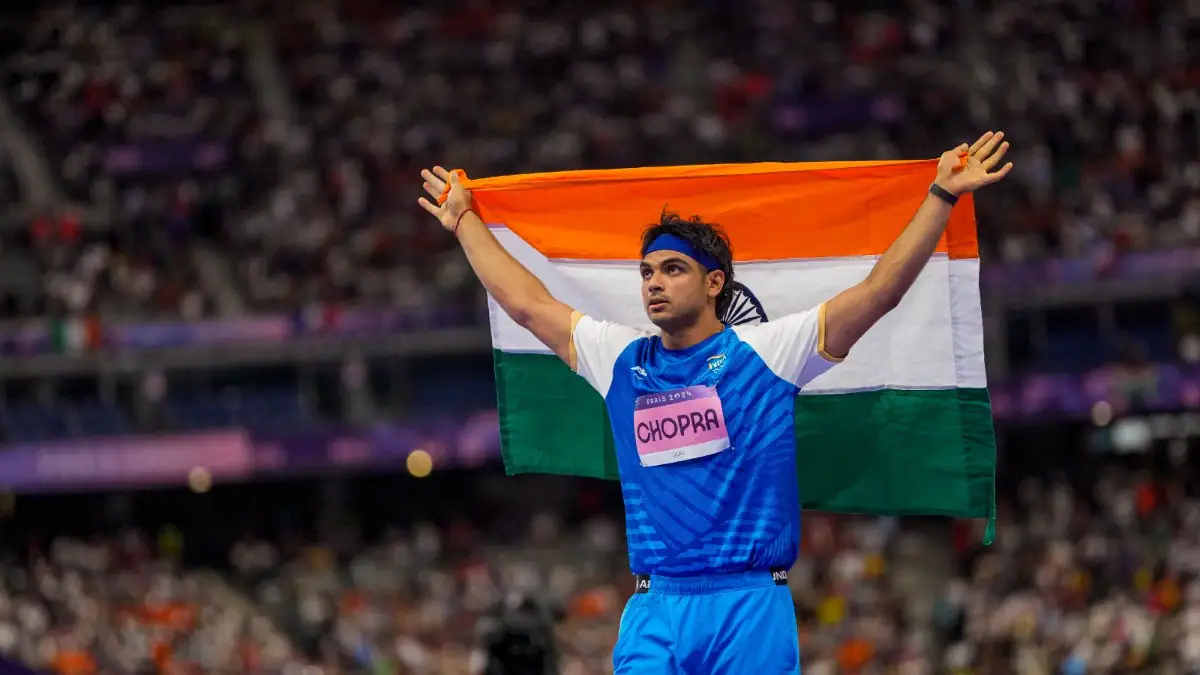
It was not a slip of the tongue. Coventry doubled down, arguing that Olympians already receive "beautiful venues, beautiful villages, and a beautiful experience," all funded by the money the IOC raises. For Indian fans who watched Neeraj Chopra hurl history into the Paris sky, Manu Bhaker rewrite the record books with two bronzes, and Aman Sehrawat wrestle to the podium at 21, the question is uncomfortable but unavoidable.
Should the world's richest sporting body, which earns billions on the back of athlete sweat, really send the performers home empty-handed?
The Numbers Behind the Rings
According to the IOC's own 2024 Annual Report, the Olympic movement collected more than USD 12.3 billion (roughly ₹1.17 lakh crore) in revenue during the 2021 to 2024 cycle covering the Tokyo and Paris Games. Broadcast rights alone brought in USD 4.6 billion (about ₹43,700 crore), with sponsorships from 15 TOP partners including Coca-Cola, Visa, Samsung, and Toyota adding another USD 3.3 billion (about ₹31,350 crore). NBC's US broadcast deal alone is worth USD 7.75 billion through 2032, an average of more than USD 1 billion per Games.
After distributing money to organizing committees, federations, and National Olympic Committees, the IOC closed 2024 with a surplus of USD 1.134 billion and reserves of USD 4.88 billion (about ₹46,360 crore). For the next cycle, 2025 to 2036, the IOC has already locked in USD 18.4 billion in confirmed future revenue. The athletes whose names sell those broadcast deals receive, directly from the IOC, zero rupees in prize money for participation or for winning a medal.
Coventry's Defence and Its Blind Spot
Coventry's argument leans on what the IOC calls the "solidarity model." She points out that the IOC redistributes 90 percent of its income, the equivalent of USD 4.7 million (about ₹44.6 crore) every single day, to support sport globally. The Olympic Solidarity program has a 2025 to 2028 budget of USD 650 million (about ₹6,175 crore) for athlete scholarships, coaching, and grants routed through National Olympic Committees. She herself was once an Olympic Solidarity scholarship holder, and credits that support for her career.
Her concern is also structural. If the IOC starts paying medalists directly, she warns, smaller nations with smaller athlete pools could be priced out, the universality of the Games could shrink, and lesser-known Olympic sports could lose out to a winner-takes-all economy. There is real merit in that worry. But the numbers reveal a gap. In 2024, the entire Olympic Solidarity program paid only USD 17.6 million (about ₹167 crore) directly to 2,150 athletes worldwide. That is roughly ₹78,000 per athlete for the year. The IOC's reserves alone are around 277 times that amount. The "beautiful village" Coventry points to was paid for by the host city. The product on the screen, the moments fans tune in for, is created entirely by athletes.
The Contrast: How Other Global Tournaments Treat Their Stars
The Olympics today stands almost alone in its refusal to pay performers. The FIFA World Cup in Qatar 2022 distributed a prize pool of USD 440 million (about ₹4,180 crore), with the winning nation, Argentina, alone receiving USD 42 million (about ₹399 crore). The 2026 World Cup co-hosted by Canada, the US, and Mexico will raise that pool to USD 871 million (around ₹8,275 crore). Even teams eliminated in the group stage walk away with USD 9 million (about ₹86 crore). Tennis Grand Slams reward champions with multi-million-dollar cheques. The Indian Premier League pays uncapped Indian rookies more in two months than most Indian Olympians earn in a career.
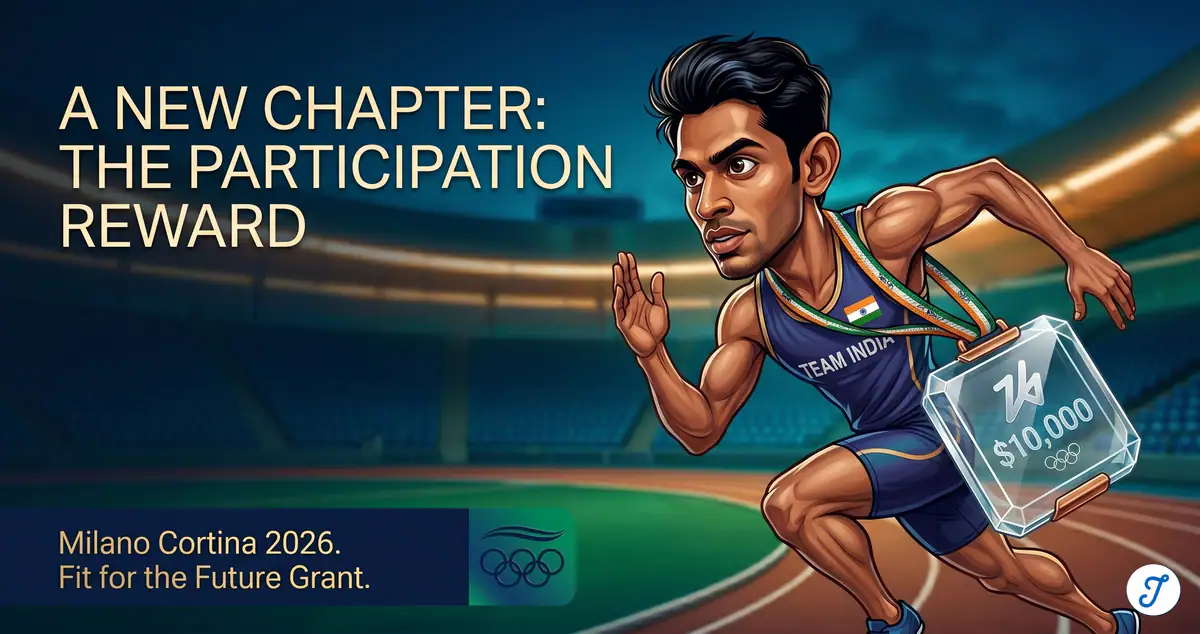
Even inside the Olympic movement, the resistance is cracking. World Athletics, under Sebastian Coe, broke ranks in 2024 and became the first international federation to award USD 50,000 (approximately ₹47.5 lakh) to each of its 48 gold medalists in Paris, with silver and bronze winners to be added at LA 2028. Coe's reasoning was simple. He said it would be "inconsistent" for the sport's governing body to benefit from broadcast and sponsorship deals without compensating the athletes who make them possible. Neeraj Chopra publicly welcomed the move and called for other federations to follow.
The Indian Angle
For India, this question carries extra weight. Indian Olympians are largely supported through central government schemes (TOPS, Khelo India), state government cash rewards, public sector jobs in Railways and the armed forces, and private sponsors. Neeraj Chopra received ₹2.51 crore from Punjab and ₹1 crore from the BCCI after his Tokyo gold. Manu Bhaker received ₹30 lakh from the central government for her two Paris bronzes. These are generous in headline terms, but they exist precisely because the IOC pays nothing. The financial weight of an Olympic journey is borne by the Indian taxpayer, the Indian sponsor, and very often, the athlete's own family.
For every Neeraj, there are hundreds of athletes like sprinter Lokesh Kumar, who struggled to afford basic dietary supplements, or swimmer Sajan Prakash, who once considered auctioning his medals to fund his training. Indian walkers Irfan KT and Basant Bahadur did not own proper shoes before the London Olympics. The IOC's model assumes that someone, somewhere, the taxpayer, the sponsor, or the family, will catch the athlete before they fall. For most Indian aspirants chasing the rings, no one does.
The Real Reason for the Resistance
Strip away the language of "solidarity" and "Olympic values," and Coventry's position has one practical truth at its core. The moment the IOC starts paying athletes directly, the conversation shifts from charity to entitlement. Athletes could organize. They could demand a contractual share of broadcast revenue. They could unionize. The IOC would no longer be the benevolent custodian of a movement; it would be an employer with negotiating partners across the table. That is a power dynamic the IOC has resisted for over a century, ever since it quietly abandoned amateurism only in the 1980s and began monetizing the Games at scale.
Coventry's statement is honest, and her commitment to the solidarity model is sincere. But it is also the corporate position of a body sitting on ₹46,000 crore in reserves, telling the workforce that the experience is the reward. For an Indian athlete who gives a decade of their life chasing a flag, an anthem, and a medal that no longer even guarantees a job, the question is no longer whether the Olympics can afford to pay. It is whether the world's most powerful sporting body still believes its athletes deserve to be paid.
The athletes built the rings. They have started asking what the rings owe them back.
Comments (0)
to post comments, replies, and votes.
Loading comments…