The IOC shatters 130 years of tradition with a direct $10,000 grant. Discover how this vital funding changes the game for Indian Olympic athletes.
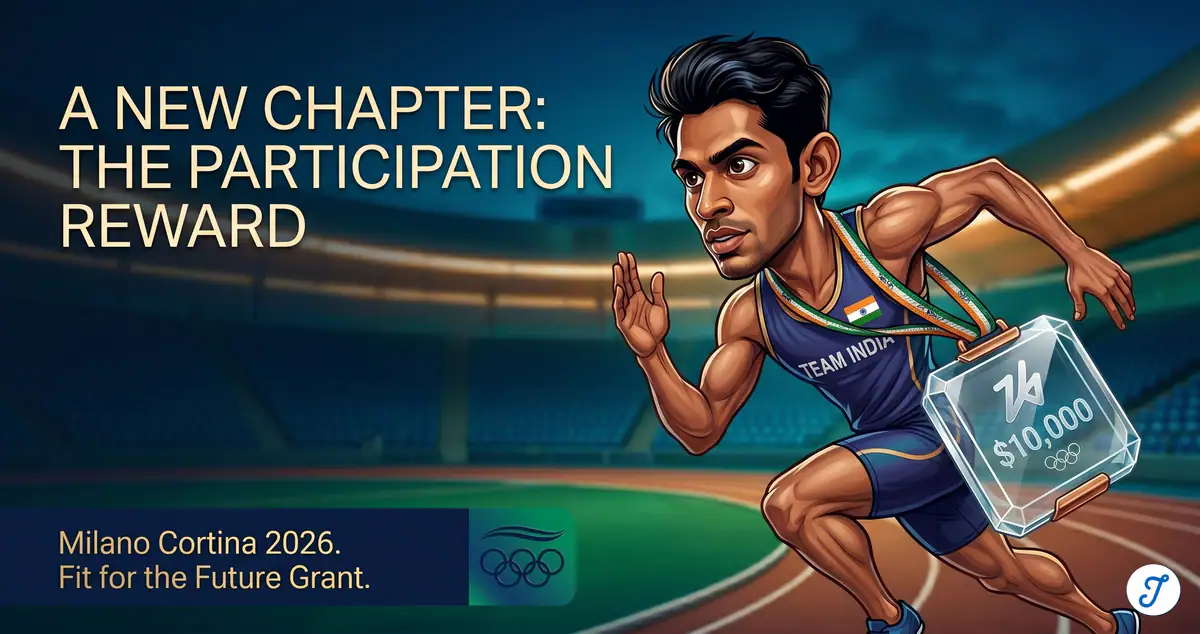
On June 24, 2026, during the 146th International Olympic Committee (IOC) Session in Lausanne, Switzerland, the governing body announced the creation of the "Fit for the Future Olympian Grant". Under this program, every single athlete who competes in the Olympic Games, starting retroactively with the Milano Cortina 2026 Winter Games, will be eligible for a direct USD 10,000 grant. Backed by a USD 140 million fund per four-year Olympiad cycle, the initiative is expected to support approximately 14,000 athletes per cycle. This landmark policy directly validates the claims made in recent sports commentary, marking an authenticated and unprecedented pivot in the commercial structure of global athletics.
Historical Context: From Classist Amateurism to State-Backed Shamateurism
For 130 years, the Olympic movement was governed by a strict, often classist amateur ethos. Established in 1894, these rules barred professional athletes to preserve the "Corinthian spirit" of playing solely for the love of the game. In practice, this restricted competition to the wealthy elite who could afford to train without income, while working-class athletes were heavily penalized. The absolute rigidity of this rule was highlighted in 1912 when Jim Thorpe was stripped of his track and field gold medals simply for accepting minor expense money to play baseball.
Throughout the mid-20th century, this system decayed into "shamateurism". Eastern Bloc nations, most notably the Soviet Union, bypassed amateur restrictions by enlisting elite athletes into the military or enrolling them as students, effectively funding them full-time to train while maintaining nominal amateur status. This structural imbalance eventually forced the IOC to dismantle amateur barriers between 1988 and the late 1990s. Yet, even as professional multi-millionaires entered the Games, the IOC refused to distribute its massive commercial revenues directly to the thousands of less-privileged participants who formed the backbone of the event.
Why Now: Political Demands and Leadership Shifts
The implementation of this direct grant is the result of rapid political shifts within sports governance. On June 23, 2025, Kirsty Coventry, a double Olympic swimming champion from Zimbabwe, assumed office as the first female and first African President of the IOC. Coventry immediately introduced her "Fit for the Future" strategic framework to modernize the movement and place athlete welfare at the center of governance.
This internal restructuring coincided with massive external pressure. Sebastian Coe, the leader of World Athletics, broke decades of Olympic protocol by paying USD 50,000 to track and field gold medalists at the Paris 2024 Games. This move triggered intense debate over the financial exploitation of Olympic athletes, with former competitors demanding that the IOC share its USD 7.7 billion in commercial revenues. While Coventry consistently opposed paying elite prize money to a tiny tier of medalists, the USD 10,000 grant serves as a diplomatic compromise that provides a baseline financial floor for all competitors.
The Reality of Sports Governance in India
In India, sports is constitutionally classified as a "State" subject, meaning that the primary responsibility for nurturing athletic talent is divided across 28 states and eight union territories. This structural division causes highly unequal infrastructure, non-uniform policies, and highly inconsistent funding. While elite government schemes like the Target Olympic Podium Scheme (TOPS) provide extensive travel and coaching budgets for select medal prospects, the vast majority of developmental athletes receive minimal grassroots support. This severe lack of resources has historically forced families to incur devastating personal debts, routinely selling ancestral land, livestock, or exhausting wedding savings to purchase basic equipment, travel, and nutritional supplements.
Impact on Indian Athletes: Bypassing Bureaucratic Bottlenecks
The introduction of the USD 10,000 grant represents a vital financial lifeline that bypassed traditional administrative delays. Although the grant is designed to be distributed through National Olympic Committees (NOCs), the IOC requires strict verification that these funds are transferred directly into the hands of the qualified athletes.
This direct flow of capital is particularly critical given the ongoing crisis within the Indian Olympic Association (IOA). Escalating governance disputes between IOA President PT Usha and her executive committee have paralyzed day-to-day operations, prompting the IOC to suspend the IOA's annual USD 1.1 million Olympic Solidarity grant. However, because the IOC maintains direct-to-athlete payment pathways for individual scholarships, the USD 10,000 grant bypasses the frozen local bureaucracy, ensuring that every Indian athlete who secures an official "Aa" Olympic accreditation receives their funds directly.
Why More Indians Must Enter Olympic Sports
For an aspiring Indian athlete, qualifying for the Olympics is no longer just a prestige goal; it is now a verified commercial milestone. A guaranteed USD 10,000 (approximately INR 9.3 Lakhs) upon qualification provides essential seed capital to fund the next four-year cycle or to ease career transition.
Furthermore, the national landscape is undergoing a massive transformation. In 2025, the Indian government approved the Khelo Bharat Niti (Play India Policy), committing a record annual budget of USD 457 million to back its official bid to host the 2036 Olympic Games. By combining this unprecedented surge of national sports infrastructure funding with the guaranteed financial floor established by the IOC, the professional path in Olympic disciplines has never been more secure, offering a viable, stable alternative to cricket.
Enjoyed this story? A small contribution helps us cover more of Indian sport.₹200+ unlocks 1 year Premium · tap anywhere to paySupport · ₹501