Beyond the Crease: Assessing India’s Trajectory in Team Sports for the LA28 Olympics
From cricket dominance and hockey's revival to the steep uphill climb for volleyball and flag football.
From cricket dominance and hockey's revival to the steep uphill climb for volleyball and flag football.
For a nation of over 1.4 billion people, India’s relationship with global multi-sport events has historically been a tale of massive potential contrasting with modest podium finishes. While individual disciplines like shooting, wrestling, badminton, and athletics have slowly begun to yield regular medals on the world stage, team sports have traditionally carried a different kind of emotional weight.
As the sporting ecosystem shifts its focus toward the Los Angeles 2028 Olympic Games (LA28), a fascinating graphic detailing India’s global standing across specific team sports outlines a stark reality. The graphic maps out a compelling narrative of dominance, revival, and steep uphill climbs across eight key team disciplines:
Cricket: Ranked 1st
Hockey: Ranked 8th
Lacrosse: Ranked 35th
Volleyball: Ranked 42nd
Rugby Sevens: Ranked 48th
Flag Football: Ranked 56th
Basketball: Ranked 76th
Football (Soccer): Ranked 102nd
This data tells a multi-layered story. It reflects not just performance, but the deep-rooted cultural biases, financial investments, structural gaps, and varying levels of grassroots infrastructure that define Indian sports today.
The headline of the data is completely expected, yet uniquely significant: India ranks 1st in cricket. For decades, cricket has operated outside the Olympic sphere, existing as a standalone religion in South Asia. However, with the International Olympic Committee (IOC) officially confirming cricket’s inclusion in the LA28 program, the dynamic of Olympic sports in India is about to shift fundamentally.
India’s top ranking isn't just about on-field talent; it represents an entire ecosystem built on world-class domestic infrastructure, unmatched financial backing through the Indian Premier League (IPL) and Women's Premier League (WPL), and a hyper-competitive grassroots talent pipeline.
When the Indian contingent marches into Los Angeles in 2028, the cricket teams, both men’s and women’s will carry the heavy burden of absolute expectation. Unlike individual sports where a single bad day can eliminate a medal favorite, India’s cricketing depth makes them formidable contenders over an entire tournament structure. The Olympic inclusion of cricket also offers a massive strategic advantage to the Indian Olympic Association (IOA). It guarantees a highly realistic shot at a gold medal, a feat that drastically changes India's position on the final medal tally. However, this undisputed dominance in one sport sharply highlights the massive developmental gap when compared to other team disciplines.
The Legacy of the National Game: Hockey's Steady Climb
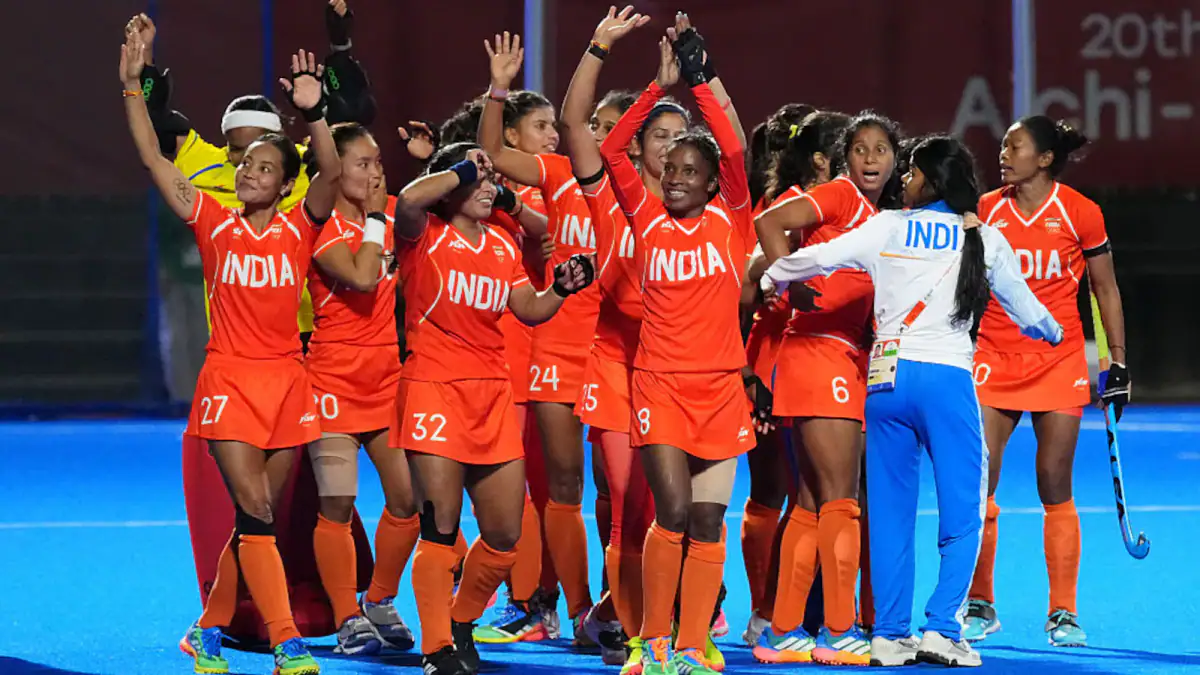
Positioned at Rank 8, field hockey represents India’s traditional sporting soul. The eighth-place ranking tells a story of a sport that fell from absolute grace, went through a painful rebuilding phase, and is now firmly on a path of renaissance.
India’s historic relationship with Olympic hockey is legendary, boasting eight gold medals. Yet, the transition from natural grass to synthetic astroturf in the late 20th century destabilized India’s dominance for decades. The turn of the millennium saw Indian hockey struggling to even qualify for the Olympics.
The current world ranking of 8th, alongside recent podium finishes at the Tokyo and Paris Olympic cycles, proves that structural reforms work. The sustained support from corporate partnerships and dedicated state sponsorships most notably by the Odisha government has provided hockey with world-class sports science, foreign coaching expertise, and a steady domestic league structure. Securing a top-8 global position in field hockey is incredibly difficult given the extreme competitiveness of European teams (like Belgium, the Netherlands, and Germany) and Oceanic powerhouses (like Australia). For India to convert this solid top-10 ranking into a definitive gold-medal threat by LA28, the focus must shift from merely competing to mastering tactical consistency under high-pressure, late-stage tournament scenarios.
Sitting at rank 35, lacrosse is an unexpected entry that represents a highly strategic opportunity for the Indian sporting ecosystem. Alongside flag football and cricket, lacrosse (specifically the fast-paced "Sixes" format) is making its official return to the Olympic roster for LA28.
Though historically rooted in North American Indigenous culture, lacrosse shares striking kinetic similarities with field hockey, a sport India fundamentally understands. The stick-handling coordination, spatial awareness, and quick-passing bursts required in lacrosse mean that India possesses a massive, untapped reservoir of crossover athletes who can transition from field hockey or traditional local sports.
An initial ranking of 35 indicates a growing foundation. Unlike mature European or American ecosystems, the global field in the newer, high-speed Olympic Sixes format is still stabilising. If the Indian Lacrosse Federation can fast-track high-performance training camps and secure international exposure over the next two years, this discipline offers a dark-horse pathway to punch well above India's traditional weight class on the global stage.
The Untapped Frontier: The Uphill Battle for Volleyball
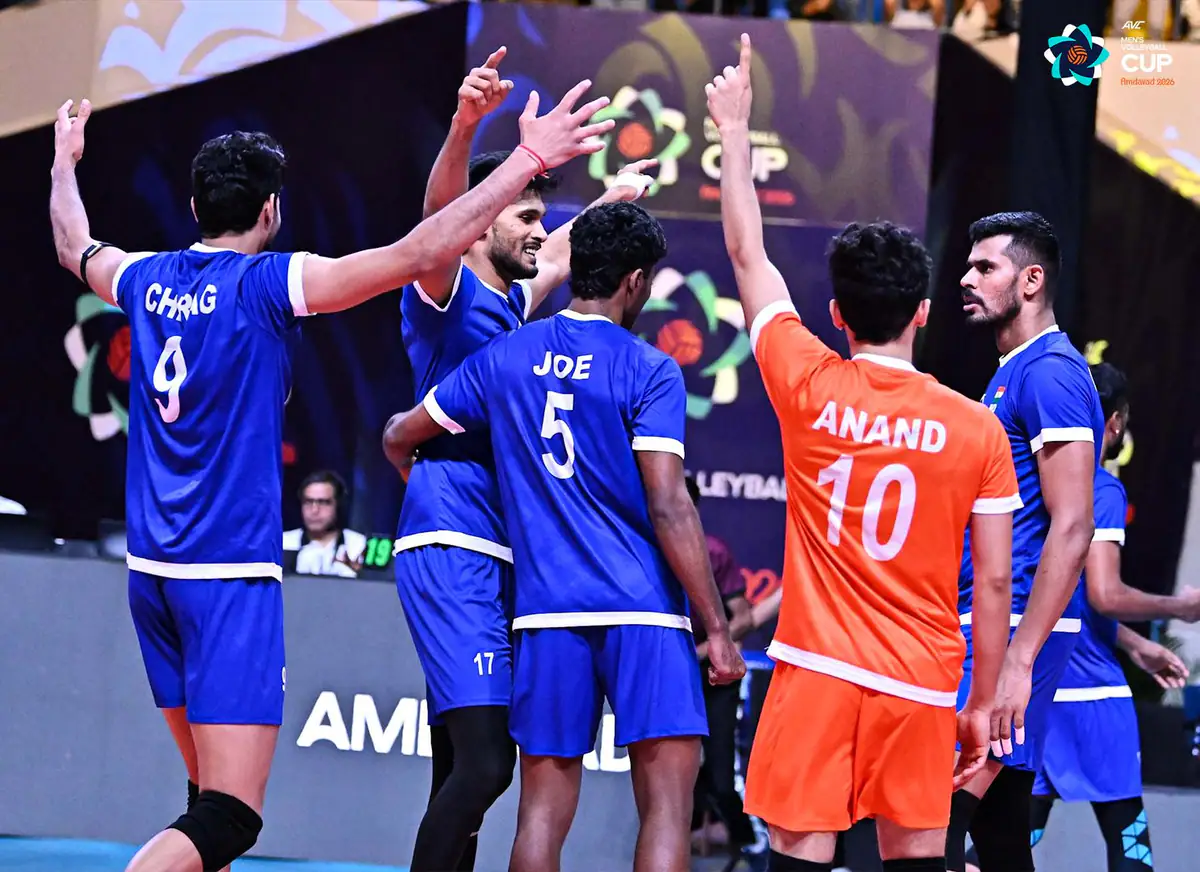
Further down the graphic, a massive gap appears as volleyball sits at rank 42. Volleyball is incredibly popular in rural and semi-urban India. Walk through almost any village or school playground across the country, and you will find makeshift volleyball courts packed with local talent. Yet, this massive grassroots participation has failed to translate into global competitiveness.
A global ranking of 42 highlights a classic systemic issue in Indian sports: the disconnect between raw talent and elite infrastructure. For years, the administrative framework governing Indian volleyball faced severe internal instability, legal disputes, and a lack of clear direction. This directly impacted international exposure, training camps, and structural funding for athletes.
Without a highly competitive, long-term professional domestic league, athletes lack the opportunity to play alongside and against elite international players regularly. Furthermore, modern volleyball relies heavily on specific physical profiles and advanced sports science, fields where India's domestic setup has historically lagged behind nations in Europe and South America. Overcoming a rank of 42 by 2028 is a monumental challenge. It requires an immediate overhaul of the sport's domestic calendar, heavy investment in youth development pipelines, and sustained international exposure to bridge the tactical gap between India and the world's elite teams.
Positioned at rank 48, Rugby Sevens represents a fascinating case study of asymmetric growth, fuelled primarily by the meteoric rise of the Indian National Women’s team in Asia.
Rugby sevens, a high-intensity, short-duration Olympic variant, demands elite levels of aerobic capacity, raw sprinting speed, and relentless physical resilience. While the men's side continues a slow, grassroots build, the women’s team has consistently challenged continental powerhouses, capturing attention with standout performances at the Asian Rugby Sevens circuits.
However, a global ranking of 48 underscores the massive divide between regional competency and global qualification. To breakthrough into the top tiers required for Olympic contention, the sport requires severe systemic intervention. The corporate blueprint that revitalized Indian hockey needs to be applied here: establishing fully funded residential academies, integrating specialized strength-and-conditioning staff, and securing consistent fixtures against high-tempo tier-1 rugby nations.
The next data point on the graphic is perhaps the most intriguing for the future Olympic landscape: flag football, where India is positioned at rank 56. Like cricket, flag football a non-contact variant of American football is making its grand debut at the LA28 Olympics. Being the host nation, the United States has championed the inclusion of this sport, sparking a sudden global scramble among nations to assemble, train, and field competitive teams.
An initial ranking of 56 is neither a failure nor a surprise; it is a baseline marker for a sport that is effectively in its infancy within the Indian subcontinent. Unlike cricket or hockey, flag football has no deep historical roots, mainstream media coverage, or widespread school-level infrastructure in India.
However, this low ranking presents a unique, blank-canvas opportunity. Because the sport is relatively new to the Olympic roster globally, the performance gap between nations isn't as deeply set as it is in traditional sports like football or basketball. India can look to leverage athletes from other disciplines such as track and field, rugby, or ultimate frisbee who possess the explosive speed, agility, and catching skills required for flag football. Achieving competitiveness in flag football by LA28 requires building awareness from the ground up, establishing a functional national federation, and organizing fast-tracked talent identification camps across the country.
Sitting at rank 76, Basketball presents an intriguing dichotomy between exploding urban popularity and a stagnant global ranking. While standard 5x5 basketball remains a steep hill to climb, the faster, high-octane 3x3 format introduced permanently to the Olympic roster offers a highly viable shortcut for Indian hoops.
The standard ranking of 76 tells the familiar story of physical and structural limitations. Historically, India has struggled to match the sheer height, physical verticality, and tactical rigor of European and American programs. Furthermore, the lack of a continuous, highly paid professional domestic league has caused a massive brain drain of top-tier talent.
Yet, the 3x3 format provides a beacon of hope. It requires fewer players, rewards street-smart agility, and relies less on raw height and more on rapid shot-making and conditioning. With corporate entities finally investing in short-format pro leagues inside India, elevating the 3x3 ranking represents India's most realistic avenue to make a sudden, profound statement on the hardwood by the time the LA28 cycles conclude.
At the bottom of this specific team sport spectrum lies the ultimate paradox: Football (Soccer) at Rank 102. Despite possessing a multi-million dollar domestic league ecosystem in the Indian Super League (ISL) and an aggressively passionate fanbase, the national team’s global standing remains locked outside the top 100.
The rank of 102 exposes the ultimate failure of translating commercial enthusiasm into elite, high-performance output. While the ISL has successfully brought glitz, glamour, and broadcasting revenue, it has inadvertently exposed severe deficiencies in the grassroots pipeline. For decades, Indian football lacked unified youth development, leaving players structurally and tactically raw by the time they reached the senior level.
Olympic football is uniquely strict, operating primarily as an Under-23 tournament. For India to even dream of a qualification pathway through the highly cutthroat Asian qualifiers, the entire philosophy must shift. It requires moving away from relying on aging foreign imports in the domestic league and pivoting toward mandatory, hyper-structured youth minutes; elite coaching at the U15–U19 levels; and exposing young Indian starlets to international leagues early in their development cycles.
The data presented in the graphic provides a clear, unsentimental look at the current state of Indian team sports. It shows a country that is a powerhouse in one sport, a historic giant finding its feet in another, and an underdog looking for direction in the rest.
If India wants to transform from a nation that celebrates individual brilliance to a true global sports superpower, the lessons from cricket's commercial success and hockey's structural revival must be adapted for other team sports. LA28 is just a few years away, and while cricket offers a highly anticipated shot at Olympic glory, the real test of India’s sporting maturity will lie in how effectively it elevates the sports currently sitting in the deeper, uphill ranks of the global stage.
Comments (0)
to post comments, replies, and votes.
Loading comments…