Indian-Origin Stars Stealing the Show at Majors: Theegala, Bhatia & the Diaspora Domination

From Theegala’s flair and Bhatia’s boldness to Rai’s historic major win, the Indian diaspora is transforming golf’s biggest stages.
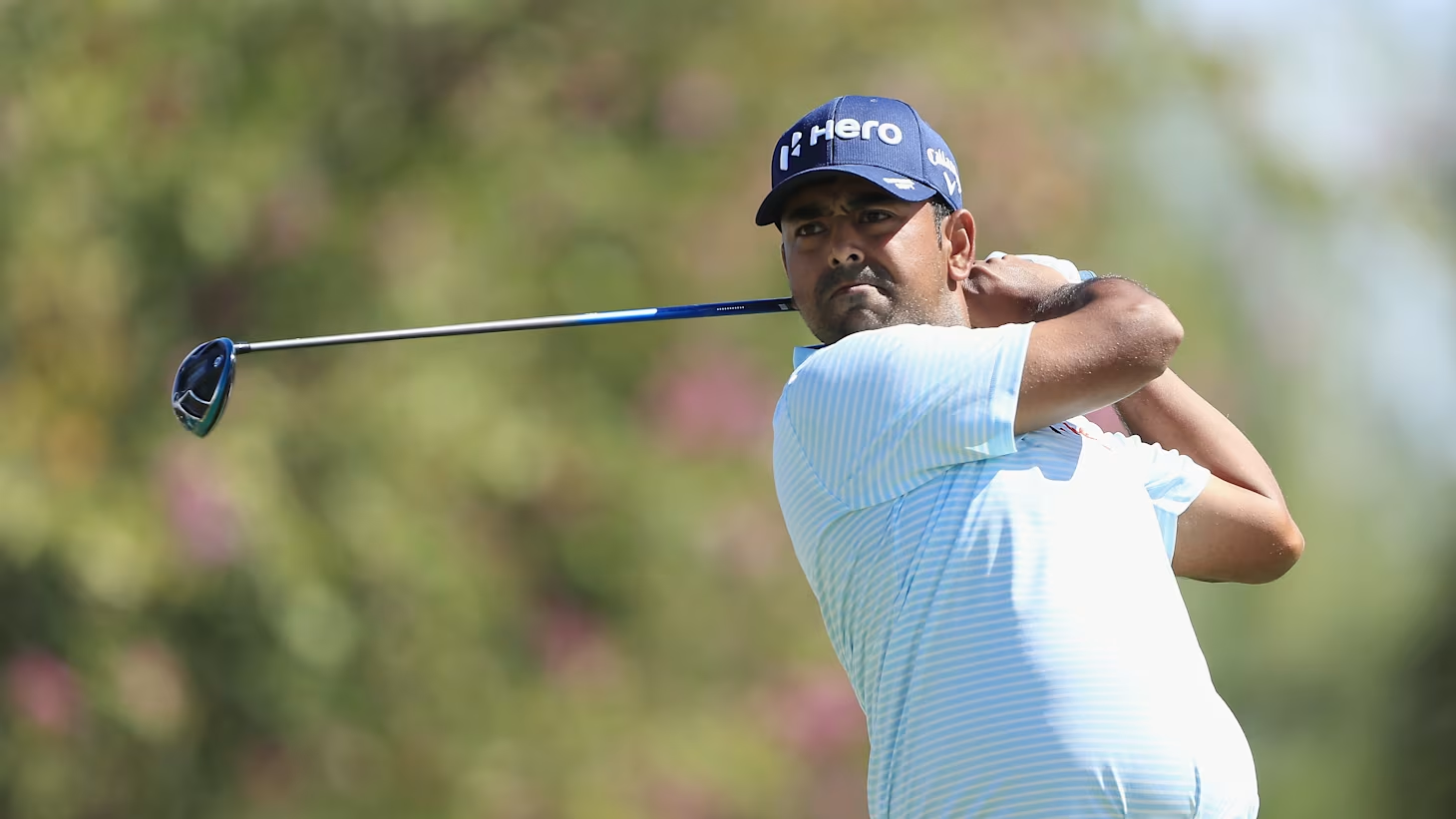
Indian-Origin Stars Stealing the Show at Majors: Theegala, Bhatia and the Diaspora Domination You know that feeling when you’re watching a major championship and suddenly notice a familiar rhythm in someone’s swing or hear a name that makes you do a double-take? For many in the Indian community, whether in the U.S., the UK, or back home, that moment has been happening more and more lately. Sahith Theegala, Akshay Bhatia, and a handful of other players with Indian roots are no longer just participating in golf’s biggest stages. They’re contending, winning, and rewriting what success looks like in a sport that historically felt worlds away from desi dinner tables.
Let’s start with Sahith Theegala. Born in Orange, California, to Telugu immigrants from Telangana, Sahith grew up in Chino Hills with a backyard that probably saw more golf balls than grass at times. His parents, Muralidhar and Karuna, moved to the States in the late ’80s chasing better opportunities. They couldn’t have imagined their son would one day stand on the first tee at Augusta or trade shots with the best in the world at the U.S. Open.
Theegala’s college run at Pepperdine was the stuff of legend. He swept the big awards Haskins, Hogan, and Nicklaus in 2020, becoming the first to do so in the same season in a long time. That kind of dominance doesn’t come from talent alone. It’s hours on the range, family sacrifices, and that quiet pressure of representing something bigger. Turning pro in 2020, he earned his PGA Tour card and wasted no time making noise. His first victory came at the 2023 Fortinet Championship, and he’s been a fixture near the top of the rankings since, peaking inside the world’s top 15.
Indian-American Stars Shining on the PGA Tour
What stands out about Theegala isn’t just the scores. It’s the way he plays with creativity, flair, and that big smile that lights up broadcasts. He’s 6’3”, athletic, and has this knack for pulling off shots that make you lean forward in your chair. In recent majors, including strong showings at the U.S. Open where he posted one of his career-best finishes, he’s shown he belongs among the elite. Watching him navigate tough setups reminds me how golf rewards imagination as much as power. For Indian-American kids grinding away at local munis, seeing Sahith contend feels like validation.
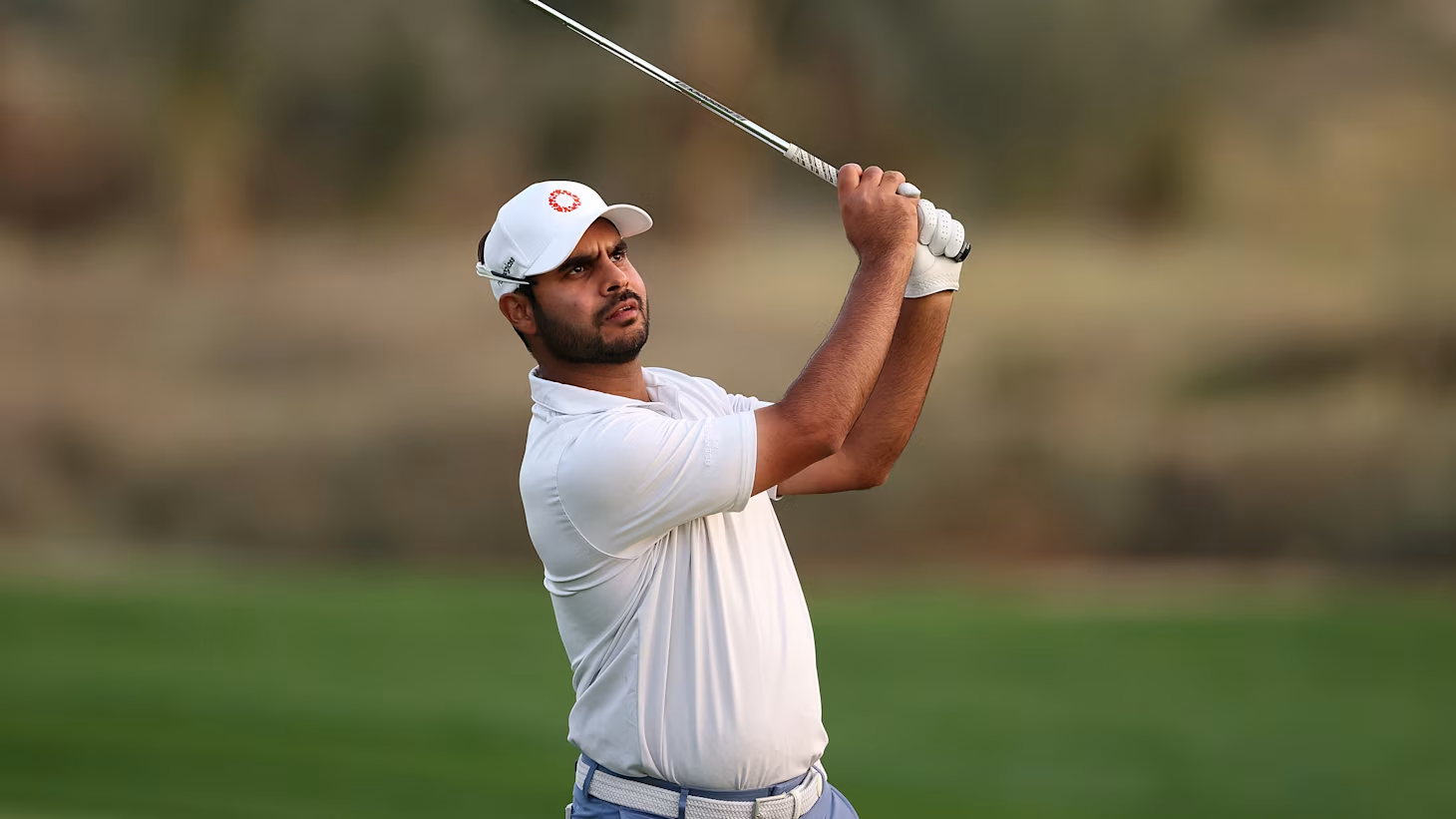
Then there’s Akshay Bhatia, the kid who turned pro at 17 and basically told the conventional path to take a hike. Born in Northridge, California, to parents Sonny and Renu, who came from Delhi, Bhatia moved to North Carolina as a teen. He was a junior phenom, top-ranked amateur, and Walker Cup player as a high schooler and works. But instead of college, he went straight to the pros, faced the grind on smaller tours, dealt with COVID disruptions, and came out the other side stronger. Bhatia’s breakthrough wins, including the Valero Texas Open and the prestigious Arnold Palmer Invitational, marked him as a serious force. At just 24, he already has multiple PGA Tour titles and has been climbing the world rankings aggressively.
His game is fearless long off the tee, creative around the greens, and mentally tough in pressure situations. In majors, he’s been posting consistent top-20s and better, proving he can handle the Sunday heat when the eyes of the golf world are watching.
What I love about Bhatia’s story is the raw ambition. Turning pro young is risky. Many flame out. He didn’t. He adjusted his swing, battled through setbacks, and emerged with a game that’s both powerful and polished. His parents’ move from India and the support they gave him echo the classic immigrant tale: work hard, bet on your kids, and watch them soar in a new land.
Humble Roots, Historic Major Win and Diaspora Resilience
Of course, the diaspora story doesn’t stop with these two Americans. Aaron Rai, born in Wolverhampton, England, to parents of Indian descent (Punjabi roots on his father’s side and Kenyan-Indian on his mother’s), has become one of the most consistent performers on the PGA Tour. Known for his meticulous habits, like covering his irons after every shot to honour his dad’s sacrifices, Rai’s recent major success, including a historic PGA Championship win, sent waves through the community. He’s the first golfer of Indian heritage to claim a major title, breaking barriers in style.
Rai’s journey from a working-class background, turning pro at 17, and grinding his way up shows resilience. His equipment quirks might seem quirky to outsiders, but they’re a beautiful nod to family values, respect for what you have and where you came from. Alongside Theegala and Bhatia, his top finishes in events like the U.S. Open highlight how multiple Indian-origin players are now making deep runs together in the same tournaments.
This isn’t a fluke. Look at the bigger picture. Players like Sudarshan Yellamaraju (Indo-Canadian) and others such as Manav Shah are also popping up in major fields. The Indian diaspora spread across North America, the UK, and beyond brings a unique mix of discipline, family support, and hunger to excel. Golf is expensive and elitist, but immigrant families often prioritise education and extracurriculars that build character. Many of these players grew up balancing academics with endless range sessions, learning early that success demands sacrifice. Think about the cultural layer. Indian families traditionally pushed medicine, engineering, or business. Sports, especially individual ones like golf, weren’t the default dream.
Yet here we are, with second-generation kids dominating junior ranks and transitioning seamlessly to the pros. Theegala has spoken about embracing his heritage and inspiring the next wave. Bhatia’s fearless style resonates with a generation that’s confident in blending cultures' American swagger with Indian roots. In recent seasons, seeing three or more Indian-origin names on major leaderboards or FedEx Cup playoffs feels historic. It’s not just about individual glory.
How the Indian Diaspora is Reshaping Golf
It's a representation. Kids in Hyderabad or Hounslow or Houston picking up clubs because they saw someone who looks like them competing at Augusta National. It chips away at the idea that golf is only for certain backgrounds. Of course, challenges remain. Access to top coaching, funding, and networks can still be hurdles, especially for those without the diaspora advantages.
Back in India itself, players like Jeev Milkha Singh, Arjun Atwal, and Anirban Lahiri paved early paths, but the numbers are smaller due to infrastructure and cost. The success of the diaspora might eventually loop back funding academies, inspiring policy changes, or simply normalising golf as a serious pursuit. As I watch these guys tee it up, I can’t help but feel optimistic. Theegala’s creativity, Bhatia’s power and poise, and Rai’s precision and humility each bring something special. Their presence forces the golf world to pay attention to a community that’s often overlooked in mainstream sports coverage.
The next time a major rolls around, don’t be surprised if the leaderboard has a cluster of names ending in -gala, -tia, or Rai near the top. It’s not domination in the overwhelming sense yet, but it’s a clear shift. The Indian diaspora is here, swinging with purpose, and the game is richer for it. Whether it’s a clutch birdie on Sunday or a quiet thank you to family after the round, these stories remind us why we love sports: they show what’s possible when talent meets opportunity across borders and generations. Golf has always been a global game in theory.
Thanks to Theegala, Bhatia, Rai, and the growing wave, it’s becoming one in practice too. And for those of us cheering from living rooms far from the fairways, it feels personal, like watching family steal the show.
Comments (0)
to post comments, replies, and votes.
Loading comments…