1-10 Defeat to Yugoslavia at the 1952 Olympics for Ind…
Indian football has seen its share of highs and lows over the years. But one match stands out as the toughest night in the team’s history.
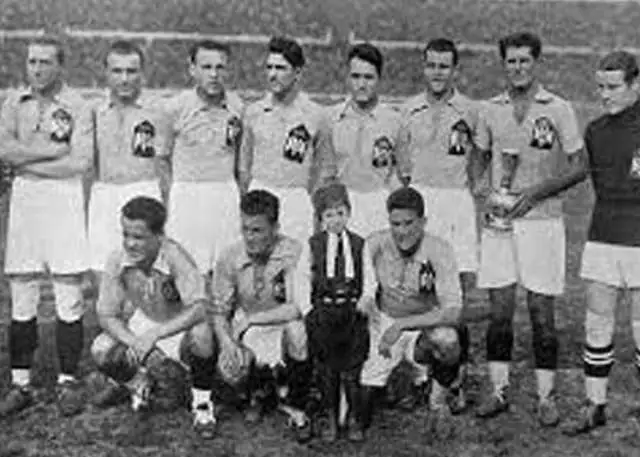
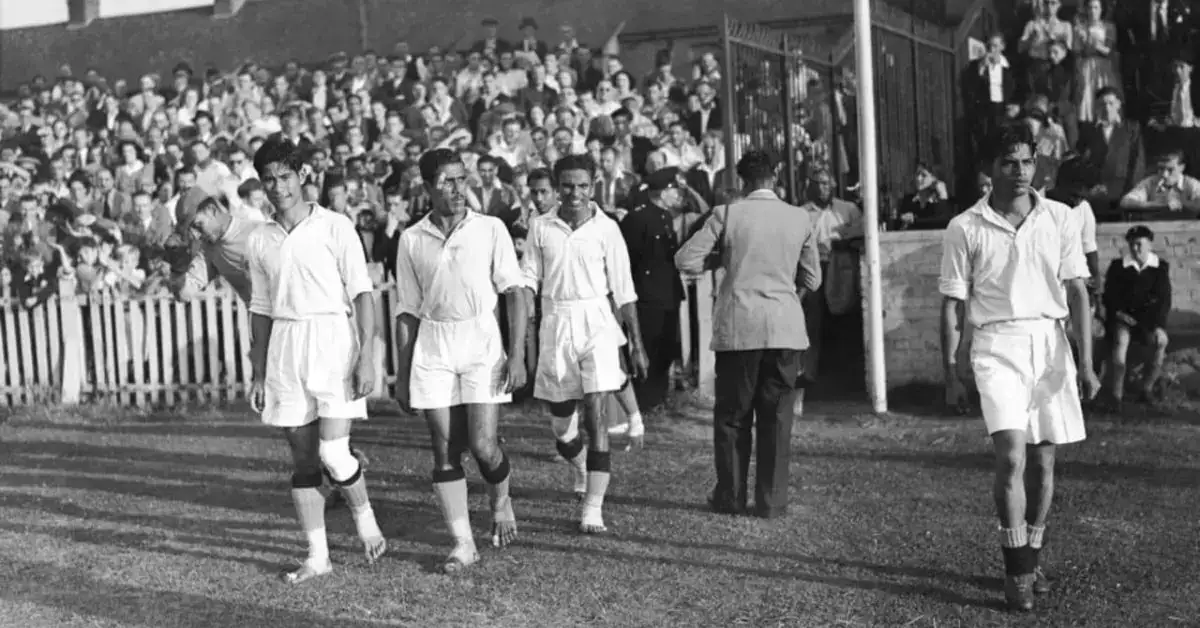
At the 1952 Summer Olympics in Helsinki, India faced Yugoslavia and lost 10–1. To this day, it remains the biggest loss for India’s men’s football team in any competitive international match. The match took place on 15 July 1952 at the Töölön Pallokenttä Stadium in Helsinki, Finland. It was part of the Olympic football tournament’s preliminary round. Over 10,000 fans were in the stands to watch what would become a one-sided affair.
Yugoslavia entered the tournament as a strong side. They had won silver at the 1948 London Olympics and carried that momentum into Helsinki. India, in contrast, was just beginning to make a name for itself internationally, having participated in its first-ever Olympics only four years earlier, in 1948.
From the very first whistle, Yugoslavia showed why they were among Europe’s top teams. Branko Zebec opened the scoring in just the 2nd minute. Rajko Mitić soon added another in the 14th minute. Zebec struck again in the 17th and 23rd minutes, giving Yugoslavia a 4–0 lead before half-time. Mitić made it 5–0 right before the break.
The second half brought no relief for India. Tihomir Ognjanov scored in the 52nd minute, Zebec netted his fourth in the 60th, and Bernard Vukas added two more in the 62nd and 87th minutes. Mitić completed his hat-trick in the 67th minute. By the time India’s Ahmed Khan scored in the 89th minute, the match was long decided.
The final score read 10–1. It was a record-breaking win for Yugoslavia and a painful night for Indian football.
The Yugoslavian attack was spearheaded by Branko Zebec, who netted four goals on that night. Three more goals were made by Rajko Mitić and two by Bernard Vukas, while Tihomir Ognjanov made one goal for Yugoslavia. The coordination and efficiency shown by these players proved to be too much for the Indian defence. India had their only goal scored by Ahmed Khan. This goal may have been scored after a long while, but it still reflects the effort put in by the Indians despite the unfavourable situation.
India was coached by Syed Abdul Rahim, a man who would later be credited with building the golden era of Indian football. Despite this heavy loss, his side would go on to achieve notable success in the years that followed.
Where This Loss Stands in Indian Football History
While India has suffered other heavy defeats, none in competitive matches have come close to the 10-goal margin from the 1952 Olympics. The 11–1 loss to the Soviet Union in 1955 is sometimes mentioned as the heaviest overall defeat, but that was a friendly match, not part of any tournament. India’s 0–9 loss to Burma in the 1971 Merdeka Tournament remains the worst defeat against an Asian side, but it still falls short of the 10-goal gap from Helsinki.
More recent losses, such as the 1–9 defeat to Kuwait in 2010 or the 0–6 loss to the UAE in 2024, were either friendlies or had smaller scorelines.
The 10-1 loss against Yugoslavia remains India's most embarrassing defeat ever in an official international match for men. No matter what happened afterwards, no better performance in the Olympics, AFC Asian Cup, FIFA World Cup Qualifiers, or any other official tournament than this has been achieved till now.
Why People Still Talk About the Match
This match has been talked about for more than 70 years after the incident because of its sheer embarrassment. India came up against a Yugoslav team that was among the strongest in Europe and simply couldn't match its pace, movement, or finishing. It was a humiliating defeat, but it did not stop Indian football in its tracks. The national team continued to compete internationally and enjoyed some memorable years during the 1950s and 1960s. Today, the Helsinki defeat remains part of the country's football history, a record nobody wants, but one that explains just how difficult those early years were against the world's best teams.
Just four years after the Helsinki loss, India reached the semi-finals at the 1956 Melbourne Olympics. The team also won gold at the 1951 and 1962 Asian Games. These wins revealed the potential inherent in Indian football even after all the difficulties it faced in the international arena.
The Indian team is struggling to establish itself internationally, and a look back at a match like the defeat in the Olympics in 1952 can help us understand this. The game is remembered because of its score, but it is also indicative of the gulf that separated India from the best football-playing countries. That gap has narrowed in some areas, though there is still plenty of work to do.
India's 10-1 defeat to Yugoslavia at the 1952 Helsinki Olympics remains the heaviest loss in the history of the men's national team in an official competition. It was a painful result and one that has stayed in the record books for more than seven decades. But a single match does not define Indian football. The national side has delivered performances that are memorable, enjoyed success in Asian football for some time, and even now, keeps delivering players who have the ability to make a mark. The progress made has not always been easy, but football has continued to evolve despite the obstacles.
The loss in Helsinki is part of India’s football history. It is not a chapter anyone celebrates, but it shows how much the sport has changed since those early Olympic days and how much more it still has to achieve.



Comments (0)
to post comments, replies, and votes.
Loading comments…