Asian Games football: India teams left out of final draw despite qualification
Bureaucratic rules lock Indian football out of the 2026 Asian Games despite earned qualification on the pitch.
The dream of representing one's country on the continental stage is the ultimate fuel for any athlete. For the young men and women of the Indian national football teams, that dream was earned, fair and square, on the pitch. Through grit, sweat, and tactical evolution, both squads secured their qualification for the upcoming Aichi-Nagoya 2026 Asian Games. Yet, when the final draws are conducted, the tricolour will be nowhere to be seen.
In a heartbreaking twist of bureaucratic irony, both teams have been left out of the official tournament roster. They did not lose a decisive playoff, nor did they suffer a sudden outbreak of injuries. Instead, their campaign was cut short by a desk in New Delhi. The culprit? A rigid, long-standing selection policy from the Indian Sports Ministry that strictly bars team sports from participating unless they are ranked within the top eight in Asia.
It is a decision that has left fans furious, experts bewildered, and players devastated. It also exposes a deeper, systemic paradox within Indian sports administration: how can a nation expect its football teams to break into Asia’s elite tier if it repeatedly denies them the chance to compete against them?
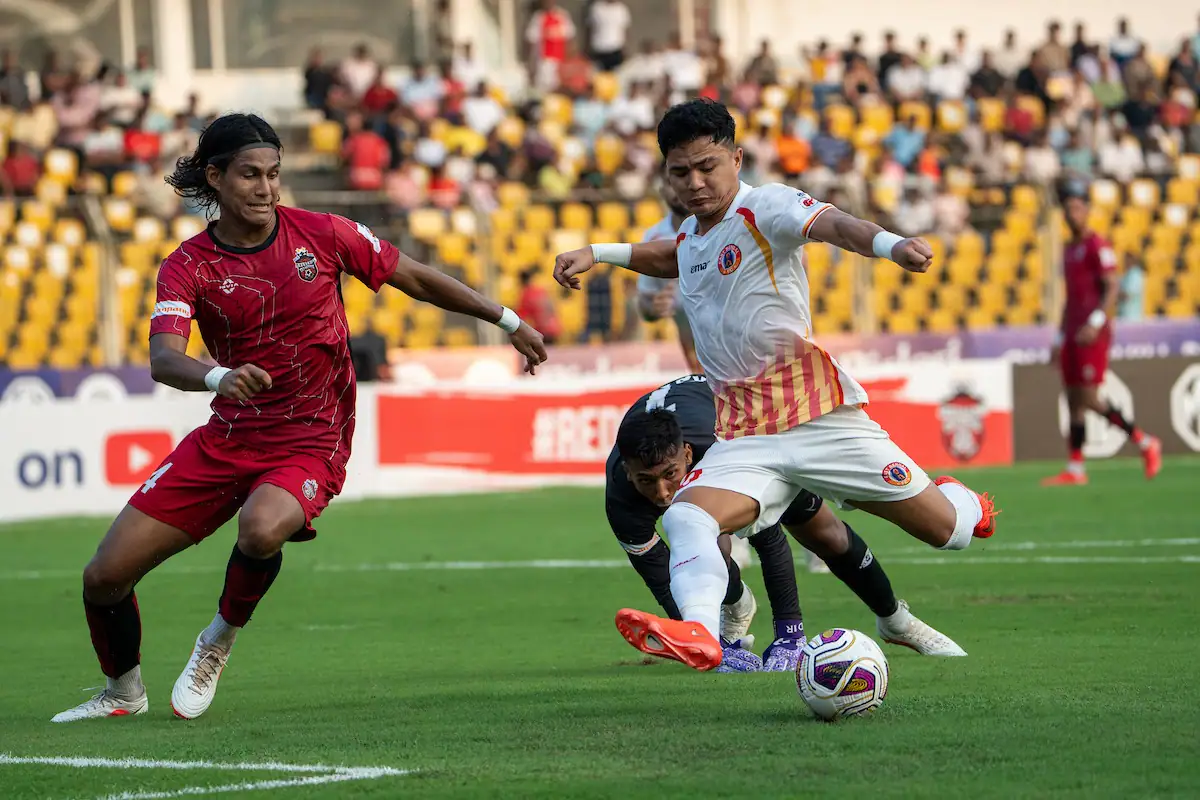
To fully understand the bitterness surrounding this decision, one must look at how both teams got here. Neither side was asking for a free pass or a handout. They qualified strictly on sporting merit. The men’s side earned their berth through a gritty display in the AFC U-23 Asian Cup qualifiers, navigating a tough group to finish second only to continental powerhouse Qatar. Under the Asian Games qualification framework, the top fifteen performers from that U-23 tournament are granted automatic entry to Aichi-Nagoya. The Indian youngsters did their job, proving they belonged among the continent’s rising stars.
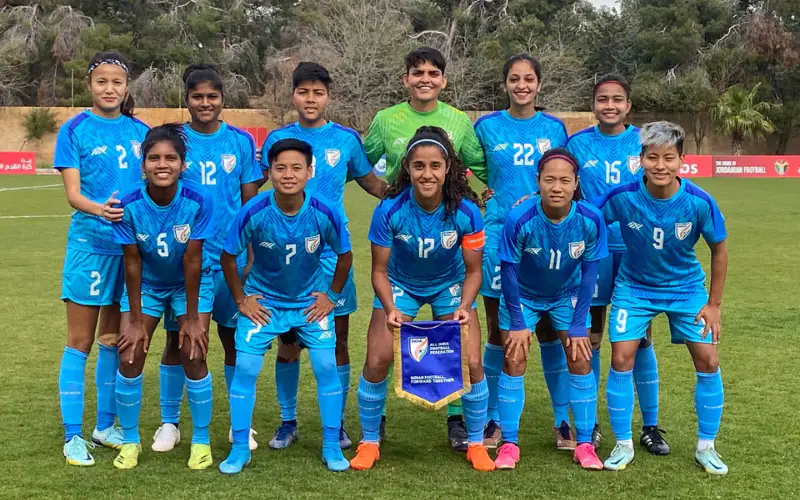
For the women’s team, qualification was even more definitive. By securing their place in the highly competitive 12-team AFC Women’s Asian Cup, they naturally booked their ticket to the Asian Games, where the field was similarly streamlined to twelve teams. On paper, they were in. On the field, they were ready. But on the official documents, they were crossed out.
The barrier preventing their travel is a Sports Ministry guideline designed to ensure that only medal-contending athletes are sent to major multi-sport events at the taxpayers' expense. The rule mandates that in team sports, India must be ranked among the top eight in Asia.
Currently, the Indian men’s team sits at 138th in the global FIFA rankings, which translates to a modest 26th in Asia. The women's team fares significantly better, sitting at 69th in the world and 13th in Asia, but they still fall short of that elusive top-eight cut-off. On the surface, prioritising potential medallists seems financially prudent. But when applied blindly to a global, highly competitive sport like football, the logic crumbles. Football is not a sport where progress can be manufactured in isolation. To improve, teams need high-stakes exposure.
By enforcing a strict ranking cutoff, the government has locked Indian football in a devastating Catch-22: You cannot go to major tournaments because your ranking is too low, but your ranking remains low because you are denied the chance to play in major tournaments.
The blow is particularly devastating for the women's national team. Just last month, the team united the country in celebration by lifting the SAFF Women's Championship trophy on home soil, earning public praise from Prime Minister Narendra Modi. Yet, while the political establishment celebrates their regional dominance, administrative rules prevent them from testing their mettle against Asia's giants like Japan, South Korea, and China.
The absurdity of the situation is highlighted by the final draw list. Because India withdrew, their spot was reallocated. Taking their place is Bangladesh, a team ranked 107th globally and 19th in Asia. Bangladesh, a team that India recently defeated twice on their way to the SAFF crown, will match up against the best in Nagoya while the champions watch from their living rooms.
This creates an incredibly discouraging narrative for female athletes in India. They did everything asked of them: they won tournaments, qualified for the continental championship, and raised the profile of the sport. To have their progress halted not by an opponent, but by a domestic administrative guideline, is a tough pill to swallow.
For long-time followers of Indian football, this situation feels like a recurring nightmare.
The 2018 Jakarta Debacle: The sports ministry used the exact same ranking criteria to block the football teams from travelling to Indonesia, sparking massive public outcry.
The 2023 Hangzhou Reprieve: History seemed set to repeat itself ahead of the 2023 Games. However, following a massive campaign by fans, players, and coach Igor Stimac, the ministry relented at the eleventh hour, granting a special exemption that allowed the teams to participate.
Many hoped a similar miracle would happen for Aichi-Nagoya 2026. But this time, the door is firmly shut. With the official draws scheduled for late July, the organisers have already finalised the replacement teams. The administrative machinery has moved on, leaving no room for a last-minute political rescue.
AIFF Deputy Secretary General M. Satyanarayan summed up the federation's quiet resignation: "There are some rules of the government based on which they depute teams for the Asian Games. We have 40 national federations; not all of them send teams. In football, we are not among the top eight in Asia. If we were in the top eight, we would have been at the World Cup."
Short-Term Savings, Long-Term Cost
While the sports ministry might save a fraction of its budget by keeping a travelling contingent of footballers at home, the long-term cost to the sport's development is immeasurable.
A competitive national team cannot be built solely through domestic leagues like the Indian Super League (ISL). While the ISL has undeniably improved infrastructure, grassroots coaching, and player salaries, domestic club football is only one half of the equation. The other half is international exposure. Young prospects need to feel the immense pressure of representing their nation against superior, faster, and tactically superior opponents on the continental stage.
Depriving this "nice crop of young players", as Satyanarayan described them, of tournament experience stalls their developmental curve. It sends a message to the youth academies that even if you defy the odds and qualify on merit, your efforts might still be deemed unworthy by your own sports ministry.
If India truly wishes to become a multi-sport sporting powerhouse, its administrative policies must evolve beyond a simple "medal-or-nothing" mentality. Football is a global game of fine margins and decades-long building processes. Until the administrative framework aligns with this reality, the beautiful game in India will continue to take one step forward on the pitch, only to be dragged two steps back in the boardroom.
Comments (0)
to post comments, replies, and votes.
Loading comments…