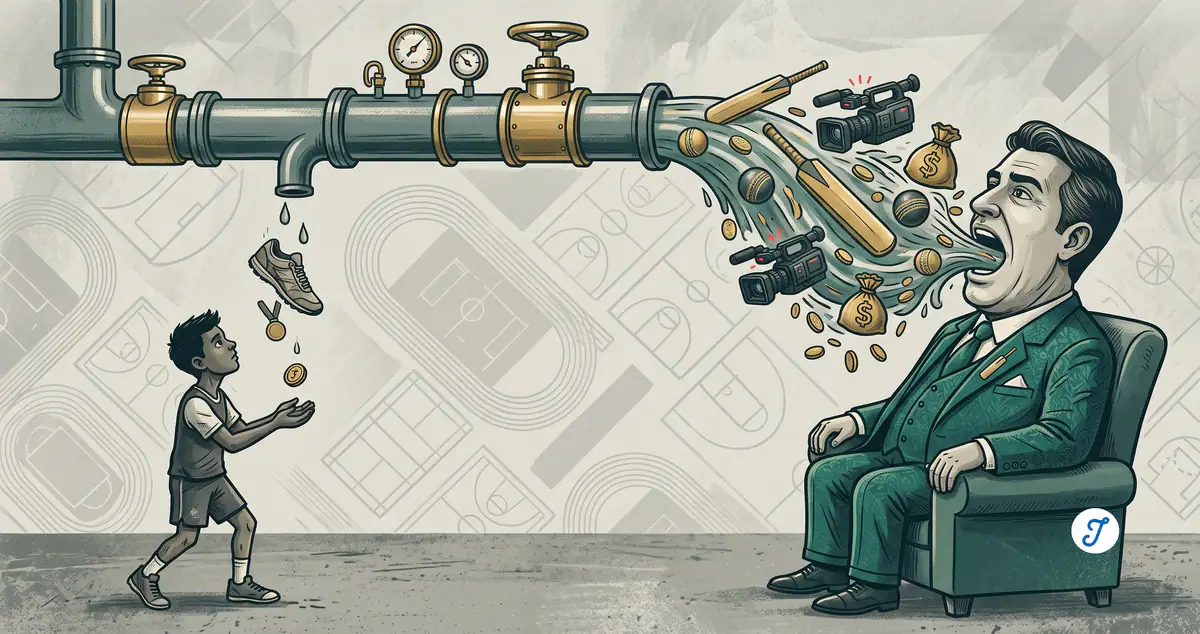
Editorial illustration visualising the central theme of stark contrast between men's cricket and other sports in India
Discover India's growing sports leagues beyond cricket. Explore regional hotspots, Olympic growth, and which sporting tournaments are thriving or failing.
The sporting landscape in India is undergoing a fundamental structural transition, shifting from a market historically dominated by a single athletic discipline into a highly dynamic, multisport ecosystem.
The Indian sports market is projected to reach 130 billion US dollars by 2030, expanding at an impressive compound annual growth rate of 14%, which is nearly double the growth rate of the national gross domestic product. A pivotal driver of this structural change is the rise of a broad multisport fandom. Currently, 90 % of Indian sports enthusiasts follow multiple disciplines beyond cricket. Kabaddi has successfully amassed a dedicated fan base of 120 million people, while football follows closely with 85 million active fans. This broadening of consumer interest has catalysed new commercial opportunities, backed by rapid digital expansion and targeted public policy initiatives.
While cricket remains a powerful cultural and commercial monolith, its absolute monopoly over the sports advertising and media ecosystem is gradually shifting. In 2024, emerging sports generated 2559 crore rupees, capturing approximately 14% of the sports industry revenue in India. Notably, these emerging sports recorded an annual revenue growth rate of 24%, comfortably outperforming the maturing 14% growth rate of cricket.
This demographic transition is heavily led by Gen Z, who represent 43% of the sports fan base in India. Younger fans consume sports in a fundamentally different manner than previous generations, heavily prioritising interactive, personalised, and digital experiences. For instance, 93% of Gen Z fans utilise a second screen to explore related sports content while watching live matches. Furthermore, across all demographics, Indian fans spend 20% more time on non-live content, such as highlights, behind-the-scenes features, player interviews, and tactical analysis, than on live sports events.
This shift allows emerging and Olympic sports to build continuous, year-round engagement, reducing their reliance on the expensive and highly competitive live television broadcast slots dominated by men's cricket.
The interest in global tournaments highlights this changing appetite. Google search data reveals that while cricket still dominates peak volumes, interest in global events like the FIFA World Cup is growing rapidly. The relative search volume comparison in 2026 demonstrates this shift. Assigning the peak search value for the FIFA World Cup 2026 as 1.0, the T20 World Cup 2026 achieved a relative search value of 0.5, while the Wimbledon tennis tournament registered less than 0.1
Even though the Indian Premier League in 2023 commanded 3.9 times the peak search volume of the FIFA World Cup, the sheer volume of searches for international tournaments indicates that Indian audiences are increasingly looking beyond local cricket fixtures.
Regional Sporting Hotspots and State Wise Fandom
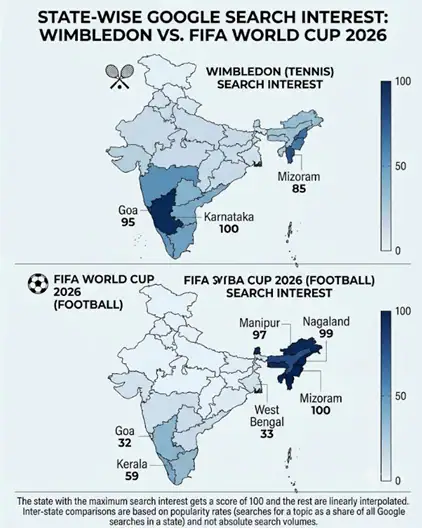
The growth of sports in India is highly localised, with specific states and cities acting as specialised hubs for talent identification, infrastructure, and audience engagement. These regional variations heavily influence search trends and athletic participation. For example, search interest for the Wimbledon Championships is concentrated in the southern and western coastal regions, running strongest in Karnataka and Goa. Conversely, interest in the FIFA World Cup is highly concentrated in the northeastern states, West Bengal, and Kerala.
To illustrate these distinct geographic patterns, Google search interest for these major tournaments is analysed across various states using a linear interpolation scale where the state with the maximum search rate receives a score of 100. To illustrate these distinct geographic patterns, Google search interest for these major tournaments is analyzed across various states using a linear interpolation scale where the state with the maximum search rate receives a score of 100
Source: Google
Beyond these search patterns, specific regions have evolved into highly specialised athletic nurseries, driven by local culture, government support, and dedicated academy networks.
Karnataka & Goa: The undisputed regional epicentres for tennis and Grand Slam interest across the country, particularly leading the national data for Wimbledon search traffic.
Mizoram, Manipur, & Nagaland: The absolute hubs for football in India. The North Eastern belt routinely registers the highest density of fans and organic engagement for major global tournaments like the FIFA World Cup.
Kerala & West Bengal: The traditional strongholds of Indian football, maintaining deep-rooted fan bases and high analytical engagement for international football events alongside the North East.
The Polarized Economics of Non-Cricket Leagues
The commercial viability of professional leagues in India is starkly polarised. While certain sports have cracked the code of financial self-sustainability, others are actively collapsing or are barely kept alive through the patronage of wealthy corporate benefactors.
Leagues on the Path of Steady Growth
The Pro Kabaddi League, founded in 2014 by Anand Mahindra and Charu Sharma, represents the most successful commercial model outside of the Indian Premier League. After a decade of financial struggles, including losses of 22 crore rupees in fiscal year 2021 and 8.6 crore rupees in fiscal year 2022, the league officially recorded a profit of 2 crore rupees in fiscal year 2023. The league, owned 74% by Disney Star, secures its financial stability through a 180 crore rupee seasonal broadcast deal. This deal distributes 12 crore rupees to each of the twelve franchises annually, ensuring that teams like the Haryana Steelers remain profitable. Viewership has surged concurrently, with unique viewers crossing 283 million in Season 11, drawing sponsorship from brands like Dream11, Roff, and UltraTech Cements.
Similarly, the Women's Premier League has emerged as a major commercial asset. Pulling massive crowds in Delhi, Mumbai, and Bengaluru, the league has capitalised on the star power of players like Smriti Mandhana and Harmanpreet Kaur, rapidly securing lucrative sponsorships and player auction excitement. Ultimate Kho Kho has also joined this upward trajectory. By modernising traditional rules with a shorter field and introducing a specialised attacking player called the wazir, the league attracted 64 million viewers in its first season. Backed by a five-year, 200 crore rupee investment and broadcast deal with Sony Pictures Network, the league is expanding to include up to ten teams and foreign players.
Leagues Hanging on Due to Rich Benefactors and Corporate Patrons
Professional football in India operates under a highly challenging financial model. The Indian Super League has generated passionate fan cultures but continues to struggle with weak monetisation, lower television ratings, and inconsistent attendance. It functions as a high-burn, low-return asset where clubs spend heavily on international talent without yielding equivalent revenue. An average franchise like JSW Sports' Bengaluru FC loses 30 crore rupees annually.
The league has faced existential threats, including commercial disputes between the Football Sports Development Limited and the All India Football Federation that temporarily halted play. It is kept alive almost entirely by wealthy corporate benefactors like Reliance and JSW Sports, though long-term commercial rights deals with partners like FanCode and Genius Sports, worth 1190 crore rupees and 2129 crore rupees respectively, aim to stabilise the ecosystem.
The Hockey India League is currently experiencing an acute financial crisis following its revival in the 2024 to 2025 season. Originally suspended in 2017 because franchises incurred unsustainable annual losses of 10 crore rupees, the league returned with a centralised hub model. However, within months, three franchises withdrew. Team Gonasika dissolved due to personal problems; the UP Rudras pulled out, citing untenable sustainability challenges; and the women's champions, the Odisha Warriors, failed to pay player salaries.
Operating costs for a single franchise range from 14 to 15 crore rupees, rising to 18 crore rupees with logistics. By holding matches in neutral hub cities like Rourkela and Ranchi, franchises are stripped of home stadium ticketing revenue and local sponsorships. To prevent a complete collapse, Hockey India had to step in, using the Warriors' 1 crore rupee prize money to cover player salaries, assuming direct operational control of the UP Rudras, and offering to waive franchise fees for three years to encourage stability.
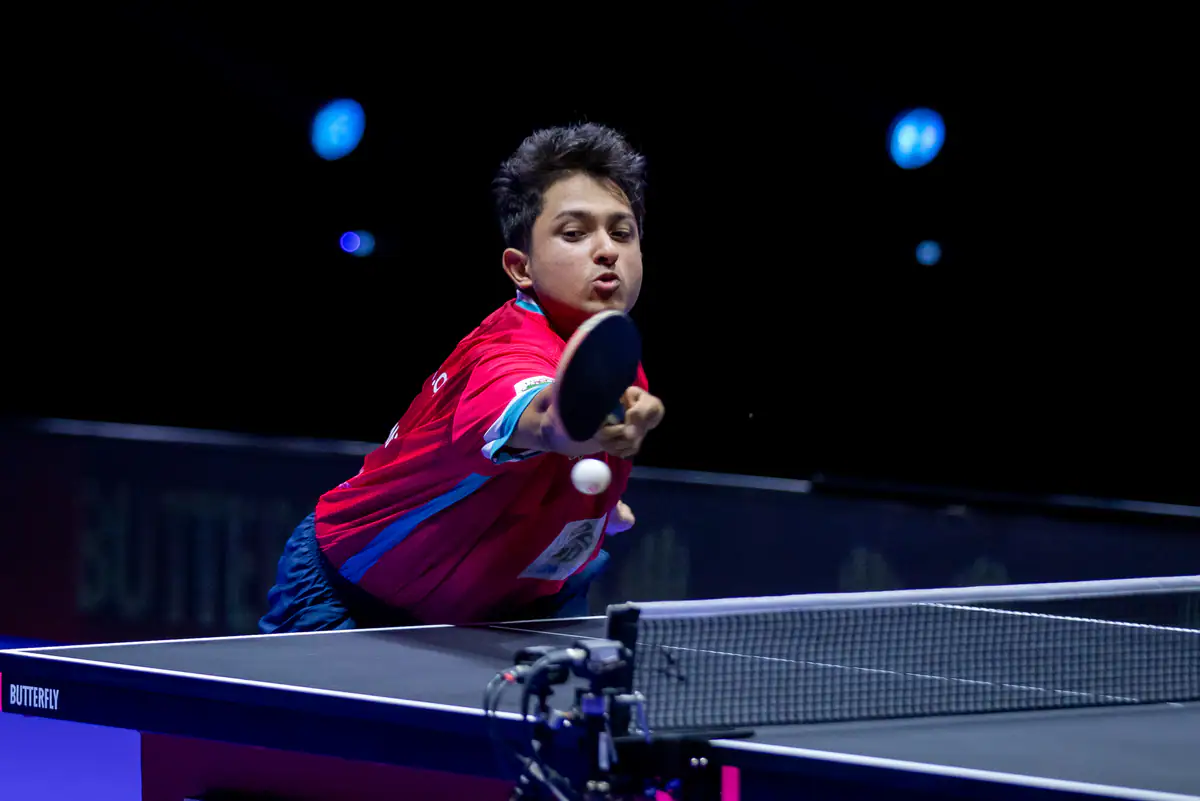
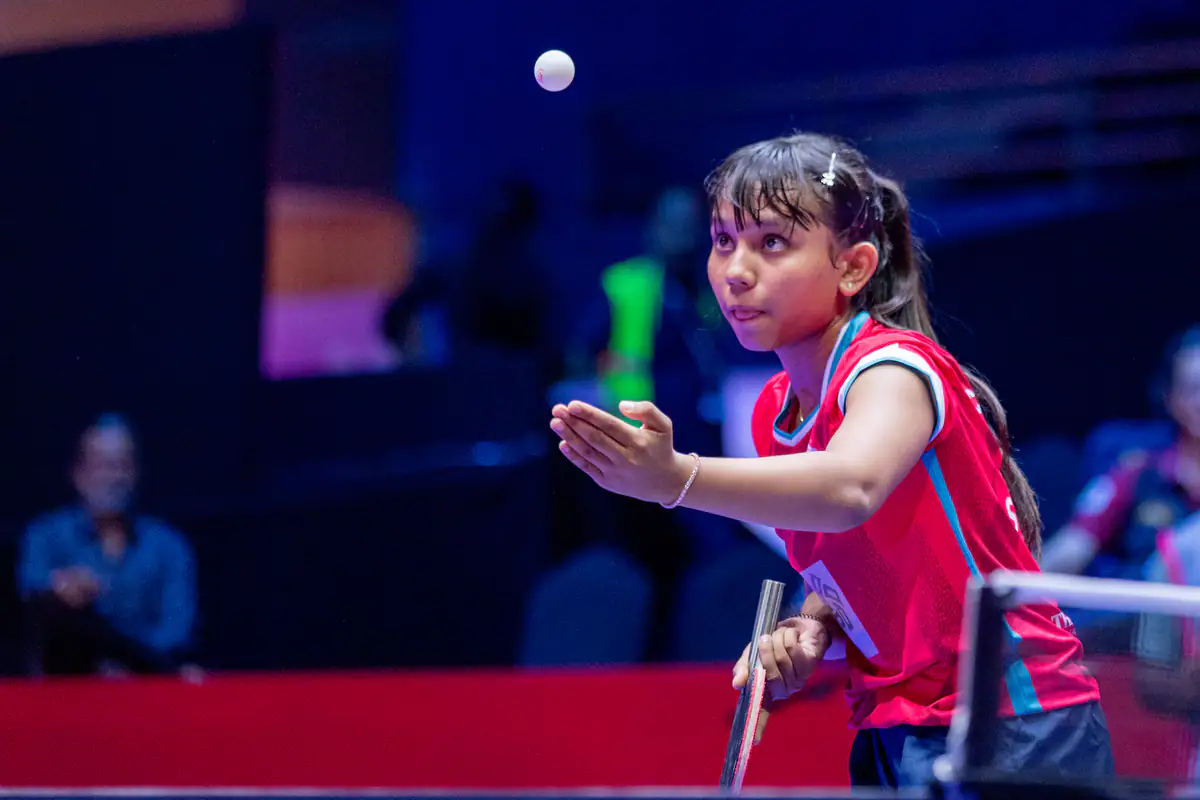
Ultimate Table Tennis, although growing steadily, is still operating on a highly fragile scale. The league faces structural disruptions, such as the termination of its agreement with World Of Krida, which forced the exit of the Jaipur Patriots. It relies heavily on its title sponsor Butterfly, which signed a five-year deal in 2026, and the personal backing of key administrators like Vita Dani to sustain its seven franchises.
The Premier Badminton League has collapsed under the weight of financial unviability. Despite showcasing top international talent and bidding up to 77 lakh rupees for marquee players like PV Sindhu, the league struggled with low television viewership and minimal ticket sales. Generating negligible sponsorship revenue compared to its high operating costs, the league has paused operations indefinitely. This mirrors the historical collapse of the Indian Cricket League, which folded in 2009 due to commercial isolation and a lack of support from official governing bodies.
Global Tournaments and Grassroots Pathways for Aspiring Youth
For young Indian athletes aspiring to enter professional sports, global tournaments and structured grassroots pathways are essential to build competitive skills.
The Wimbledon Championships have established a direct bridge for junior tennis players. In 2014, the Wimbledon Foundation and HSBC teamed up with the All India Tennis Association to launch "The Road to Wimbledon in India". Led by tennis legends like Tim Henman and Dan Bloxham, the programme conducts coaching clinics and under-14 national singles events in cities like Delhi, Mumbai, Pune, and Bangalore. The top sixteen boys and girls qualify for the Junior Masters in Delhi, and the finalists are invited to travel to London to compete on the grass courts of Wimbledon, providing a life-changing developmental pipeline for players like Adil Kalyanpur and Siddhant Banthia.
In football, the Stairs School Football League was relaunched in 2026 as a national scouting programme. Led by international footballer David Forde, the initiative identifies raw talent across schools and gathers them in national camps to build mental conditioning and technical skills. Similarly, the Oscar Foundation utilises football to train and educate youth from highly underprivileged communities, building a network of young leaders.
At the public level, the central government's Khelo India initiative acts as the primary grassroots ecosystem. Initiated in 2018, the programme has expanded from the flagship Youth Games to include the University Games, Winter Games, Para Games, Beach Games, and the newly launched Water Sports Festival and Tribal Games. It provides financial support, coaching, and equipment to over 1000 localised centres. This robust structure has successfully trained elite athletes like Olympic medallist Manu Bhaker and archery world champion Aditi Swami.
Civil society organisations also play a critical role in athletic development. The Brahmaputra Volleyball League in Assam distributes equipment to rural areas, engaging over 12000 children across 400 grassroots teams to foster leadership and competition. Other non-profitorganisations like Bridges of Sports, the Khel Khel Mein Foundation, and the Victory Sports Foundation provide specialised kits, coaching, and nutrition to rural and disabled athletes, ensuring that economic and physical barriers do not impede athletic potential.
The transition of India into a genuine multisport nation is a permanent structural shift. Driven by a digital-first Gen Z demographic, sports fans are actively seeking diverse athletic content, presenting commercial brands with a substantial sports marketing opportunity beyond traditional cricket sponsorships.
However, the commercial viability of domestic professional leagues remains highly fragile. While the Pro Kabaddi League has demonstrated that a traditional sport can achieve sustainable profitability through controlled costs and structured broadcast revenue, other disciplines continue to struggle. The financial distress of the newly revived Hockey India League and the high burn rate of the Indian Super League emphasise that audience interest alone cannot sustain a league. Future success depends on establishing realistic salary caps, minimising expensive logistical travel through consolidated hub formats, and building robust public-private partnerships that leverage localized geographical hotspots to discover and nurture young talent.
Enjoyed this story? A small contribution helps us cover more of Indian sport.₹200+ unlocks 1 year Premium · tap anywhere to paySupport · ₹501




.avif)