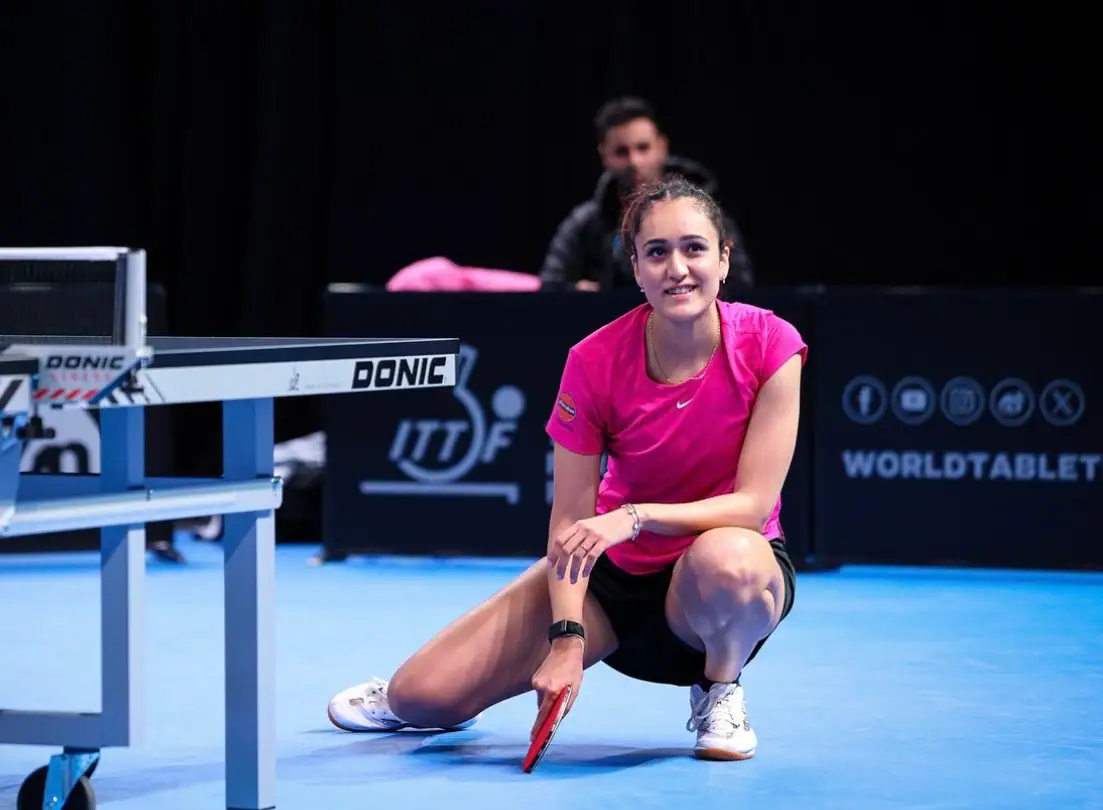
From South 24 Parganas to India's Biggest Stage: How 16-Year-Old Syndrela Das Is Shaping the Future of Indian Table Tennis
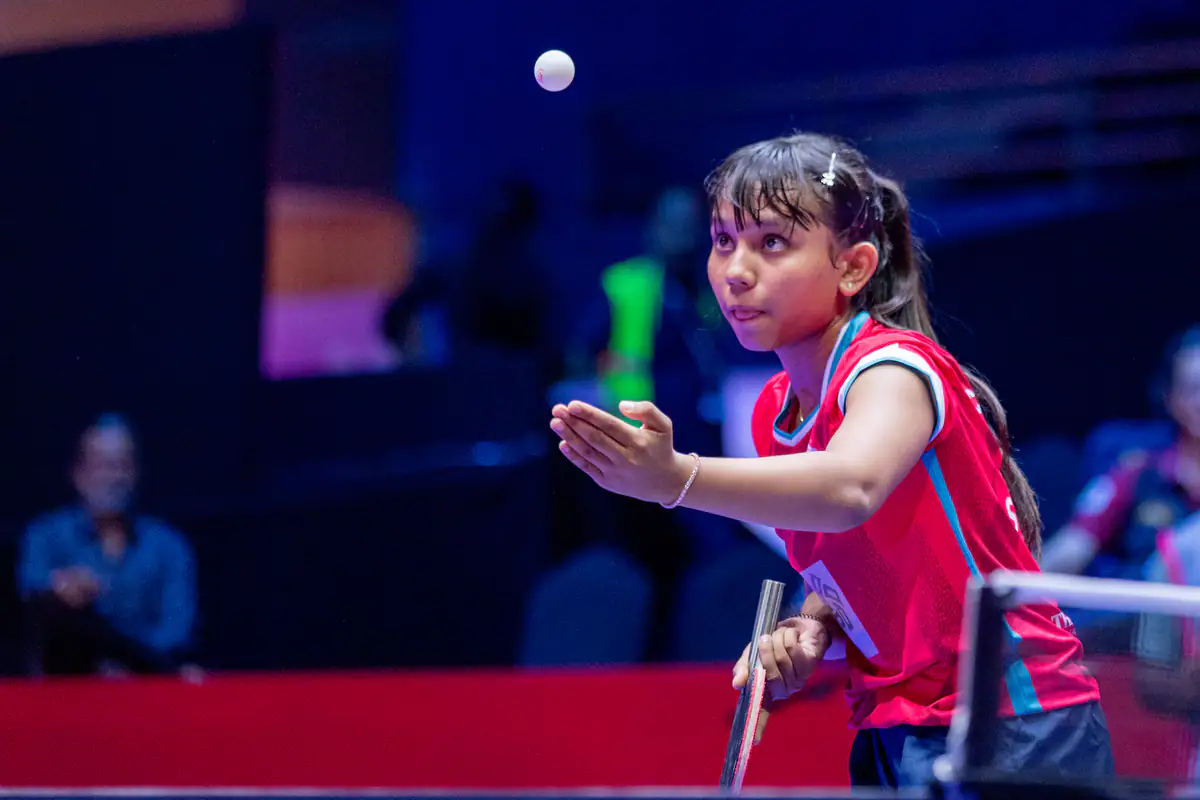
At just 16, Syndrela Das has emerged as one of India's brightest table tennis stars. From becoming World No. 1 in junior doubles to earning Asian Games selection and stunning Manika Batra in UTT, here is the remarkable story of her rise.
Every generation produces athletes who announce themselves with a single performance. Others quietly build their reputation through years of consistent excellence before finally stepping into the spotlight. For Indian table tennis, Syndrela Das belongs firmly in the second category.
The 16-year-old from West Bengal has spent years climbing every rung of the sport's ladder, winning national titles, dominating the junior circuit, becoming World No. 1 in junior girls' doubles, claiming medals at the Asian Youth Championships, earning senior international success, and now making headlines after defeating Indian Start women's paddler, Manika Batra, during Ultimate Table Tennis (UTT) Season 7.
Yet behind those achievements lies a story that is less about overnight success and more about patience, trust, relentless work and an unwavering love for the sport.
Unlike many elite athletes who specialise from an early age, Syndrela's childhood revolved around several activities.
Growing up in South 24 Parganas in West Bengal, she explored swimming, drawing, singing and dancing before table tennis gradually became the centre of her life. The turning point came during an open mixed-gender tournament, where she defeated a male opponent 3-0 in the final. That victory convinced both Syndrela and those around her that table tennis deserved to become more than just a hobby.
Soon after, she joined the Dhanuka Dhunseri Soumyadeep Poulomi Table Tennis Academy, where former internationals Soumyadeep Roy and Poulomi Ghatak began shaping her game through structured, high-performance training.
The hours increased. The expectations grew.
So did the results.
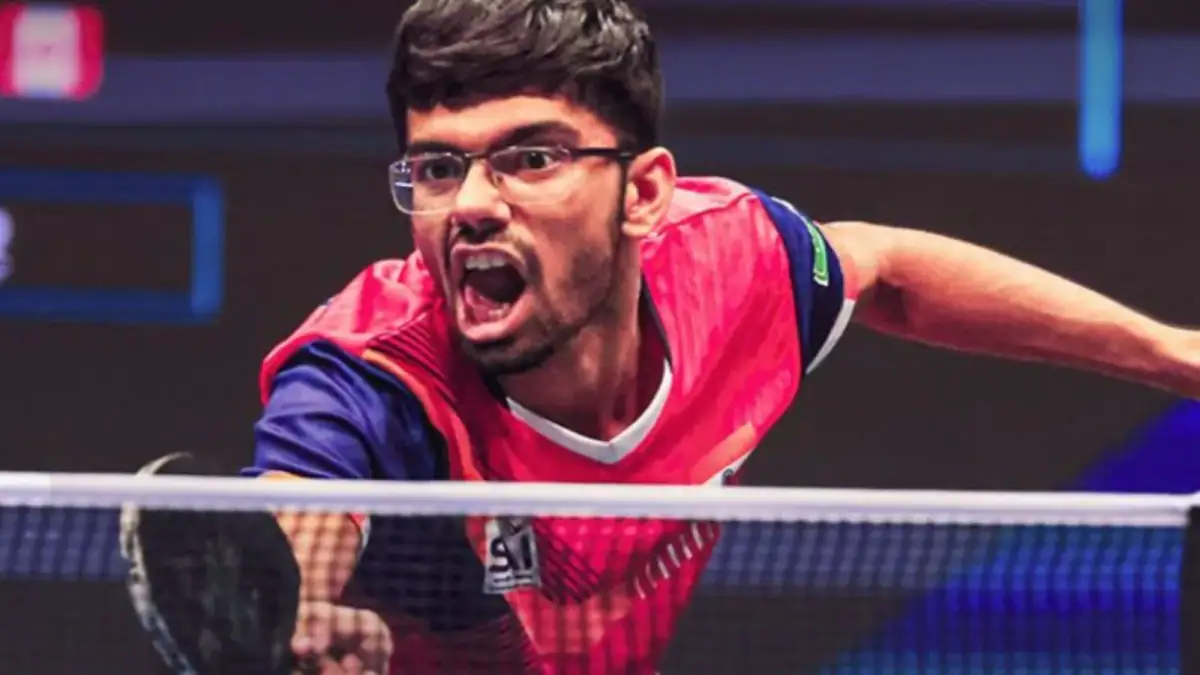
Every successful player develops an identity. For Syndrela, it has been aggressive table tennis. Her game is built around attacking from close to the table, using quick backhand flicks, sharp angles and relentless pressure to take control of rallies early. While that aggressive approach occasionally resulted in rushed shot selection during her formative years, it gradually evolved into one of her greatest strengths through technical refinement and mental conditioning.
Equally important has been her ability to stay composed.
One of the defining examples came during the WTT Star Contender Ljubljana qualifiers, where she defeated 62-year-old Luxembourg veteran Ni Xia Lian after making tactical adjustments against one of the sport's most unique playing styles. The match demonstrated not only her technical quality but also her willingness to adapt under pressure.
The Partnership That Changed Indian Junior Table Tennis
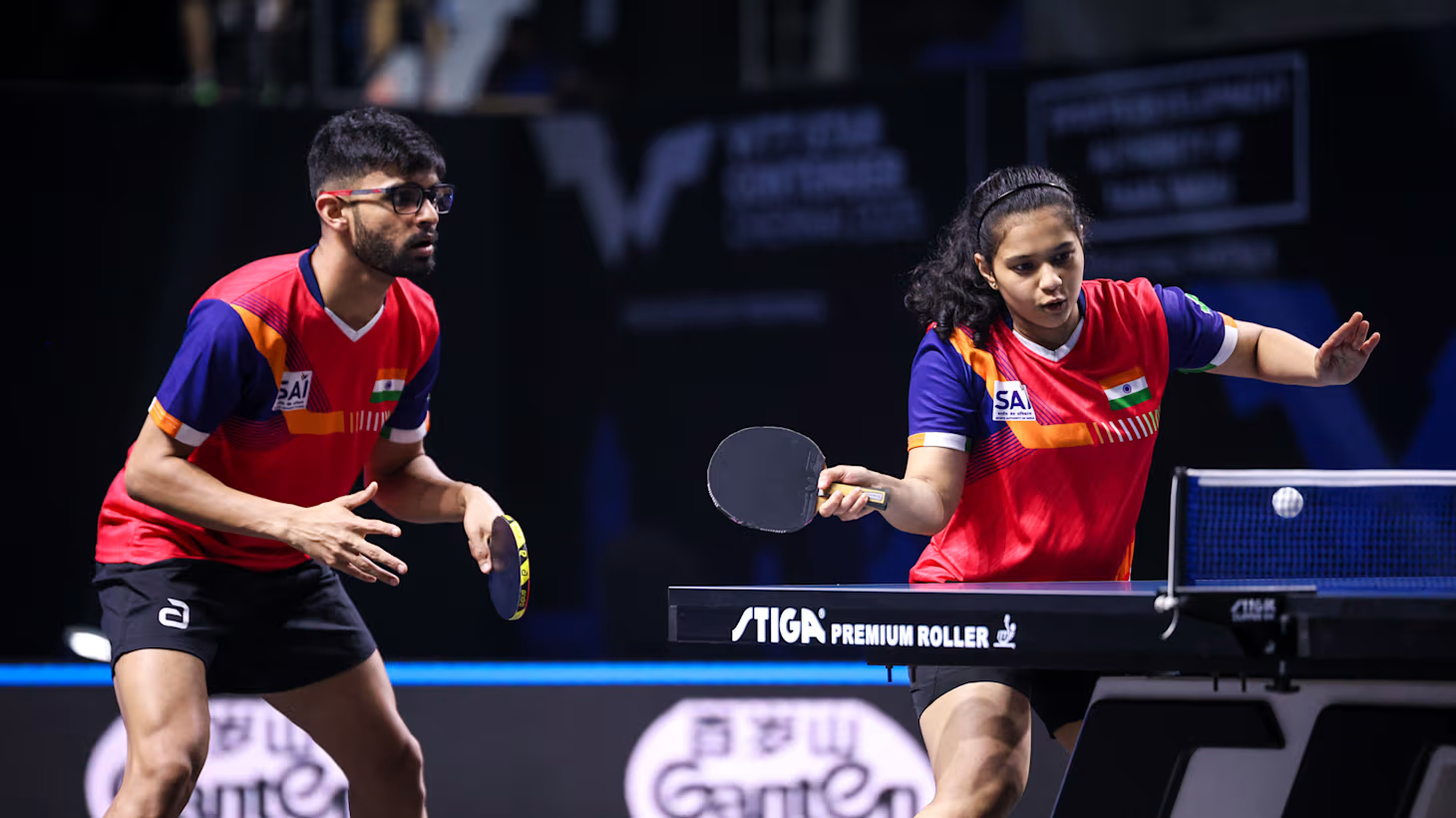
While Syndrela has enjoyed tremendous success individually, one partnership has become synonymous with her journey.
Divyanshi Bhowmick.
Together, the duo climbed to World No. 1 in the ITTF Under-19 Girls' Doubles rankings, establishing themselves as the strongest junior doubles pair in the world. Their chemistry is built on more than technical compatibility.
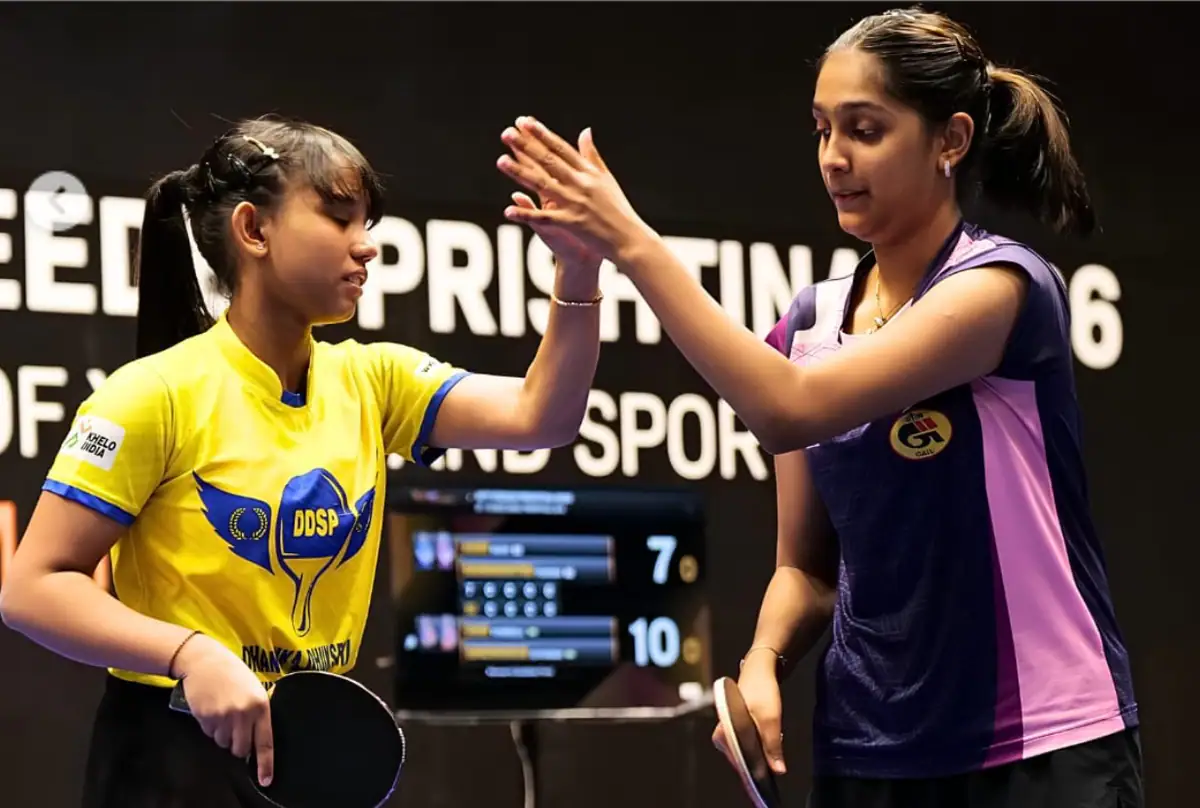
It's built on trust.
Speaking about the partnership, Syndrela explained that both players instinctively understand each other's decisions during matches.
"I trust her blindly. She trusts me blindly. Even if I take a different decision without telling her, she is always prepared for the next ball. If she does something different, I'm prepared too. That's what is most important in doubles."
Their partnership has already produced multiple landmark achievements, including the WTT Feeder Cappadocia title and a silver medal at the Asian Youth Championships.
Breaking Into Senior Table Tennis
Transitioning from junior to senior competition is often the hardest step in table tennis. Syndrela has handled it remarkably well.
She claimed silver at the Senior National Championships after defeating defending champion Diya Chitale in an unforgettable semifinal before narrowly losing the final to Yashaswini Ghorpade. Earlier in the season, she also completed a rare double by winning both the Under-17 and Under-19 national titles.
Those performances eventually earned her selection in India's squad for the 2026 Asian Games, making her one of the youngest players in the contingent. When she received the official confirmation, she was in Slovenia.
"I called my mom first," she recalled with a smile. "I was happier because the Asian Games are in Japan. I've always wanted to visit Japan."
Living the UTT Dream
If international tournaments test a player's quality, Ultimate Table Tennis tests their ability to perform under the spotlight. For Syndrela, Season 7 has been an unforgettable experience. Bought by Dempo Goa Challengers, she suddenly found herself sharing the dressing room with players she had admired for years including Romanian star Bernadette Szocs.
"When I was small, I used to look up to Bernie a lot because I loved her style," Syndrela said. "When I heard she was in my team, I was so happy."
She also praised the team's strategic planning during the auction, explaining how Goa assembled players capable of constantly changing combinations in mixed doubles to keep opponents guessing.

That tactical flexibility has already paid dividends during the league.
The Night That Changed Everything
Then came the moment that announced Syndrela to a much wider audience. Facing World No. 52 and India's most accomplished women's player, Manika Batra, the teenager produced one of the biggest upsets in UTT history.
She won 3-0.
Every game was decided by the narrowest of margins 11-10, 11-9, 11-9 but Syndrela never looked intimidated. Instead, she trusted the attacking instincts that had carried her this far. The victory proved decisive in Dempo Goa Challengers' 8-7 win and earned her both the Indian Player of the Tie and Match IQ Player of the Tie awards.
Despite the increasing expectations, Syndrela remains refreshingly grounded. Her philosophy is surprisingly simple.
"When I enjoy what I do, I play better," she explained. "The more I enjoy, the more freely I play."
Even during UTT, while preparing for crucial matches, she prefers spending time with teammates away from the table, whether that's relaxing together or heading to the swimming pool after training.
That approach has become increasingly important because her schedule leaves little room for extended training blocks. Over the last few months, she has travelled almost continuously, competing across Europe and Asia in pursuit of ranking points that determine qualification for major international tournaments.
"It's very difficult to train continuously because I'm playing so many tournaments," she admitted.
Eyes Firmly Set on Bigger Goals
The year 2026 has already become the biggest of Syndrela's career. Alongside UTT, she has represented India at the World Team Championships, earned selection for the Asian Games and Commonwealth Championships & Youth Olympics Games in 2026, and continues to compete across the WTT circuit.
Yet she isn't looking too far ahead. Her focus remains on playing freely, improving steadily and embracing every opportunity that comes her way.
When asked about the future, she didn't hesitate. The long-term dream is clear. The Olympics.
Given everything she has achieved before turning 17, it no longer feels like an impossible ambition. Instead, it feels like the next chapter in a journey that has only just begun.
From a young girl discovering table tennis in West Bengal to becoming one of India's brightest hopes on the global stage, Syndrela Das represents far more than an emerging talent. She embodies the new generation of Indian paddlers: fearless, technically refined, mentally resilient and ready to compete with the very best.
If her trajectory continues on its current path, Indian table tennis may well be witnessing the rise of its next global star.
Comments (0)
to post comments, replies, and votes.
Loading comments…