India Turn Up the Heat Late to Put One Foot in Junior Asia Cup Semifinals

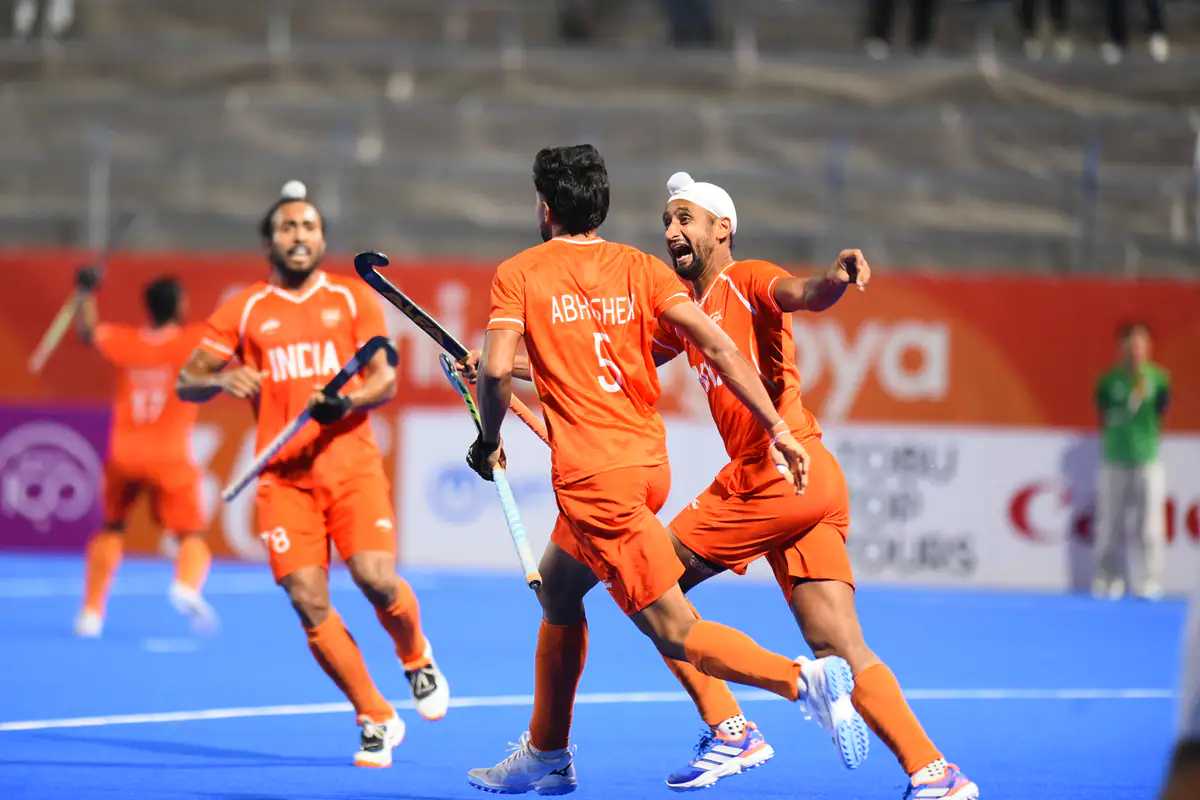
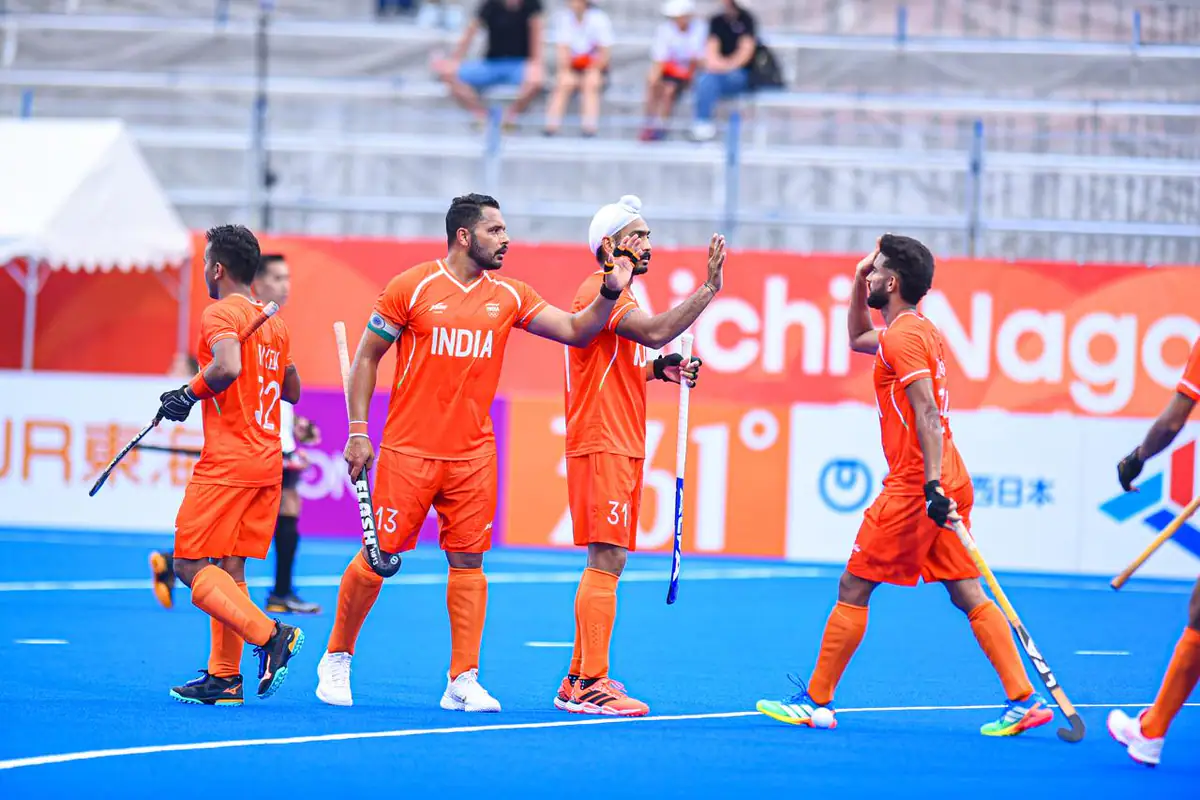
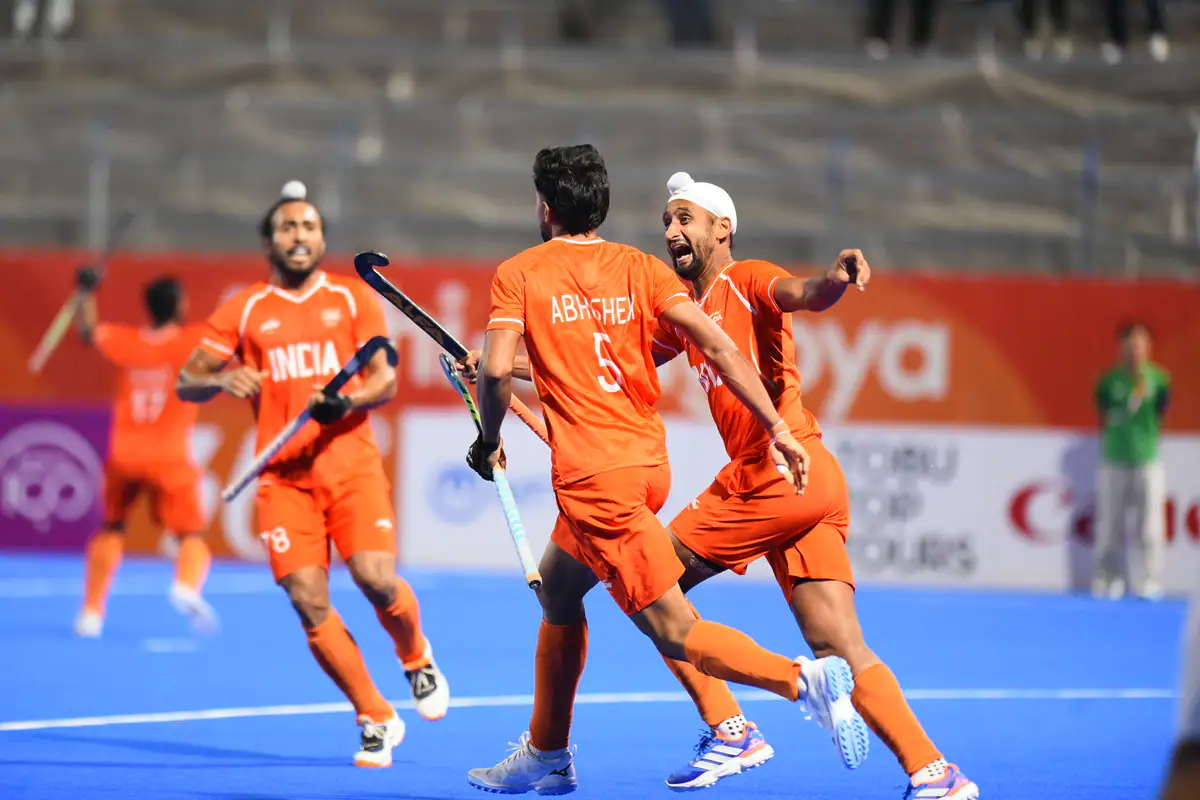
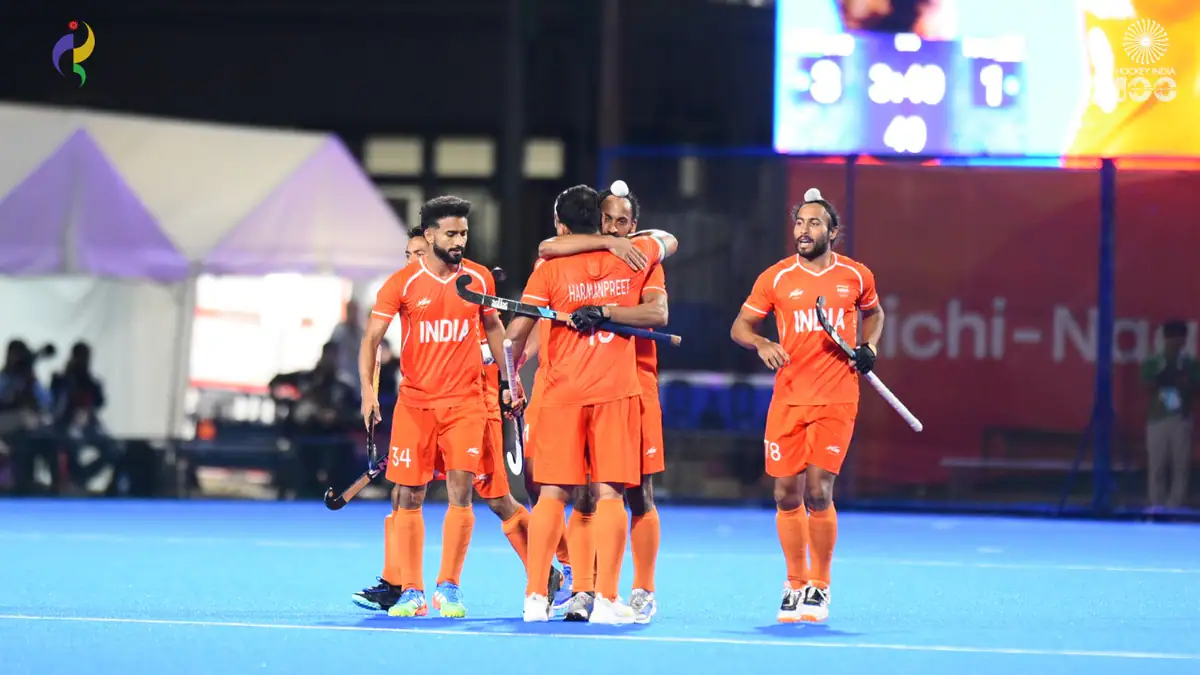
India defeated South Korea 7-3 at the AHF Junior Asia Cup 2026, with captain Anmol Ekka scoring twice as the defending champions moved closer to the semifinals.
There are matches where the final score tells the whole story. And then there are matches where the scoreline only makes sense once you understand how dramatically the game changed.
India’s 7-3 victory over South Korea at the AHF Junior Asia Cup 2026 belonged firmly to the second category.
For three quarters, neither side was willing to give the other any real breathing room. Goals arrived in response to goals, leads disappeared almost as quickly as they were created, and the defending champions were repeatedly forced to find another answer.
Then came the final quarter. India found another gear, South Korea could not match it, and a contest that had been balanced for much of the evening suddenly turned into a statement victory.
The result leaves India at the top of Pool A with seven points from three matches and within touching distance of a semifinal place. At the centre of it all was captain Anmol Ekka, who once again proved to be India's most reliable source of goals. His brace took his tournament tally to eight.
India started with purpose and did not have to wait long for their first breakthrough. In the fifth minute, Anmol stepped up for a penalty corner and made no mistake, giving India the lead.
South Korea's response was immediate. Just a minute later, Dohyeon Choi converted a Korean penalty corner to bring the scores level at 1-1. It was an early indication of the contest that was developing; India would have to work for every advantage.
The second quarter followed almost exactly the same pattern. Lovenoor Singh restored India's lead in the 18th minute with a field goal, but South Korea refused to allow the Indian side to settle. Hyoguk Yoo scored from a penalty corner within the next minute, making it 2-2.
India eventually managed to break the cycle.
Ajeet Yadav struck in the 20th minute to put India 3-2 ahead at half-time. It was a slender advantage, but an important one. South Korea, however, had no intention of allowing India to dictate the contest.
The third quarter became another test of India's ability to absorb pressure. South Korea continued to attack with intent and again found their reward through Yoo. Six minutes into the quarter, the Korean forward scored his second goal to make it 3-3.
For the third time, India had seen a lead disappear. At that stage, the match looked destined to go down to the wire.
Instead, India produced the first truly decisive moment of the evening. In the 42nd minute, Prabhdeep Singh restored India's advantage with a crucial goal, making it 4-3.
The goal did more than change the scoreboard. It shifted the momentum. India entered the final quarter with the lead and, increasingly, began to look like the side more capable of turning pressure into opportunities.
Three goals in three minutes
The decisive passage arrived late, but when it came, it was devastating. South Korea had spent most of the match matching India, yet suddenly found themselves unable to contain a sustained Indian assault. Gursewak Singh made it 5-3 in the 55th minute.
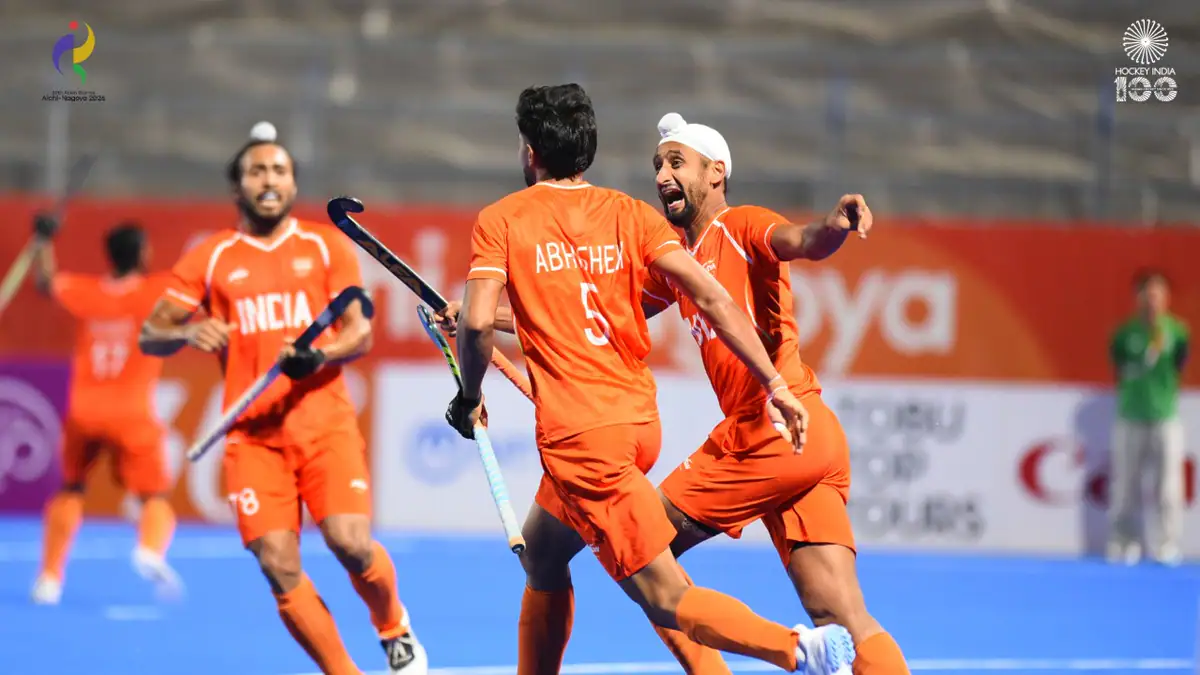
One minute later, Anmol was back on the scoresheet. The captain converted another penalty corner to put India 6-3 ahead, his second goal of the match and eighth of the tournament. By now, the Korean defence was under enormous pressure.
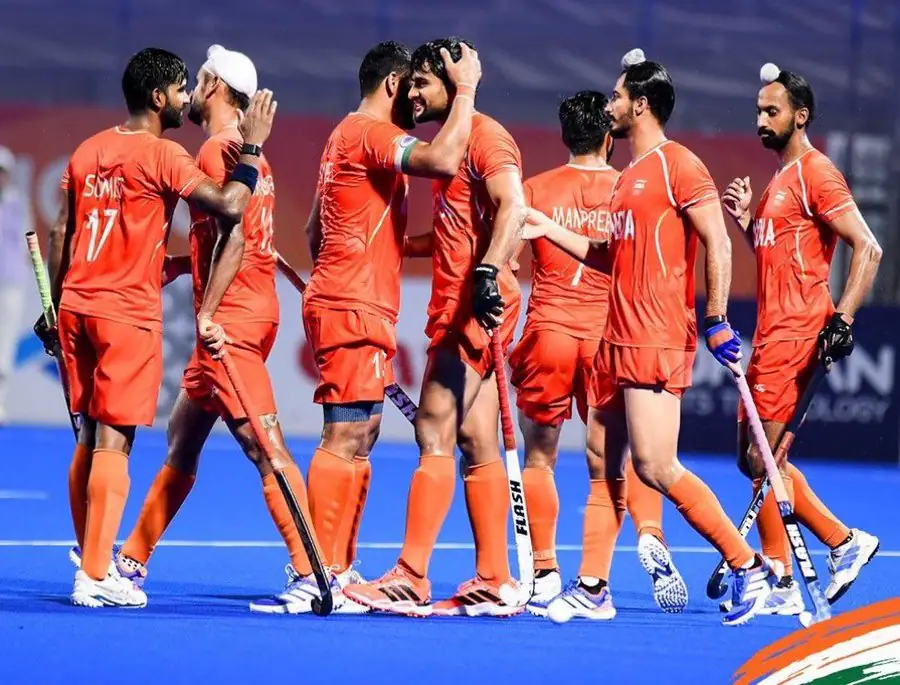
India sensed the opportunity to finish the contest once and for all. Aryan Xess did exactly that in the 58th minute, completing a remarkable three-goal burst and taking India to 7-3. A match that had been separated by a single goal suddenly had a four-goal gap.
There was no way back for South Korea.
The victory matters because of where India now stands in the pool. The defending champions have seven points from three matches, having recorded two wins and a draw. South Korea remains on six, while Japan is still in contention on four points.
India's final Pool A fixture comes against Chinese Taipei on Wednesday.
A victory would seal their place in the semifinals. That makes the result against South Korea particularly valuable. India have not only strengthened their position but have also demonstrated their ability to win a match that demanded patience.
For long stretches, the Koreans were able to match India's attacking output. Rather than panicking when the lead disappeared, India repeatedly rebuilt their advantage.
And when the decisive moment arrived, they did not settle for a narrow victory. They finished the job emphatically.
The captain's contribution deserves particular attention. Eight goals in three matches places Anmol at the forefront of the tournament's scoring charts, but his influence goes beyond the numbers. His dragflicking has repeatedly provided India with a route through tightly contested games.
Against South Korea, his two penalty-corner goals arrived at important moments the opener and the goal that stretched India's lead to three. For a team looking to defend its title, having a consistent source of goals from penalty corners can prove invaluable once the tournament reaches the knockout stages.
But India will know there is still work to do. The first three quarters against South Korea exposed how quickly an opponent can punish even small lapses. The final quarter, meanwhile, showed what happens when India combines defensive discipline with sustained attacking pressure.
That contrast may ultimately be the biggest takeaway from the game.
India now has one pool match remaining. Seven points have put them within reach of the semifinals. One more strong performance against Chinese Taipei could take them there. And after the way they finished against South Korea, the defending champions have made it clear that they are not simply here to progress.
They are here to defend their crown.
Comments (0)
to post comments, replies, and votes.
Loading comments…