LA 2028 Olympics: How Far Are Indian Athletics Records from the Olympic Qualification Standards?
India's athletics programme produced a landmark season in 2026, with 34 national records falling across 22 events. Gurindervir Singh brought the men's 100m record down to 10.09 seconds, Vishal TK became the first Indian to break 45 seconds in the 400m, and Vithya Ramraj erased P.T. Usha's 42-year-old 400m hurdles record.
Yet, with World Athletics announcing the qualification standards for the Los Angeles 2028 Olympic Games, the next challenge is considerably bigger: translating national-record performances into Olympic qualification.
A comparison of India's latest national records with the LA 2028 entry standards reveals a mixed picture. Some athletes are already within striking distance, while several events require significant improvements. Importantly, the ranking pathway offers another route to qualification, meaning athletes who do not achieve the entry standard can still secure a place through consistent international performances.
The athletics competition at LA 2028 will run from July 15 to 30, featuring 23 men's events, 23 women's events and two mixed relays.
World Athletics has adopted a dual-pathway qualification model, under which approximately 40% of athletes are expected to qualify through entry standards and the remaining 60% through world rankings.
However, achieving the entry standard does not automatically guarantee an Olympic place. If more athletes achieve the standard than the available quota permits in an event, qualification will be restricted to the best performances within the quota. In that situation, no additional athletes will qualify through rankings.
For Indian athletes, this makes both performance levels and competition planning crucial. A national record may represent significant progress, but it must be assessed against the international benchmark.
Sprinting: Gurindervir and Vishal face the next challenge
Gurindervir Singh's 10.09-second national record in the men's 100m is one of the standout performances of Indian athletics in 2026. However, the Olympic entry standard of 9.93 seconds requires another 0.16-second improvement.
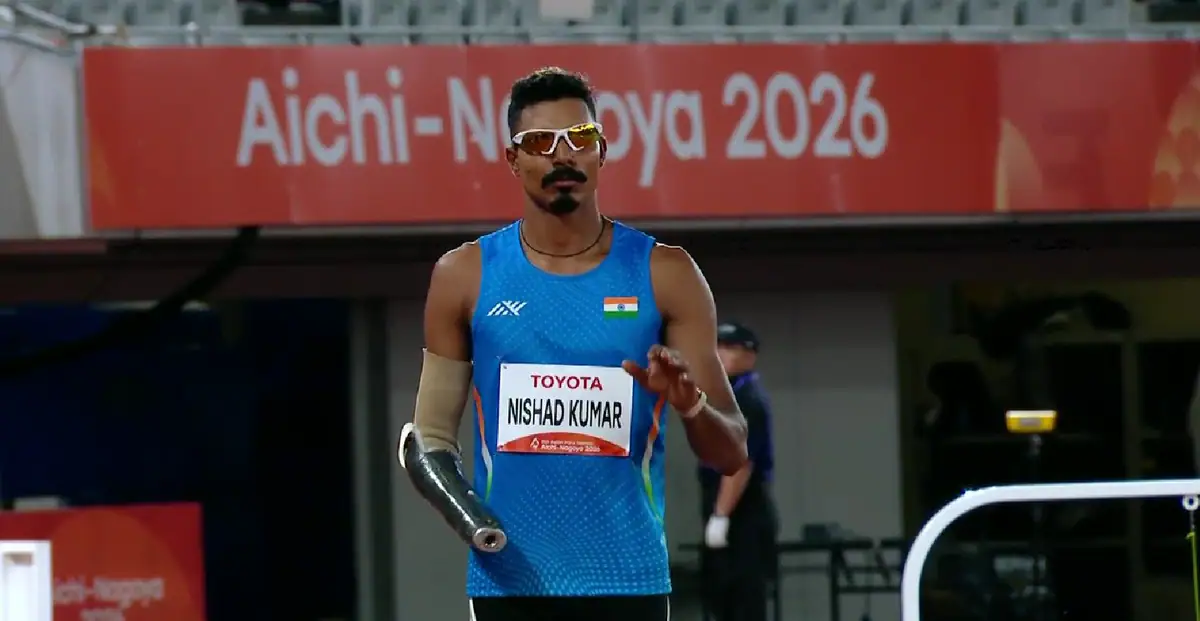
The men's 400m presents a similar challenge. Vishal TK improved his own national record to 44.98 seconds at the Federation Cup in Ranchi. The LA 2028 standard is 44.40 seconds, leaving a gap of 0.58 seconds.
In the men's 110m hurdles, Tejas Shirse's national record of 13.27 seconds is just 0.09 seconds outside the required 13.18. Among the events compared, this is one of India's closest approaches to an Olympic entry standard.
These performances indicate progress, but the next step will be converting national-level breakthroughs into competitive international times.
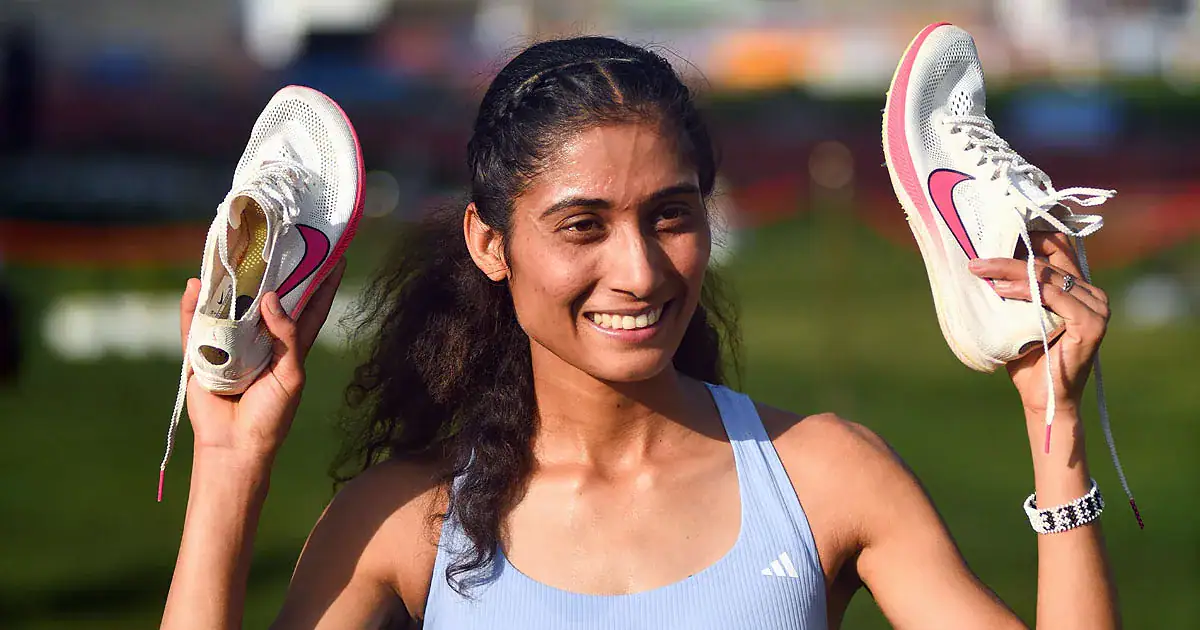
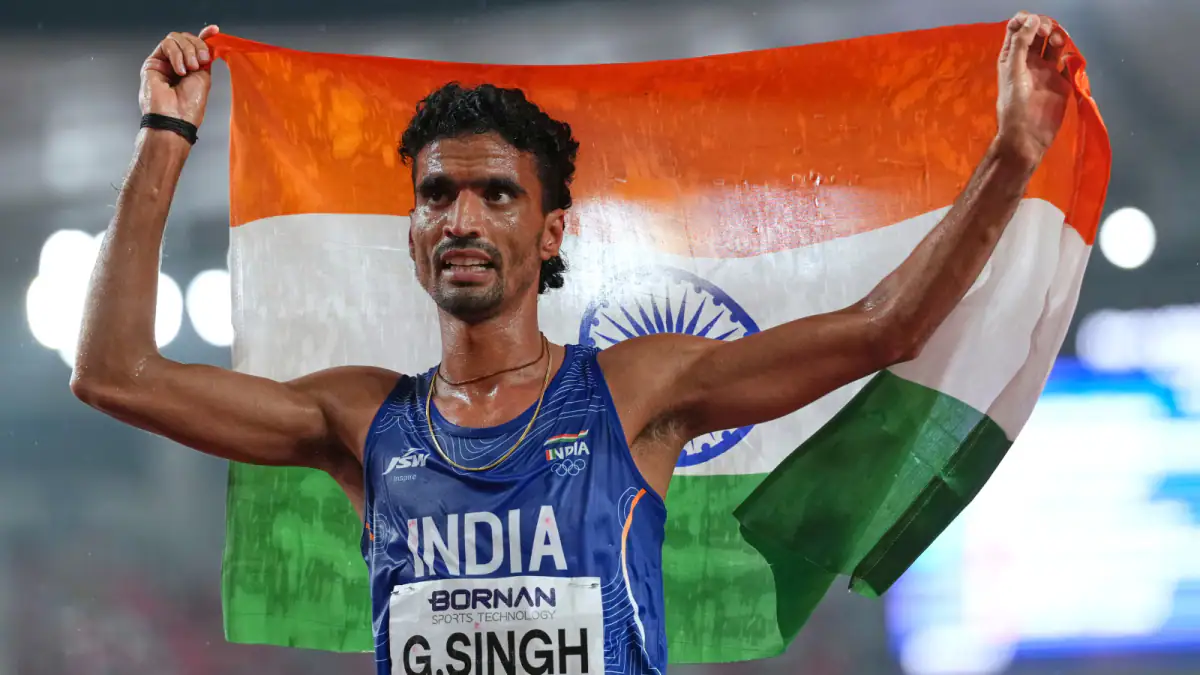
Gulveer Singh holds the men's 5000 m national record at 13:03.93, set at the LA Track Fest in May 2026. The Olympic standard is 12:50.00, requiring an improvement of 13.93 seconds. Parul Chaudhary holds India's women's 5000 m record at 15:04.26, but the LA standard of 14:34.00 is 30.26 seconds faster.
Parul also broke her own women's 3000m steeplechase record at the Asian Games, clocking 9:08.67. The Olympic entry standard is 9:06.00, leaving a gap of 2.67 seconds. In the women's 400m hurdles, Vithya Ramraj's 54.75-second national record is 0.75 seconds outside the 54.00-second standard. Her achievement in breaking P.T. Usha's long-standing record provides a strong foundation, but another step forward will be necessary.
Field events: Some close, others need major improvements
The field events reveal some of the most interesting comparisons. Sarvesh Kushare's men's high jump national record of 2.31m is just one centimetre below the 2.32m Olympic standard. Ancy Sojan's women's long jump record of 6.88m is also close, with only two centimetres separating her mark from the 6.90m requirement.
The gaps are considerably larger in pole vault. Dev Meena's men's national record of 5.50m is 40 centimetres short of the 5.90m standard, while Sindhushree G's women's record of 4.25m is 55 centimetres below the 4.80m requirement.
The hammer throw also presents a substantial challenge. Nirbhay Choudhary's men's record of 71.02m is 7.48m short of the standard, while Tanya Chaudhary's women's record of 68.35m is 5.65m below the 74m mark.
In the decathlon, Tejaswin Shankar's national record of 8,057 points is 593 points short of the Olympic standard of 8,650.
Sawan Barwal improved the men's marathon national record to 2:11:37 at the 2026 Asian Games, where he also won silver. The LA 2028 entry standard is 2:05:00, leaving a gap of six minutes and 37 seconds.
However, marathon qualification has additional provisions. On March 19, 2028, the top 56 athletes on the filtered Road to LA list, with a maximum of three per country, will be considered qualified. The first five finishers at Platinum Label marathons during the qualification period will also be considered to have achieved the entry standard.
Race walking will have a separate pathway. The first 12 finishers at the World Athletics Race Walking Team Championships in Hefei on April 9, 2028, will automatically qualify for the half marathon race walk events. The remaining 36 places will be allocated through world rankings.
India has already established national records in the new formats: Ram Baboo clocked 3:09:16 in the men's marathon race walk, Manju Rani recorded 3:33:24 in the women's event, while Sahil and Ravina set the men's and women's half marathon race walk records at 1:25:48 and 1:39:14 respectively.
For relays, the first 14 countries at the World Athletics Relays in The Bahamas on April 22–23, 2028, will qualify. India will need to target a strong team performance rather than rely on individual entry standards.
India's 2026 record-breaking season demonstrates that the country's athletics standards are moving forward. The achievements of Gurindervir Singh, Vishal TK, Parul Chaudhary, Vithya Ramraj, Dev Meena and others provide measurable benchmarks for the next phase.
But the comparison also makes the challenge clear: breaking a national record and reaching an Olympic entry standard are two different milestones.
The qualification windows begin at different times. Marathon qualification starts on November 1, 2026, while race walks, relays, 10,000m and combined events begin on December 19, 2026. All other events have a qualification window from June 19, 2027, to June 18, 2028.
For Indian athletics, the objective should be to improve national records, build world-ranking positions and plan competition schedules strategically. The 2026 season has established the benchmark. The next two years will determine how many Indian athletes can turn that progress into Olympic qualification.
Comments (0)
to post comments, replies, and votes.
Loading comments…