Rani Rampal’s 2010 World Cup Breakthrough: How a 15-Year-Old Became India’s Youngest Star
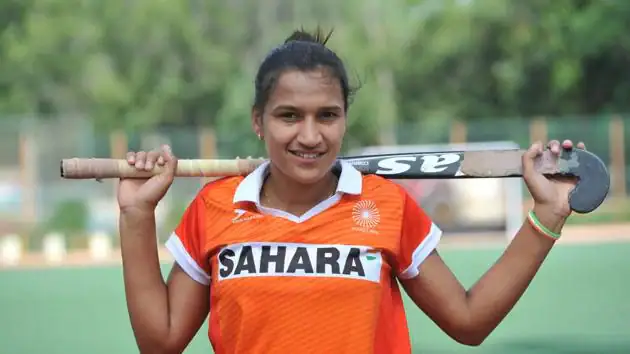
At 15, Rani Rampal starred at the 2010 Women’s Hockey World Cup with seven goals, finishing second in scoring and winning Best Young Player honours.
There are sporting breakthroughs that announce a player's arrival. Then there are performances that change how an entire country looks at an athlete.
For Rani Rampal, the 2010 Women's Hockey World Cup was both.
At just 15 years of age, Rampal became the youngest Indian player to feature at a Women's Hockey World Cup. What followed in Rosario, Argentina, was a campaign that established her as one of the most exciting young forwards in international hockey.
Across six matches, Rampal scored seven goals, finishing second in the tournament's overall scoring charts. Even more strikingly, all seven of her goals came from open play. Her performances earned her the Best Young Player of the Tournament award and led to her nomination for the 2010 FIH Young Women's Player of the Year award.
Rampal's World Cup breakthrough did not happen overnight. Born in Shahabad Markanda, Haryana, she grew up in difficult financial circumstances. Her father worked as a horse-cart puller, while access to equipment, nutrition and other resources was limited. She began formal hockey training in 2003 at the Shahabad Hockey Academy under renowned coach Baldev Singh. Support from the GoSports Foundation subsequently helped her continue developing as an elite athlete.
Her rise through the Indian system was exceptionally rapid. Rampal made her senior international debut in 2008 at just 14 years old during the Olympic Qualifiers in Kazan, Russia. She became the youngest player to represent the Indian women's national team.
A year later, she produced another remarkable performance at the 2009 Champions Challenge II, scoring four goals in the final as India won the tournament. She was named both top goalscorer and young player of the tournament.
By the time she arrived at the 2010 World Cup, Rampal was already regarded as one of India's brightest young talents.
Seven Goals on the Biggest Stage
The 2010 World Cup in Rosario represented a much bigger test. India was competing against established international powers, including the Netherlands, Germany and Australia. Rampal, however, showed little fear of the occasion. She scored against the Netherlands in India's opening match, briefly bringing the score level at 1-1 before the eventual 7-1 defeat.
Against Germany, she scored again, finding the equaliser in the 24th minute. She also scored India's goal against Australia and continued to influence India's attack throughout the tournament. Her campaign ended with another important contribution in India's ninth-place classification match against South Africa.
India won that match 4-3, with Rampal playing a decisive role in the attacking effort. Seven goals in six matches placed her second in the overall scoring charts, behind only Netherlands penalty-corner specialist Maartje Paumen, who scored 12 goals. The difference between their scoring methods was also notable. While Paumen's goals came through penalty corners, Rampal scored all seven from open play.
That made her the tournament's leading field-goal scorer.
Rampal's impact was not limited to her scoring numbers. Her game was built around acceleration, movement and the ability to find space inside the shooting circle. She could operate as a centre-forward but was also capable of dropping deeper and contributing to attacking transitions. Her ability to create opportunities from open play was particularly valuable for India, whose set-piece output was comparatively limited during the tournament.
That made her seven-goal return even more significant. She was not simply finishing chances created by a dominant team. Rampal was often required to manufacture attacking opportunities against stronger opponents.
Her performances in Rosario brought immediate international recognition. The FIH named Rampal the Best Young Player of the Tournament, while her World Cup campaign also resulted in a nomination for the 2010 FIH Young Women's Player of the Year award. Although China's Zhao Yudiao ultimately won the award, Rampal's achievements did not go unnoticed. She was also selected in the FIH Women's All-Star Team of 2010, alongside some of the biggest names in world hockey.
For a 15-year-old Indian forward, it was an extraordinary level of recognition.
The 2010 World Cup eventually became the opening chapter of a remarkable international career. Rampal went on to captain India to a bronze medal at the 2013 FIH Junior World Cup, win the Women's Asia Cup in 2017 and lead the national team to its historic fourth-place finish at the Tokyo Olympics. She ultimately finished her senior international career with 254 appearances and 120 goals before announcing her retirement in October 2024.
But before the medals, captaincy and Olympic history came Rosario. At 15, Rani Rampal walked into the 2010 Women's Hockey World Cup as the youngest Indian player in the tournament. She left it as one of its biggest stories.
Seven goals. Six matches. Second in the scoring charts. Best Young Player. And a nomination for the FIH Young Player of the Year award.
For Indian women's hockey, it was the moment a prodigy announced that she belonged on the world's biggest stage.
Comments (0)
to post comments, replies, and votes.
Loading comments…