Sarvesh Kushare’s Rise Continues: From Asian Championship Heartbreak to World Stage Breakthrough
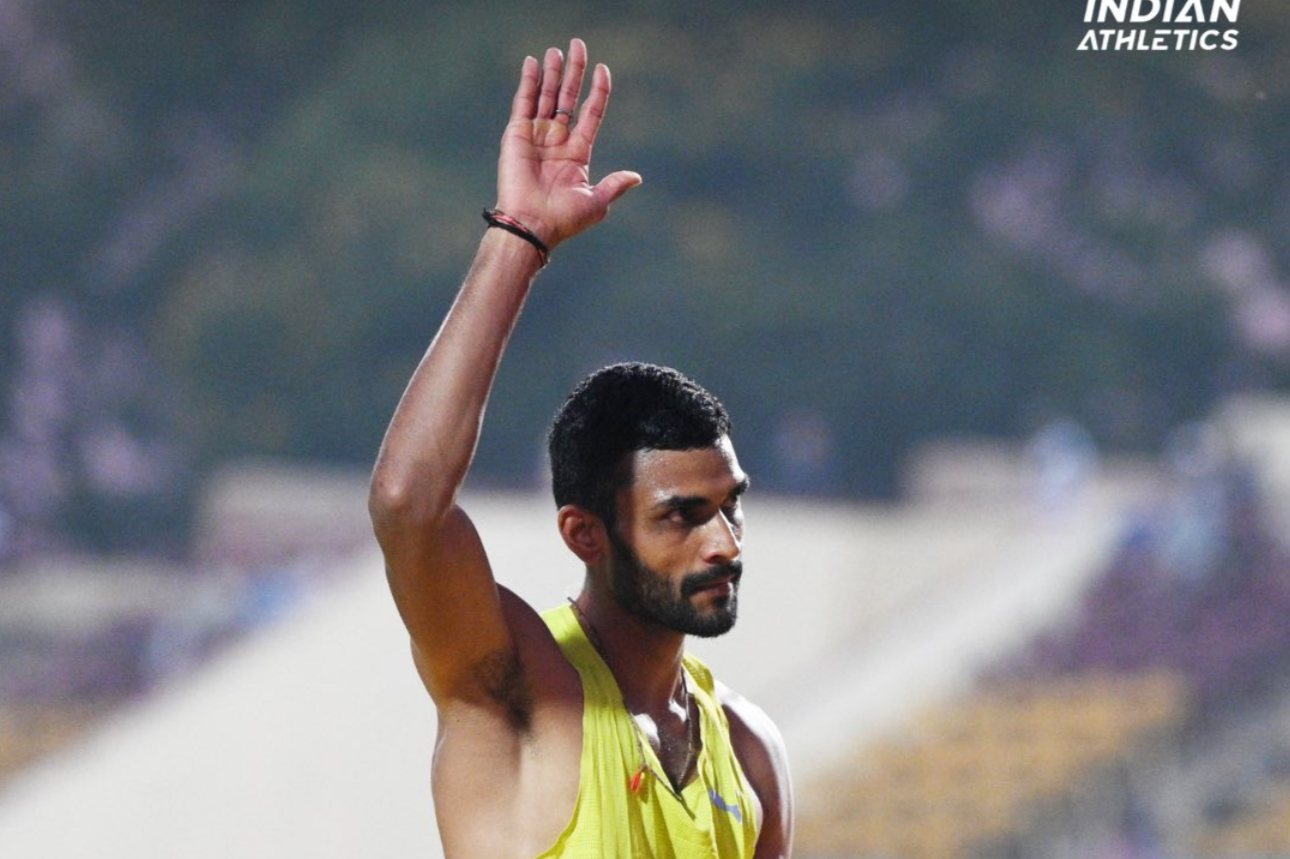
Indian high jumper Sarvesh Kushare continues his rise after clearing 2.28m twice, becoming a World Championships finalist and breaching CWG qualification.
Indian high jump has quietly entered one of its strongest phases in recent years, and at the centre of that rise stands Sarvesh Kushare.
Over the last three seasons, the Maharashtra athlete has steadily transformed from a consistent domestic jumper into a genuine international-level contender. The progression has not been sudden or accidental. It has come through years of technical refinement, resilience after setbacks, and a growing ability to deliver under pressure on the biggest stages.
Ironically, one of the biggest turning points of Sarvesh’s career came in defeat. At the Asian Championships in 2023, he narrowly missed out on a bronze medal in the men’s high jump by just four centimetres. Despite the disappointment, the competition became a defining moment in his development.
Rather than fading after missing the podium, Sarvesh responded with the most consistent phase of his career. Later that season, he cleared 2.26m at the Indian Open Athletics Meet in Sangrur before going on to win the Inter-State Championships with a best effort of 2.24m. Those performances confirmed that his Asian Championships result was not an isolated peak, but part of a larger upward trend.
The defining breakthrough finally arrived at the 2025 World Athletics Championships in Tokyo. Coming into the competition, expectations around Indian high jump globally remained limited. No Indian male high jumper had ever qualified for a World Championships final before.
Sarvesh changed that.
In qualification, he produced a composed and technically controlled performance, clearing 2.25m to become the first Indian high jumper in history to reach a World Championships final. That achievement alone would have marked a historic moment for Indian athletics. But Sarvesh was not finished.
In the final, he delivered the best performance of his career, soaring over 2.28m to finish sixth overall against one of the strongest fields in world athletics. The jump became India’s second-best high jump performance ever, behind only Tejaswin Shankar’s national record of 2.29m.
More importantly, it established Sarvesh as a legitimate global competitor rather than just a continental-level athlete.
The momentum from Tokyo, however, did not immediately continue into 2026. Sarvesh opened his season with a modest 2.16m effort at the Indian Open Jumps competition, a result well below his established standards. Soon after, he was defeated by local athlete Swadhin Kumar Manjhi at the National Indoor Championships in Bhubaneswar.
For many athletes, such setbacks after a career-best season can trigger uncertainty. But Sarvesh responded exactly like elite athletes are expected to respond immediately.
At the Indian Athletics Series-1 in Bengaluru, Sarvesh regained rhythm by clearing 2.23m. It was not a spectacular mark by his standards, but it showed technical stability and renewed confidence. Then came the Federation Cup. Competing against a strong domestic field, Sarvesh once again cleared 2.28m, equalling the best jump of his career and comfortably surpassing the Commonwealth Games qualification mark of 2.22m.
The performance confirmed that Tokyo was no one-off breakthrough. Even more encouraging was his attempt at 2.29m, the national record held by Tejaswin Shankar. Although he narrowly missed the clearance, the attempts themselves demonstrated how close Sarvesh now is to rewriting Indian athletics history.
One of the most positive developments from the Federation Cup was that Sarvesh was not the only athlete to cross the Commonwealth Games qualification mark. Adarsh Ram also cleared the required standard, highlighting the growing depth in Indian men’s high jump.
For years, Indian athletics largely depended on isolated individual breakthroughs in field events. Now, thaere are signs of a stronger competitive ecosystem developing domestically, especially in jumps. That competition is important because elite-level consistency is often built through internal rivalry and high-pressure domestic meets.
At 2.28m, Sarvesh Kushare now stands firmly among Asia’s top high jumpers and increasingly close to global elite territory. The next milestone is obvious the national record of 2.29m.
But beyond numbers, his biggest achievement may already be the barrier he has broken psychologically for Indian athletics. Reaching a World Championships final and competing confidently against the world’s best has expanded what Indian high jumpers can realistically believe is possible.
And judging by the way Sarvesh has responded after every setback in recent years, it feels increasingly likely that his best jump is still ahead of him.
Comments (0)
to post comments, replies, and votes.
Loading comments…