Sreejesh Exit Sparks Debate: Indian vs Foreign Coaches in Hockey
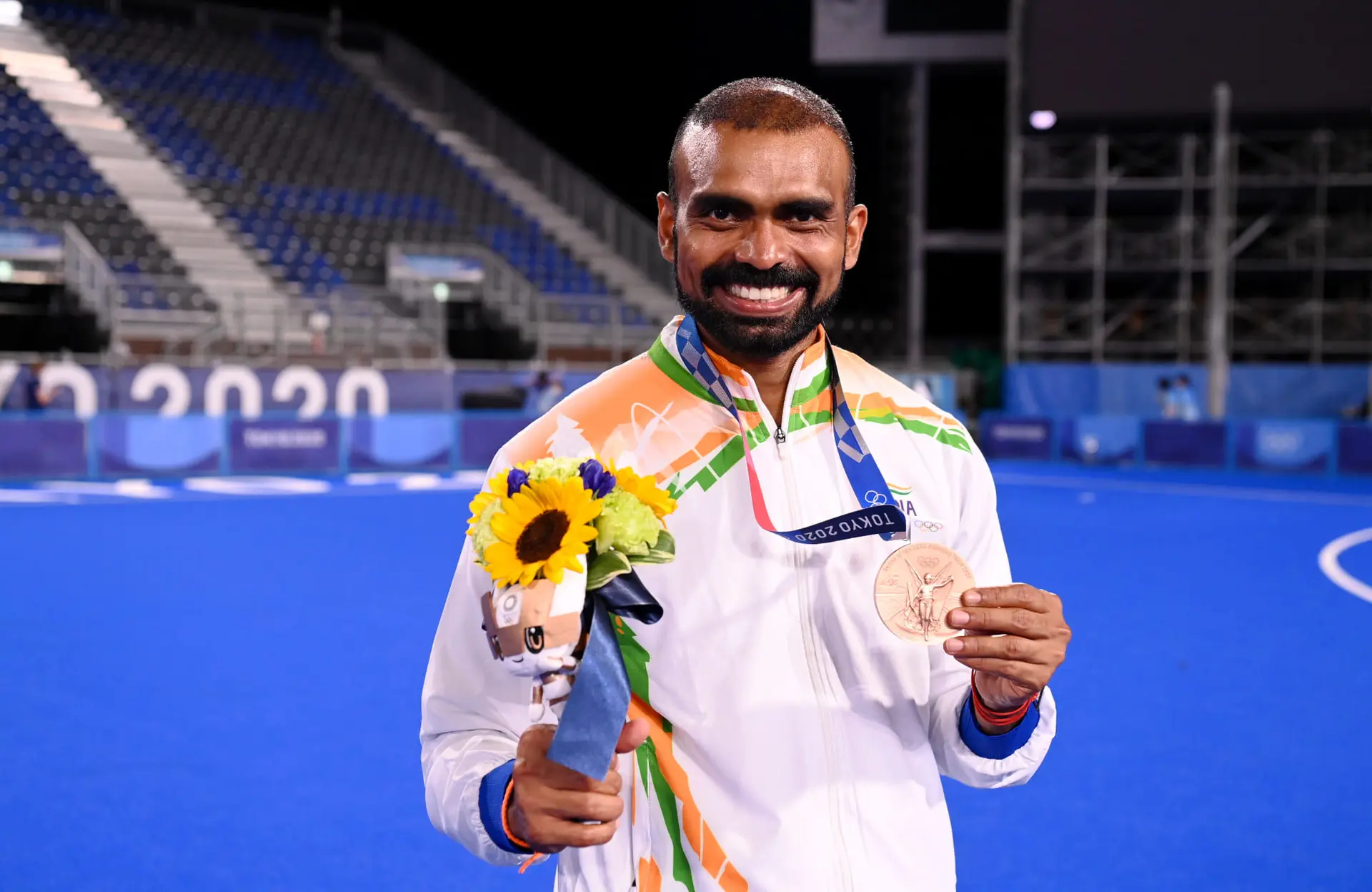
P.R. Sreejesh’s exit as junior coach has sparked debate on Indian vs foreign coaches, raising questions about pathways, merit and hockey’s long-term vision.
The exit of P.R. Sreejesh as India’s junior men’s hockey coach has triggered a wider debate that goes beyond one appointment.
At its core lies a familiar and often polarising question should Indian hockey rely on homegrown coaches, or continue to lean on foreign expertise?
Sreejesh, one of India’s most decorated goalkeepers, made his concerns public after his coaching stint ended, expressing disappointment over what he perceived as a preference for foreign coaches within the system. His statement, however, has been met with a detailed clarification from Hockey India, setting up a layered discussion around merit, process, and long-term planning.
Sreejesh’s tenure as junior coach lasted around 1.5 years, during which India secured podium finishes in all five tournaments, including a Junior World Cup bronze medal. From a results perspective, it was a productive stint. His primary concern revolves around continuity and recognition. He pointed out that while coaches are often removed after poor performances, his exit came despite consistent results. More significantly, he questioned the underlying philosophy, asking whether Indian coaches are being given enough trust to develop Indian hockey.
The emotional undertone of his statement also stems from a perceived contradiction. He referenced a meeting with Sports Minister Mansukh Mandaviya earlier this year, where he was encouraged to step into leadership roles as India builds towards the 2036 Olympic vision. From his standpoint, the messaging appears inconsistent encouraging Indian coaches on one hand, while continuing to appoint foreign coaches across teams.
Hockey India’s Response: Process Over Perception
Hockey India’s official statement presents a different narrative. According to the federation, Sreejesh’s tenure concluded as per contract in December 2025. The position was subsequently advertised, and a new coach was selected through a standardised process based on merit. Importantly, the federation has rejected the claim that Sreejesh was “removed” or “fired.” Instead, it stated that he was offered a role with the Development team an important part of the Olympic cycle but chose not to accept it.
Hockey India also clarified that there was no directive or preference from the senior men’s team coach regarding the appointment of a foreign coach for the junior side. The federation emphasised its broader commitment to developing Indian coaches, citing its coaching pathway program, which has certified over 600 coaches nationwide.
This situation reflects a recurring tension in Indian sport balancing sentiment with structure. On one hand, Sreejesh represents the ideal narrative of a former elite player transitioning into coaching. His stature, experience, and understanding of the game make him a valuable asset. On the other hand, coaching at the highest level is a specialised profession that often requires structured progression starting from grassroots or state-level roles before moving into national setups.
Sreejesh’s own coaching journey began directly at the junior national level, a rare pathway that bypassed traditional stages of development. While this reflects the trust placed in him, it also raises questions about long-term coaching pathways in India.
The debate around foreign versus Indian coaches is not new in Indian hockey. Historically, many of India’s recent successes have come under foreign coaches such as Roelant Oltmans, Terry Walsh, Graham Reid, and Craig Fulton. These coaches have brought structured systems, modern tactical frameworks, and international exposure. Sreejesh himself was part of teams coached by these individuals, achieving some of his biggest successes during that period.
This context complicates the narrative. While the argument for promoting Indian coaches is valid, the transition must be supported by a robust ecosystem that ensures they are equipped to handle the demands of elite coaching.
The issue is not a binary choice between Indian and foreign coaches it is about creating a sustainable pathway. For Indian coaches to take charge consistently at the highest level, there needs to be structured progression from grassroots to national roles, continuous exposure to international best practices & integration within high-performance environments.
Hockey India’s approach of aligning Indian coaches with senior setups and providing certification programs is a step in that direction. However, translating this into leadership roles remains a work in progress.
There is also an optics challenge. Sreejesh’s statement resonates because it touches on a broader sentiment whether Indian expertise is being undervalued. At the same time, the federation’s response highlights procedural integrity and long-term planning.
Both perspectives can coexist.
The key lies in communication and clarity. Ensuring that stakeholders understand the rationale behind decisions is as important as the decisions themselves. For Sreejesh, the immediate future remains open. His stature in Indian hockey ensures that opportunities whether in coaching, mentoring, or administration will continue to be available. For Indian hockey, the focus must remain on building a system that does not rely on individual debates but operates on clear, transparent pathways.
The Sreejesh episode has sparked an important conversation one that Indian hockey needs to have. It is not about choosing between Indian and foreign coaches, but about creating an ecosystem where Indian coaches can develop, gain experience, and eventually lead at the highest level. That process takes time, structure, and consistency.
The challenge now is to ensure that this debate leads to progress, not just headlines.
Comments (0)
to post comments, replies, and votes.
Loading comments…