2026 FIFA World Cup League Numbers Offer India a Blueprint for Building a World Cup-Ready Football Team

The numbers from the 2026 FIFA World Cup offer an important lesson for Indian football: the pathway to competing at the highest level cannot be built around the domestic game alone.
Of the 1,248 players representing 48 nations at the expanded FIFA World Cup, 1,058 were reported to be playing in the world's top 30 leagues. More significantly, 464 players, accounting for 37.2% of the tournament's total playing pool, were registered with clubs in Europe's Big Five leagues — the Premier League, La Liga, Bundesliga, Serie A and Ligue 1.
That concentration is worth examining. While playing in a top league does not automatically make a player an international star, exposure to higher standards of competition, tactical demands, training environments and match intensity can help footballers develop the qualities required at international level.
For India, the message is clear: if the country wants to qualify for a FIFA World Cup, developing players who can compete regularly in stronger leagues must become a central part of its football strategy.
The 464 players associated with Europe's five leading leagues represented more than one-third of the entire 2026 World Cup field. The research also highlights how their representation increased as the tournament progressed.
Using 2025/26 club registrations, Big Five representation reportedly rose from 37.2% of the initial player pool to 50% in the Round of 32, 56% in the Round of 16, 79% in the quarter-finals and 91% in the semi-finals.
The trend suggests that players competing in these leagues were heavily represented among teams advancing into the latter stages of the competition.
However, there is an important distinction between league representation and league quality. The number of World Cup players supplied by a particular competition does not, by itself, establish its global ranking. Some leagues feature prominently because their national teams qualified and selected a substantial number of home-based players.
For Indian football, therefore, the objective should not simply be to send players abroad. It should be to ensure that they move into competitive environments that genuinely improve their footballing development.
Asian nations offer India a more realistic pathway
Japan provides one of the strongest examples of a successful overseas player-development pathway in Asia. Its 2026 World Cup squad featured players across several European competitions, including the Bundesliga, Eredivisie, Premier League and Belgian Pro League.
The important lesson is that Japanese players did not necessarily move directly into Europe's biggest clubs. Several developed through intermediate competitions that provided opportunities to adapt to European football.
Belgium's Sint-Truidense VV, for example, has played a role in the development of Japanese internationals such as Daichi Kamada, Wataru Endo and Takehiro Tomiyasu.
Uzbekistan and Jordan offer two other useful examples. Both made their World Cup debuts in 2026 without relying on squads filled with Big Five regulars.
Uzbekistan combined a strong domestic and regional player base with the presence of Manchester City defender Abdukodir Khusanov. Jordan, meanwhile, relied heavily on its domestic and regional core, supported by the attacking quality of Musa Al-Taamari, who plays in France.
These examples demonstrate that a country does not need 26 players competing in Europe's elite leagues to reach a World Cup. It needs a competitive domestic structure, international exposure and individuals capable of performing at a higher level.
India's recent international performances underline the scale of the challenge. Having been ranked 99th in July 2023, the national team slipped towards the 140th position in the FIFA rankings by November 2026.
India's failure to progress from the second round of the 2026 World Cup qualifiers, followed by a disappointing campaign in the 2027 AFC Asian Cup qualifiers, exposed the gap between Indian football and the continent's stronger national teams.
The challenge is not restricted to the senior national team. India's club ecosystem also needs improvement. The country ranked 26th in the 2026 AFC Club Competitions Ranking, earning only a single indirect qualifying berth in the third-tier AFC Challenge League for the 2027/28 season.
There are also practical obstacles to overseas transfers. European work-permit regulations, particularly in England, make direct entry difficult for Indian players. Domestic salary structures can also discourage established footballers from accepting lower wages to pursue opportunities abroad.
This makes a structured pathway even more important.
A three-stage career pathway for Indian footballers
Rather than expecting young Indian players to secure immediate moves to the Premier League or La Liga, the focus should be on building a realistic progression.
Stage 1: Foundation (16–20 years)
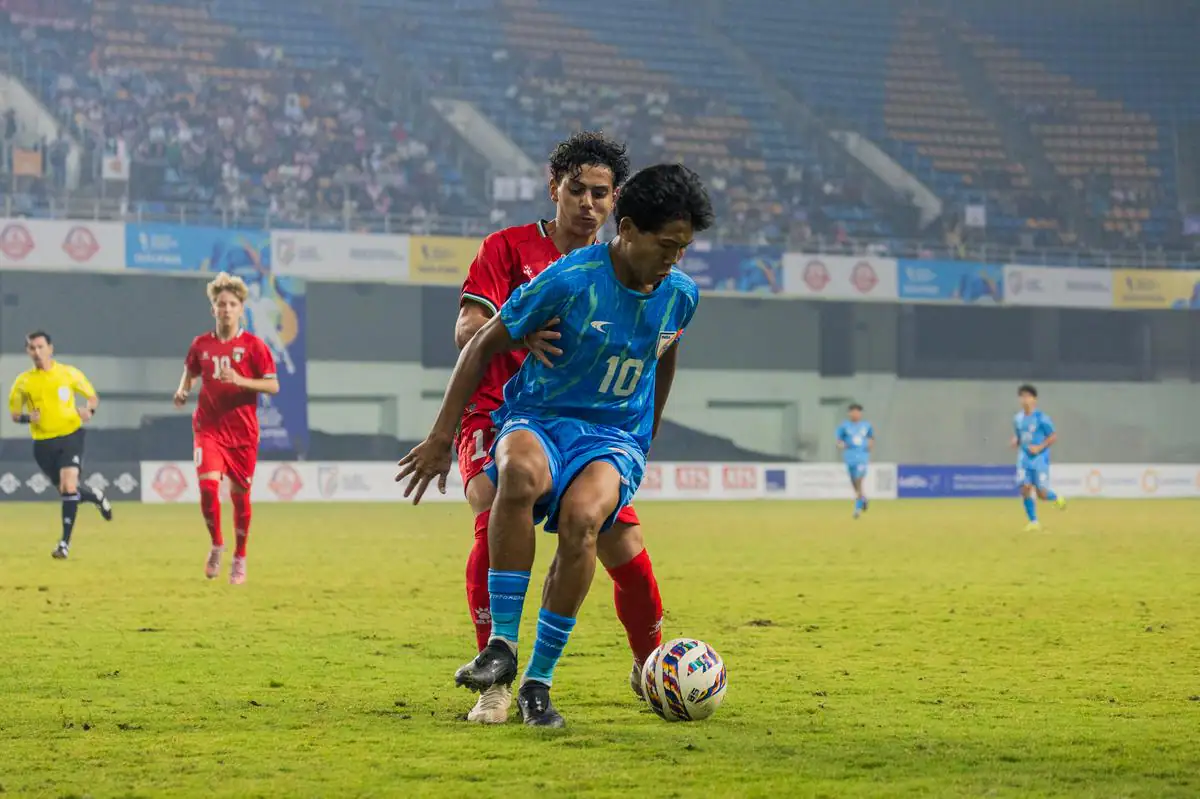
Players should prioritise the AIFF Elite Youth Leagues, AFC U-17 and U-20 competitions, and regular exposure to continental football. International youth tournaments provide the experience and visibility needed to attract overseas interest.
Stage 2: Overseas development (19–23 years)
The next step should be competitive Asian leagues such as Japan's J1 and J2 Leagues, South Korea, the UAE and Qatar, alongside European bridge competitions in Belgium, Portugal, the Netherlands, Czechia, Denmark, Cyprus and Scotland.
These leagues can provide exposure to different tactical systems, higher match intensity and more competitive environments. Regular playing time should matter more than simply securing a contract with a recognisable club.
Stage 3: Elite competition
Once established abroad, players can target UEFA Europa League and Conference League clubs, the EFL Championship and eventually the Big Five leagues. Progression should be based on performance, consistency and opportunities earned.
The 2026 World Cup numbers should not be interpreted as a formula guaranteeing qualification. Playing abroad alone will not take India to football's biggest stage.
But India needs more players competing outside its domestic ecosystem, particularly in leagues that can challenge them technically, tactically and physically. Even a small group of Indian footballers becoming regular starters in the Belgian Pro League, Dutch Eredivisie, Portuguese Primeira Liga or Japanese J1 League could significantly improve the national team's competitive depth.
At the same time, the domestic league must become stronger, clubs need better youth-development structures, and India's performance in AFC club competitions must improve.
The career ambition for India's most talented young footballers should be clear: earn the opportunity to play in stronger leagues, establish themselves there and eventually compete at the highest level.
India's World Cup dream will require more than one generation of talented players. It will require a system that consistently produces footballers capable of succeeding beyond the country's borders.
The 2026 FIFA World Cup has offered a useful reference point. The challenge now is to turn those numbers into a long-term development strategy for Indian football.
Comments (0)
to post comments, replies, and votes.
Loading comments…