AFC U17 Asian Cup 2026: India’s U17 men’s Outclassed by Australia U17
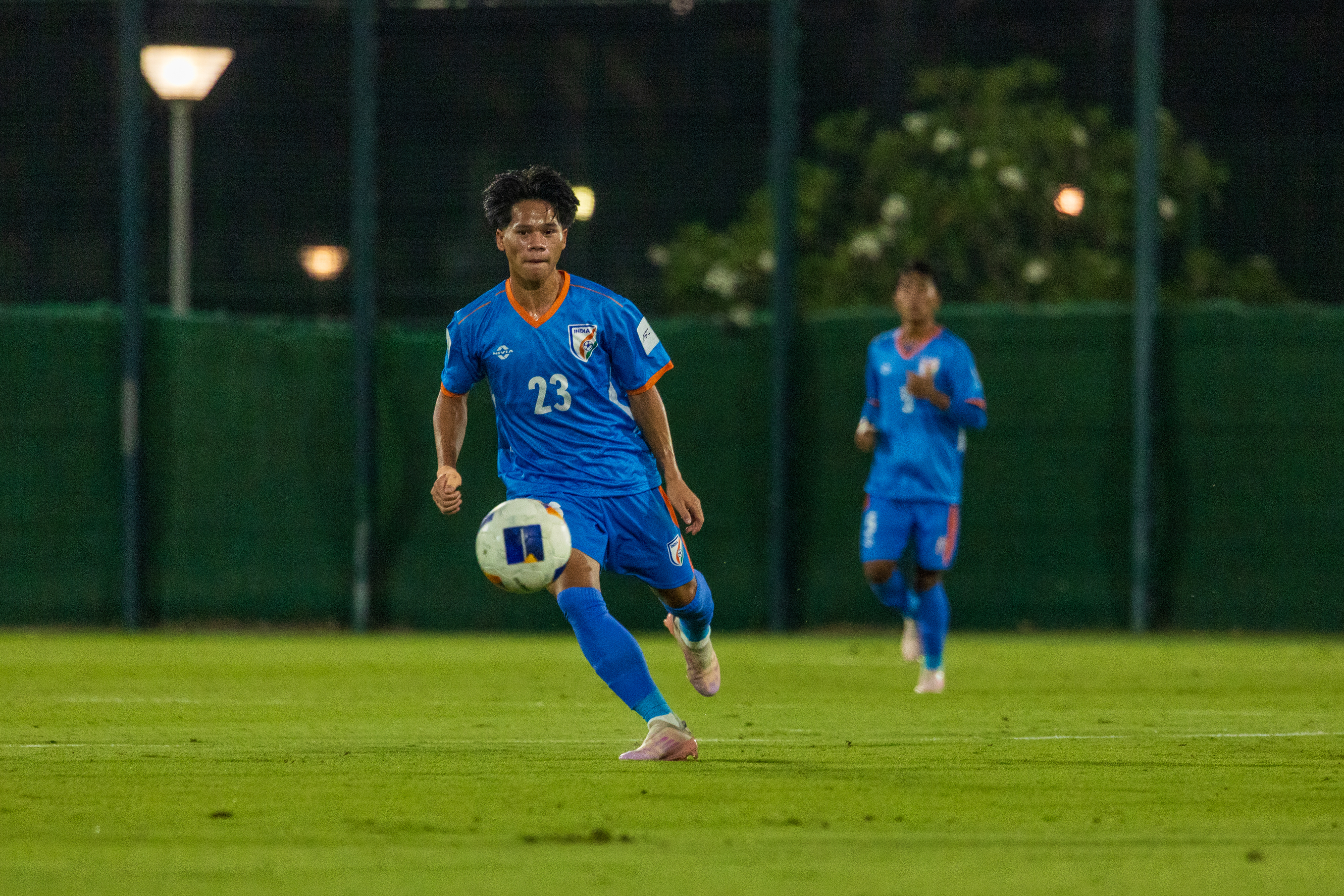
India’s U17 men’s national team endured a difficult start to their AFC U17 Asian Cup 2026 campaign, going down 0-4 to a sharp and clinical Australia side in their Group D opener
India’s U17 men’s national team endured a difficult start to their AFC U17 Asian Cup 2026 campaign, going down 0-4 to a sharp and clinical Australia side in their Group D opener at the King Abdullah Sports City in Jeddah on May 6.
While the scoreline reflected Australia’s dominance in key moments, the contest also revealed phases where the Blue Colts showed promise, particularly in their response after falling behind early. Australia wasted no time asserting control. Their aggressive high press disrupted India’s build-up from the outset, forcing hurried decisions and limiting space in midfield. The early pressure paid off in just the fourth minute when Luke Becvinovski found himself unmarked inside the box to finish a well-delivered ball from the left, giving Australia an immediate advantage.
For a young Indian side entering a high-intensity continental tournament, conceding early could have derailed the contest completely. Instead, the Blue Colts responded with encouraging intent. Within minutes, a well-constructed move saw Denny Singh and captain Dallalmuon Gangte combine effectively to release Gunleiba Wangkheirakpam, whose run into the box ended with a shot into the side netting. It was a glimpse of India’s attacking potential, built on quick passing and direct running.
However, Australia’s structure and physicality continued to pose challenges. Their width, particularly through Henrique Oliveira and Archie Mitchell, stretched the Indian defence and created overloads in wide areas. Despite this, goalkeeper Rajrup Sarkar emerged as a key figure, producing an impressive diving save in the 14th minute to deny Max Court and keep India within reach. The turning point in the first half arrived in the 29th minute. A defensive lapse led to a penalty after Moosa Ashiq brought down Akeem Gerald inside the box. Court stepped up and calmly converted, doubling Australia’s lead and placing India under significant pressure heading into the latter stages of the half.
India continued to show flashes of attacking intent, with Azlaan Shah’s dribbling and Gangte’s link-up play offering some penetration. Yet, the final ball remained elusive. Australia’s defensive discipline ensured that while India could advance into promising areas, clear-cut chances were limited. At the other end, Rajrup’s performance kept the contest from slipping further away. Alongside him, defenders Shubham Poonia and Korou Meitei Konthoujam made several crucial interventions to prevent Australia from extending their lead before half-time.
The second half saw a noticeable improvement in India’s control and composure. The Blue Colts enjoyed longer spells of possession, pushing Australia deeper and attempting to build more structured attacks. Denny Singh grew into the game, dictating tempo in midfield, while Gunleiba continued to offer a direct outlet with his pace and movement.
India’s best phase came around the hour mark. Gangte tested the Australian goalkeeper from a tight angle, and moments later, a quick transition nearly caught Australia off guard. Rajrup, too, remained alert, rushing off his line to break up a counterattack, underlining his all-round contribution. The closest India came to scoring arrived in the 70th minute. A flowing move involving Gangte and Denny Singh released Azlaan Shah, whose effort was saved by Charlie Wilson-Papps. Substitute Raj Singh Wahengbam reacted quickly to the rebound but sent his header narrowly wide. It was a pivotal moment that could have shifted momentum had it resulted in a goal.
Instead, Australia responded with clinical efficiency. Just four minutes later, substitute Luka Demuth struck from outside the box, capitalising on space at the edge of the area to make it 3-0. The goal effectively ended any realistic hopes of a comeback. Despite the setback, India continued to push forward in search of a breakthrough. However, their attacking efforts lacked the finishing touch, and Australia remained dangerous on the counter. Henrique Oliveira added a fourth in the 86th minute, cutting in from the right before finishing neatly to complete the scoring.
While the result is a heavy one, the performance offered valuable lessons for the Indian side. The gap in physicality and execution at key moments was evident, but so too was India’s ability to compete in phases, particularly when they settled into the game.
The Blue Colts’ challenge now shifts to their next fixture against Uzbekistan. With DPR Korea withdrawing from the group, the equation becomes clearer India must produce a significantly improved performance to stay competitive in the tournament. For a young squad, tournaments like these are as much about development as results. The defeat to Australia highlights areas that need refinement decision-making under pressure, defensive organisation, and clinical finishing but also reinforces the importance of exposure to high-level competition.
If India can build on the positive spells from this match and address the lapses that proved costly, there remains an opportunity to finish their campaign on a stronger note.
Comments (0)
to post comments, replies, and votes.
Loading comments…