Animesh Kujur, Mohammed Afsal Shine as Indian Athletes Impress at Saudi Grand Prix 2026
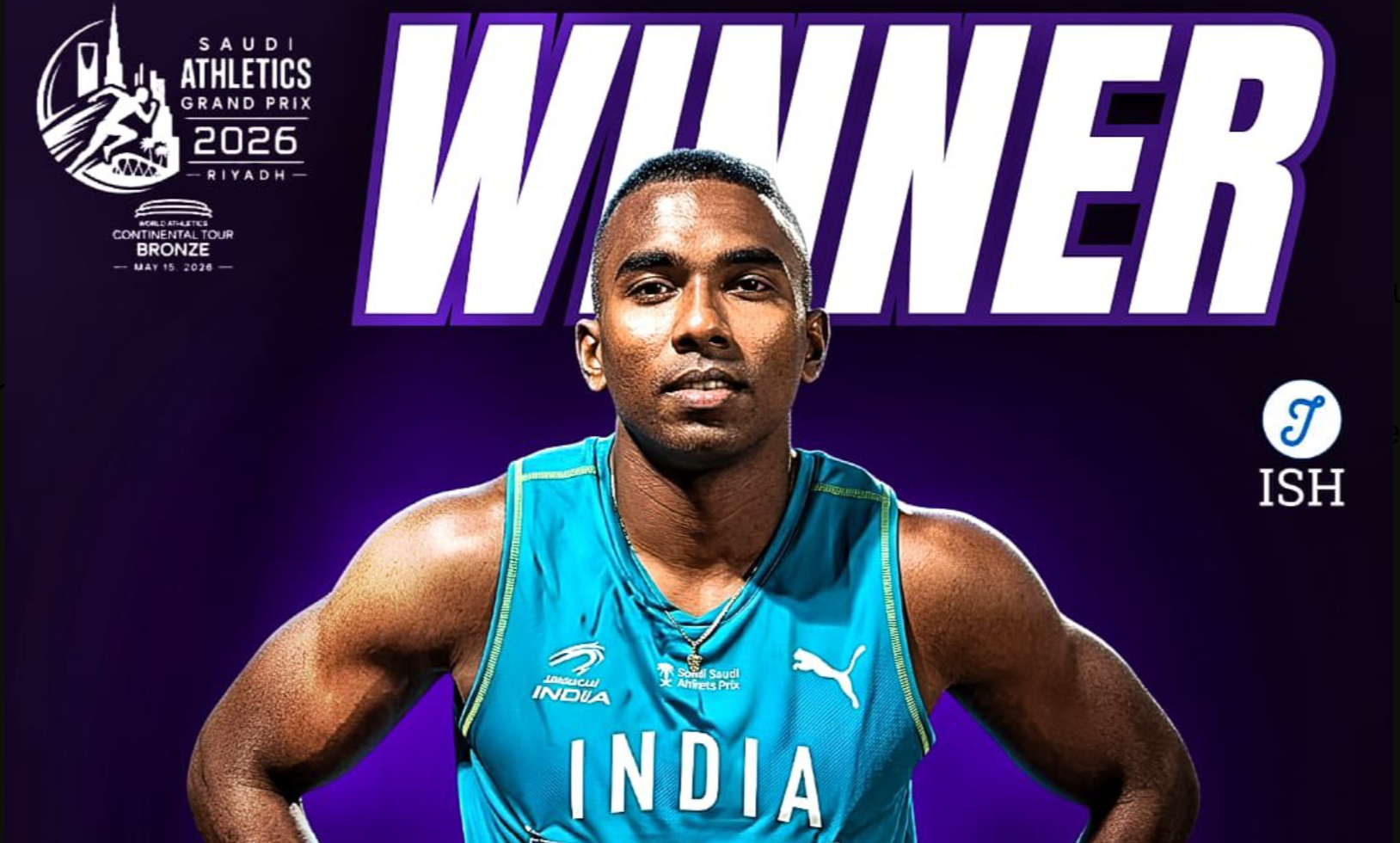
Indian athletics enjoyed a productive outing at the Saudi Grand Prix 2026 in Riyadh, with multiple athletes delivering podium finishes across sprinting, hurdles, middle-distance running, and relay events.
The standout performances came from India’s fastest man Animesh Kujur and national record holder Mohammed Afsal, both of whom secured titles in their respective events. India’s men’s 4x100m relay team also finished first, while hurdler Krishik M continued his encouraging rise at the international level.
Although the competition field was relatively modest in certain events, the meet still provided valuable race exposure and performance indicators for Indian athletes early in the season.
Animesh Kujur once again emerged as the headline performer for India. The national record holder clinched the men’s 200m title with a timing of 20.77 seconds, finishing ahead of Britain’s David Harrison (20.87s) and Olympic bronze medallist relay runner Toby Harries (21.01s). The performance underlined Animesh’s growing consistency in the event. Remarkably, this was only his second 200m race of the season after opening with 20.74 seconds at Indian Series-3.
Last year, Animesh rewrote Indian sprint history by breaking the national record twice and lowering it to 20.32 seconds. His current performances suggest he is maintaining a strong competitive base heading deeper into the international calendar. Perhaps more importantly, the Indian sprinter continues to show the ability to deliver consistently below the 21-second mark something that was rare in Indian sprinting until recently.
Animesh also delivered another solid performance in the men’s 100m, finishing second in the final with 10.44 seconds. Fellow Indian sprinter Gurindervir Singh clocked the exact same timing to finish third, while Britain’s David Harrison narrowly won the race in 10.42 seconds. The race, however, was significantly affected by a strong headwind of -2.4 m/s, which impacted overall timings across the field. Pranav Gurav also impressed by topping Heat 2 and eventually finishing fourth overall with 10.45 seconds, further highlighting the growing depth in Indian sprinting.
Harsh Raut finished sixth in Heat 2 with 10.75 seconds.
While the timings themselves were not exceptionally fast, especially considering the relatively weaker competition field, the consistency shown by multiple Indian sprinters remains encouraging.
India’s men’s 4x100m relay team secured first place with a timing of 40.49 seconds. However, the race itself unfolded under unusual circumstances, as only two of the five entered teams actually started the event, with three teams marked DNS (Did Not Start). Saudi Arabia’s A team began strongly and held the advantage during the early phases of the race before their second-leg runner appeared to suffer a cramp, effectively ending their challenge.
India’s relay performance itself was mixed.
The quartet had a relatively slow opening phase, and the baton exchange between the third and fourth legs lacked smoothness. Despite those issues, the Indian team managed to finish first and gain another valuable relay outing together. The result reinforces the importance of continued relay exposure, particularly as India looks to improve its baton coordination and overall sprint relay standards internationally.
One of the most encouraging performances of the meet came from Krishik M in the men’s 110m hurdles. Competing in his first international competition, Krishik finished third with a timing of 13.90 seconds despite battling a significant headwind of -2.9 m/s. Cuba’s Kendry Menendez won the event in 13.26 seconds, while Dutch national champion Job Geerds finished second with 13.83 seconds.
For Krishik, the result continues a rapid upward trajectory. In his previous race, he clocked a massive personal best of 13.44 seconds, becoming India’s second-fastest 110m hurdler of all time. Given the difficult wind conditions in Riyadh, the 13.90-second performance still represents a solid international debut. Indian men’s hurdles has historically lacked depth at the continental level, making Krishik’s recent rise particularly important for the event nationally.
Mohammed Afsal added another title for India by winning the men’s 800m in 1:48.24 seconds. The national record holder finished ahead of South Africa’s Christopher Swart (1:48.50s) and Werner Gouws (1:48.75s). While the timing was well outside his national-record performances from last season, the victory nevertheless demonstrated Afsal’s ability to control races tactically and close effectively.
Last year, Afsal became the first Indian athlete to break the 1:45 barrier in the 800m, registering historic timings of 1:44.93 and 1:45.61. His early-season performances suggest that he remains India’s strongest middle-distance athlete heading into a crucial international season.
Overall, the Saudi Grand Prix provided encouraging signs for Indian athletics across multiple disciplines. India’s sprinters continue to show improved consistency, the relay setup is gaining valuable race practice, and athletes like Krishik M and Mohammed Afsal are steadily strengthening India’s presence in traditionally underdeveloped events. While the competition level in Riyadh may not have matched elite Diamond League standards, the performances still offered meaningful progress indicators.
Most importantly, Indian athletics is increasingly producing athletes capable of competing consistently across sprinting, hurdles, middle-distance, and relay events a sign of broader structural improvement within the sport.
Comments (0)
to post comments, replies, and votes.
Loading comments…