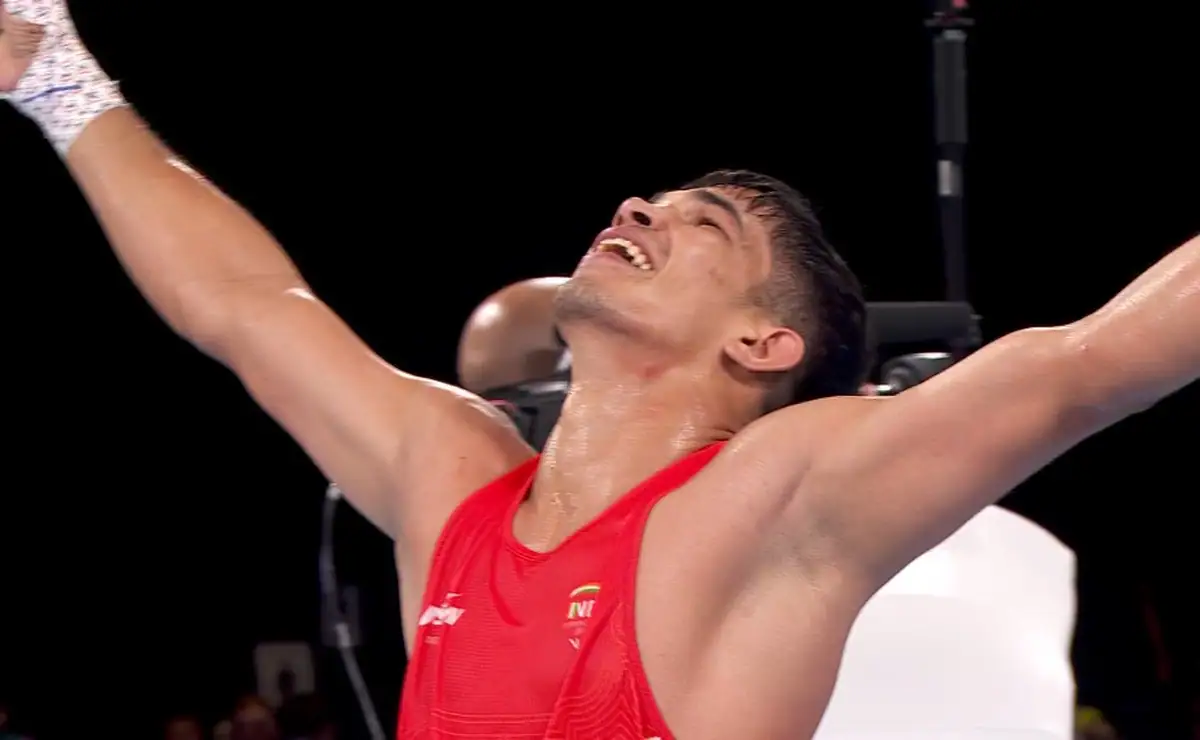
Asian Games 2026: Antim Panghal’s Road to Gold Runs Through a Familiar Rival
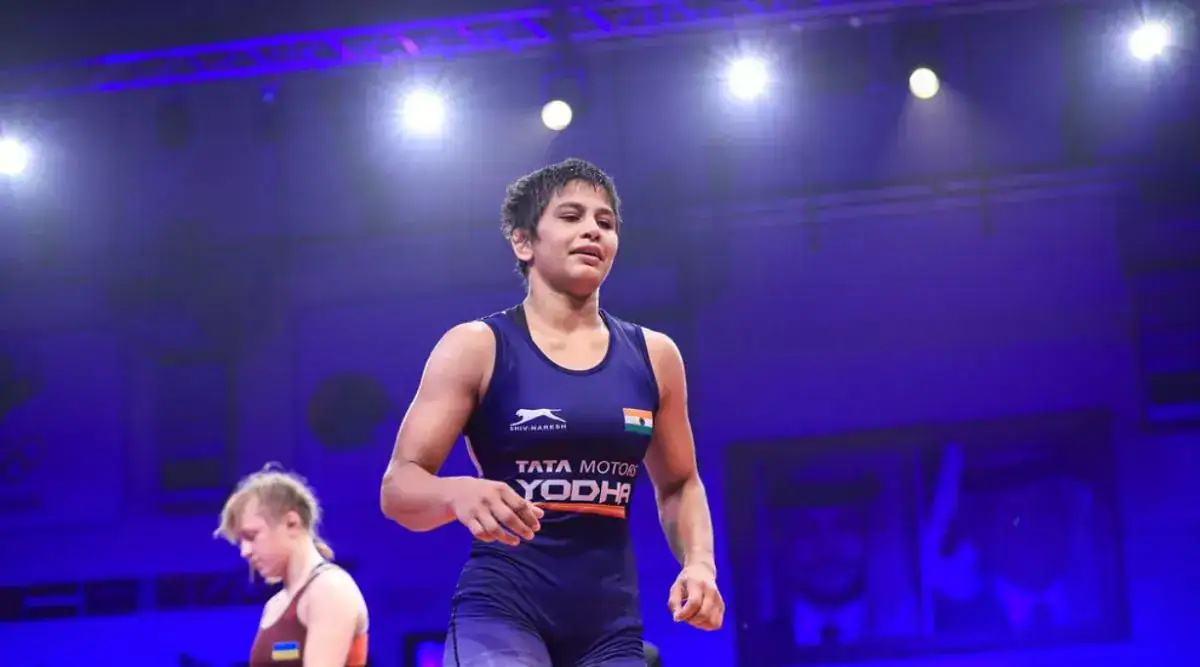
Antim Panghal begins her Asian Games 2026 women’s freestyle 53 kg campaign with a clear opportunity to add an Asian Games gold medal to an already impressive international résumé.
But in one of the most technically concentrated wrestling brackets of the competition, the Indian’s route to the title will demand precision from the opening bout and could culminate in a final against one of the strongest wrestlers in the division. The 53 kg tournament at the Nagoya City Inae Sports Center features an 11-wrestler unseeded draw, creating a striking imbalance between the two halves. Panghal is positioned in the upper branch, while several of the division’s leading contenders including Japan’s Moe Kiyooka and North Korea’s Choe Hyo Gyong are concentrated in the lower half.
That structure gives Panghal a potentially favourable route to the final. But it also places enormous importance on one likely semifinal: a meeting with China’s Zhang Jin.
Panghal's tournament starts with a preliminary-round bout against Kazakhstan’s Shugyla Omirbek. Unlike several of the leading contenders, Panghal does not receive a bye, meaning she must first navigate the opening bout before entering the quarterfinal stage. Her technical profile is particularly suited to dealing with opponents who allow space for low-level attacks. Panghal works from a compact stance and relies heavily on low single-leg attacks, rapid re-attacks and counter-scrambling. Her head-and-arm control also gives her options once an opponent becomes committed to an attack.
The immediate objective will be simple: win efficiently and avoid unnecessary physical expenditure.
The entire 53kg competition is being contested on a single day, making recovery an important part of the championship equation. Every minute spent in difficult exchanges early in the tournament could become relevant several hours later.
If Panghal defeats Omirbek, she will meet Uzbekistan’s Sakibjamal Esbosynova in the quarterfinal. Esbosynova enters the tournament with a bronze medal from the 2026 Asian Wrestling Championships, so this is not an opponent Panghal can afford to underestimate. However, the Indian has a significant historical advantage in the matchup.
The two previously met at the 2024 Budapest Ranking Series, where Panghal won 10-0. Panghal's challenge will be to impose the same kind of defensive control while preventing Esbosynova from establishing front-headlock positions and slowing the match down. A quarterfinal victory would put Panghal into the final four, where the tournament becomes significantly more demanding.
Zhang Jin is the key obstacle.
China's Zhang Jin represents the most significant challenge on Panghal's side of the bracket. Zhang is the reigning 2026 Asian champion at 53 kg and previously won a silver medal at the 2024 World Championships at 55 kg. Her transition into the Olympic 53 kg category has strengthened an already powerful technical game. Her preferred approach is built around aggressive ties, physical pressure and upper-body attacks. Rather than allowing opponents to operate freely in open space, Zhang attempts to crowd them, establish heavy collar ties and create opportunities for throws and chest locks.
Panghal, however, has repeatedly found ways to neutralise this style. She leads Zhang 3-0 in their recent international head-to-head record. Most significantly, Panghal defeated Zhang 10-6 in the 2025 World Championships quarterfinal and followed that with a 7-5 victory at the 2026 Ranking Series in Budapest.
The margins have become tighter, however.
That makes a potential semifinal far more complicated than the 3-0 record suggests. Zhang's ability to force close-contact exchanges will test Panghal's defensive positioning, while Panghal will look to keep the contest in open space where her low singles and re-attacks can become more effective.
The semifinal could ultimately determine whether India has a realistic shot at gold.
The lower half is loaded with danger.
While Panghal's side provides a relatively direct route to the semifinals, the bottom half of the bracket contains several elite contenders. Japan's Moe Kiyooka, the 2024 World Champion at 55kg, is positioned in the same quarter as North Korea's Choe Hyo Gyong, the Paris 2024 Olympic bronze medallist and 2025 Asian champion. Assuming both win their opening bouts, they will meet in the quarterfinal.
It is arguably the most consequential bout of the morning session. Kiyooka and Choe have already faced each other at the 2025 Asian Championships, where Choe prevailed. Kiyooka, however, defeated Zhang Jin in the 2024 World Championship final at 55kg, demonstrating that she has the technical ability to dominate even elite opposition. Choe brings a different challenge. Her wrestling is built around heavy underhooks, snap-downs and explosive lateral throws, particularly when exchanges become chaotic.
The winner of that quarterfinal would then face either Vietnam's Thi My Linh Nguyen or Tajikistan's Vatansulton Shakarshoeva in the semifinal. That creates an interesting contrast with Panghal's route: the eventual lower-bracket finalist could potentially arrive at the gold-medal match having endured a much more physically demanding sequence of bouts.
The single-day format makes the draw particularly important. Panghal needs to win her opening bout, quarterfinal and semifinal before potentially contesting the gold-medal match later in the day. But the lower-bracket finalist could face an especially demanding path if Kiyooka and Choe meet in the quarterfinal. A high-intensity bout between two world-level wrestlers could take a significant physical toll.
That could become relevant if Panghal reaches the final relatively efficiently. The Indian's ability to conserve energy without becoming overly defensive will therefore be crucial. She cannot afford to look beyond the next opponent, but she also has to manage her physical resources with potentially four bouts separating her from the gold medal.
Three factors stand out. First is the Zhang matchup. Panghal's 3-0 record provides valuable evidence that her style has historically troubled the Chinese wrestler, but the latest meetings have been increasingly competitive. Second is energy management. In a tournament compressed into one day, avoiding unnecessary extended exchanges could prove as important as technical superiority.
Third is the final opponent. If Panghal reaches the gold-medal bout, she could face Kiyooka or Choe — both wrestlers with proven international success and contrasting styles. Panghal has already demonstrated that she belongs at this level. She is a two-time U20 world champion, a two-time senior World Championship bronze medallist and an Asian Games bronze medallist from Hangzhou.
Now she has an opportunity to go one step further. Her route is not without danger, but the bracket keeps the two most formidable threats — Kiyooka and Choe — away from her until the final. If Panghal can navigate Omirbek, Esbosynova and Zhang with the controlled counter-wrestling that has defined her best performances, she could arrive in the championship bout with both momentum and energy.
For India, the gold-medal equation is therefore relatively clear: win the early exchanges, control the semifinal against Zhang and make the most of the bracket's separation. The 53kg field is packed with world-class talent. But Antim Panghal has already beaten several of the names surrounding her in the international hierarchy.
In Nagoya, she has the chance to turn that experience into Asian Games gold.
Comments (0)
to post comments, replies, and votes.
Loading comments…