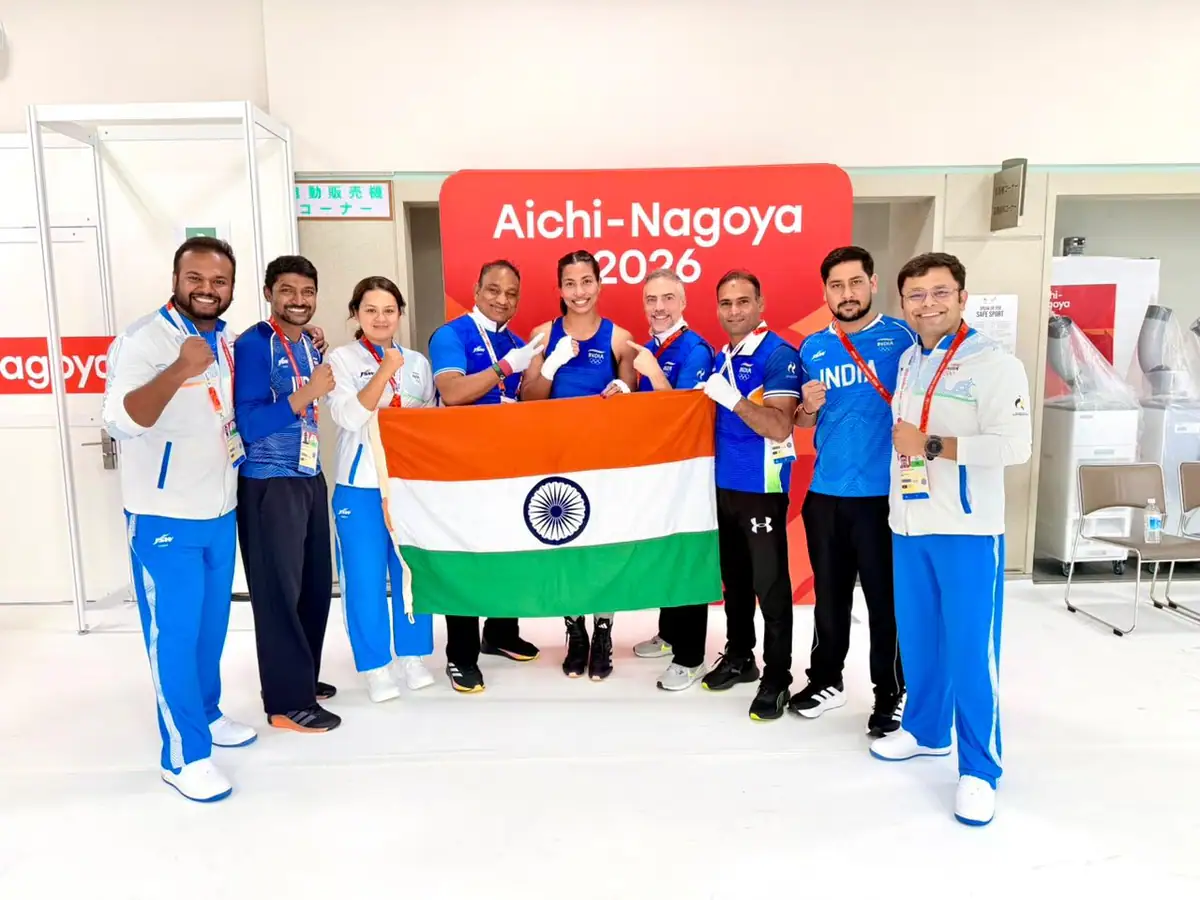
Indian Women Hockey End 44-Year Wait, Beat China to Win Historic Asian Games Hockey Gold
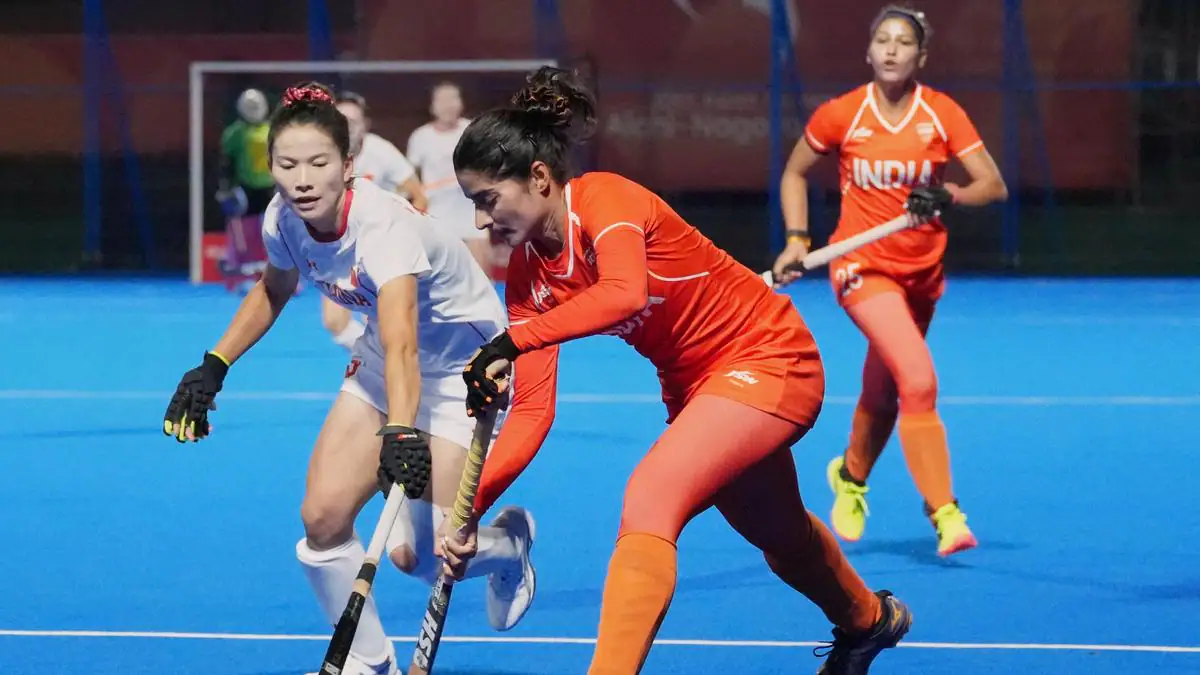
India have ended a 44-year wait for Asian Games women’s hockey gold, defeating defending champions China 1-0 in a tense final at the Gifu Prefectural Green Stadium on Friday.
Lalremsiami’s brilliant first-quarter strike proved decisive as India absorbed wave after wave of Chinese pressure for the remainder of the contest. Goalkeeper Savita Punia produced a crucial penalty-stroke save, the Indian defence repeatedly survived penalty corners and late pressure, and the team held its nerve to complete one of the most significant victories in its recent history.
The triumph also secures India's place at the Los Angeles 2028 Olympic Games, marking the team's return to the Olympics after seven years. For a team that missed the Paris 2024 Olympics and was relegated from the Pro League, the turnaround has been dramatic. India returned to the Pro League, finished fifth at the World Cup and have now added Asian Games gold to that season.
The final began with China quickly taking possession and testing India's defensive structure. Within the opening minutes, the Chinese created an opportunity down the left flank, sending the ball into India's circle before Bichu Devi came off her line to clear it. India were then forced into a defensive phase, with Baljeet Kaur receiving an early green card.
But India gradually began finding their way forward. Their attacking moves increasingly came through the right flank, while the defensive unit remained compact behind the ball.
Then, in the 10th minute, came the decisive moment. Sakshi found Lalremsiami, who turned before unleashing a powerful tomahawk strike. The shot flew past the Chinese goalkeeper and into the corner of the goal.
China 0-1 India.
It was a goal of exceptional quality and, ultimately, the only goal India needed. The goal also came on a landmark occasion for Lalremsiami, who was beginning her 200th appearance for India. India finished the opening quarter with the lead and, importantly, had begun to demonstrate that they could withstand China's possession without losing their defensive shape.
The second quarter was dominated by China's attempts to find an equaliser. India's first penalty corner came in the 13th minute after another strong move down the right. Ishika injected and Navneet Kaur came close, with her effort flashing past the right side of the goal.
But China soon began creating the more dangerous opportunities. In the 19th minute, China earned its first penalty corner. Another followed shortly afterwards after Sushila Chanu was struck by the ball.
India's defensive unit repeatedly stood between China and the equaliser. Navneet made a crucial goal-line clearance after a Chinese drag-flick, while the Indian rushers and defenders combined to deal with another penalty corner. Then came perhaps India's most important defensive moment of the match.
In the 22nd minute, China was awarded a penalty stroke. Zhang Ying stepped up with an opportunity to bring the defending champions level.
Savita Punia had other ideas. The experienced goalkeeper dived low to her left and made the save, keeping India's 1-0 advantage intact. India went into half-time still ahead.
Defensive Resistance Becomes the Story
The second half was increasingly about survival. China controlled possession for long periods, repeatedly attempting to enter India's circle. India's attacking threat was reduced, particularly after Salima Tete appeared to pick up an injury and walked towards the bench with a physiotherapist around the 33rd minute.
That forced India into an even deeper defensive posture. China continued creating opportunities. A dangerous solo run from the right flank was eventually cleared by the Indian defence. Another penalty corner was dealt with by the rushers and defensive unit. At one stage, China appeared to have a route to goal after a pass across the face of the goal, but there was nobody at the far post to apply the finishing touch.
India entered the final quarter still 1-0 ahead. The question was no longer whether India could score again. It was whether they could keep China out for another 15 minutes.
The final quarter became an extended examination of India's defensive organisation. China continued knocking on the door, while India concentrated on protecting its narrow advantage. The Indian players also became increasingly pragmatic with possession. On one occasion, Baljeet and Lalremsiami carried the ball towards the left corner inside China's half, using valuable seconds before China regained possession.
China eventually removed goalkeeper Liu Ping and added an extra outfield player in the closing minutes, increasing the pressure on India. But India survived. Savita remained alert in goal, while the defence continued clearing dangerous balls and preventing China from finding the final touch. The final whistle brought an eruption of celebration.
China 0-1 India.
India's victory ends a 44-year wait for Asian Games women's hockey gold and brings the team back to the Olympics after seven years. The result is particularly significant given the team's recent trajectory. After missing Paris 2024 and suffering relegation from the Pro League, India rebuilt their campaign with promotion back to the top level, a fifth-place finish at the World Cup and now an Asian Games title.
This was not a final won through overwhelming attacking dominance. It was won through one exceptional goal, disciplined defensive organisation and the ability to withstand sustained pressure. Lalremsiami supplied the moment of brilliance.
Savita supplied the crucial save. The defensive unit supplied the resistance. And together, India delivered something the women's hockey team had been waiting 44 years to celebrate.
India are Asian Games champions and the road to Los Angeles 2028 is now officially open.
Comments (0)
to post comments, replies, and votes.
Loading comments…