Can Sindhu Survive the Chinese Challenge and Claim a Sixth World Medal at Home?
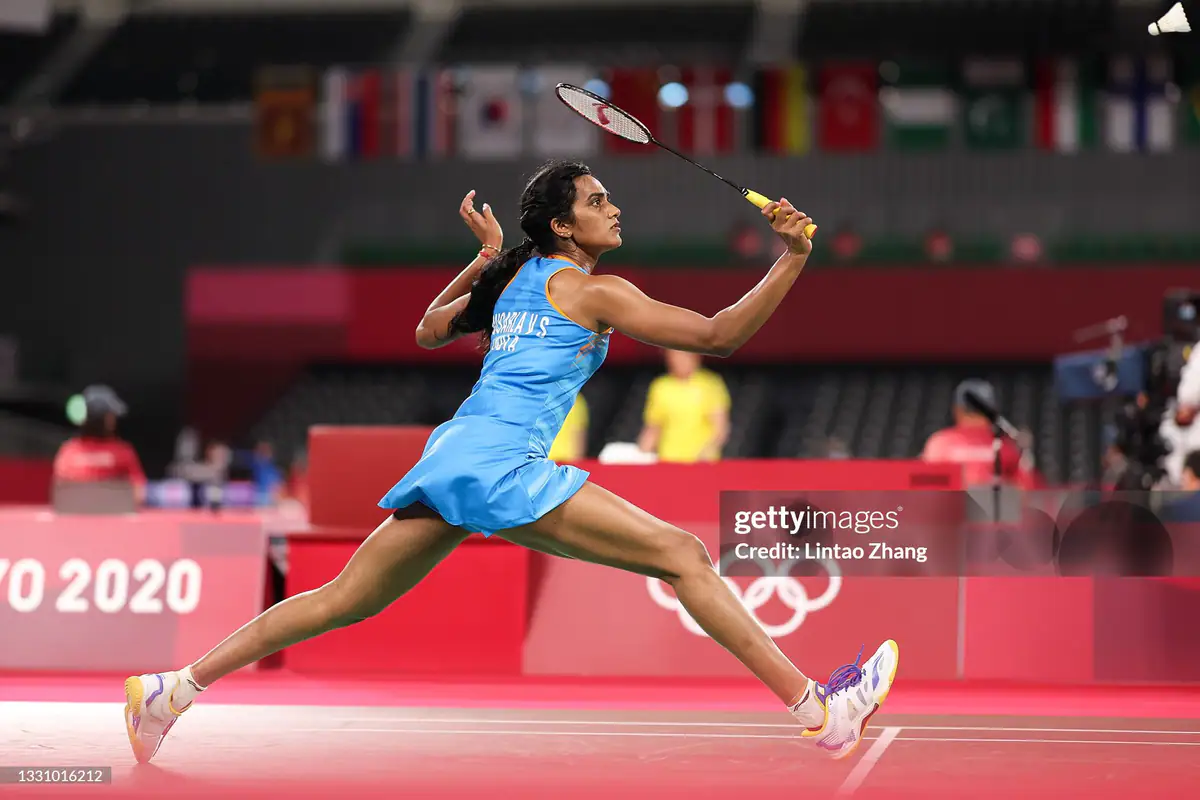
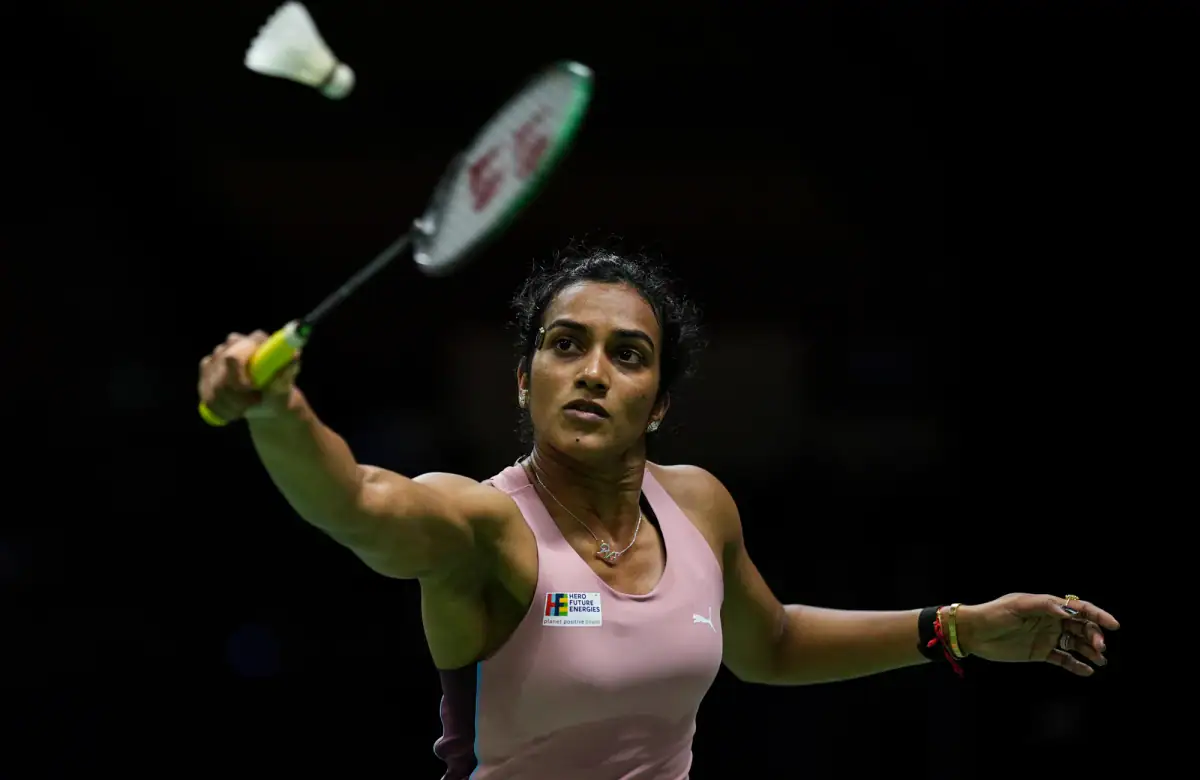
When PV Sindhu walks onto the court in Delhi this August, she won't just be chasing a medal.
When PV Sindhu walks onto the court in Delhi this August, she won't just be chasing a medal. She'll be chasing redemption, rhythm and the release of a 19-month title drought that finally ended in Tokyo.
At 31, with two Olympic medals and five World Championship medals already in the cabinet, Sindhu has little left to prove. Yet here she is, seeded ninth, in the same half of the draw as World No. 1 An Se Young, with a brutal path between her and a sixth World Championships podium this time on home soil.
The question isn't whether Sindhu can still play. Japan Open answered that. The question is whether she can do it four or five times in a row.
The Comeback Is Real
Rewind two years and the picture looked bleak. A round-of-16 exit at the Paris Olympics against He Bingjiao, recurring injuries and a foot problem that eventually forced her to end her 2025 season early left Sindhu searching for her old rhythm. Then came Irwansyah Adi Pratama. The Indonesian coach joined her camp in 2025, with the focus not simply on hitting harder but on moving better, attacking with conviction and reducing the unforced errors that had increasingly hurt her game.
Slowly, the change became visible. Her recovery improved, her court coverage tightened and the aggressive, front-foot badminton that once made her a two-time Olympic medallist began returning.
Then came Tokyo.
Sindhu beat reigning World Champion Akane Yamaguchi 21–17, 21–17 to win the Japan Open, her first Super 750 title and the first by an Indian in the tournament's women's singles history. It also ended her 19-month wait for a title. It wasn't just a trophy. It was proof that the rebuild had teeth.
The Chinese Challenge
But form is one thing. History is another.
Wang Zhiyi currently leads Sindhu 4–3 and has won their last three meetings. She beat Sindhu at the Malaysia Open, Asian Championships and Uber Cup this year, twice turning matches around after Sindhu had established promising positions. Chen Yufei is another difficult matchup. Sindhu entered the Japan Open semifinal trailing Chen 8–6 and ended a five-match losing streak when Chen retired while trailing. But Chen hit back at the China Open, beating Sindhu after the Indian held four match points in the second game. Chen now leads 9–7.
Han Yue is the exception. Sindhu leads that rivalry 8–1 after beating her comfortably at the Japan Open.
The pattern is revealing. Against opponents capable of dragging her into long, attritional rallies, Sindhu's movement and error rate become crucial. Wang, in particular, has shown that she can absorb Sindhu's power, defend patiently and wait for the aggression to turn against her. That makes the tactical blueprint fairly clear: end points early when the opportunity comes, avoid getting trapped in endless exchanges and trust the improved movement when the rallies inevitably stretch.
Mapping the Road to a Medal
Sindhu's opening rounds are manageable. She begins against Ireland's Sophia Noble before potentially facing Stefani Stoeva or Wen Yu Zhang in the Round of 32. Then comes the real test: Wang Zhiyi in the Round of 16. Sindhu beat Wang at the 2025 World Championships, but Wang has since won their three most recent encounters. This is therefore as much a psychological challenge as a tactical one.
Survive Wang and Putri Kusuma Wardani, who likely await in the quarterfinals. Putri eliminated Sindhu at the 2025 Worlds, but Sindhu got revenge at the Singapore Open this year, levelling their career head-to-head at 3–3. Then comes the biggest obstacle of all.

A semifinal would likely mean An Se Young. The World No. 1 has beaten Sindhu in all ten of their meetings, including twice this year. There is no comfortable statistical argument to make here. Sindhu has simply never solved this matchup.
And if she somehow gets through?
The final could bring Yamaguchi or Chen Yufei. Yamaguchi is particularly intriguing. She had won seven of their previous ten meetings before Sindhu's Japan Open victory. Their overall head-to-head now stands at 16–14 in Sindhu's favour, but the latest meeting is the one that matters most.
The projected route, then, is vicious:
Wang → Putri → An → Yamaguchi/Chen.
Our rough assessment puts Sindhu's chances of reaching the quarterfinals around 40–50%, the semifinals around 15–20%, and winning gold in the single digits. These are analytical estimates rather than model-generated probabilities, based on current form, recent results, H2H records and the projected draw. In simpler terms: a medal is within reach. The final is a long shot. Gold would require an exceptional week.
Home Advantage, Handled Carefully Delhi gives Sindhu something no neutral venue can: a crowd entirely on her side. She has spoken about the confidence that comes from playing in front of Indian fans, but home advantage can cut both ways. The roar can lift you; the expectation can weigh on you.
There is also a wider issue for the organisers. The January 2026 India Open was marred by complaints over air quality and venue conditions. Bird droppings interrupted play, a monkey entered the arena, and players, including Mia Blichfeldt and Anders Antonsen, criticised aspects of the tournament. The World Championships therefore offer India a chance to repair that image. The Indira Gandhi Indoor Stadium has undergone upgrades including improvements to the roof, air-conditioning, lighting and animal-control measures.
For Sindhu, cleaner conditions should mean one less variable to worry about.
The Wildcard: Her Body
The biggest uncertainty may still be fitness. Sindhu ended 2025 early because of a foot problem, after years in which injuries had repeatedly disrupted her rhythm. Since then, conditioning has been central to her comeback. The Japan Open was the strongest evidence yet that the work is paying off: she won the title without dropping a game.
But one tournament cannot erase years of physical wear. The World Championships could require five matches across several days, with every round becoming more demanding. Wang could stretch her. Putri could make her work. An Se Young would test every part of her movement and endurance.
For Sindhu, staying healthy may therefore be just as important as solving any individual opponent.
Sindhu arrives in Delhi with her best momentum in years: a first Super 750 title, a win over the reigning World Champion, a re-established attacking game and a home crowd ready to roar. But the road is vicious. Wang has beaten her three straight times. Putri knows how to knock her out at the Worlds. An Se Young remains a 10–0 mountain. And beyond them could be the very player Sindhu just conquered in Tokyo, or Chen Yufei.
Yet there is a difference between the Sindhu arriving in Delhi and the one who walked out of Paris two years ago. That Sindhu looked like a player trying to rediscover herself. This Sindhu looks like a player who has found something again. A medal feels genuinely attainable. Gold feels like it would require Sindhu to play the tournament of her career while several dominoes fall her way.
Either way, Delhi should be worth watching, not because Sindhu is a guaranteed champion, but because, for the first time in a while, she looks like she believes she can be.
Comments (0)
to post comments, replies, and votes.
Loading comments…