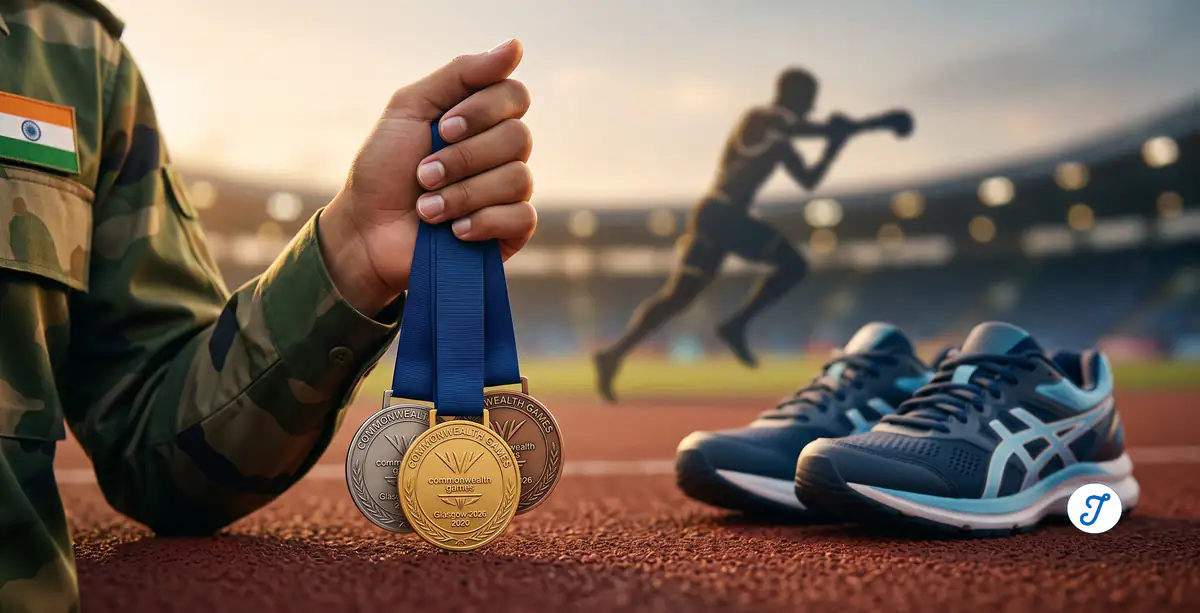
England, Australia Headline Largest Teams at Glasgow CWG 2026 as India Sends 126 Athletes
England and Australia will field the largest contingents at the Glasgow 2026 Commonwealth Games, while India will compete with a 126-member athlete squad.
With just days to go before the opening ceremony of the Glasgow 2026 Commonwealth Games, the final athlete numbers have revealed an interesting picture of how nations are approaching the first edition of the Games under the Commonwealth Games Federation's revamped, compact format.
England will field the largest contingent with 264 athletes, narrowly edging Australia, which has named 263 competitors. Host nation Scotland follows with 173 athletes, while Canada (149) and India (126) complete the top five largest delegations heading to Glasgow.
The revised Games model, featuring only ten core sports and six integrated para sports, has resulted in significantly smaller athlete contingents compared to previous editions. With the total athlete village capped at approximately 3,000 competitors, countries have been forced to make strategic selections, prioritising medal-winning potential over squad size.
Top 10 Largest Athlete Contingents
The final athlete numbers for Glasgow 2026 are:
Rank | Nation | Athletes |
|---|---|---|
1 | England | 264 |
2 | Australia | 263 |
3 | Scotland (Host) | 173 |
4 | Canada | 149 |
5 | India | 126 |
6= | New Zealand | 114 |
6= | Wales | 114 |
8 | South Africa | 112 |
9 | Kenya | 93 |
10 | Jamaica | 76 |
The next largest delegations include Nigeria (72), Northern Ireland (65), Malaysia (59), Uganda (55), and Singapore (53).
While England tops the list by a single athlete, the minimal difference between the top two nations underlines the competitive nature of this year's Games, particularly in sports such as swimming, athletics and cycling.
Unlike previous editions, Glasgow 2026 has adopted a sustainable hosting model following Victoria's withdrawal as host in 2023. Rather than constructing new venues, Scotland is utilising existing infrastructure from the successful 2014 Commonwealth Games. The streamlined programme has reduced the number of sports and athlete quotas, compelling Commonwealth Games Associations to focus on quality rather than quantity when selecting their teams.
This has resulted in many nations trimming developmental athletes from their squads while retaining proven medal contenders.
England and Australia Continue Their Rivalry
England and Australia have traditionally battled for supremacy at the Commonwealth Games, and Glasgow 2026 appears no different. England's 264-member delegation provides representation across every sport on the programme, reflecting the country's depth in athletics, swimming, cycling, boxing and para sports.
Australia, meanwhile, arrives with 263 athletes and will once again rely heavily on its world-class swimming programme, alongside strong squads in athletics, cycling and other traditional medal-winning disciplines. The battle between the two nations is expected to dominate the overall medal standings throughout the Games.
Scotland's 173-athlete squad makes it comfortably the third-largest contingent. Competing at home offers Scotland an opportunity to capitalise on familiar venues and home support. With athletes spread across all ten sports, the hosts will aim to convert home advantage into one of their strongest Commonwealth Games performances.
Their focus will be particularly strong in swimming, athletics and cycling, sports that have historically delivered medals for the host nation.
India's Compact but Competitive Squad
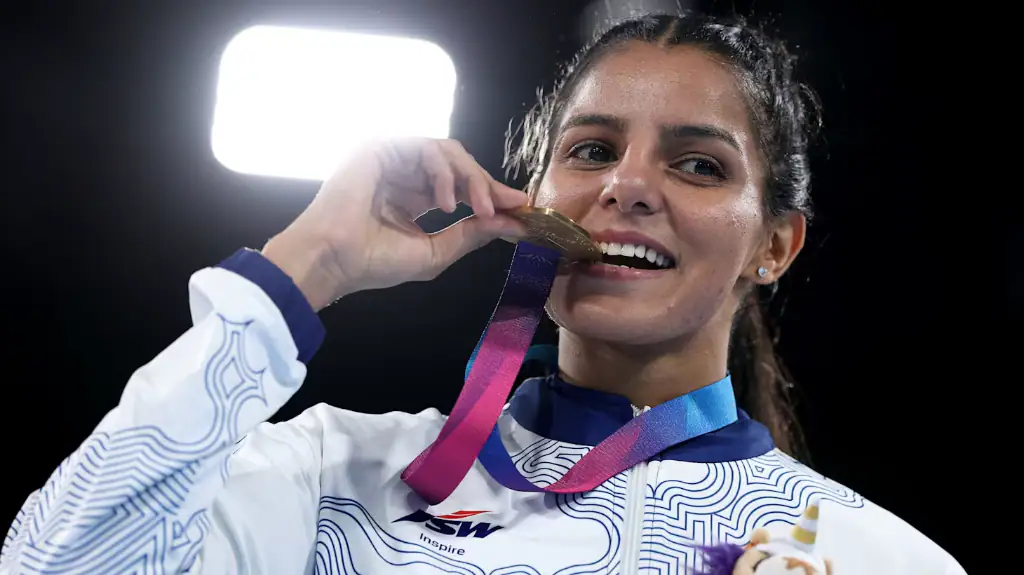
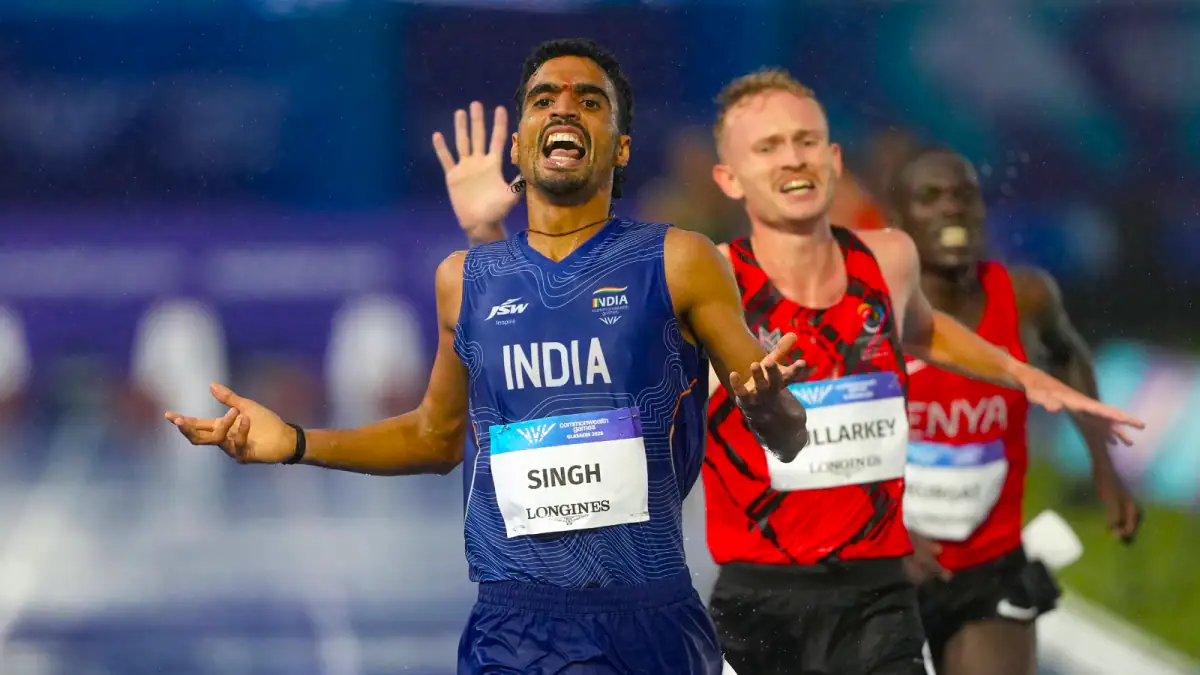
India enters Glasgow with a 126-member athlete contingent, ranking fifth among all participating nations. Although smaller than previous Commonwealth Games squads, India's team reflects the changing nature of the Games programme. Traditional medal-winning sports such as wrestling, table tennis and cricket are absent from the Glasgow schedule, forcing the Indian Olympic Association to reshape its strategy around disciplines where medals remain available.
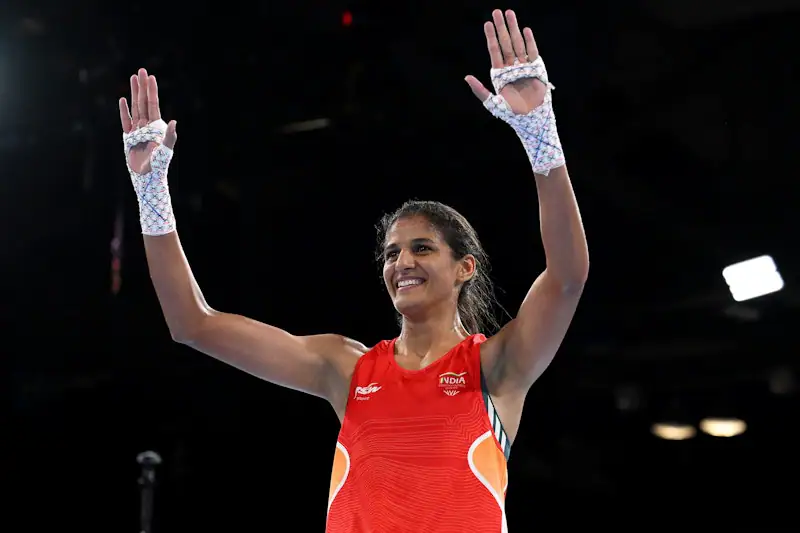
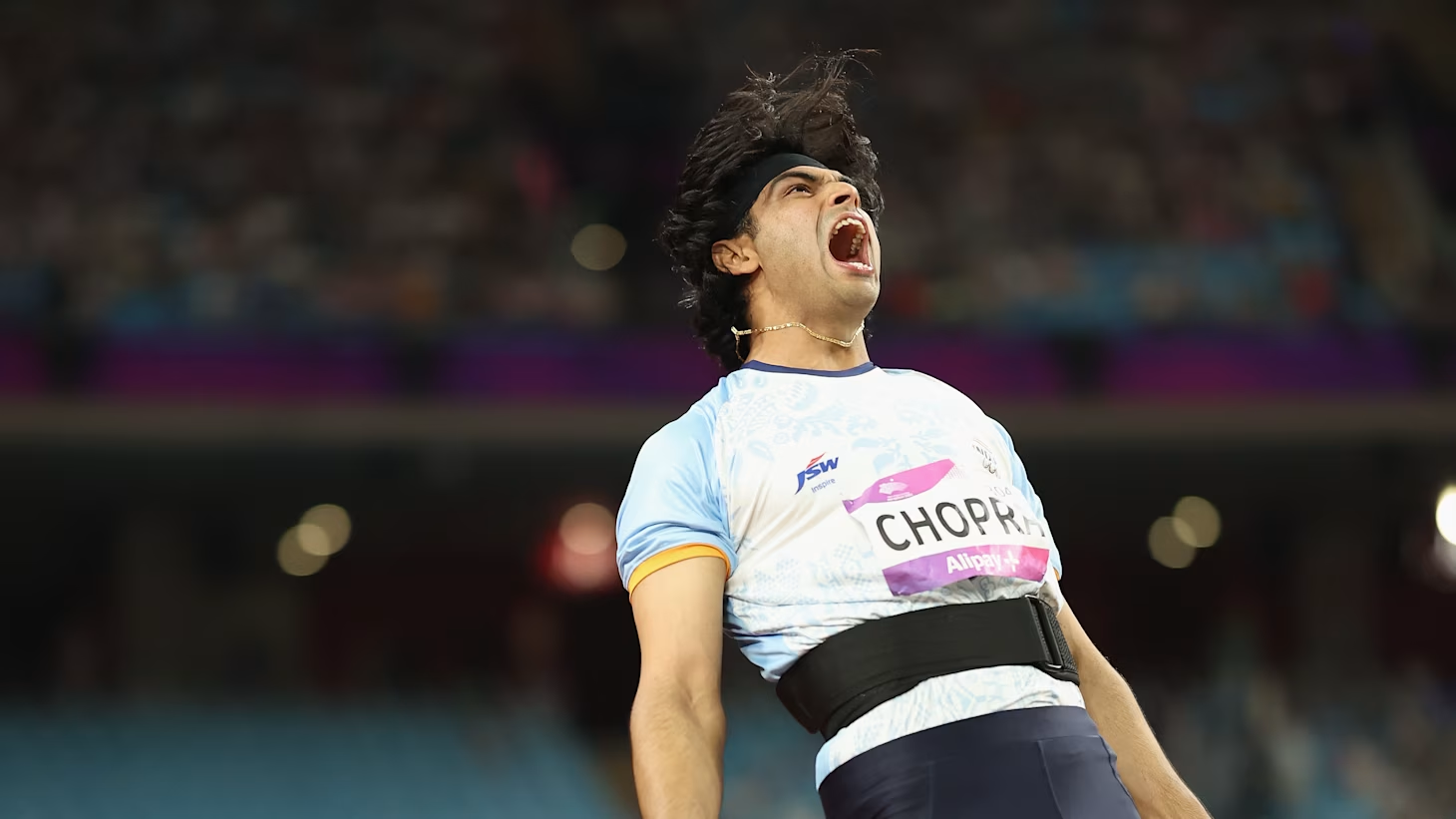
As a result, India's campaign will be led by athletes in boxing, athletics, weightlifting, badminton, shooting, judo and other individual sports that continue to feature on the programme. The contingent will include several Olympic and world-level performers, with javelin superstar Neeraj Chopra and weightlifting icon Mirabai Chanu expected to headline India's medal challenge.
Rather than aiming for strength in numbers, India's approach has been to maximise medal opportunities through carefully selected athletes capable of challenging for podium finishes.
While the largest delegations naturally attract attention, countries such as Kenya, Jamaica and Nigeria are once again expected to outperform their athlete numbers. Kenya's 93-athlete squad remains heavily centred around athletics, particularly middle and long-distance running, where the East African nation has consistently dominated Commonwealth competition.
Jamaica, despite fielding only 76 athletes, will once again be among the favourites in sprint events thanks to its world-class track and field programme. Nigeria's relatively modest squad of 72 athletes is expected to focus on sports such as weightlifting and athletics, disciplines that have traditionally delivered success at major international competitions.
These nations demonstrate that success at multi-sport events is often determined by strategic athlete selection rather than overall delegation size.
One of the defining themes of Glasgow 2026 is the emphasis on efficiency. With athlete quotas significantly reduced, countries have increasingly focused on sending competitors with realistic medal prospects rather than expanding squad sizes for developmental purposes. This shift has produced leaner but arguably stronger delegations, ensuring that the standard of competition remains exceptionally high across the Games.
For India, finishing among the top medal-winning nations will depend less on the size of its delegation and more on the performances of its elite athletes across boxing, athletics, weightlifting and other medal-rich disciplines.
As Glasgow prepares to welcome athletes from across the Commonwealth, the numbers tell an important story. England and Australia may have the largest teams, but history suggests that medals are not won solely through delegation size. In a game built around efficiency and sustainability, execution on the field of play will matter far more than the number of athletes marching in the opening ceremony.
Comments (0)
to post comments, replies, and votes.
Loading comments…