Garaga and Pruthvi Pull Off Stunning Comeback to Knock Out China Masters Finalists at Arctic Open
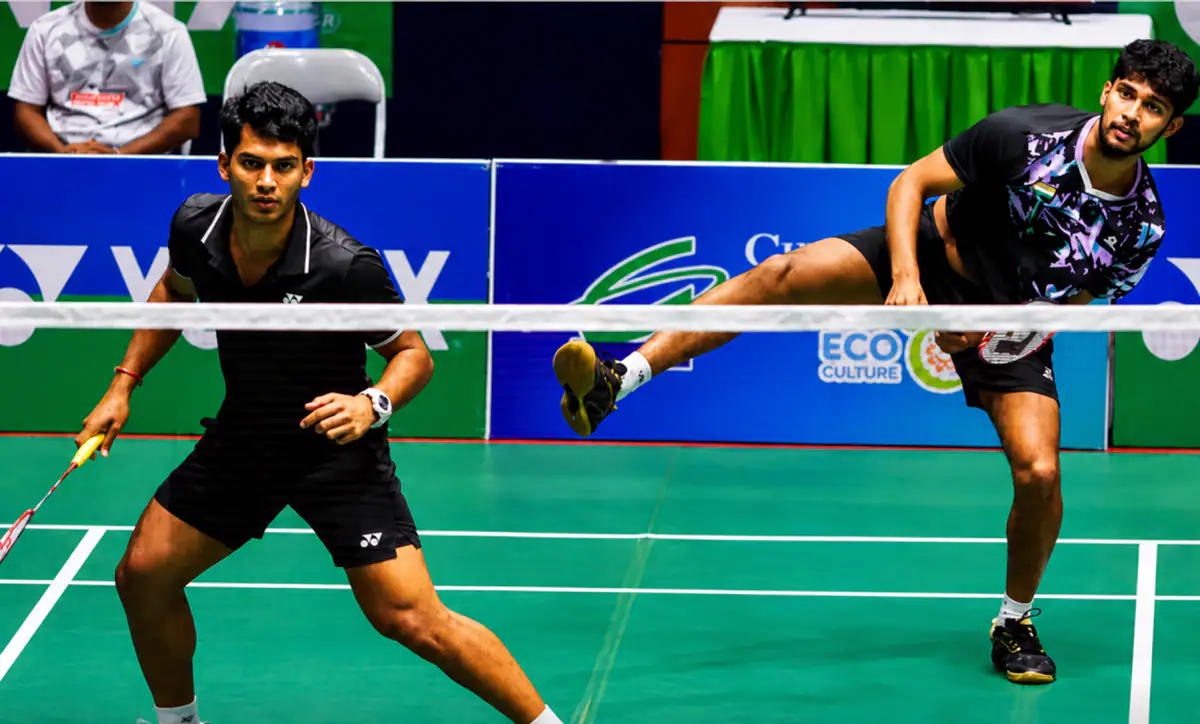
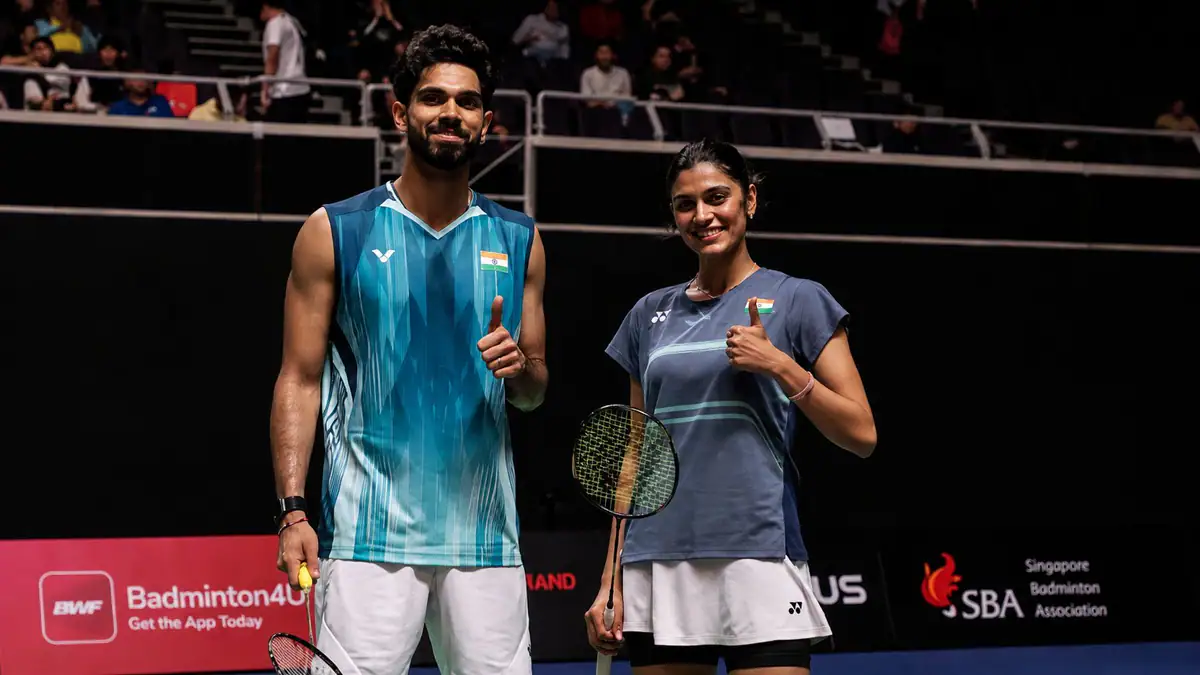
Krishna Prasad Garaga and Pruthvi Krishnamurthy Roy stunned China Masters finalists He Ji Ting and Ren Xiang Yu 10-21, 21-18, 22-20 at the Arctic Open 2026.
Indian men's doubles pair Krishna Prasad Garaga and Pruthvi Krishnamurthy Roy produced one of the biggest results of their 2026 campaign at the Arctic Open in Finland, defeating China's He Ji Ting and Ren Xiang Yu in a dramatic three-game battle.
The Indian duo recovered from a poor start to beat the former world No. 4 combination 10-21, 21-18, 22-20 in 61 minutes, overturning the momentum after losing the opening game and then holding their nerve in a tense deciding game. The victory is significant not only because of the names on the other side of the net but also because of the timing. He and Ren had recently finished runners-up at the China Masters, losing the final to India's Satwiksairaj Rankireddy and Chirag Shetty.
For Garaga and Pruthvi, this was therefore an opportunity against a pair operating at the highest level of the men's doubles circuit. They took it.
The opening game could hardly have gone worse for the Indians. He and Ren immediately established control and took the first game 21-10. Their attacking pressure prevented Garaga and Pruthvi from settling into the match, while the Chinese pair's experience at the highest level appeared to be making the difference. At 10-21, the Indian pair had two choices: attempt to change the match or allow the Chinese combination to dictate the contest.
They chose the former. The second game became a completely different contest.
Garaga and Pruthvi began finding more opportunities to attack and were able to stay much closer to He and Ren during the crucial middle phase of rallies. The match became more competitive, and the Indians eventually secured the game 21-18, forcing a decider.
That comeback was important because the Indian pair had not simply survived a close second game. They had changed the direction of the match.
Garaga's Serve Becomes a Turning Point
One of the defining moments came late in the second game. With India trailing 16-18, Garaga produced a sequence of effective serves that disrupted the Chinese pair's rhythm and helped the Indians swing the game back in their favour. In men's doubles, the serve is not simply a way of beginning the rally. At elite level, a well-executed serve can restrict the receiver's options, create a predictable return and allow the serving pair to establish the attacking formation immediately.
That became increasingly important as Garaga and Pruthvi grew into the contest. The Chinese pair had controlled the first game. By the second, India was forcing them to play on different terms.
The deciding game delivered the closest battle of the match. Neither pair was willing to surrender control, and the score remained tight deep into the final game. Eventually, Garaga and Pruthvi edged it 22-20, completing a remarkable comeback from 10-21 down. The final two points were effectively the difference between an upset and an early exit.
India held its nerve. After losing the opening game by 11 points, the pair had recovered to win the final two games by a combined margin of only five points. That statistic captures the nature of the contest: this was not a match India controlled from the outset. It was a match they rescued through tactical adjustment and composure under pressure.
Garaga and Pruthvi are not simply a one-off combination producing a surprise result. The pair has already enjoyed a productive 2026. They reached the final of the Vietnam International Challenge earlier this year, doing so after another dramatic comeback in the semifinal. Against South Korea's Cho Song Hyun and Kim Jae Hyeon, they lost the opening game 11-21 before winning the next two 23-21 and 25-23.
They subsequently won the Mexican International Challenge, defeating Canada's Lap Hing Hugo Pong and Lap Kan Kern Pong 21-18, 21-19 in the final. Their run included a three-game quarterfinal against Kevin Lee and Ty Alexander Lindeman, where they recovered after narrowly losing the second game. The pattern is becoming increasingly familiar.
Garaga and Pruthvi are showing that they can survive momentum swings rather than collapsing when a match moves away from them. That quality becomes particularly valuable at a tournament such as the Arctic Open.
The victory sends the Indian pair into the Round of 16, where they face England's Ben Lane and Sean Vendy, according to the tournament draw. That presents another demanding challenge.
The English pair brings considerable experience on the World Tour and will be a very different tactical proposition from He and Ren. India cannot afford to spend another match waiting for the contest to settle. But the victory over the Chinese pair should provide significant confidence. Garaga and Pruthvi have now beaten a combination that was recently good enough to reach a China Masters final. They have demonstrated that they can recover from a disastrous opening game, alter the momentum and close out a deciding game at 20-all.
For a developing partnership, those are valuable lessons. The importance of the result also extends beyond this one tournament.
Indian men's doubles has spent years operating under the enormous shadow of Satwiksairaj Rankireddy and Chirag Shetty. Their success has raised expectations, but it has also highlighted the need for India's next generation of combinations to develop international consistency.
Garaga and Pruthvi offer one such option. Their title in Mexico, final in Vietnam and now victory over a former world No. 4 pair in Finland suggest that the partnership is beginning to establish a distinct competitive identity. Garaga's serve variation and front-court initiative complement Pruthvi's ability to sustain the rally and maintain structure.
The next objective is consistency at the World Tour level. The Arctic Open has already provided the biggest win of their campaign. Now comes the opportunity to prove it was not an isolated upset.
From 10-21 down to a 22-20 finish, Garaga and Pruthvi did not simply beat a highly ranked Chinese pair—they showed the resilience required to compete with the world's best men's doubles teams.
Comments (0)
to post comments, replies, and votes.
Loading comments…