Unnati Hooda Pushes Akane Yamaguchi Hard but loses in Women’s Singles Quarterfinal at Asian Games 2026
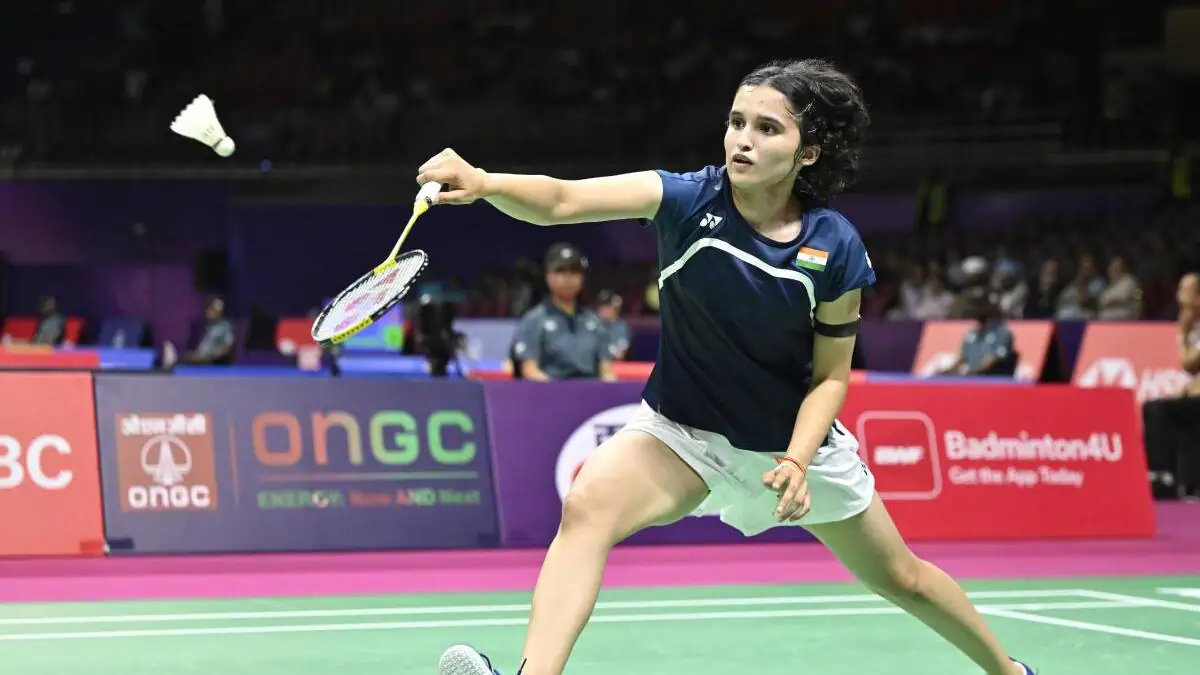
Unnati Hooda produced one of the most spirited performances of India’s badminton campaign at the Asian Games 2026, pushing Japan’s world No. 3 and home favourite Akane Yamaguchi to three games in their women’s singles quarterfinal.
The teenager showed remarkable composure against one of the most experienced players in the field, recovering from a slow start to win the second game and force a decider. Although Yamaguchi eventually established an advantage in the third game, Unnati’s performance demonstrated her ability to compete against an opponent renowned for her movement, retrieval and consistency.
The opening game initially remained competitive, with the players level at 3-3. Yamaguchi, however, soon produced a decisive run, winning eight consecutive points to establish an 11-4 advantage at the interval. Unnati struggled to match the Japanese player's ability to move the shuttle around the court during that phase. Yet the Indian did not allow the deficit to completely take her out of the contest.
She fought her way back into the game and remained within striking distance as the Japanese moved towards the finish. Yamaguchi eventually secured the opening game 21-16, but the scoreline did not reflect a completely one-sided contest. Unnati had shown enough during the latter stages to suggest that she could challenge the Japanese if she improved her start to the next game.
The second game was a completely different contest. Unnati settled into the rallies and began to play with greater confidence. Her disguised shots and attacking returns created problems for Yamaguchi, particularly during longer exchanges. The Indian drew level at 7-7 before moving ahead 8-7 with a floating winner into the backcourt. She then produced another excellent angled smash close to the sideline to take a 9-8 lead.
Yamaguchi responded and eventually led 11-10 at the interval, but Unnati remained firmly in the contest. The Indian continued to stay patient in the rallies while looking for opportunities to finish points. Rather than attempting to force winners immediately, she increasingly used her movement and shot variation to keep Yamaguchi under pressure.
The approach began to pay off.
Six Straight Points Change the Match
After the interval, Unnati continued to compete aggressively and eventually turned the game in spectacular fashion. She was able to stay with Yamaguchi through the Japanese player's trademark long rallies, while her own attacking lines became increasingly effective. Unnati produced a remarkable six-point winning streak that opened up a huge 19-6 advantage.
At that stage, Yamaguchi appeared to have stopped chasing several shuttles, while Unnati was visibly energised by the turnaround. The Japanese player attempted to fight back, but the Indian had created too much separation.
Unnati earned six game points and needed only one. Yamaguchi sent the shuttle into the net, handing the Indian the second game 21-14. The contest was level at 1-1, and Unnati had forced a deciding game against a player who has previously been world No. 1 and is a former world champion.
The deciding game began with both players exchanging points. The score moved through 3-3 and 5-5, reflecting just how competitive the contest had become.
Unnati was particularly impressive in the longer rallies. Her retrieval and ability to redirect the shuttle meant that Yamaguchi was sometimes the player making errors during exchanges in which she normally excels. The Indian was also playing with considerable energy. At one point, she attempted to reach a shuttle before it had crossed the net and was penalised.
Yamaguchi, however, gradually began to edge ahead. The Japanese star's experience and ability to sustain the intensity of the rallies allowed her to create a small advantage, eventually taking an 11-8 lead at the interval.
For Unnati, the deficit was another test of her composure after having already fought back from 11-4 down in the opening game and overturned an 11-10 deficit in the second.
The match against Yamaguchi represented a significant challenge for Unnati, not only because of the Japanese player's world ranking but also because of her experience and familiarity with the conditions as a home favourite. Yamaguchi repeatedly tried to move the Indian around the court, using her exceptional retrieval skills to extend rallies and force Unnati into difficult positions.
Unnati, however, refused to be overwhelmed. She stayed in the longer exchanges, found attacking angles and repeatedly redirected the shuttle effectively. Her second-game comeback in particular showed her ability to adjust during a match rather than allowing an early setback to dictate the outcome.
Even in the deciding game, the Indian remained competitive deep into the contest.
Regardless of the final outcome, Unnati's performance against Yamaguchi marked another important step in her Asian Games campaign. The teenager had already progressed through earlier rounds and arrived in the quarterfinals with momentum. Against the world No. 3, she showed that she could match the Japanese player's intensity for extended periods and, importantly, respond after losing a game.
Taking a former world No. 1 and world champion to a deciding game is a significant statement from the Indian youngster. The match also highlighted the qualities that could make Unnati a notable presence in Indian women's badminton in the years ahead: resilience, attacking intent, shot variation and the ability to remain competitive during long rallies.
Against one of the world's most accomplished players, Unnati Hooda did not simply make up the numbers. She fought back from a difficult opening game, levelled the contest with a dominant second-game display and pushed Yamaguchi deep into a deciding battle.
It was a performance that underlined both the challenge ahead and the potential of India's young women's singles star.
Comments (0)
to post comments, replies, and votes.
Loading comments…