Gukesh Opens World Championship Match Against Sindarov with Berlin Defence Draw After Clock Battle

D. Gukesh draws with Javokhir Sindarov in the 38-move opening game of their World Championship match in Geneva after a tense clock battle and a Berlin Defence.
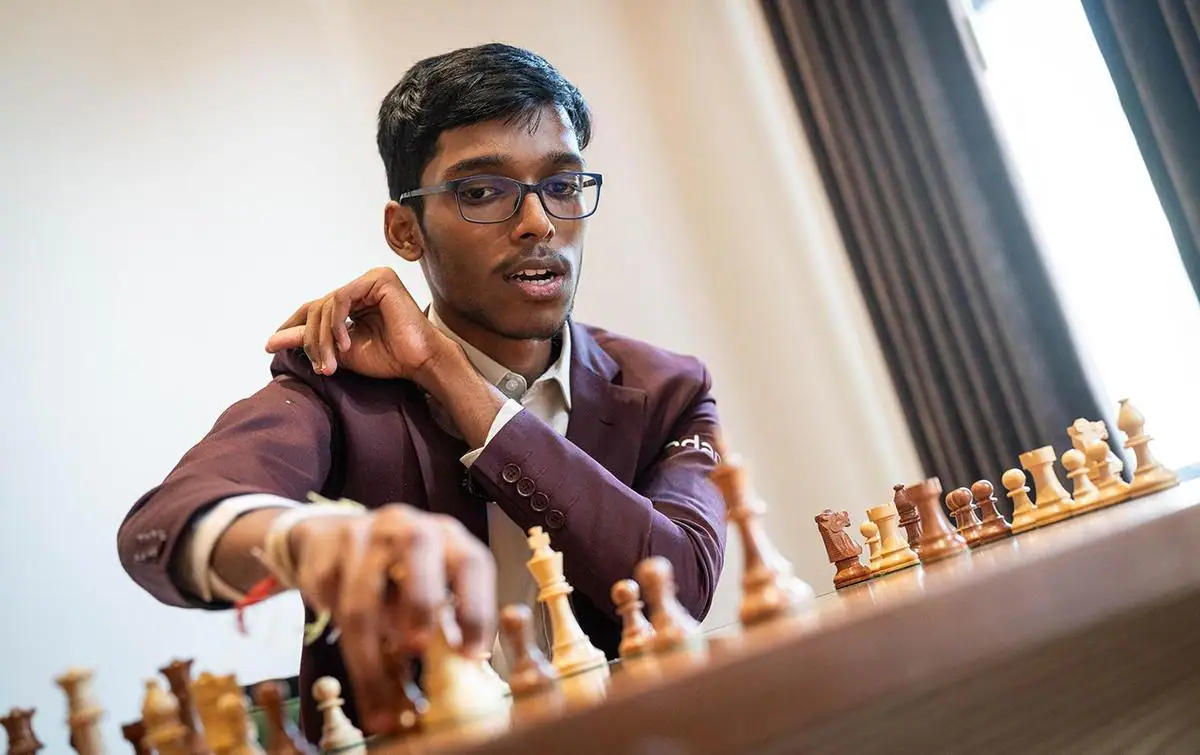
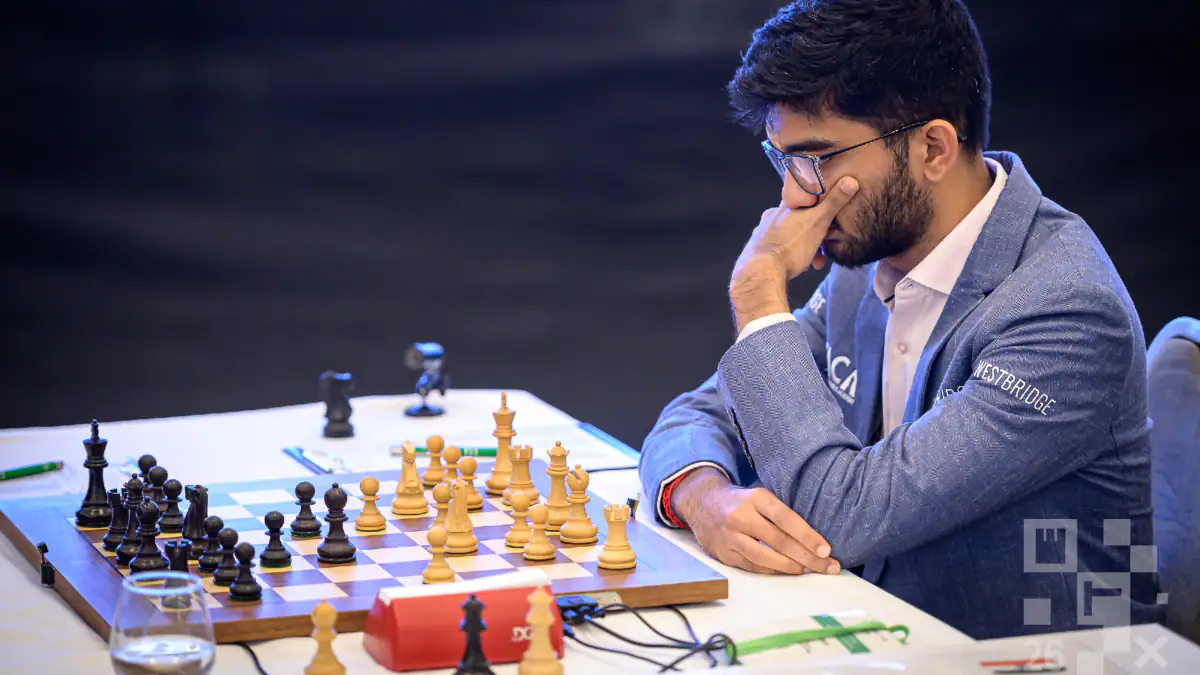
D. Gukesh began his World Chess Championship match against Javokhir Sindarov with a hard-fought draw in Geneva, choosing the Berlin Defence in a 38-move opening game that tested his time management as much as his positional understanding.
The opening game of a World Chess Championship match often offers an early indication of the players' preparation, strategic preferences and willingness to take risks. When D. Gukesh faced Javokhir Sindarov in Geneva on Tuesday, the chess world was eager to discover which opening systems the two young grandmasters would choose.
The answer came through a familiar and historically significant variation: the Berlin Defence. Playing with the black pieces, Gukesh opted for the solid Berlin Defence against Sindarov's Spanish Game. The opening choice carried an interesting historical connection to Viswanathan Anand, who used the same defence against the computer program Fritz in a celebrated man-versus-machine encounter in 1998.
In 1998, Anand faced Fritz in a match that offered an illustration of the strategic possibilities available to a human player against a powerful chess computer. Fritz opened with the Spanish Game, while Anand responded with the Berlin Defence.
The Indian grandmaster won that encounter, demonstrating that human strategic understanding could still challenge the computing power of the period. Almost three decades later, the same opening appeared on the board in another important contest involving an Indian grandmaster. Gukesh, who is now carrying India's hopes in the World Championship, chose the Berlin Defence against Sindarov.
The choice was significant because the Berlin is widely regarded as one of Black's most reliable responses to the Spanish Game. It is particularly associated with solid positional play and the ability to simplify the position without immediately surrendering winning chances.
Queens exchanged early as players enter a positional battle
The match began with Sindarov playing White and opening with the Spanish Game. Gukesh responded with the Berlin Defence, and the players followed a line that led to an early exchange of queens. Just seven moves into the game, the queens had come off the board. Such an early simplification often reduces the possibility of a direct attacking contest, placing greater emphasis on piece activity, pawn structure and endgame technique.
However, the absence of queens did not make the game straightforward. Both players continued to negotiate a position that demanded accuracy, with neither willing to give the other an easy route to an advantage.
As the game progressed, the contest became increasingly defined by the clock.
Gukesh faces a difficult time-management test
Time management was the most challenging aspect of the opening game for the Indian grandmaster. Under the match regulations, players had 120 minutes to complete their first 40 moves. Gukesh spent considerably more time than Sindarov during the early stages and repeatedly found himself in danger of falling into time trouble.
At one point, the Chennai-based grandmaster had to make 22 moves with only 24 minutes remaining. Sindarov, meanwhile, was comfortably ahead on the clock and appeared to have greater freedom to consider his options.
The contrast was particularly noticeable because Sindarov had been playing relatively quickly. He had enough time between moves to move around inside the Fondation Martin Bodmer in Cologny, the venue hosting the championship. Gukesh had no such luxury. With a substantial number of moves still required before the time control, every decision carried additional pressure. A single inaccurate move could have changed the character of the game.
The Indian, however, managed to remain composed. Rather than allowing the clock situation to dictate his decisions, he gradually reduced the time deficit while maintaining the balance on the board.
Sindarov eventually began spending more time on his moves as well. The initial difference in time management therefore became less decisive as the game approached its later stages.
The game eventually transitioned into a same-coloured-bishop ending, with neither player able to establish a decisive advantage. After 38 moves, the players agreed to a draw through repetition. The result gave both grandmasters half a point from the opening game.
For Gukesh, the draw was a particularly useful outcome given the difficulties he faced with the clock. Playing Black in the first game of a World Championship match, he avoided an early setback and demonstrated the composure required to navigate a challenging situation.
It was not a passive or uneventful draw. The clock pressure, the need for precise decisions and the evolving endgame ensured that the contest remained competitive despite the early exchange of queens.
Thirteen games remain in the championship
The opening game has set the stage for what promises to be a closely contested championship between two 20-year-olds. With the first point shared, neither player has gained an advantage on the scoreboard. The match has 13 games remaining, and the first player to reach 7.5 points will claim the World Championship title.
For Gukesh, the immediate priority will be to improve his time management while retaining the solid approach that helped him negotiate the opening game. For Sindarov, the challenge will be to convert his positional opportunities and clock advantage into something more tangible in the games ahead.
The Berlin Defence has already made its appearance, linking Anand's historic encounter with Fritz to Gukesh's latest World Championship campaign. The first game did not produce a winner, but it delivered a reminder that even in a contest between two of the world's strongest young players, patience, preparation and control of the clock can be just as important as opening theory.
The championship is only beginning, and the next 13 games will determine which of the two grandmasters can turn that preparation into the decisive advantage.
Comments (0)
to post comments, replies, and votes.
Loading comments…