How India Nearly Boycotted the Commonwealth Games 2022: The Shooting Controversy That Shook the Event
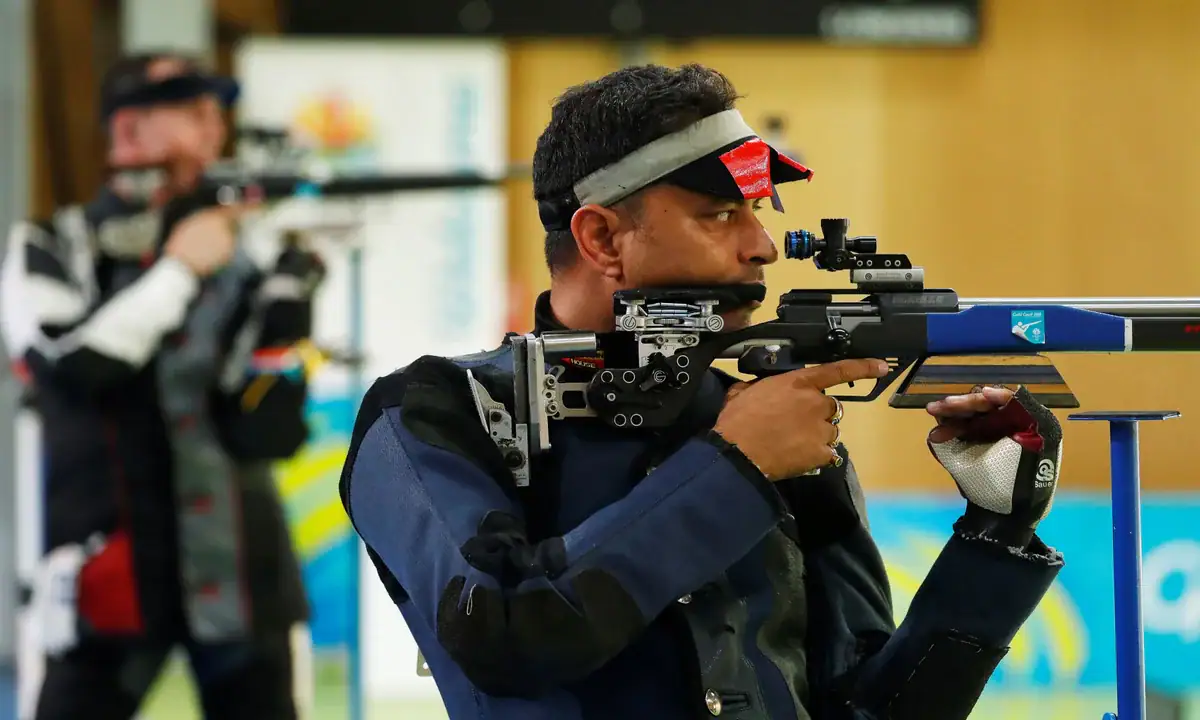
India almost boycotted the 2022 Commonwealth Games after shooting and archery were excluded. Here's how the dispute unfolded before Birmingham.
Months before the 2022 Commonwealth Games began in Birmingham, one of the biggest talking points had nothing to do with competition on the field. Instead, it revolved around the exclusion of two sports that have consistently contributed to India's success on the Commonwealth stage—shooting and archery.
The decision triggered one of the most significant disputes in the history of India's participation at the Commonwealth Games, with the Indian Olympic Association (IOA) even threatening to boycott the event. Although the standoff was eventually resolved and India went on to compete, the controversy highlighted the growing tensions between host cities, international sporting bodies and nations whose medal prospects are directly influenced by the Games' sporting programme.
The controversy began in June 2019, when the Commonwealth Games Federation (CGF) Executive Board approved Birmingham's proposal for the 2022 Games programme.
Unlike previous editions, shooting and archery were omitted from the list of sports. For India, the decision was particularly damaging.
Shooting has traditionally been one of India's strongest medal-producing disciplines at the Commonwealth Games. Across multiple editions, Indian shooters have consistently delivered gold medals and significantly contributed to the country's overall medal tally.
Archery, while not always a core Commonwealth sport, had also emerged as another discipline in which India had become increasingly competitive. The exclusion immediately raised concerns that India's chances of finishing near the top of the medal table would be substantially reduced.
The reaction from India was swift. Then IOA President Narinder Batra publicly criticised the Commonwealth Games Federation, arguing that the exclusion reflected an unfair attitude towards India. He questioned the rationale behind removing sports in which India had traditionally excelled and suggested that the leadership had failed to appreciate the importance of shooting within the Commonwealth sporting landscape.
The Indian Olympic Association went a step further by threatening to boycott the Birmingham Games, an unprecedented move that would have dramatically affected the competition given India's stature as one of the Commonwealth's leading sporting nations.
The possibility of one of the Games' biggest medal contenders staying away generated widespread debate across the international sporting community.
Rather than allowing the dispute to escalate further, discussions between stakeholders resulted in an innovative compromise. The IOA proposed hosting a separate Commonwealth Archery and Shooting Championships in Chandigarh ahead of the Birmingham Games. Under the proposal, athletes from Commonwealth nations would compete in shooting and archery outside the official Games programme, while the medals won would still count towards the final Commonwealth Games medal table.
The proposal received support from several participating nations and was eventually approved by the Commonwealth Games Federation, provided India assumed responsibility for organising and funding the championships.
It appeared to be a unique solution that balanced Birmingham's compact sporting programme with the desire to preserve medal opportunities in two important disciplines.
However, the compromise never materialised. As preparations continued, the COVID-19 pandemic created significant logistical and travel challenges.
In July 2021, organisers officially cancelled the Chandigarh championships due to uncertainties surrounding the pandemic and international participation. With the event cancelled, shooting and archery remained absent from the Commonwealth Games programme. For India, it meant accepting the reality that two of its strongest medal sports would not feature in Birmingham.
Despite the disappointment, the country ultimately chose to participate rather than continue with the proposed boycott.
The shooting controversy was not the only challenge India faced before Birmingham. In October 2021, Hockey India announced that both the men's and women's national teams would withdraw from the Commonwealth Games. The federation cited several reasons for its decision.
At the time, the United Kingdom had not recognised India's COVID-19 vaccination certificates, creating uncertainty regarding travel protocols. There were also concerns about the health risks posed by the pandemic. Equally important was the scheduling conflict. The Commonwealth Games were being held just before the Asian Games, which carried significantly greater importance because they served as a qualification pathway for the Paris 2024 Olympic Games.
From a sporting perspective, Hockey India believed prioritising the Asian Games was the more strategic decision. The announcement followed England Hockey's earlier withdrawal from the FIH Men's Junior Hockey World Cup in Bhubaneswar, a move that had disappointed Indian administrators.
The withdrawal, however, did not become permanent. Following discussions involving the Indian Olympic Association, Sports Minister Anurag Thakur and Hockey India officials, the federation reconsidered its position. Eventually, Hockey India confirmed that both teams would participate in Birmingham, subject to qualification.
The decision ensured that one of India's strongest team sports remained part of the country's Commonwealth campaign. The men's and women's teams ultimately represented India at the Games, maintaining the nation's presence in one of the competition's marquee events.
Although India resolved both controversies before the Games began, the absence of shooting significantly influenced the final medal standings. Historically, Indian shooters have contributed a substantial share of the country's Commonwealth medal tally. Without shooting on the programme, India entered Birmingham with fewer realistic medal opportunities than in previous editions. Despite that disadvantage, the contingent delivered an impressive performance, finishing fourth overall with 61 medals, including 22 gold, 16 silver and 23 bronze.
The country emerged as the top-performing nation in badminton, wrestling, table tennis and weightlifting while also creating history through its first-ever lawn bowls gold medal.
The events leading up to Birmingham exposed broader questions about the future of the Commonwealth Games. Unlike the Olympics, where the sports programme remains relatively stable, Commonwealth host cities have greater flexibility in determining which sports feature. While this allows organisers to control costs and utilise existing venues, it can also significantly affect the competitive balance for participating nations.
India's response demonstrated how closely national sporting ambitions are tied to programme decisions. Although the boycott never materialised, the controversy became one of the defining stories before Birmingham 2022 and prompted wider discussions about fairness, inclusivity and consistency within the Commonwealth Games.
Ultimately, India chose competition over confrontation, overcoming the absence of one of its strongest sports to produce another successful Commonwealth campaign. The episode remains a reminder that the biggest battles in international sport are not always fought inside the arena—they are sometimes decided long before the opening ceremony begins.
Comments (0)
to post comments, replies, and votes.
Loading comments…