India’s Historic 1974 Hockey World Cup Run: When Ajinder Kaur and Her Team Stunned the Netherlands
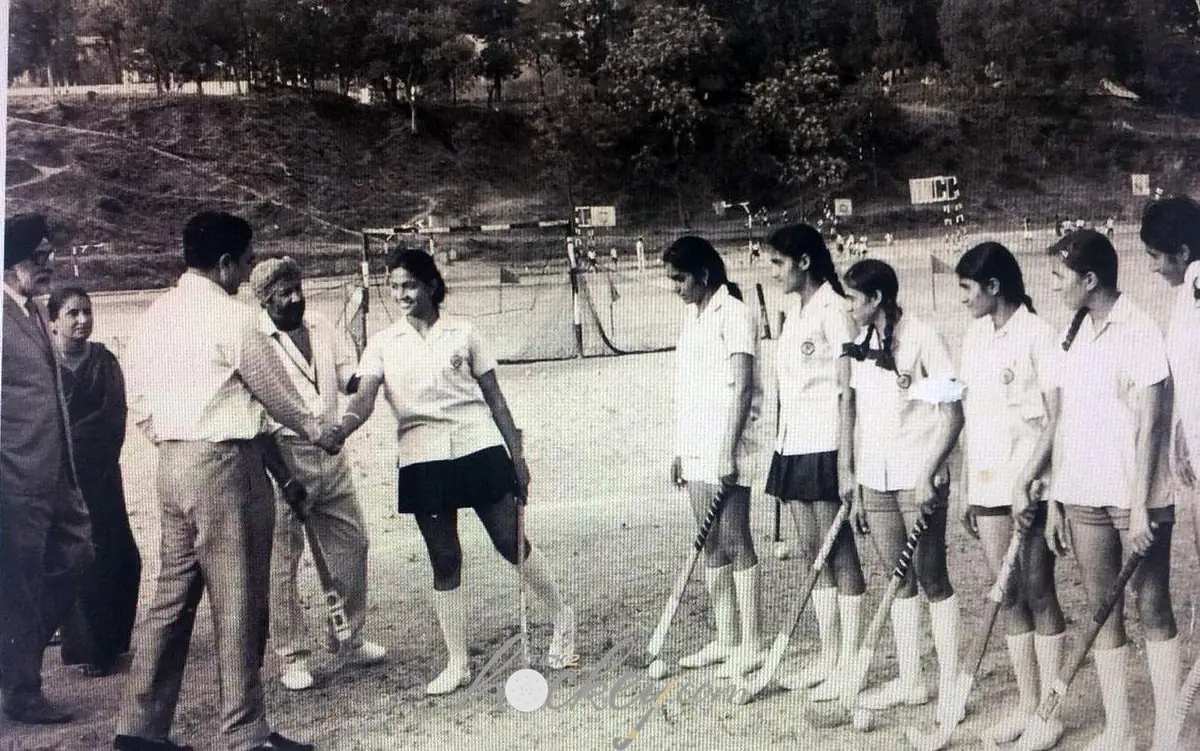
India’s women’s hockey team entered the inaugural Women’s Hockey World Cup in 1974 as an unfamiliar challenger. They left Mandelieu, France, with a fourth-place finish that remains the country’s best-ever result at the Women’s Hockey World Cup.
Led by captain Ajinder Kaur, India produced one of the most remarkable campaigns in the early history of international women’s hockey. The highlight was a 1-0 victory over the Netherlands, a team that would go on to become the dominant force in women’s hockey and eventually win the inaugural World Cup title.
The achievement becomes even more significant when viewed against the circumstances surrounding the team. The tournament, held from March 17 to 24, 1974, was the first officially organised FIH Women's Hockey World Cup. Ten teams from three continental confederations competed in Mandelieu, with matches played on natural grass and under conditions very different from the modern international game.
India arrived without the financial and institutional advantages enjoyed by many of their European opponents. Yet the team quickly showed that technical quality, tactical discipline and determination could bridge a significant gap in resources.
A Captain Who Set the Tone
At the centre of India's campaign was Ajinder Kaur, one of the outstanding Indian hockey players of her generation. A fullback and defensive leader, Kaur had made her senior international debut at just 16 and had already built a formidable reputation domestically. She was known for her powerful hitting and was particularly effective at penalty corners, operating in an era before the modern drag-flick transformed the discipline.
Her leadership was crucial to India's defensive organisation throughout the tournament. India played under coach Balkishen Singh and relied on a flexible 2-3-5 system suited to the heavy natural-grass surfaces of the era. The approach emphasised defensive organisation, quick transitions and physical resilience.
Kaur's influence extended beyond her defensive responsibilities. Her ability to organise the backline allowed India to withstand pressure from technically accomplished opponents while remaining dangerous on the counter.
India's campaign did not begin perfectly. Their opening match came against Belgium on March 17, and India suffered a 0-2 defeat. The loss immediately put pressure on the team, leaving little room for further mistakes in a group containing the Netherlands, Spain and Mexico.
The response, however, was emphatic. India defeated Mexico 3-0 the following day, with Rupa Saini scoring twice and Kulwant Bhullar adding another. A day later, India produced another strong attacking display, defeating Spain 4-1. Suddenly, the team that had begun with a defeat was firmly in contention for a semifinal place.
But the biggest challenge was still ahead.
The Netherlands Shock
The Netherlands entered their meeting with India as one of the tournament favourites. Their women's hockey programme would eventually establish itself as the most successful in World Cup history, making what happened on March 21 even more remarkable.
India defeated the Netherlands 1-0.
The match was a demonstration of defensive discipline and tactical patience. India absorbed Dutch pressure and looked for opportunities to attack in transition. The breakthrough eventually came through Baljeet Bhatti, whose goal proved decisive. The victory lifted India to the top of Pool A.
Both India and the Netherlands finished with six points, but India's superior goal difference saw them finish first and advance directly to the semifinals as group winners. It was more than an upset. It was a statement that India belonged among the world's best.
India's semifinal against Argentina on March 22 became one of the most painful chapters of the campaign. The match remained goalless through regulation time and continued into extra time. India defended for more than 100 minutes, maintaining their structure while hoping to force the contest towards a penalty-stroke decision.
Instead, Argentina found the decisive goal late in sudden-death extra time.
India lost 0-1.
The defeat was particularly heartbreaking because the team had been only one goal away from reaching the inaugural World Cup final. The Netherlands also defeated West Germany 1-0 in the other semifinal, setting up a final between the two teams that had emerged from Pool A.
India returned for the bronze-medal match against West Germany on March 24. After the physical demands of the semifinal, India could not reproduce their earlier performance and lost 0-2.
They finished fourth.
The Netherlands subsequently defeated Argentina 1-0 to become the inaugural women's world champions. India, meanwhile, had established itself as the fourth-best team at the first-ever World Cup. That fourth-place finish remains India's highest-ever position at the Women's Hockey World Cup. For Ajinder Kaur, the tournament became a defining chapter in a distinguished career. She was recognised with the Arjuna Award in 1974, further underlining her importance to Indian hockey.
Perhaps the most frustrating aspect of India's 1974 achievement was what followed. The team had demonstrated that India could compete with the world's strongest women's hockey nations. But financial and administrative difficulties prevented the programme from building consistently on that success. India did not participate in the 1976 World Cup because of financial constraints and administrative difficulties. The team returned to the World Cup in 1978 and finished seventh. India later finished fourth at the 1980 Moscow Olympics and won the 1982 Asian Games on home soil.
The missed opportunity is an important part of the story.
The 1974 team had the talent to challenge the best. It had the leadership of Ajinder Kaur, the attacking quality of players such as Baljeet Bhatti and Rupa Saini, and the defensive organisation necessary to defeat a future powerhouse like the Netherlands. What it lacked was the sustained institutional support needed to turn one extraordinary generation into a long-term system.
Still, history cannot take away what happened in Mandelieu. India lost its opening match, recovered to defeat Mexico and Spain, stunned the eventual champions Netherlands, topped its group and came within a single goal of reaching the inaugural World Cup final.
And at the heart of that historic journey stood Ajinder Kaur, India's pioneering captain, defensive leader and penalty-corner specialist.
More than five decades later, India's fourth-place finish in 1974 remains a reminder of how high Indian women's hockey once climbed—and how much that generation achieved against the odds.
Comments (0)
to post comments, replies, and votes.
Loading comments…