India Edge Past Slovakia in Thriller to Stay on Course at ITTF World Team Championships
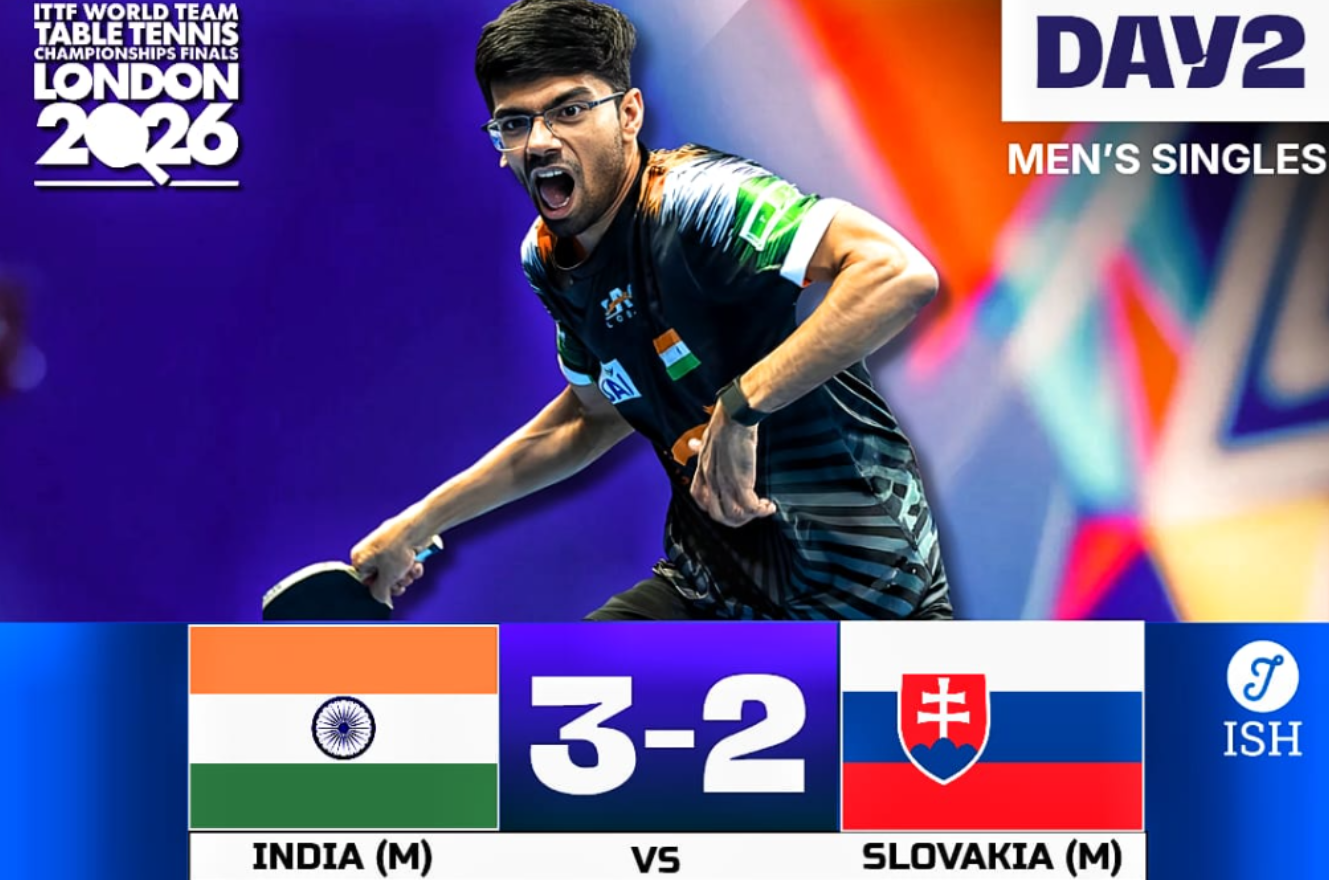
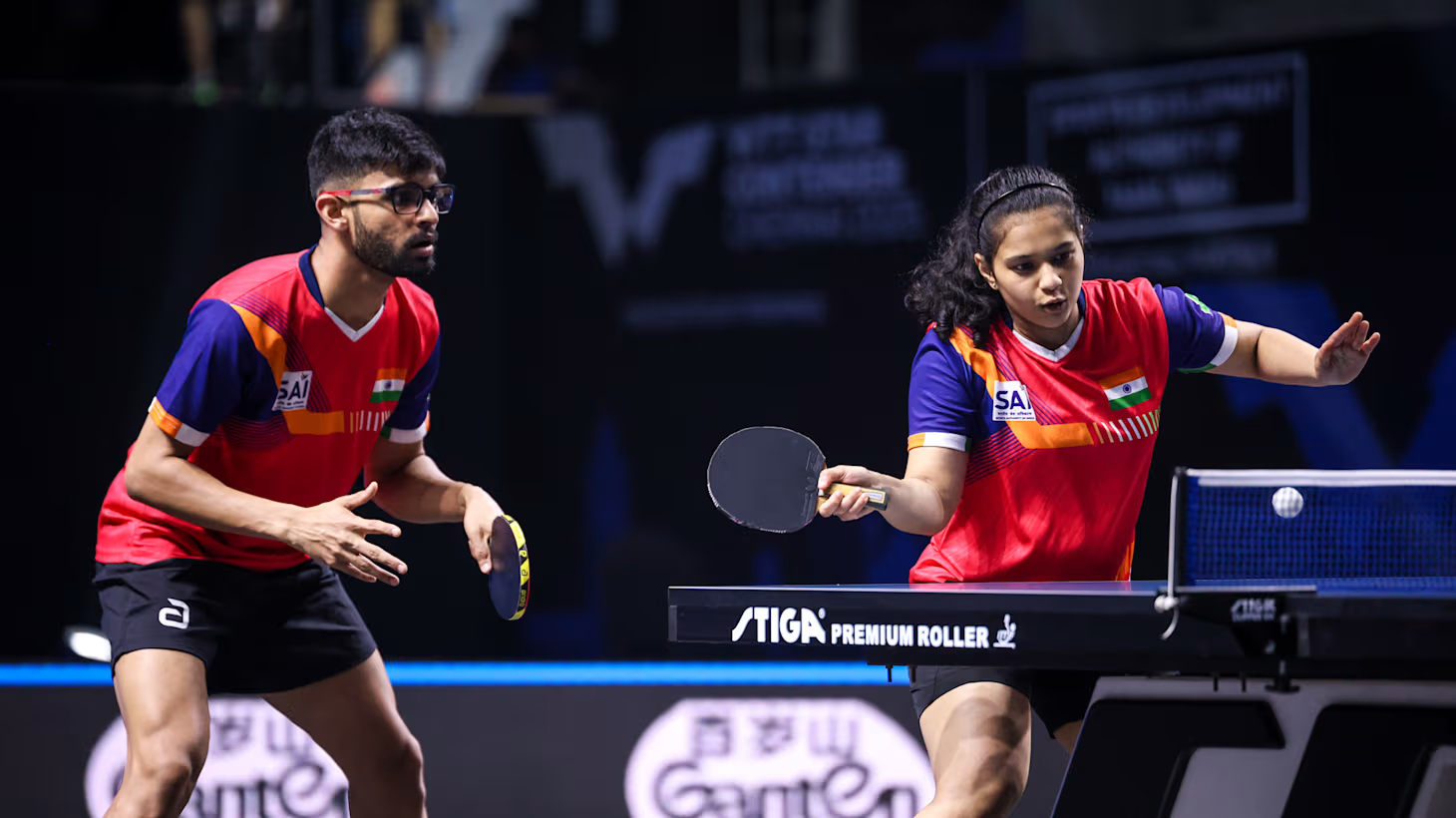
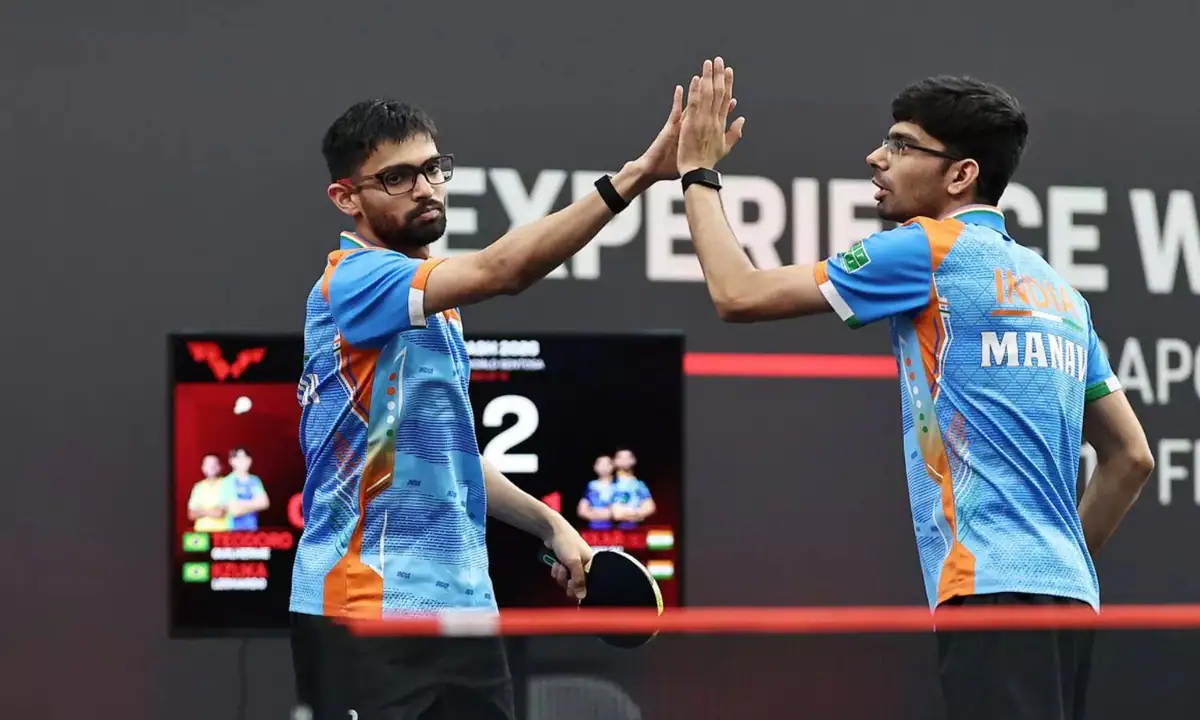
India’s men’s table tennis team held its nerve in a tense five-match battle against Slovakia, registering a hard-fought 3-2 victory in its second Group 7 encounter at the ITTF World Team Championships Finals.
A day after the women’s team survived a dramatic contest against Ukraine, the Indian men followed a similar script, overcoming early setbacks to keep their campaign firmly on track. The victory places India in a strong position ahead of its final group-stage clash against Guatemala. The tie once again underlined both the promise and vulnerability of the current Indian side. While Manav Thakkar produced two commanding singles victories under pressure, the team also showed signs of inconsistency against an experienced Slovak lineup led by Lubomir Pistej and Wang Yang.
India eventually got the job done, but not before being pushed deep into the contest.
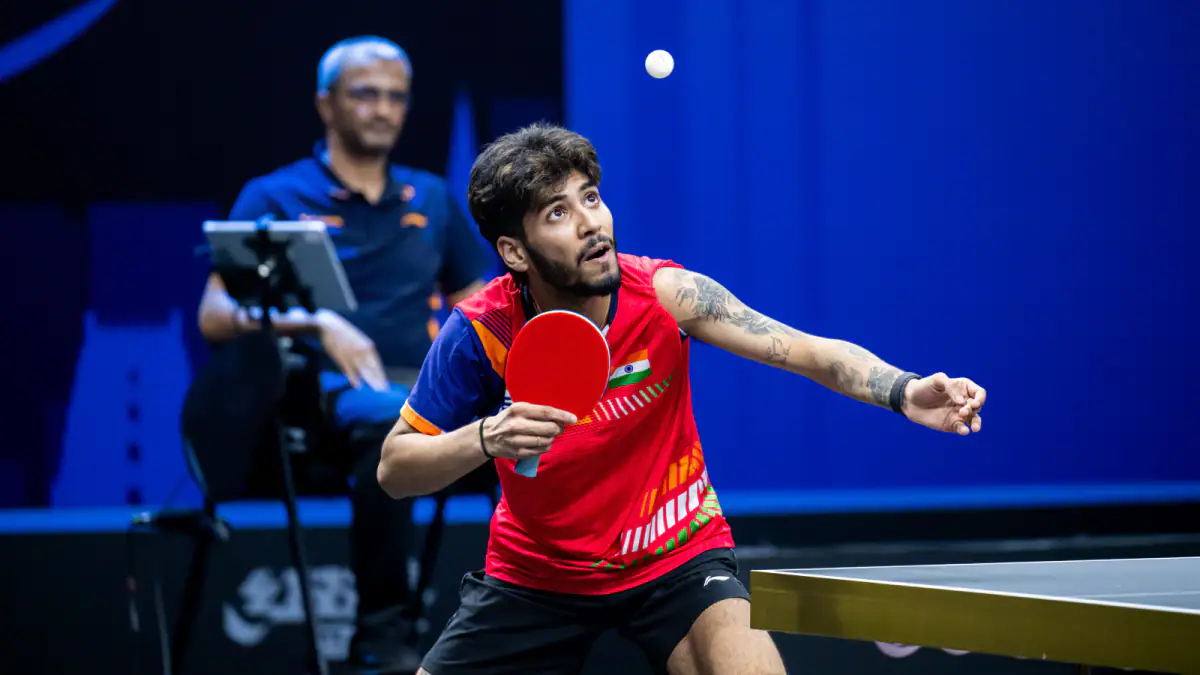
India began the tie with one of its most dependable paddlers, Manush Shah, taking on veteran Lubomir Pistej in the opening singles rubber. The match quickly turned into a momentum battle.
Pistej used his experience and variation effectively to disrupt Manush’s rhythm early, taking the first game 11-8. The Indian responded strongly in the second and third games, winning 11-5 and 11-8 with aggressive forehand play and sharper placement. At that stage, Manush appeared to be in control.
However, the Slovak veteran adjusted brilliantly. Pistej slowed the pace, forced longer rallies, and capitalised on a dip in intensity from the Indian paddler. He took the fourth game 11-5 before closing out the decider 11-6 to give Slovakia an early 1-0 lead. For India, it was not the ideal start.
The pressure immediately shifted onto Manav Thakkar.
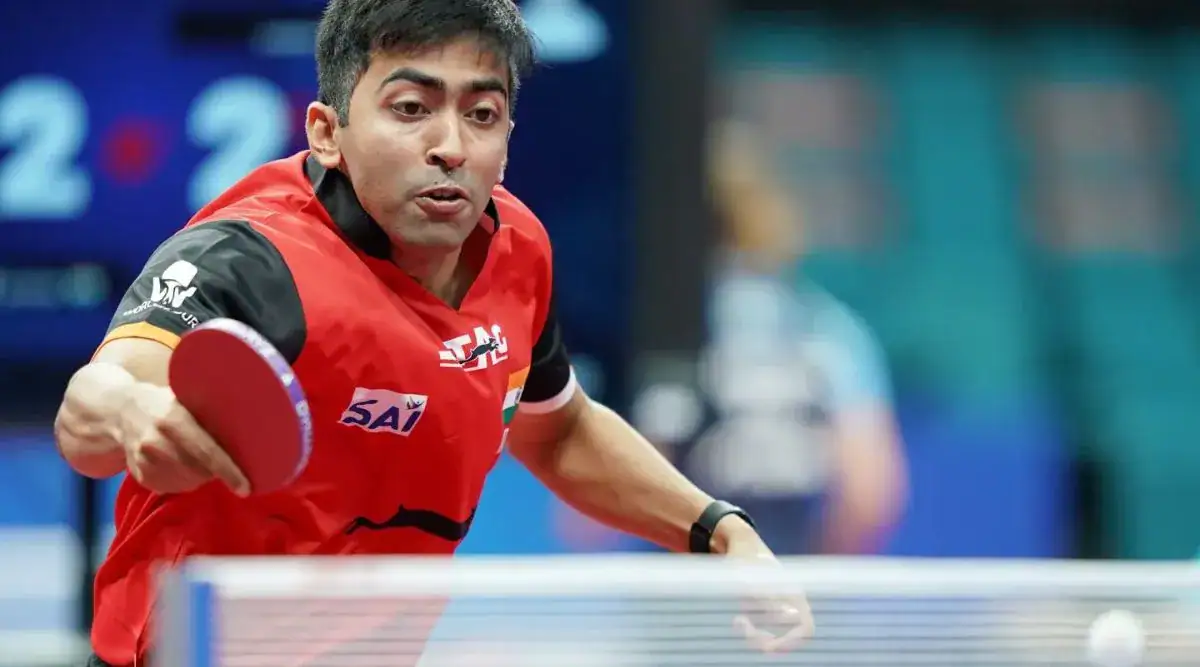
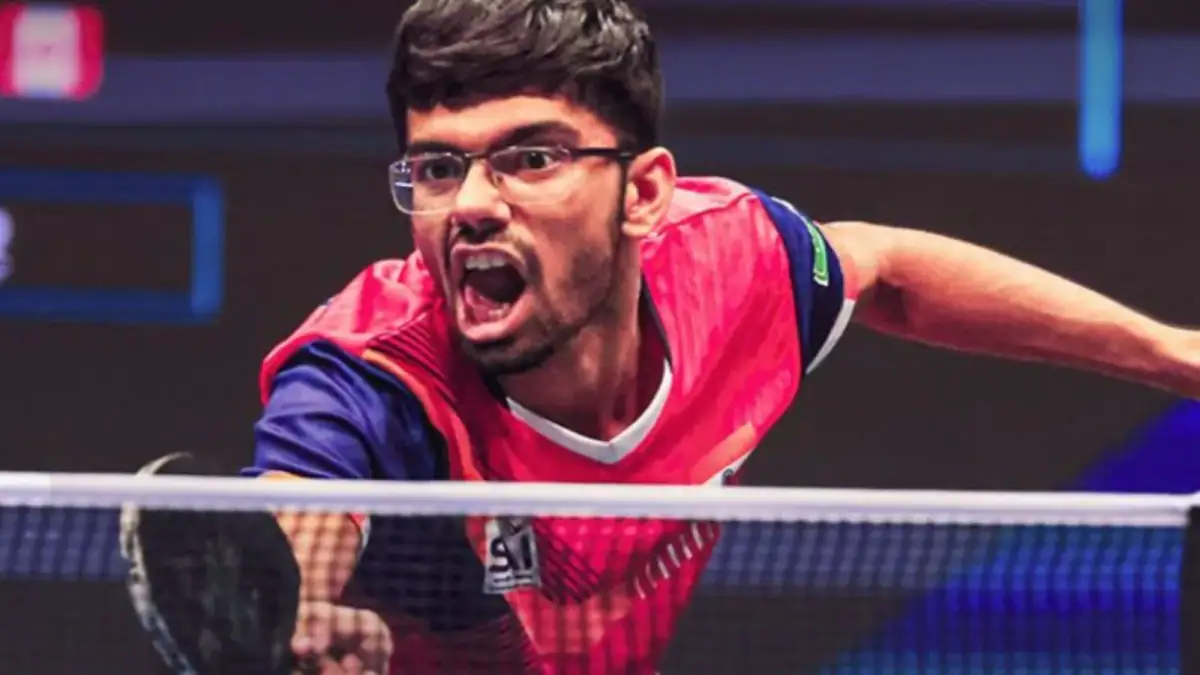
Manav, however, looked completely unfazed. Facing Jakub Zelinka in the second rubber, the Indian World No. 38 delivered one of his most clinical performances in recent months. He controlled the rallies from the outset, attacked consistently on the backhand side, and never allowed Zelinka to settle into the match.
The scoreline reflected the dominance. Manav won 11-6, 11-8, 11-6 in straight games to level the tie at 1-1 and swing momentum back toward India.
More importantly, his composure stabilised the team after the disappointment of the opening loss.
The third rubber turned into the decisive setback for India. Harmeet Desai faced experienced defender Wang Yang, whose unique style once again proved difficult for the Indian paddler to decode. Wang used his defensive control and spin variation expertly, drawing errors from Harmeet throughout the match. Although the opening game was highly competitive, with Harmeet narrowly losing 14-16, the Slovak player grew stronger as the match progressed.
Harmeet struggled to maintain attacking consistency against Wang’s deep defensive returns and eventually lost 5-11, 9-11 in the next two games.
Suddenly, India found itself trailing 1-2 in the tie. With elimination pressure slowly building, the responsibility once again fell on Manav Thakkar.
If there were any doubts about Manav’s importance to this Indian team, the fourth rubber removed them entirely. Up against Pistej, who had earlier defeated Manush, Manav produced a mature and tactically disciplined performance. He attacked the shorter balls aggressively, stayed compact during extended exchanges, and handled the Slovak’s experience exceptionally well.
The Indian paddler dominated key points throughout the contest. He won the match 11-3, 15-13, 11-7 to level the tie at 2-2 and force the deciding rubber. The second game, in particular, proved crucial. Pistej attempted to slow the pace and draw Manav into longer rallies, but the Indian stayed calm during the pressure moments and eventually closed it out 15-13.
That victory shifted all momentum toward India heading into the final match. After suffering defeat in the opening rubber, Manush Shah returned to the table knowing India’s fate rested on him. The response was outstanding.
Facing Jakub Zelinka, the Indian paddler looked far more settled and aggressive from the start. He attacked with confidence, controlled the pace of rallies, and avoided the unforced errors that troubled him earlier against Pistej. Manush never allowed the contest to drift.
He secured a comfortable 11-8, 11-8, 11-7 victory to seal the tie 3-2 for India and complete an important comeback win. The performance also showed strong mental resilience from the youngster, who bounced back impressively after the disappointment of losing the opening rubber. With victories over Tunisia and Slovakia, India now heads into its final group-stage encounter against Guatemala with momentum on its side. However, the tie against Slovakia also exposed areas India will need to sharpen before the knockout rounds. The dependence on Manav Thakkar for crucial points remains evident, while handling experienced defensive players like Wang Yang continues to be a challenge for the squad. At the same time, the team showed resilience, composure, and the ability to recover under pressure qualities essential in a long tournament.
For now, though, India remains firmly in control of its campaign.
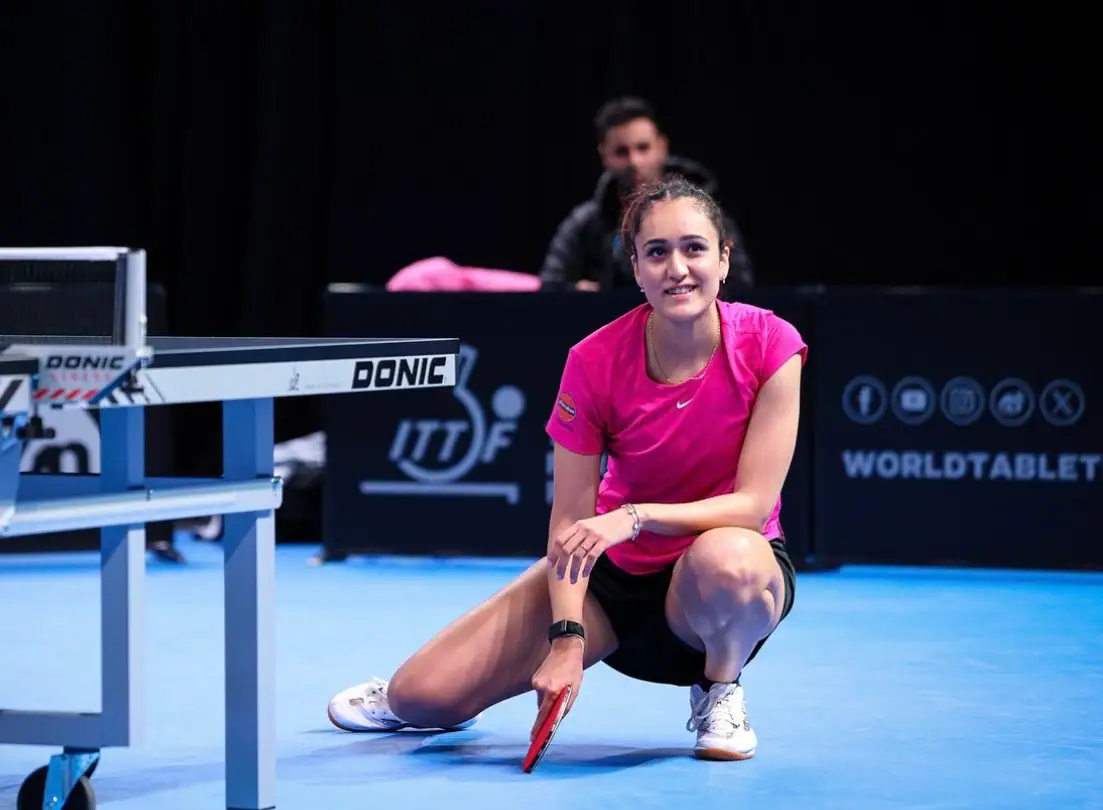
After the women’s team survived a five-match thriller earlier, the men followed with another tense escape keeping India’s hopes alive at the ITTF World Team Championships.
Comments (0)
to post comments, replies, and votes.
Loading comments…