India Eye Commanding Start at World Team Championships as Post-Sharath Era Begins
As London prepares to host the centenary edition of the International Table Tennis Federation’s World Team Championships, India arrives at a familiar crossroads armed with depth, ambition, and expectation, but also stepping into a new phase following the retirement of Achanta Sharath Kamal.
For over a decade, Sharath was the fulcrum of Indian table tennis in team events. His absence now shifts both responsibility and opportunity onto a new core.
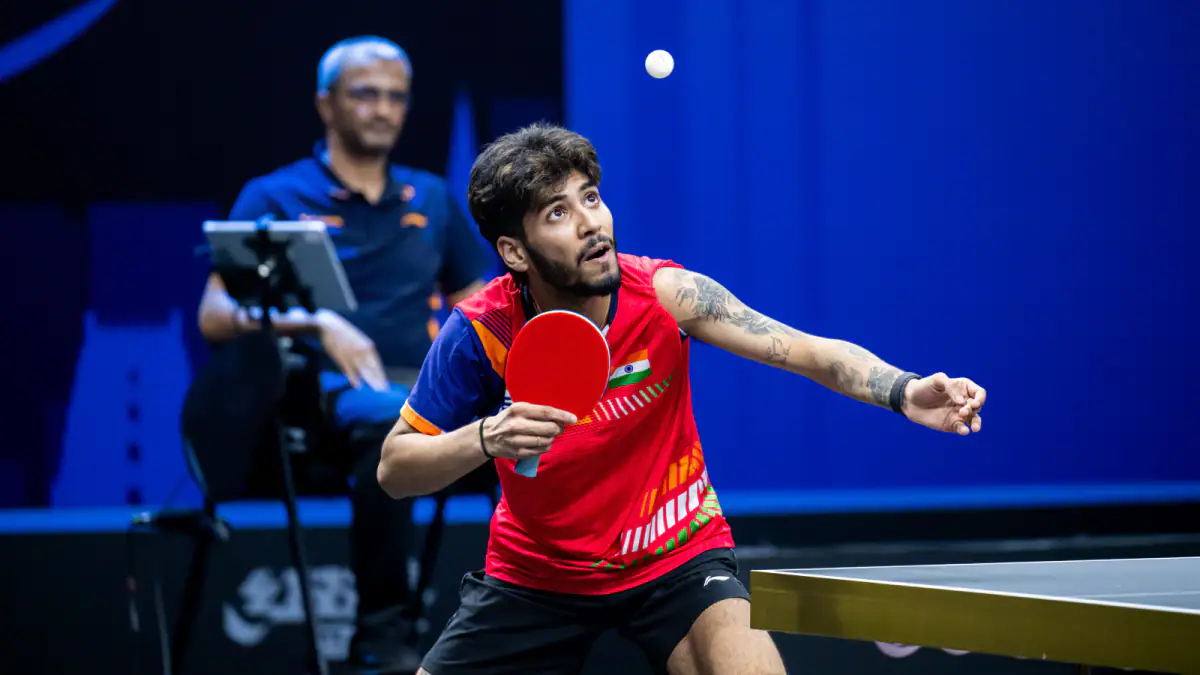
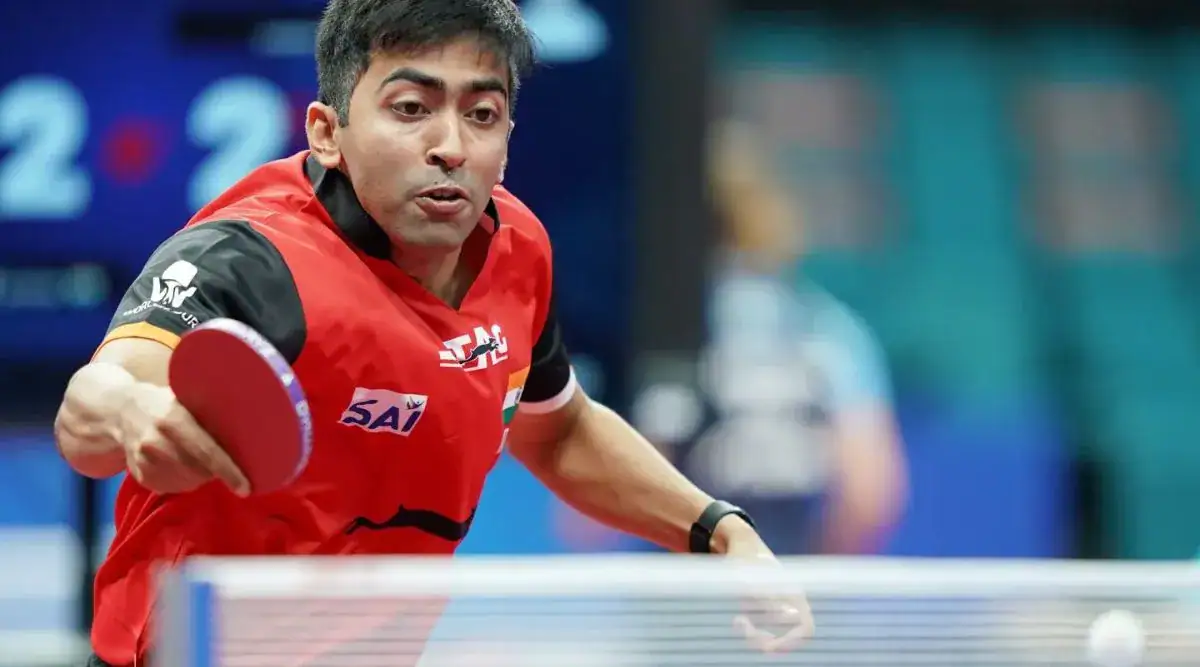
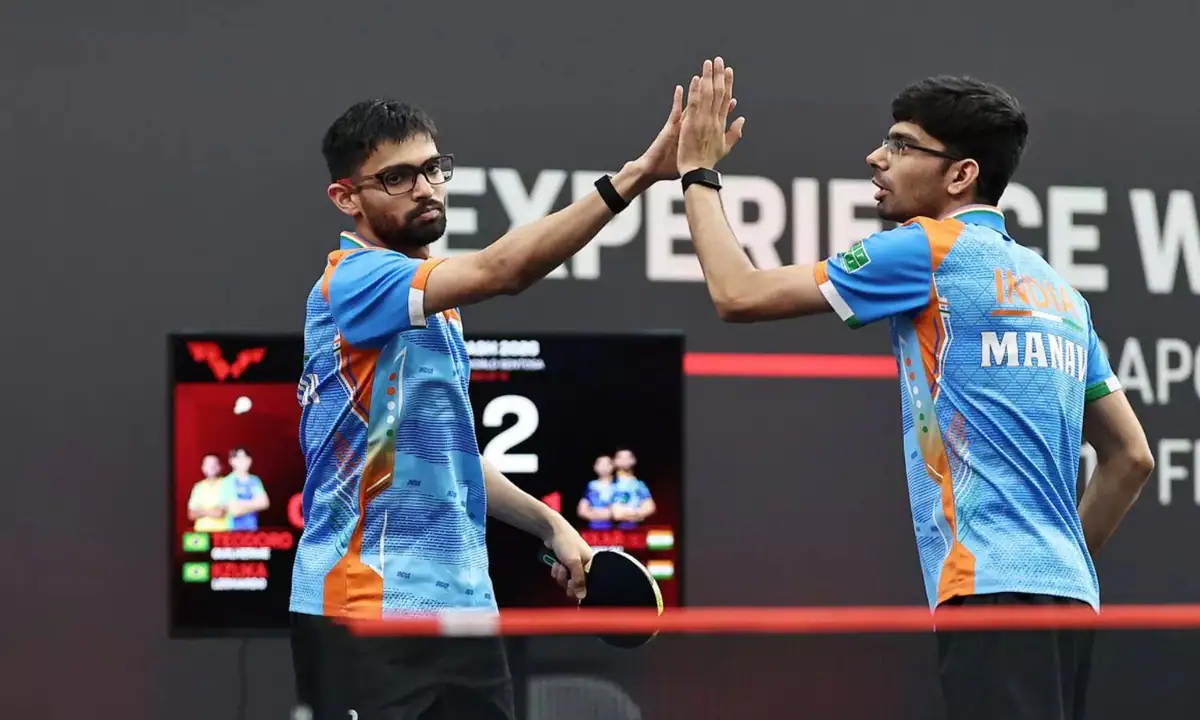
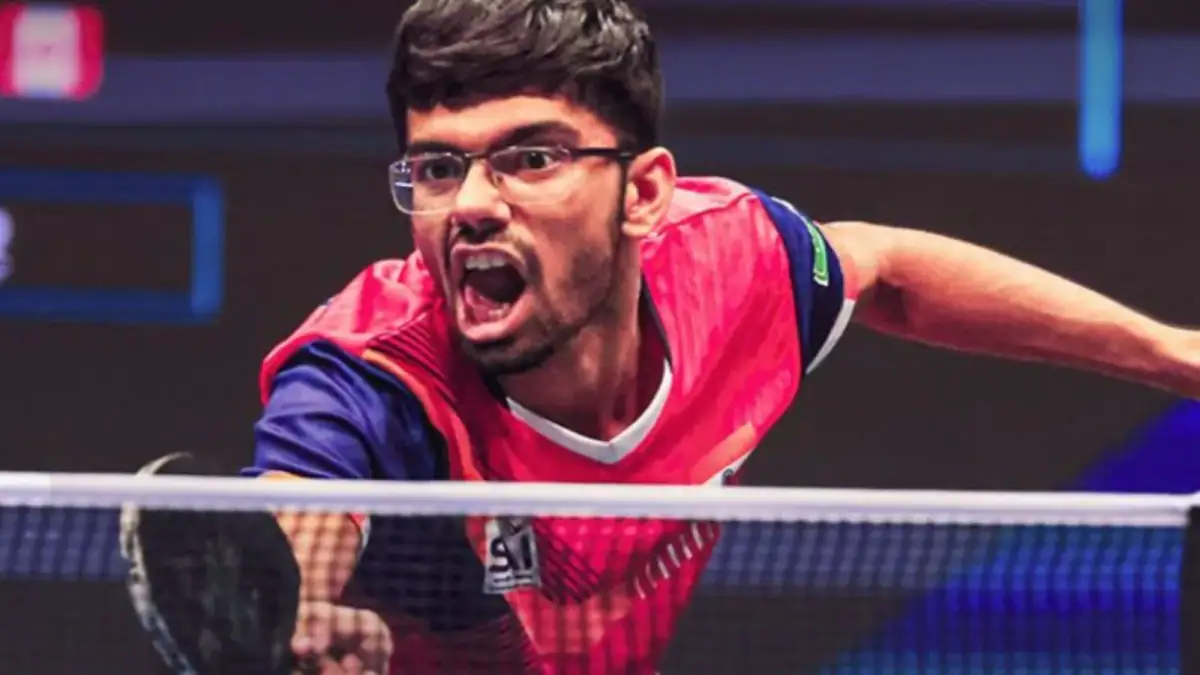
India’s men’s team finds itself in Group 7 alongside Slovakia, Tunisia, and Guatemala opponents that, on paper, present a manageable pathway to the knockouts. With Manav Thakkar (World No. 38), G. Sathiyan (42), and Manush Shah (51) leading the charge, India enters as the highest-ranked side in the group. However, rankings alone rarely dictate outcomes in team championships. Slovakia, led by Lubomir Pistej and Yang Wang, may not match India numerically, but European teams often bring tactical discipline and unpredictability in multi-match ties. Tunisia and Guatemala, while lower-ranked, can still force uncomfortable situations if India fails to assert early control.
Under the current format, finishing atop the group is critical. Only group winners secure direct entry into the main draw, while second-placed teams are left navigating a complicated qualification route that could involve match ratios or additional knockout rounds. That margin for error makes every tie significant, even against comparatively weaker opposition.
Men’s Team: Depth Without the Anchor
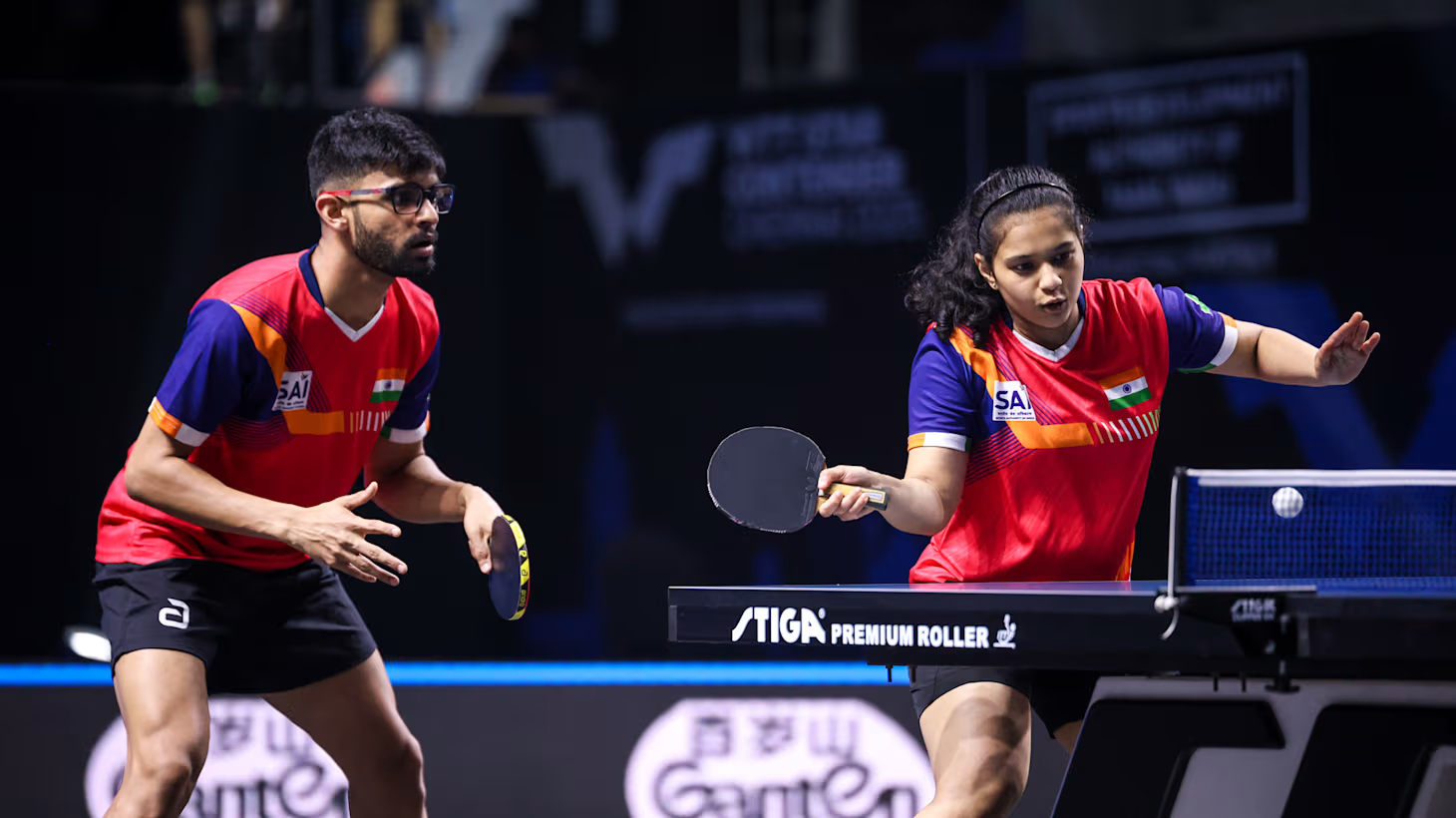
The Indian men’s squad reflects both continuity and transition. Sathiyan remains a reliable performer capable of handling pressure matches, while Thakkar has evolved into a consistent presence at the international level. Manush Shah, meanwhile, continues his upward trajectory and adds attacking flair to the lineup. Harmeet Desai and Payas Jain provide additional depth, giving India flexibility in team combinations depending on matchups. This depth is one of India’s strongest assets, particularly in a format where multiple players must deliver across ties.
Yet, the absence of Sharath Kamal introduces a subtle but important variable. Beyond rankings and results, Sharath brought composure in decisive moments a quality that often proved decisive in five-match ties. Without that experienced anchor, India’s ability to close out tight contests will be closely watched.
Women’s Team: Balance and Emerging Confidence
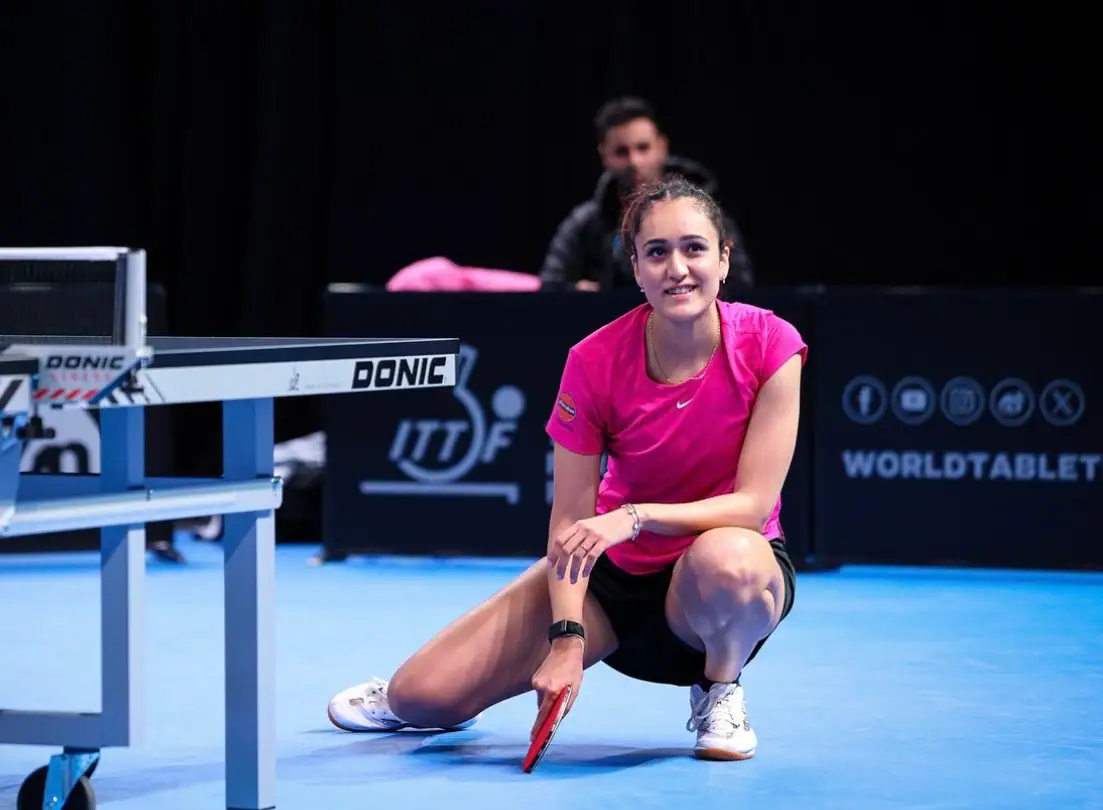
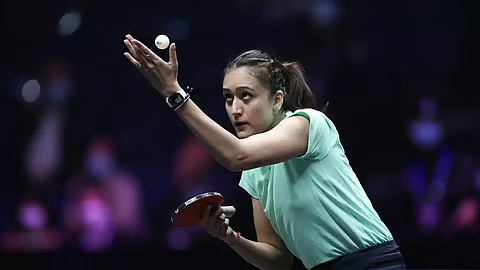
India’s women’s team faces a slightly more competitive group in Group 6, alongside Ukraine, Uganda, and Rwanda. Led by Manika Batra (World No. 49), the squad combines experience with a promising younger core. Ukraine, anchored by Margaryta Pesotska, represents the primary challenge. The matchup is likely to determine the group winner, making it a pivotal tie for India’s campaign.
Beyond Manika, players like Yashaswini Ghorpade, Diya Chitale, and Sutirtha Mukherjee bring variety in playing styles. The inclusion of Syndrela Das, the youngest member of the squad, reflects a broader intent to integrate emerging talent into the senior setup. This blend of experience and youth gives the women’s team a more balanced look compared to previous editions. Importantly, the group has already shown signs of resilience in recent tournaments, particularly in close encounters against higher-ranked teams.
https://www.indiasportshub.com/articles/manika-batra-stuns-world-no-25-miyuu-kihara-to-reach-pre-quarterfinals-at-wtt-contender-taiyuan
India’s performance at the 2024 World Team Championships in Busan offers a useful reference point. Both the men’s and women’s teams advanced to the knockout stage but were eliminated in the Round of 32. The women’s team, in particular, delivered encouraging performances, securing narrow wins over Hungary and Spain while pushing China in a closely contested 2-3 tie. The men’s team showed flashes of quality but struggled against stronger opposition, including a 0-3 defeat to South Korea in the knockouts.
These results underline a consistent theme: India has the capability to compete but needs greater consistency to convert competitive performances into deep runs.
In a format where every match contributes to overall standings, building early momentum is essential. For India, this means not just winning ties, but doing so convincingly. A dominant group-stage performance reduces the risk of tiebreak scenarios and ensures a smoother progression into the knockout rounds. More importantly, it builds confidence something that becomes crucial when facing top-tier teams later in the tournament. This edition of the World Team Championships represents more than just another international outing. It marks the beginning of a transition phase for Indian table tennis.
The men’s team is stepping out of the shadow of its most influential player, while the women’s team is gradually evolving into a more cohesive and competitive unit. How both teams respond to this transition will shape the trajectory of Indian table tennis over the next Olympic cycle.
For India, simply reaching the knockout stage is no longer sufficient. The objective now is to establish authority both in the group stage and beyond. If the men can manage pressure situations without their former talisman and the women can convert their balance into consistent results, a deeper run is within reach. However, any lapse particularly in tight ties could quickly complicate the campaign. India enters the 2026 World Team Championships with a favourable draw and a strong squad on paper. But the real challenge lies in execution.
In London’s centenary spotlight, this tournament offers India a chance to redefine its identity in team table tennis. Whether this marks the start of a new era or a period of adjustment will depend on how effectively the team converts potential into performance.
Comments (0)
to post comments, replies, and votes.
Loading comments…